
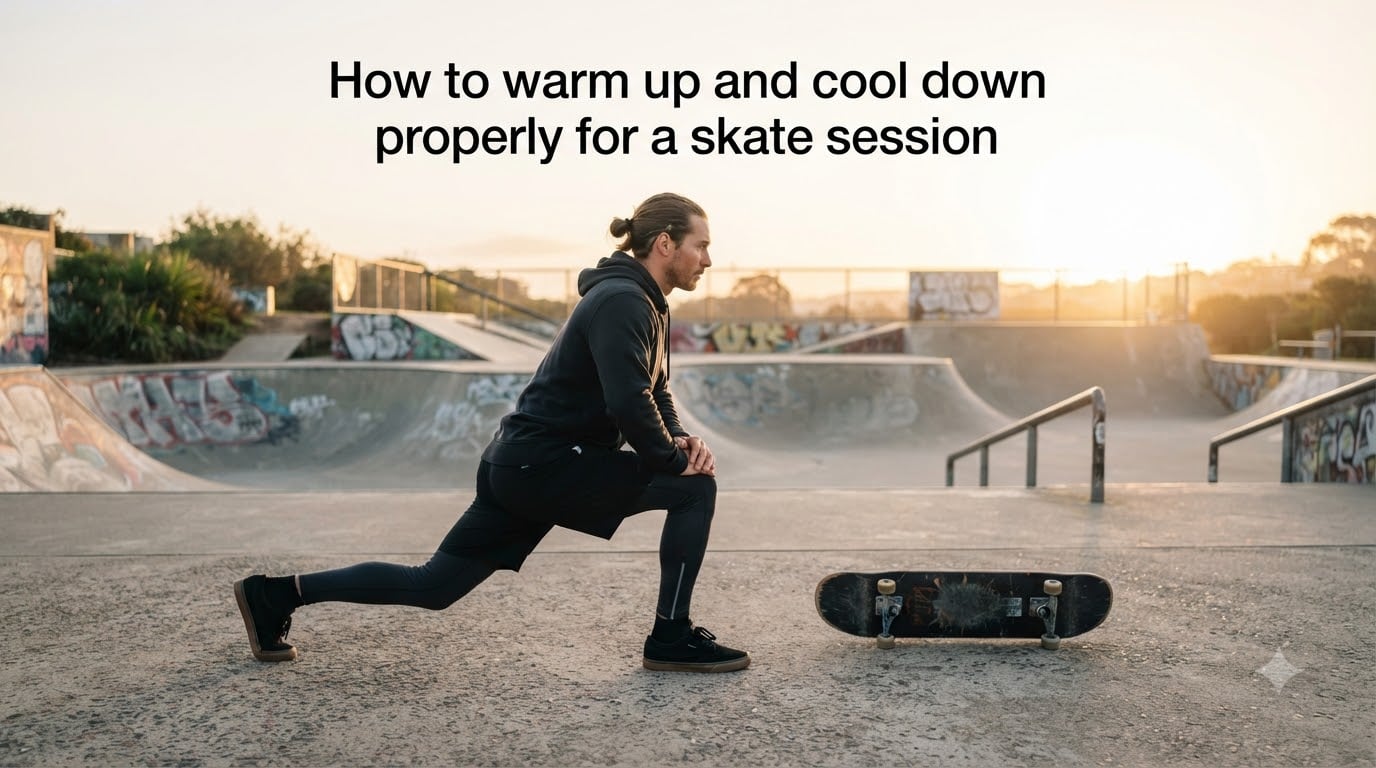
I remember the first time I laced up a pair of inline skates without warming up. I felt stiff, slow, and almost twisted an ankle within the first ten minutes. That day taught me that learning how to warm up and cool down properly for a skate session is not optional, it’s the difference between a fun session and a frustrating one.
Most skaters skip the warm-up because they think skating itself is enough exercise. The truth is your ankles, hips, and core all need targeted preparation before the lateral stresses of skating hit them. In this guide, our team walks through the exact routine we use before and after every session, so you can skate longer, recover faster, and stay injury free.
Table of Contents
What Is a Skate Warm-Up and Why It Matters?
A skate warm-up is a short sequence of dynamic movements you perform before skating to prepare your muscles, joints, and cardiovascular system. It is not the same as stretching, and confusing the two is one of the biggest mistakes skaters make.
Warm-Up vs Stretching: What’s the Difference?
Dynamic warm-up moves your body through a full range of motion while raising your heart rate. Static stretching holds one position for 20 to 60 seconds to lengthen muscles after activity. Warming up happens before skating. Stretching happens after.
Skating on cold muscles is like trying to bend a cold rubber band. It snaps. A proper warm-up raises muscle temperature by 1 to 2 degrees, which is enough to improve elasticity and reduce strain risk by a noticeable margin.
The Physiology Behind Warming Up
During a warm-up, your heart rate climbs and blood flow to working muscles increases. Synovial fluid, which lubricates your joints, becomes more viscous. Nerve conduction speed improves, so your reactions feel sharper. I have noticed my first five minutes on skates feel dramatically different after a real warm-up versus none.
The R.A.M.P. Protocol: A Skater’s Blueprint for Warming Up
The R.A.M.P. protocol is a four-phase framework used by sport scientists to structure warm-ups. We adapted it for skating because no competitor we found was covering it for this sport.
Raise: 2 to 3 minutes of easy cardio such as jumping jacks, jogging in place, or jump rope to elevate heart rate.
Activate: 1 to 2 minutes of muscle activation drills like glute bridges, clamshells, and banded walks to wake up key stabilizers.
Mobilize: 2 to 3 minutes of joint mobility work targeting ankles, hips, and thoracic spine.
Potentiate: 1 to 2 minutes of sport-specific movement prep such as simulated strides, crossovers on dry land, or low-intensity skating.
Following R.A.M.P. takes about 8 to 10 minutes total. It is the single best framework we have found for warming up before any type of skating, whether you are on ice, inline, or a board.
Dynamic Warm-Up Exercises for Skating (Step-by-Step)
Here is the 8-exercise dynamic warm-up routine our team uses before every skate session. Spend roughly 30 to 45 seconds on each movement.
Heel-to-toe raises: 20 reps. Lift onto your toes, hold for a second, then rock back onto your heels. This primes the ankles for the constant micro-adjustments skating demands.
Ankle circles: 10 each direction per foot. Loosen the joint capsule and wake up proprioceptors.
Leg swings: 10 per leg, front to back and side to side. Opens the hips and stretches the hamstrings and adductors dynamically.
High knees in place: 30 seconds. Drives hip flexion and warms the hip flexors, which skaters constantly load.
Bodyweight squats: 15 reps. Activates quads, glutes, and core in one move.
Walking lunges: 10 per leg. Combines balance, hip mobility, and unilateral leg strength.
Torso twists with arms wide: 20 reps. Loosens the thoracic spine, which matters for balance and arm swing during crossovers.
Skating strides on dry land: 20 per side. Mimic your skating push to make the transition onto the surface smoother.
If you are short on time, focus on exercises 1, 5, 6, and 8. That four-move mini routine hits the muscles skating actually uses.
On-Ice vs Off-Ice Warm-Up: Which Is Better?
The best warm-up combines both. Start with 5 minutes off-ice to raise your heart rate and activate the major muscle groups. Then spend 5 minutes on the ice, road, or ramp doing easy gliding and basic strides with no tricks.
Off-ice warm-ups are great because they prepare your body in a controlled environment without the unpredictability of skating. On-ice or on-surface warm-ups are great because they train the actual movement patterns you are about to perform.
If you only have time for one, choose off-ice. A study-backed principle in sport science is that tissue temperature and heart rate elevation matter more than movement specificity, and both are easier to control before you strap on your skates.
How Long Should a Skate Warm-Up Last?
A skate warm-up should last between 5 and 10 minutes for casual sessions, and 10 to 15 minutes for intense or competitive sessions. The goal is to feel slightly out of breath and to notice your muscles feel looser than when you started.
Anything shorter and your tissues are not fully prepared. Anything longer and you risk pre-session fatigue, especially if you are skating early in the morning.
For a quick reference, here is how we break it down by skill level:
Beginners: 8 to 10 minutes off-ice, then 5 minutes easy gliding on the surface.
Intermediate skaters: 6 to 8 minutes dynamic warm-up, then straight into light skill work.
Competitive or advanced skaters: 10 to 15 minutes including R.A.M.P. phases plus sport-specific drills.
Cooling Down After Skating: The Forgotten Half
Most skaters finish their session, kick off their skates, and sit down. That is the same mistake as skipping the warm-up. Cooling down is when your body clears metabolic waste, lowers your heart rate safely, and starts the recovery process.
A good cool-down takes 5 to 10 minutes. Start with 2 to 3 minutes of easy movement, like a slow walk or gentle cycling, to bring your heart rate down gradually. Stopping abruptly can cause blood pooling and lightheadedness.
Static Stretches to Do After Skating
After the easy movement, hold these static stretches for 20 to 30 seconds each. Static stretching is appropriate here because your muscles are already warm.
Standing quad stretch: pulls the front of the thigh, heavily used during strides.
Seated hamstring stretch: lengthens the back of the thigh.
Pigeon pose: opens the hips, which take a beating during crossovers.
Calf stretch against a wall: targets the gastrocnemius and soleus, both key push muscles.
Figure-four glute stretch: releases deep hip rotators.
I noticed a real difference in next-day soreness once I started doing this five-stretch routine consistently. Recovery improved within two weeks.
Age-Specific Warm-Up Tips for Skaters
Your warm-up needs change as you age, and the difference becomes noticeable around age 30. Tendons and ligaments lose some elasticity, joints produce less synovial fluid, and muscle mass drops by roughly 3 to 8 percent per decade after 30.
If You Are Under 30
A 5-minute dynamic warm-up is usually enough. Your tissues recover quickly, and you can tolerate higher-intensity on-surface warm-ups without much issue.
If You Are Over 30
Add 2 to 3 minutes of joint mobility work and spend more time on activation drills. Pay special attention to ankles, hips, and lower back. Older skaters in our community consistently report fewer aches when they extend warm-up time and add hip openers like the couch stretch.
It is never too late to learn to skate. Many of our readers started in their 30s, 40s, and beyond. The warm-up just becomes more important, not optional.
Common Warm-Up Mistakes to Avoid
Even experienced skaters fall into these traps. Here are the ones we see most often in forums and at the rink.
Skipping warm-up entirely. The number one mistake. Five minutes is enough to make a difference.
Doing only static stretching before skating. Static stretching on cold muscles can temporarily reduce strength output by up to 5 percent.
Going too hard too soon. Your warm-up should feel easy. Save intensity for the session itself.
Copying a runner’s warm-up. Skating is lateral and demands hip and ankle focus. A jog will not prepare your adductors.
Skipping cool-down. Skating for 60 minutes then sitting down cold increases next-day soreness significantly.
Forum users have shared stories of ankle sprains and hip flexor strains from exactly these patterns. Fix the routine, and you fix most of the risk.
Frequently Asked Questions
How to warm up for skating?
Do 5 to 10 minutes of dynamic exercises: heel-to-toe raises, ankle circles, leg swings, high knees, bodyweight squats, walking lunges, torso twists, and dry-land strides. Then spend 3 to 5 minutes easy gliding on the skating surface before doing anything technical.
How long should a skate warm-up last?
A skate warm-up should last 5 to 10 minutes for casual sessions and 10 to 15 minutes for competitive or intense sessions. The goal is to raise your heart rate, warm your muscles, and loosen your ankles and hips before skating at full effort.
How to cool down properly after skating?
After skating, do 2 to 3 minutes of easy walking or cycling to lower your heart rate gradually. Then hold static stretches for your quads, hamstrings, hips, calves, and glutes for 20 to 30 seconds each. The full cool-down should take 5 to 10 minutes.
Why is warming up important for skating?
Warming up raises muscle temperature, increases joint lubrication, improves reaction time, and prepares the cardiovascular system. Skating on cold muscles increases the risk of strains, sprains, and slow reaction during tricks or crowded sessions.
Is 27 too late to learn to skate?
No, 27 is not too late to learn to skate. Adult learners may need a slightly longer warm-up, especially for hips and ankles, but the learning curve is similar to any other age. Many skaters start well into their 40s and 50s and progress quickly with consistent practice.
Final Thoughts: Make Warm-Up and Cool-Down Part of Your Skate Identity
Learning how to warm up and cool down properly for a skate session is the simplest upgrade you can make to your skating. Five to ten minutes before, five to ten minutes after, and you will skate longer, recover faster, and avoid the injuries that knock most beginners off their feet.
Pick the 8-exercise dynamic routine from this guide, follow the R.A.M.P. protocol, and finish every session with the static stretches we listed. Do this for 30 days and you will feel the difference on the very first run of week five. That is what transformed our team’s skating, and it is what will transform yours too.