
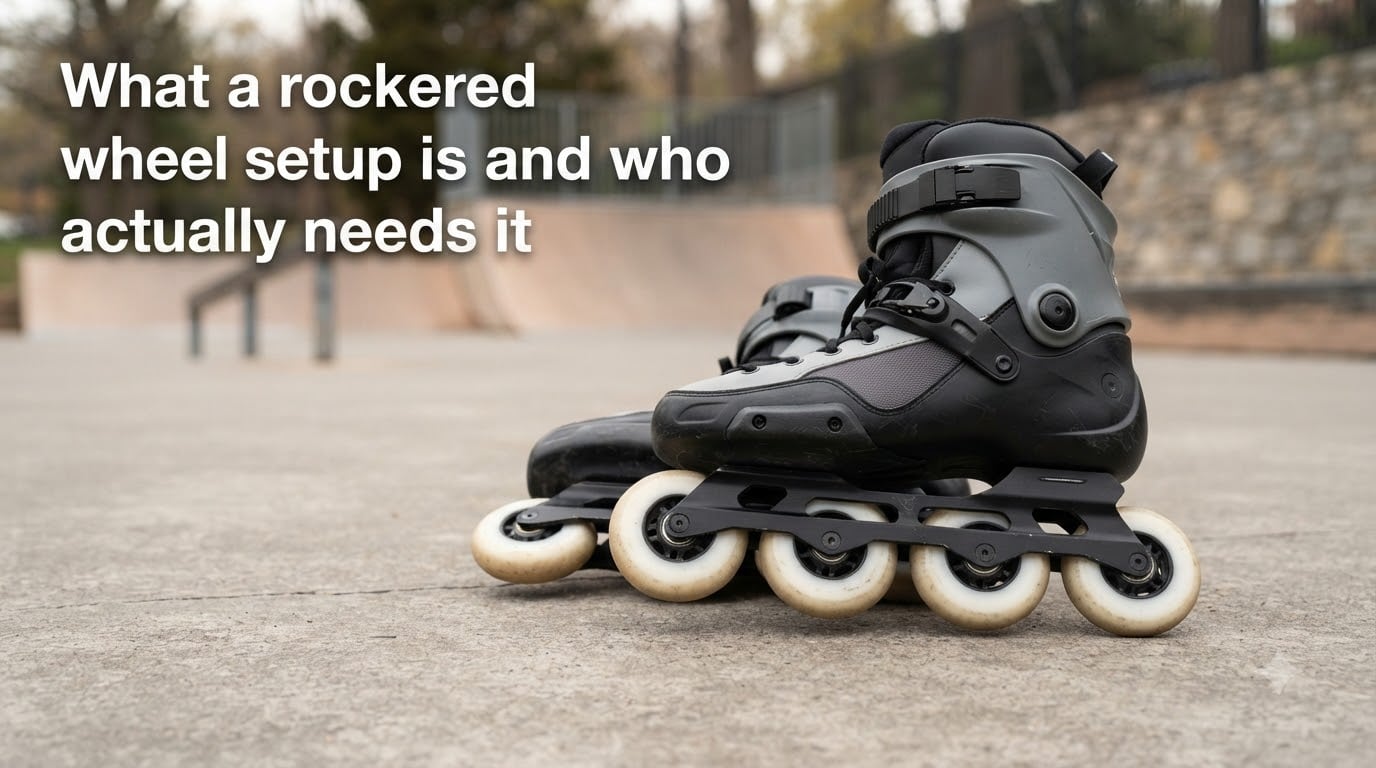
If you’ve ever watched slalom skaters weave between cones like they’re dancing on pavement, or seen urban freeskaters pivot on a dime around city obstacles, you were probably looking at a rockered wheel setup in action.
I get asked about rockering all the time at our shop, and the confusion is understandable. Most skates ship in a “flat” configuration where all four wheels touch the ground evenly. A rockered wheel setup is different: the wheels are mounted at different heights so only some of them touch at once. This small change has a massive impact on how your skates behave.
In this guide, I’ll walk you through exactly what a rockered wheel setup is, how it works, the different variations, and most importantly, who actually needs one. Whether you’re a complete beginner or a seasoned skater considering the switch, you’ll know by the end whether rockering is right for your style of skating.
Table of Contents
What Is a Rockered Wheel Setup?
A rockered wheel setup is a wheel configuration where inline skate wheels are mounted at different heights so not all wheels touch the ground at the same time. The middle wheels (or sometimes the outer wheels) sit lower, while the others are raised slightly, creating a curved contact pattern similar to an ice skate blade.
Think about the blade on an ice skate. It’s curved front-to-back, so only a portion of it touches the ice during any given stride. That curve is what lets ice skaters carve, turn, and pivot so naturally. Rockered inline skates use the same principle.
In a typical 4-wheel rockered setup, only two or three wheels contact the ground at once. The front and rear wheels are slightly raised, leaving the middle wheels to do most of the work. This reduces your effective wheelbase and changes how your weight transfers during turns.
How does this actually work mechanically? When you shift your weight forward, the front wheel lowers and gains grip. Lean back, and the rear wheel engages. The middle wheels stay planted the whole time. This mimics the way an ice blade curves through a turn, letting you rock smoothly from edge to edge instead of fighting a flat, planted platform.
The amount of “rocker” is measured in millimeters of wheel size difference. A common setup uses 76mm wheels in the middle and 80mm wheels on the ends, giving you a 4mm rocker. Aggressive setups might use 72mm outer wheels for a deeper curve.
Flat vs Rockered: What’s the Difference?
The flat setup is the default configuration most inline skates ship in. All four wheels are the same size, sit at the same height, and contact the ground simultaneously. This gives you maximum stability, top speed, and predictable straight-line performance.
A rockered wheel setup sacrifices some of that stability for dramatically improved maneuverability. With fewer wheels on the ground at any moment, your effective wheelbase shrinks and your skate can pivot faster.
Here’s how they compare in real use:
Stability: Flat wins. Four contact points resist wobble at speed better than two or three.
Maneuverability: Rockered wins by a wide margin. Tighter turns, quicker pivots, more responsive edge changes.
Top speed: Flat is faster because all four wheels push against the ground.
Slalom and tricks: Rockered is built for this. Slalom cones and urban obstacles become much easier to navigate.
Learning curve: Flat is more forgiving for beginners. Rockered has a steeper adjustment period.
I learned this the hard way during my first season of aggressive skating. I tried to bomb hills on a fully rockered setup and quickly learned that wobbling at speed is a real problem. Once I switched to flat for distance skating, the wobble disappeared entirely.
The choice between flat and rockered comes down to what you actually do on skates. If you’re commuting, doing long distance, or just starting out, flat is the right call. If you’re slaloming, freestyling, or skating urban environments where quick direction changes matter, rockering is the upgrade you want.
Types of Rockered Wheel Setups
Not all rockered setups are the same. The rocker can be applied to the front, rear, or both ends of your frame, and the wheel sizes you choose change how each one feels. Here are the main configurations skaters use today.
Front Rocker
A front rocker raises only the front wheel, leaving the rear three wheels flat. This setup gives you quicker turn initiation because the front wheel can lift and pivot more easily, while the rear stays planted for stability and power transfer. It’s a great middle-ground option for skaters who want better maneuverability without sacrificing too much straight-line stability.
Full Rocker (Banana Rocker)
The full rocker, also called a banana rocker, raises both the front and rear wheels equally. This creates a symmetrical curve across the entire frame, similar to the blade of an ice skate. Banana rockers are the most maneuverable configuration and are the go-to choice for slalom skaters and freestyle inline.
In a typical banana rocker on a 4-wheel frame, the front and rear wheels are 2-4mm smaller than the middle pair. On a 3-wheel setup like aggressive skates, the center wheel stays smaller while the outer two are larger.
HiLo Setup
A HiLo setup uses larger wheels in the middle and smaller wheels on the outsides, but the difference is often more pronounced than a banana rocker. The classic HiLo uses 80mm middle wheels and 76mm outer wheels, creating a noticeable curve. HiLo is popular for urban and freeride skating because the larger middle wheels roll over cracks and rough pavement better, while the rockered outer wheels keep things nimble.
Full HiLo Rocker
The full HiLo rocker combines the HiLo wheel arrangement with additional rocker between the two middle wheels. So you have large outer-middle wheels, smaller inner-middle wheels, and small outer wheels. This creates a deeper curve and even more pivot capability. It’s less common for beginners but experienced slalom skaters love the control it gives them.
Anti-Rocker
Anti-rocker is the opposite approach. Instead of using smaller wheels on the outsides, anti-rocker setups put small, hard plastic wheels (sometimes called “grind wheels”) on the inside positions. The middle wheels are larger and contact the ground, while the inner anti-rocker wheels stay raised.
Anti-rocker setups are almost exclusively used in aggressive inline skating. The small inner wheels provide a groove for grinding rails and ledges, while the larger outer wheels handle rolling. If you’re not doing grinds, anti-rocker won’t help you and will actually hurt your maneuverability.
Benefits of a Rockered Wheel Setup
Why do experienced skaters go through the trouble of rocking their wheels? The benefits are real and specific. Here’s what a rockered wheel setup actually gives you.
First, maneuverability. This is the headline benefit. With fewer wheels on the ground, your skate can change direction faster. Slalom skaters can weave through tighter cone patterns, urban skaters can dodge obstacles quickly, and freeskaters can pivot on a dime for tricks.
Second, carving and flow. A rockered setup lets you rock the skate from edge to edge, similar to carving on a snowboard or surfing. The curve creates a natural pivot point at your center of gravity, making S-turns and smooth carves feel almost effortless.
Third, tighter turning radius. Flat setups have a wider minimum turning radius because all four wheels have to travel the arc. Rockered setups can pivot around the middle wheels, dramatically shrinking your turning circle.
Fourth, better control at low speeds. Counterintuitively, a rockered setup can be easier to control at walking pace because you can shift your weight onto the front or rear wheel deliberately. Flat setups can feel “stuck” when you’re not moving fast.
Fifth, reduced wheel bite. On flat setups, all four wheels push against the ground during sharp turns, which can cause the inside wheel to “bite” or grab. Rockered setups lift the inside wheels slightly, reducing bite and making slides more predictable.
Drawbacks and Considerations
Rockered setups are not all upside. There are real trade-offs to consider before you start swapping wheel sizes.
The biggest drawback is reduced speed and wobble at high speeds. With fewer wheels on the ground, you have less grip and less stability when you’re going fast. Long-distance skaters and downhill skaters almost always prefer flat setups for this reason. If you try to bomb a hill on a fully rockered setup, expect some serious speed wobbles.
There’s also a learning curve. Rockered setups feel unstable at first, especially if you’ve been skating flat for a long time. Your ankles work harder because they have to compensate for the constantly shifting balance. Reddit skaters regularly report ankle soreness during the first few weeks of transition.
Wheel selection becomes more complex. You need to source multiple wheel sizes, and not all wheels in the same durometer are made in every size. Budget-conscious skaters sometimes struggle to find affordable rockered wheel combinations.
Finally, rockered setups aren’t ideal for backwards skating. One beginner on Reddit asked why they couldn’t turn backwards on their rockered skates, and the community pointed out that the rear wheel sitting higher makes reverse pushing feel strange. It takes time to learn to weight the rear wheel properly when going backwards.
Who Actually Needs a Rockered Setup?
Here’s the honest answer: most skaters don’t need a rockered wheel setup, but specific skating styles benefit enormously from one. Let me break it down by discipline.
Slalom Skaters
If you’re serious about slalom skating, a rockered wheel setup isn’t optional, it’s essential. Slalom requires tight, precise turns around cones, and the only way to get that level of agility is with a rockered or HiLo setup. Most competitive slalom skaters use a full banana rocker or full HiLo rocker.
Freestyle and Freeskate Skaters
Freeskaters doing tricks, spins, and slides benefit from the pivot capability a rockered setup provides. If you’re learning to do 360s, soul grinds, or any rotation-based trick, rockering makes the skate more responsive to weight shifts.
Urban Skaters
Urban skating involves weaving around pedestrians, hopping curbs, and navigating tight spaces. A rockered setup helps with quick direction changes and makes the skate feel more “alive” under your feet. Many urban skaters use a HiLo or front rocker setup as a compromise between maneuverability and stability.
Aggressive Skaters
Aggressive inline skaters typically use anti-rocker setups because the small inner wheels create a grind groove. Standard rockering (where the outer wheels are smaller) is less common in aggressive skating.
Beginners
Here’s the part where I’ll be direct: most beginners should start with a flat setup. The Reddit skating community consistently recommends spending at least a month on flat skates before trying rockered ones. Flat setups are more forgiving, more stable, and easier to learn the basics on. Once you’ve got solid balance and can stop confidently, then experiment with rocker.
That said, some skate shops actually recommend rockered setups for beginners because the front rocker helps initiate turns, which can make learning to carve feel more intuitive. The Rockin’ Frames brand in particular has built its reputation around the idea that beginners learn faster on rockered frames. There’s a real debate in the community about this, and the honest answer is that it depends on the individual.
Distance and Speed Skaters
If you’re skating long distances, commuting, or chasing top speed, skip the rocker. You want all four wheels on the ground for stability, efficiency, and confidence at higher speeds. Inline hockey skates are almost always flat for the same reason.
How to Transition from Flat to Rockered?
If you’ve decided to try rockering, here’s how our team recommends making the transition. Start with a mild front rocker instead of going straight to a full banana. A front rocker gives you most of the maneuverability benefit with less of the stability trade-off.
Give yourself at least two to three weeks to adapt before deciding whether rockering works for you. Your ankles will be sore at first because they’re working harder. This is normal and goes away as you build strength.
Practice basic skills like balancing on one foot, pushing off, and stopping before you start working on slalom or tricks. The rockered setup changes how these fundamentals feel, and you want to rebuild your confidence with the new feel before moving on to advanced moves.
Finally, don’t be afraid to switch back to flat if rockered doesn’t feel right. Many skaters keep both flat and rockered frames and swap them based on what they’re skating that day. There’s no rule that says you have to commit to one setup forever.
Frequently Asked Questions
What are the benefits of rockered skates?
Rockered skates offer better maneuverability, tighter turning radius, smoother carving, easier pivoting at low speeds, and reduced wheel bite during sharp turns. They excel at slalom, freestyle, and urban skating where quick direction changes matter more than top speed.
What’s the difference between flat and rocker skating?
In a flat setup, all four wheels touch the ground evenly for maximum stability and speed. In a rockered setup, the front and rear wheels are raised so only 2-3 wheels contact the ground, dramatically improving maneuverability but reducing top speed and high-speed stability.
What do anti-rocker wheels do?
Anti-rocker wheels are small, hard plastic wheels placed in the inner positions of an aggressive inline skate frame. They stay raised off the ground during normal skating but create a groove for grinding rails and ledges. The outer wheels do the actual rolling.
Are 99A wheels too hard for rockered setups?
99A durometer wheels are quite hard and work well for rockered setups on smooth surfaces like rinks or polished concrete. For rough outdoor pavement, softer wheels (85A-88A) provide more grip and a smoother ride, which can help offset the reduced contact patch of a rockered configuration.
Should you rotate inline skate wheels on a rockered setup?
Yes, rotating your inline skate wheels is important regardless of setup. On a rockered setup, different wheels wear at different rates because they’re not all contacting the ground. Rotating them front-to-back and side-to-side helps maintain even wear and extends the life of your wheels.
Final Thoughts on Rockered Wheel Setups
A rockered wheel setup is one of those modifications that can completely change how your skates feel, for better or worse depending on your skating style. Slalom skaters, freestylers, and urban skaters will find rockering opens up new possibilities for tricks and flow. Distance skaters and beginners will likely prefer the stability of a flat setup.
If you’re unsure, start flat, build your skills, and experiment with a mild front rocker once you’re comfortable. You can always add more rocker later, or swap back to flat if it doesn’t suit you. The best setup is the one that matches how you actually skate, not what looks coolest on Instagram.