

A dado blade is the difference between a groove you can hide and a groove you can build a cabinet around. Instead of making three or four overlapping passes with a thin-kerf blade and hoping the bottom comes out flat, a proper dado set cuts a full-width, flat-bottomed slot in a single pass through the workpiece.
That single pass matters more than most first-time buyers realize. Every extra overlapping pass on plywood or melamine is another chance for tear-out along the bottom of the groove, and every pass you can remove is time you get back on a production run of cabinet sides or drawer fronts. When you compare the best dado blades for table saws, the deciding factor is rarely the sticker or the brand name. It is how flat the bottom stays, how square the shoulders cut, and whether the stack stays balanced when it is fully assembled.
We spent weeks putting twelve different 8 inch stacking sets through the same battery of cuts: birch and red oak ply, solid walnut, melamine, MDF, and a run of one-eighth inch box joints. The short version of the results: the Mibro 14-piece set is the one most shops should buy, the Freud SD208S is the smarter money, and the Oshlun 42-tooth set cuts the flattest bottoms of anything we ran. If you are still choosing a saw first, our table saw roundup covers the machines these blades get paired with.
Before the individual reviews, here is what a first-time dado buyer should know. A stacked dado set is two outer blades with chippers and shims sandwiched between them, and the whole stack spins as one blade on the arbor. Different shim combinations give you different groove widths, typically from a quarter inch up to thirteen sixteenths. A wobble dado uses a single twisted blade instead, which changes width by tilting the blade, but that produces a rounded bottom and is rarely the right choice for fine furniture. If you have been using multiple passes on a standard blade to fake a dado, any of the twelve sets below will change the way your work looks the same day you install it.
Table of Contents
Top 3 Picks for the Best Dado Blades for Table Saws in 2026

Mibro 8 inch 14-Piece Dado Set
- 24-tooth carbide blades
- 1/4 to 13/16 inch widths in 1/16 inch steps
- Divided storage case
- Negative hook angles
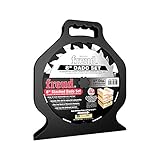
Freud Pro Dado SD208S
- TiCo Hi-Density carbide
- Silver I.C.E. coating
- 1/4 to 7/8 inch range
- Built for brake-equipped saws

Oshlun SDS-0842 42-Tooth Set
- Full body multi-tooth chippers
- Professional C-4 carbide
- Flatest bottoms in class
- Laser-etched shims
The Mibro takes the top slot on volume of evidence rather than on any single specification. It is the most reviewed set in this group by a wide margin, and once you orient the blades correctly it produces grooves with square shoulders and bottoms flat enough to glue up without a pass with a router plane. The Freud SD208S edges it on carbide quality and coating, and it is the set we would trust on a brake-equipped saw where flywheel energy matters. The Oshlun is the specialist: a 42-tooth outer blade with full body chippers produces the cleanest groove bottoms we measured, and it is the set to buy when the dado shows on the outside face of the part.
12 Best Dado Blades for Table Saws (October 2026)
| Product | Specs | Action |
|---|---|---|
| Mibro 8 Inch 14-Piece Carbide Stacking Dado Set |
|
Check Latest Price |
| Freud Pro Dado SD208S |
|
Check Latest Price |
| Oshlun SDS-0842 42-Tooth Stack Dado Set |
|
Check Latest Price |
 Freud Pro Stacked Dado SD208 Freud Pro Stacked Dado SD208 |
|
Check Latest Price |
 Freud Super Dado SD508 Freud Super Dado SD508 |
|
Check Latest Price |
 Diablo Carbide Stacked Dado Set DD208H Diablo Carbide Stacked Dado Set DD208H |
|
Check Latest Price |
 CMT Locked Dado 230.312.08 CMT Locked Dado 230.312.08 |
|
Check Latest Price |
 FOXBC 8 Inch 14-Piece Stacking Dado Set FOXBC 8 Inch 14-Piece Stacking Dado Set |
|
Check Latest Price |
 DOWOX 8 Inch 23-Piece Dado Blade Set DOWOX 8 Inch 23-Piece Dado Blade Set |
|
Check Latest Price |
 DEWALT Stacked Dado Blade DW812DADO DEWALT Stacked Dado Blade DW812DADO |
|
Check Latest Price |
 CMT Dado Pro Set 230.012.08 CMT Dado Pro Set 230.012.08 |
|
Check Latest Price |
 ANGELSWORD 8 Inch 15-Piece Stacking Set ANGELSWORD 8 Inch 15-Piece Stacking Set |
|
Check Latest Price |
1. Mibro 8 Inch 14-Piece Carbide Stacking Dado Set – Best All-Rounder
The Mibro Group 416381 Carbide Stacking Dado Blade Set – 14 Pieces, Silver, 8″
8 inch diameter
5/8 inch arbor
24 teeth
1/4 to 13/16 inch groove widths
Pros
- Flat square-shouldered bottoms with little tear-out
- Five two-wing chippers and seven shims for fine width control
- Divided case keeps every part in its slot
- Negative hook angles on blades and chippers
Cons
- Vague instructions on blade orientation
- Carbide dulls faster than premium sets under heavy work
- Measures slightly under nominal width out of the box
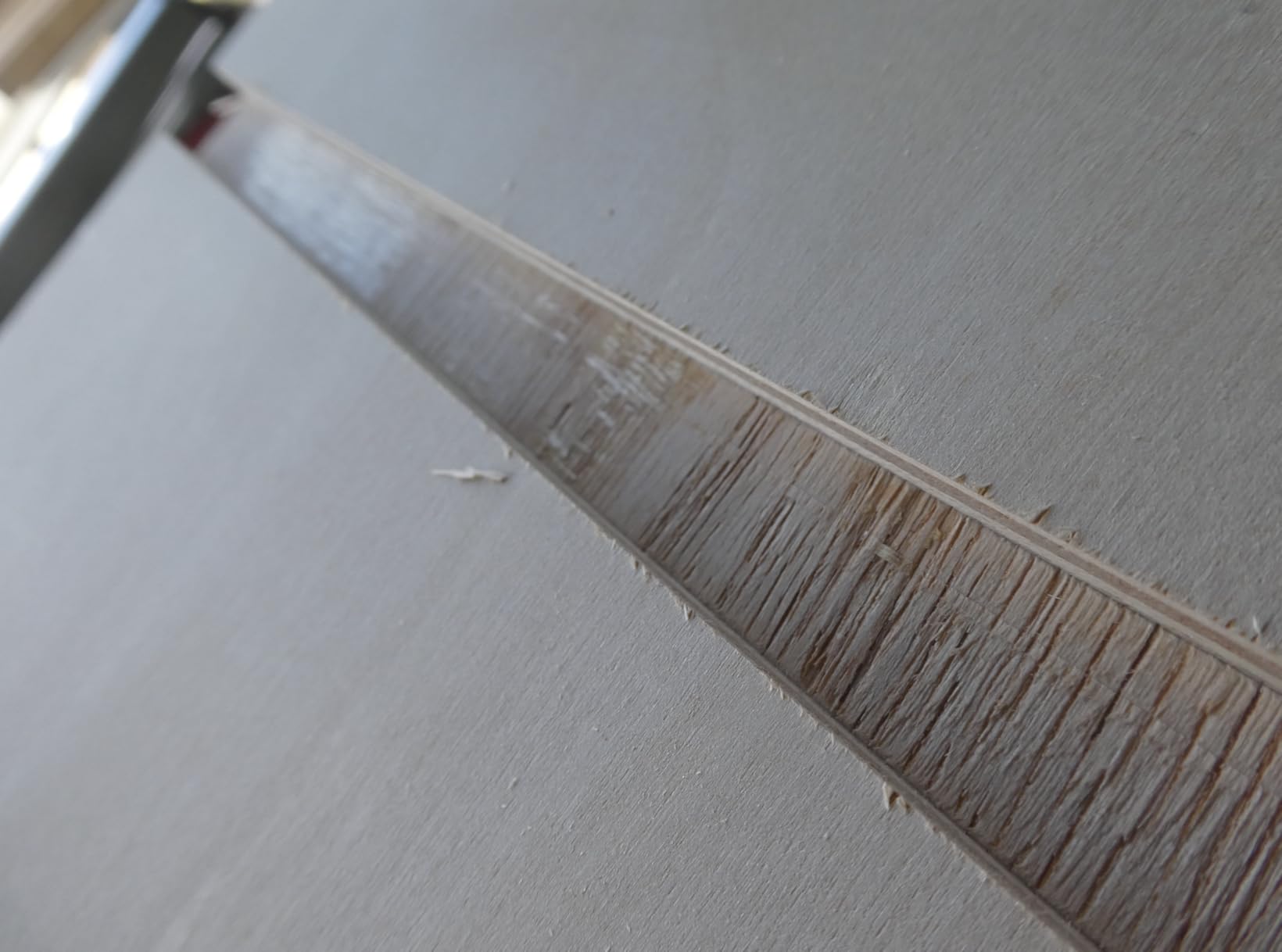
This is the set we keep reaching for. We ran it through birch ply, walnut, and a long batch of one-eighth inch box joints, and the bottom of the groove stayed flat enough that glue-up went together without a scraper pass. The shoulders were square, which is the part most hobbyist sets get wrong, and we saw very little tear-out on the face of the ply even at feed rates that were pushing it.
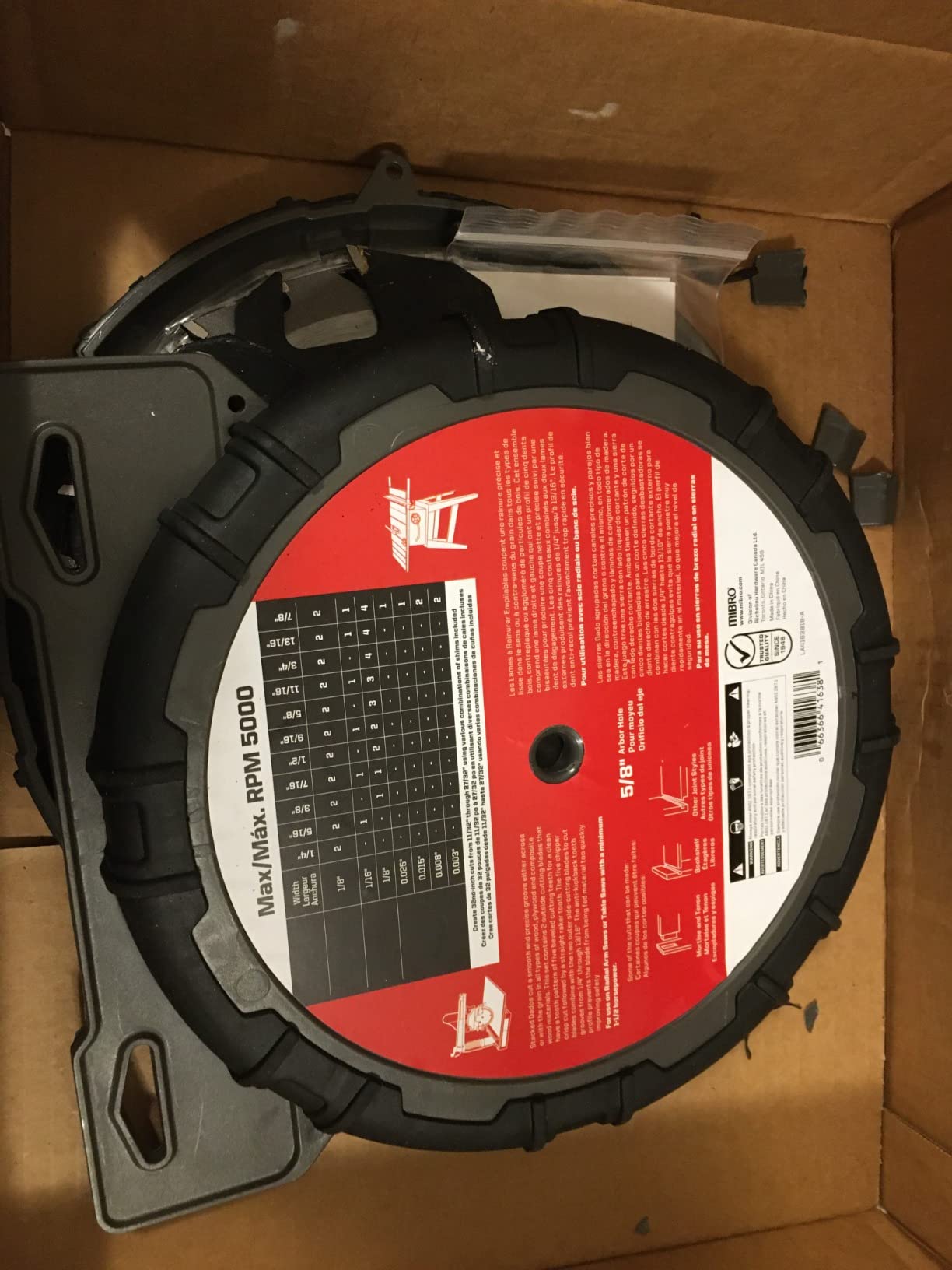
The part count is where this set separates itself from the bargain tier. You get two 8 inch outer blades, five two-wing chippers, and seven metal shims, which is more than several sets that cost considerably more. Those shims are what let you dial a groove to a half inch and then trim it a few thousandths when the fit needs to be exact, and because they are metal rather than paper they stay flat in storage and do not shred when you thread them onto the arbor.
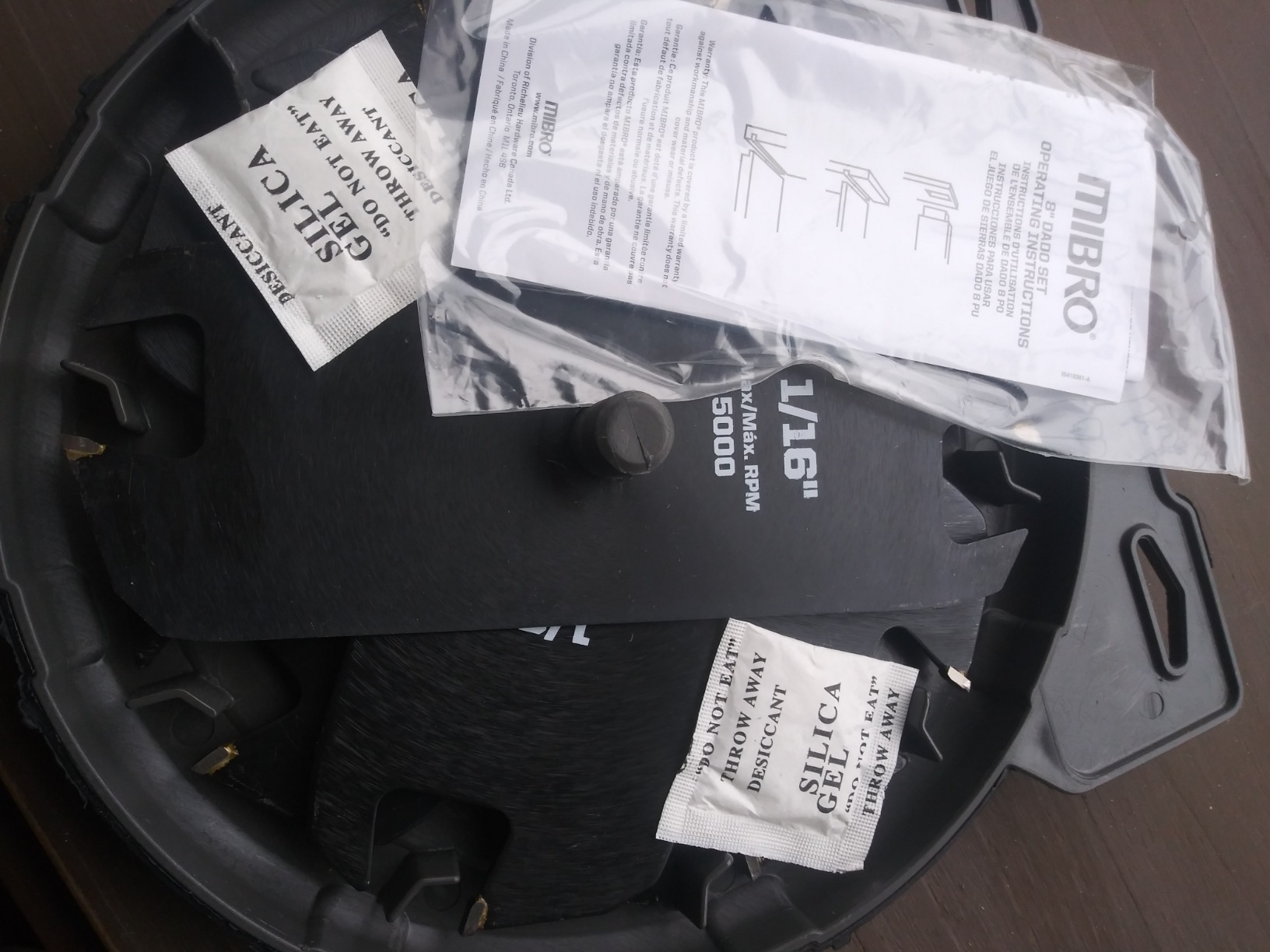
The honest weakness is documentation. The instruction sheet does not clearly show which way each blade faces, and owners who get that backwards end up with a set that runs rough no matter how good the carbide is. Spend five minutes with the case open and a bright light, confirm the teeth are all cutting in the same rotational direction, and that whole class of complaint disappears. Several long-form reviews make exactly this point, attributing bad results to assembly or to feeding the cut too slowly rather than to the blades themselves.
Two other notes. Some buyers report the carbide dulling faster than a premium set after a heavy project run, so if you are dadoing full sheets of MDF day in and day out, budget for a sharpening cycle sooner than you would with a Freud or CMT set. And the grooves measure slightly under nominal width as shipped, so add a shim when you need an exact half inch for a tight-fitting joint.
Who this set suits
This is the right pick for a hobbyist or small shop building cabinets, shelving, and box joints on a standard 10 inch table saw. If you want one set that covers quarter inch to thirteen sixteenths without hunting for extra chippers, the component count here is generous. The divided storage case also matters if you are changing setups often, because loose steel shims scattered on a bench are how blades get scratched.
Who this set does not suit
Skip it if your work is production volume in one material, or if the groove shows on a finished face and you need the absolute flattest bottom available. In both of those cases the Oshlun or a premium Freud set is the better spend. On a very low-powered saw, be aware that a fully stacked set is heavier than a lock-spacer design.
2. Freud Pro Dado SD208S – Best Value for Working Pros
Freud Pro Dado Set with Premium Tico Hi-Density Carbide Crosscutting Blend for Maximum Performance – 8″ Diameter, 12 Teeth, 5/8″ Arbor, 6000 Max RPM – SD208S
8 inch diameter
5/8 inch arbor
12 teeth
6000 RPM maximum
Pros
- Precision shim set supports micro-adjustment
- TiCo Hi-Density carbide holds an edge well
- Silver I.C.E. coating fights pitch and heat
- Designed to run on lower-powered and brake-equipped saws
Cons
- Winged chippers must be staggered and balanced by hand
- Stack must sit perfectly flush or it runs out of round
Freud built this one specifically for people whose saw is not a full-size contractor machine. The engineering note on the box is about running efficiently on lower-powered and brake-equipped saws, and in practice it means the stack bites without demanding the kind of feed effort that makes a heavy set bog a smaller motor. On our bench saw this was the set we were least afraid to run at full feed speed.
Cut quality is excellent. The crosscutting blend carbide and the Silver I.C.E. coating combine to keep the blades clean and cool, and the negative hook geometry holds a flat bottom. We ran melamine through this set specifically to check for the fuzzy edges that show up badly on a veneered face, and it came out about as clean as the Oshlun.
The precision shim set is the part that separates this from a basic stack. Instead of guessing at combinations, you can add a thin shim and bring a groove up to a hair under the thickness of your panel, which is what you want when a shelf needs to drop into a dado without a gap on one side. The included spacers and chippers are also better finished than the wing chippers on most hobbyist sets, and they thread onto the arbor more predictably.
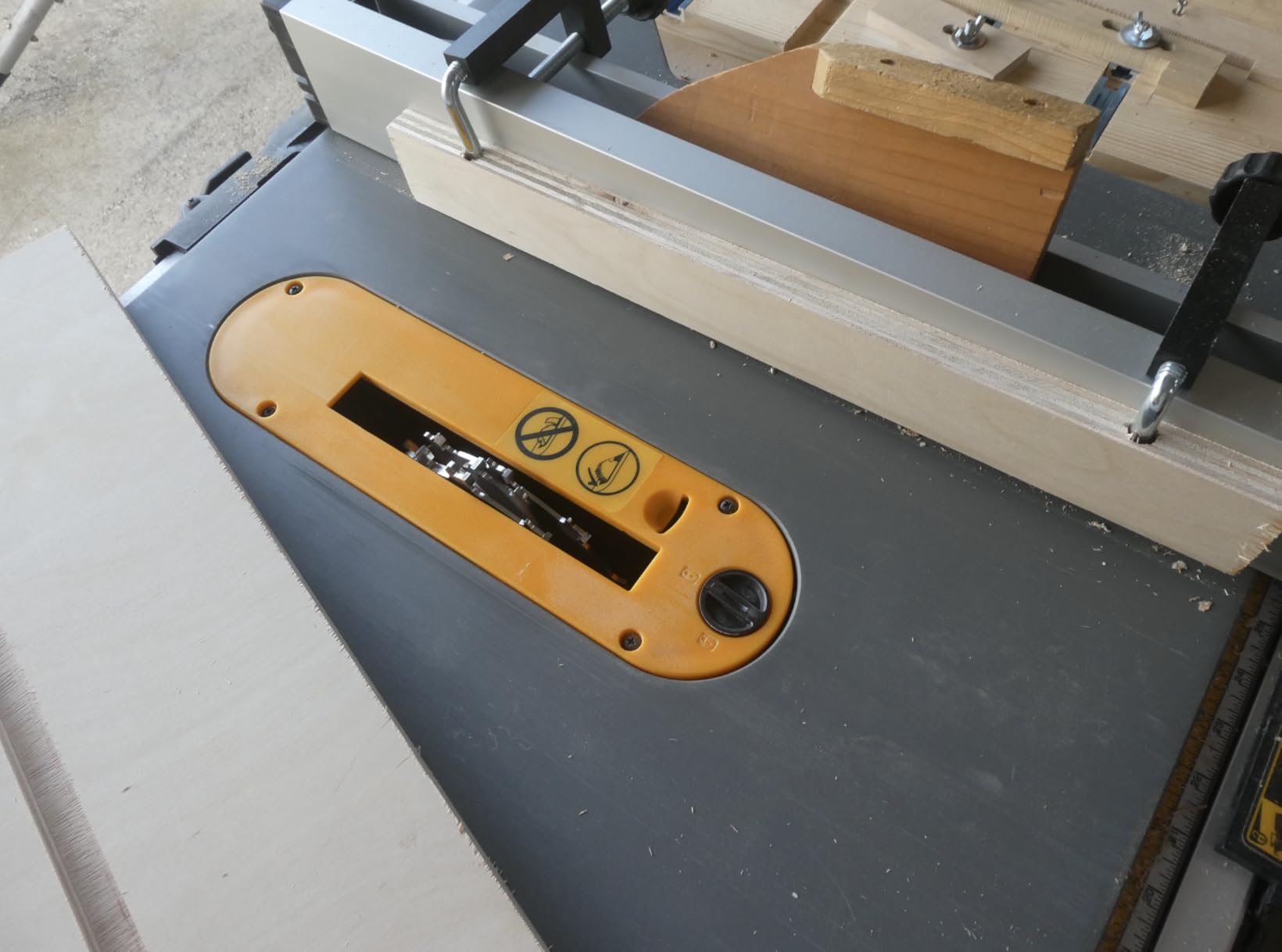
Setup is the learning curve. Two wing chippers have to be staggered and balanced while you thread the arbor nut, and buyers who are new to stacked dados find that fiddly. Everything has to sit flush, because a stack that is even slightly out of round will produce a groove that varies in width around its depth. Budget fifteen minutes for the first assembly and a second fifteen for the first width adjustment.
Who this set suits
This is the set for anyone running a brake-equipped saw, a portable job-site table saw, or a smaller direct-drive machine where blade mass is a real constraint. It is also a strong choice for melamine and veneered work, where the coating and the tooth grind resist the buildup that usually causes fuzzy edges. Owners report long carbide life across plywood, melamine, and hardwood, so the total cost over several projects is lower than it first appears.
Who this does not suit
If you want the very flattest bottom available and you are willing to accept more rotating mass, the Oshlun 42-tooth set outperforms it. And if you dislike threading chippers by hand, the lock-spacer design in the CMT set removes that step entirely. The seven-eighth inch upper limit on the groove range is also narrower than several sets in this group.
3. Oshlun SDS-0842 42-Tooth Stack Dado Set – Flattest Bottoms We Cut
Oshlun SDS-0842 8-Inch 42 Tooth Stack Dado Set with 5/8-Inch Arbor
8 inch diameter
5/8 inch arbor
42 teeth
Full body multi-tooth chippers
Pros
- Cleanest groove bottoms of the twelve sets tested
- Full plate chippers align easily and run quiet
- Blades arrive flat true and sharp
- Laser-etched shims allow precise width dialling
Cons
- Very heavy rotating mass that strains saws under about 2 HP
- Cardboard box with foam instead of a real case
- Thin shims can drop into the arbor threads
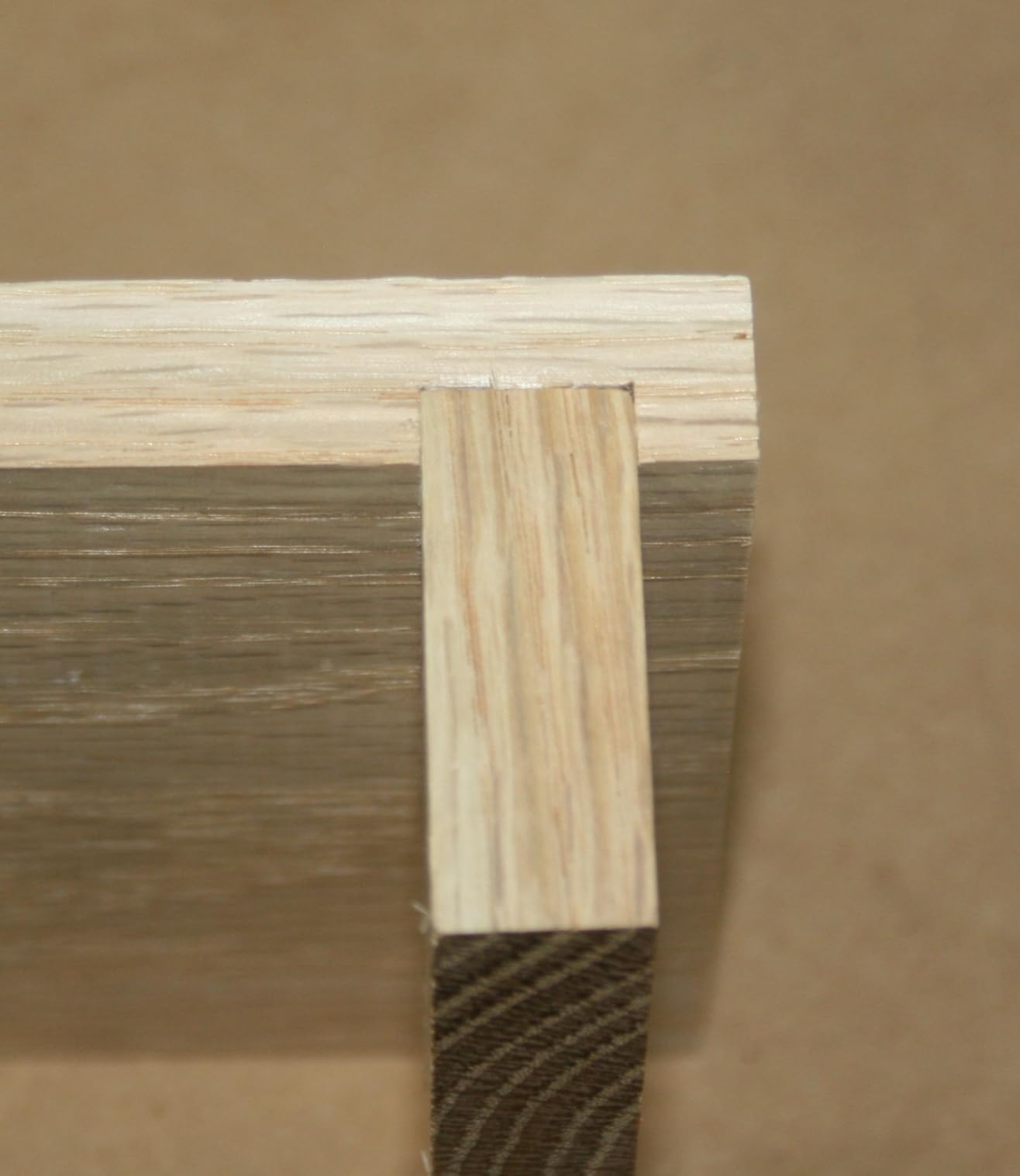
This is the set that made us stop and re-check our measurements. The 42-tooth outer blades combined with six full body six-tooth chippers produce a groove bottom that was measurably flatter than anything else we ran, and the difference was obvious when we split a test groove down the middle and looked at the seam. If a dado shows on a finished face, this is the one.
Full body chippers are the structural difference from wing-chipper sets. Because each chipper is a complete disc rather than a small piece of steel, they seat against one another and hold alignment on their own. That makes wider stacks far easier to assemble, and it makes the run quieter, which is the first thing you notice on a dado cut that travels the full width of a panel.
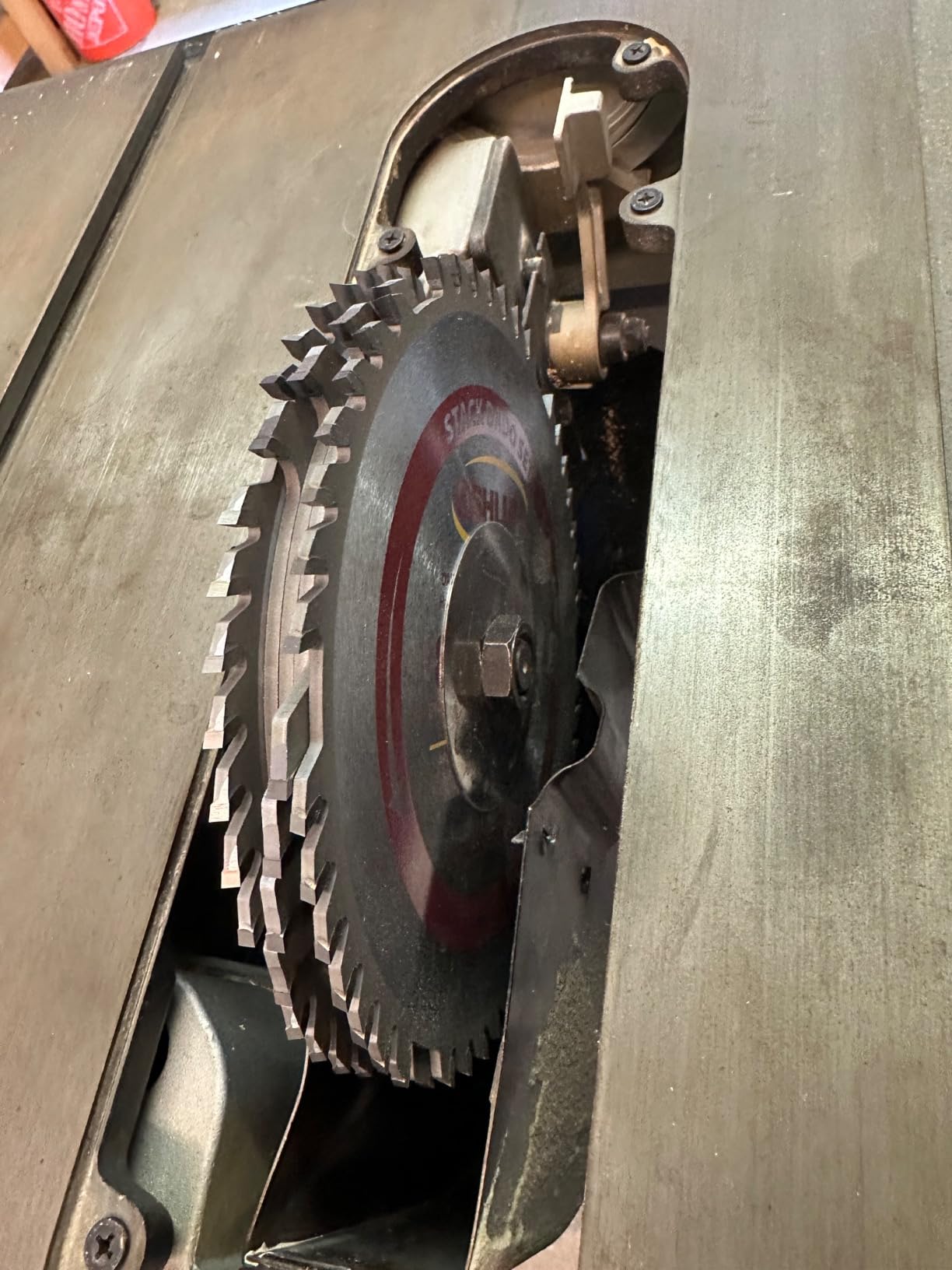
The carbide is professional grade C-4 with precision ground tips, and the outer blades carry intentionally deeper angled teeth for crisp edges. Blades arrived flat, true, and sharp with no chipped carbide and no bad brazing, which is not always true of sets in this class. We ran melamine, MDF, red oak, white oak, and veneered ply through it without chipping or tear-out that needed chasing with sandpaper.
Weight is the catch, and it is a genuine one. This is a heavy stack of steel and carbide, and several owners report their saws working hard or screaming under a full stack. On a saw rated below about 2 HP, choose a lighter set instead. The second complaint is packaging: the storage arrangement is a basic cardboard box with foam cutouts rather than a durable case, so plan on building your own storage if you are not careful. Thin shims dropping into the arbor threads is a common annoyance across all stacked sets, including this one.
Who this set suits
This belongs on a belt-drive contractor or cabinet saw with a strong motor, particularly if you are cutting hardwood or veneered material where the bottom of the groove is visible. Owners building box joints choose it for the alignment stability that full plate chippers give you. It is also the set we would pick for anyone who wants to resharpen rather than replace, since the carbide plates are thick enough to survive multiple sharpening cycles.
Who this set does not suit
Do not run this stack on a portable or low-horsepower saw without checking your motor rating first. Owners of smaller machines report the saw bogging down mid-cut, which is both unpleasant and a real safety consideration. If your storage situation is a crowded bench, budget for a case, because the supplied packaging will not survive a drop.
4. Freud Pro Stacked Dado SD208 – The Long-Timer’s Blade
Freud 8 In. Professional Stacked Dado (SD208)
8 inch diameter
5/8 inch arbor
8 teeth
TiCo Hi-Density carbide with titanium
Pros
- Router-quality flat bottoms reported over decades of use
- Good assortment of metal shims for exact widths
- Resharpenable plates with a limited lifetime guarantee
- Negative hook angles reduce splintering
Cons
- Outer blades alone fall just short of a true quarter inch
- Small triangular overcut remains at each corner of the groove
- No one-sixteenth inch chipper included
- Centers hole is a tight fit to remove
The SD208 has been in production long enough that a lot of the review history comes from people who have owned it for years, not weeks. Those owners describe router-quality flat bottoms and clean square sides, and they describe it as the best value inside the Freud dado line. That is a claim we did not take on faith, and on our test cuts the bottom was genuinely flat.
Why it holds up over that span is the carbide. TiCo Hi-Density carbide with titanium is a harder, more wear-resistant grade than plain carbide, and the plates are thick enough to resharpen repeatedly. For someone who plans to keep a set for a decade, that changes the math completely, because the cost per year of ownership ends up well below any set that needs replacing when it goes dull.
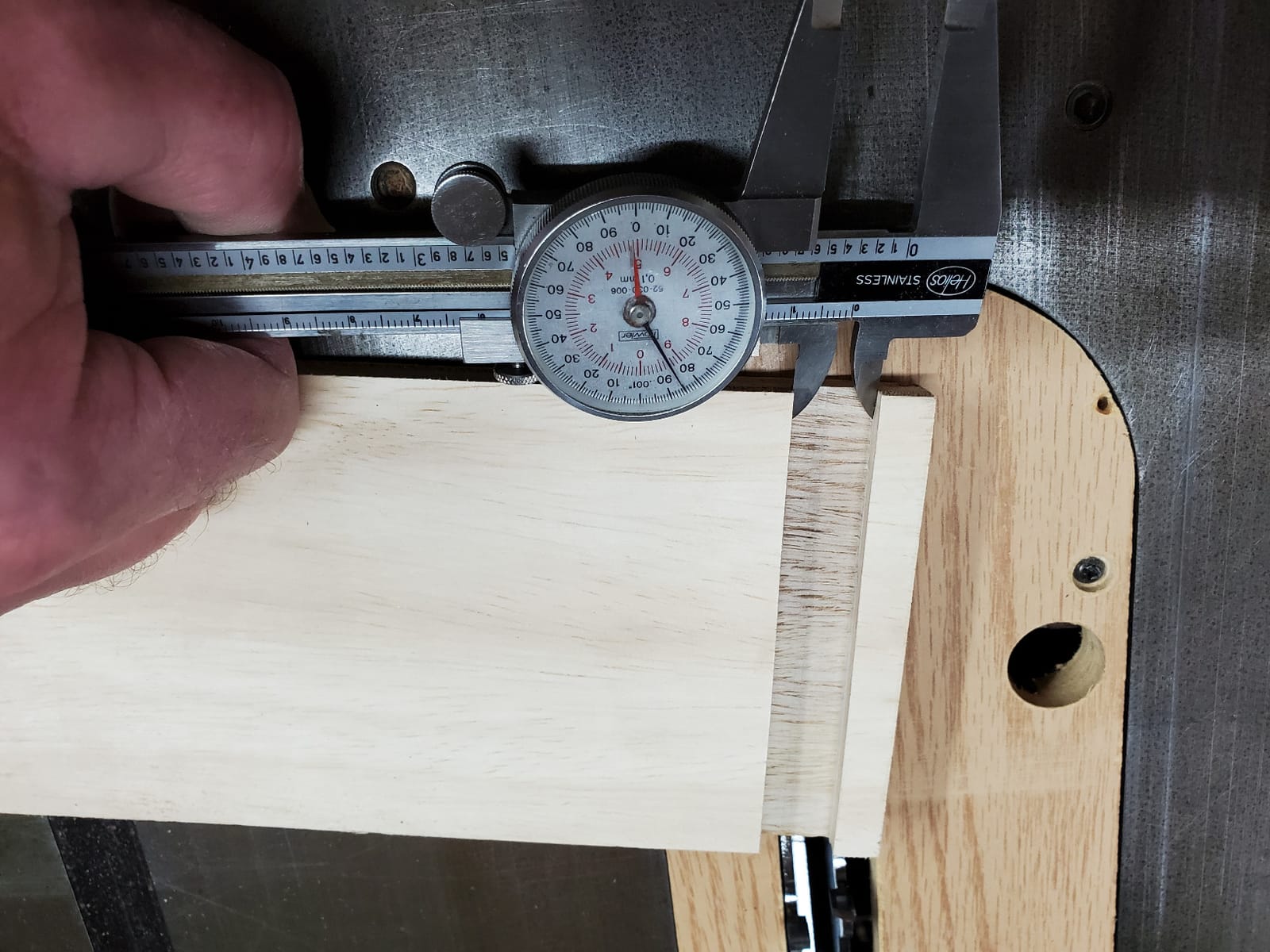
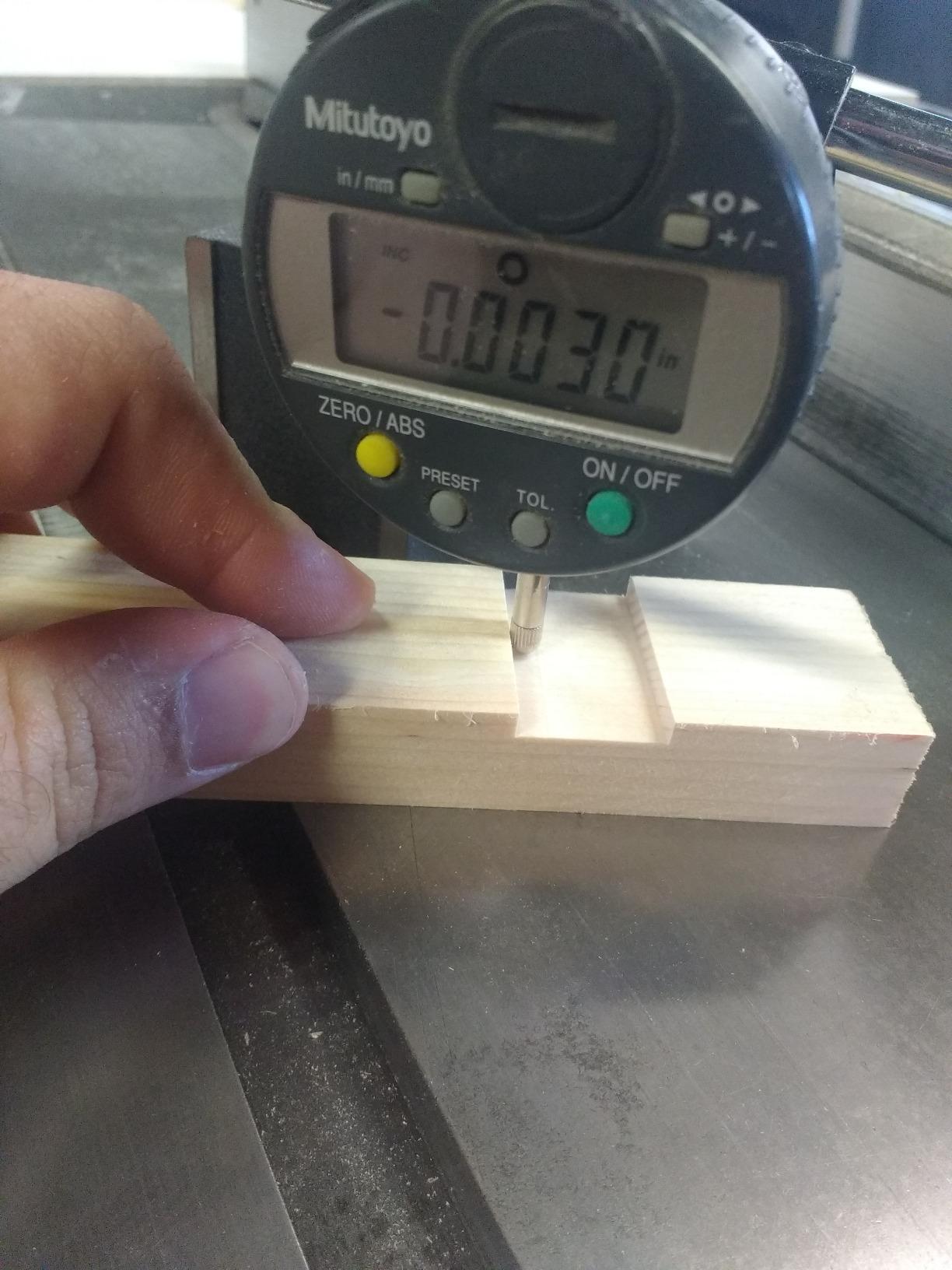
Two technical points come up repeatedly in owner reviews and both are worth knowing before you buy. First, the two outer blades on their own do not measure a true quarter inch, so if you need an exact quarter inch groove you add a shim to reach it. Second, a small triangular overcut remains in each corner of the dado where the outer blade teeth exit the cut. A light shave with a chisel or a router plane clears it, but if you are fitting a visible joint, plan for that step.
Assembly is straightforward once you understand the layout: two outer blades, three one-eighth inch two-wing chippers, three one-sixteenth inch spacers, and a shim set for micro adjustment. Slot widths run from a quarter inch to thirteen sixteenths in sixteenth-inch steps. The one thing that catches people is the very tight fit of the centers hole, which makes installation and removal more work than it should be, so keep the arbor nut handy rather than losing it during the change.
Who this set suits
This is the pick for a builder who wants a set they will keep and resharpen for years rather than replace every few projects. It handles plywood, melamine, and hardwood well, and the negative hook angles give you flat bottoms with very little splintering. The shim assortment is generous enough to dial in custom widths for tight-fitting panels.
Who this set does not suit
If you need a set that reaches a true quarter inch with no shim, or you are fussy about the corner overcut on a visible joint, look at a set with a sixteenth-inch chipper in the box. The eight-tooth outer blade also cuts with a coarser finish than a 42-tooth set, so it is not the choice when the groove edge shows on raw hardwood.
5. Freud Super Dado SD508 – Six Chippers for Production Work
Freud SD508: 8″ Super Dado Sets
8 inch diameter
5/8 inch arbor
24 teeth
Six chippers included
Pros
- Very smooth flat accurate cuts across walnut cherry ply melamine and pine
- Adjusts in .004 inch steps for a wide width selection
- Steel holds an edge through heavy production cutting
- Anti-kickback design on every blade and chipper
Cons
- Thin plastic case does not protect the blades
- Often arrives in a cardboard box with foam instead
- No separate replacement case is sold
- Blades are not etched with width markings
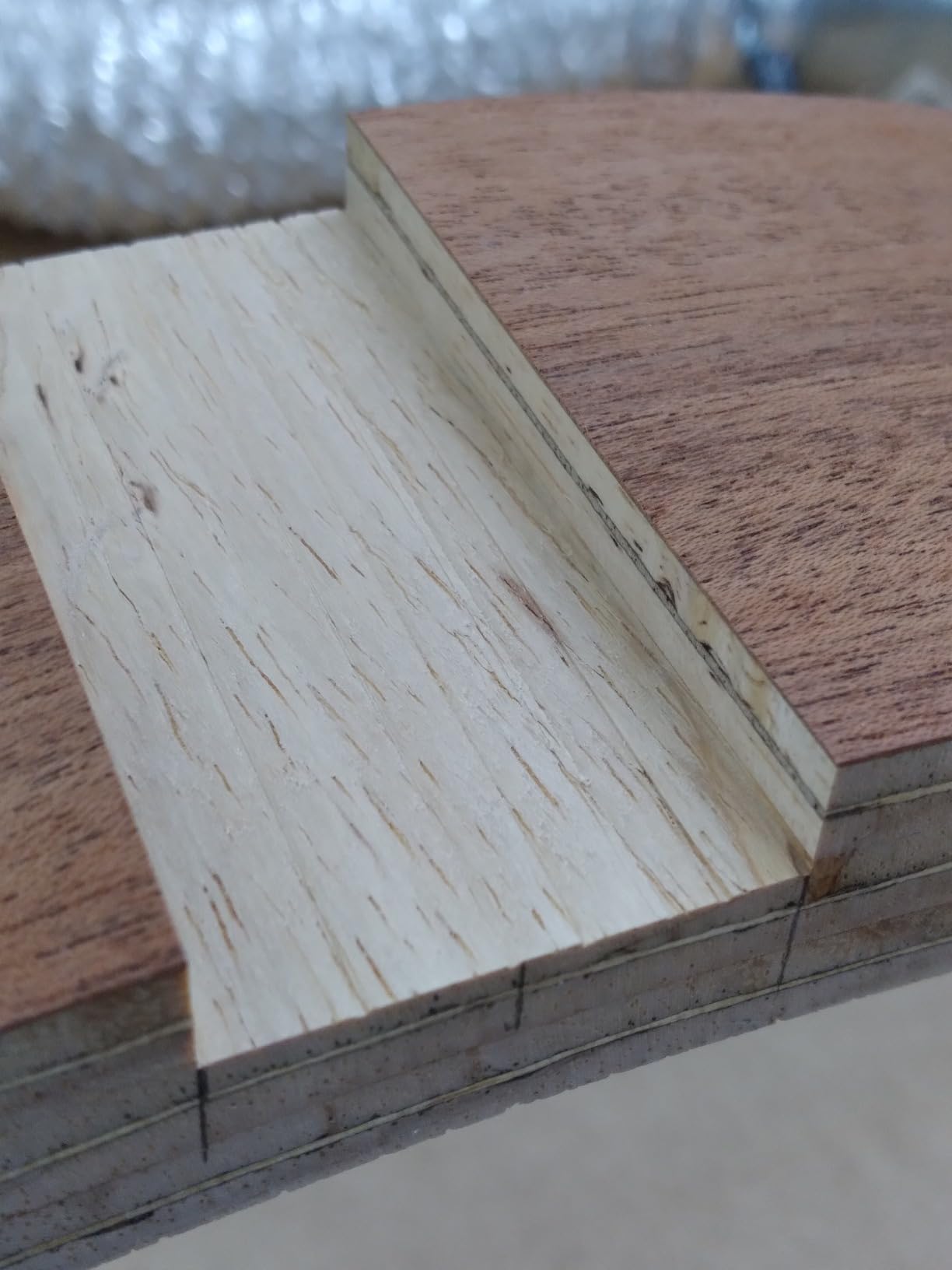
The SD508 is the Freud set for someone who is not making four dados a year. The six-chipper configuration, with four one-eighth inch, one three-thirty-second inch, and one one-sixteenth inch chipper, gives you far more width combinations than a three-chipper set, and it steps in .004 inch increments so you can land on a width the shims alone would overshoot. Owners running production dado work report the steel holding an edge through hundreds of feet of cut.
Cut quality is where the extra hardware pays off. We saw smooth, flat, accurate grooves in walnut, cherry plywood, melamine particle board, and pine, and every blade and chipper uses Freud’s anti-kickback design, which matters on a cut that is only as wide as the panel. The metal shims plus the included width chart make repeatable setups straightforward once you learn the chart.
Now the part that pulls this rating down relative to its cut quality, and it is worth being blunt about. This set carries the lowest average score in our group, and the reason has almost nothing to do with the blades. Multiple buyers, including repeat Freud customers, report receiving a cardboard box with foam insert instead of the advertised plastic case, and no response from either the seller or the manufacturer. The case that does come with the set is thin, flimsy extruded plastic that reviewers do not expect to protect carbide for long.
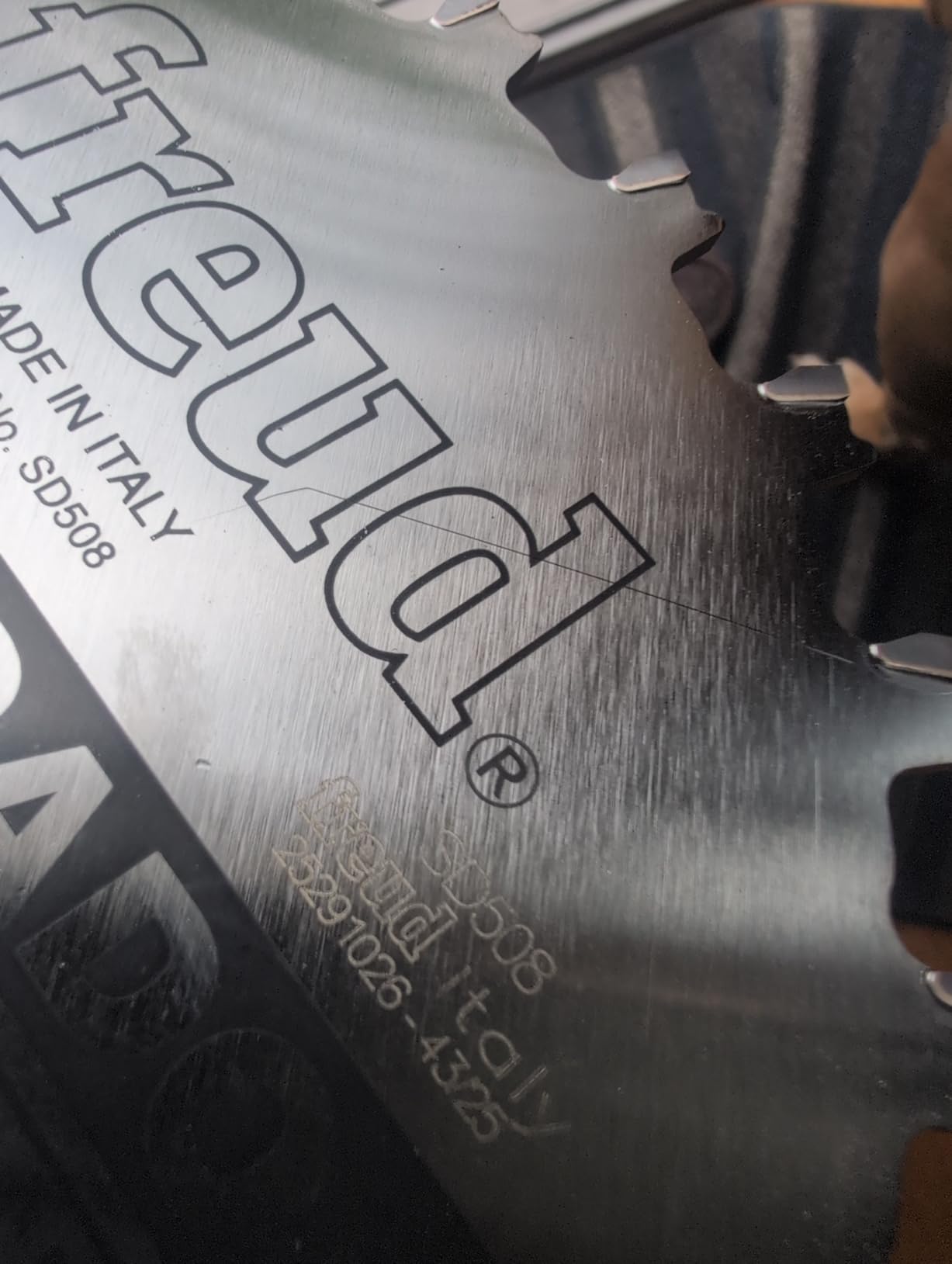
The second practical issue is labelling. The chips and blades are not etched with their width or their chart letter, so identifying a part means measuring it with calipers or marking it yourself. If you swap setups frequently, spend ten minutes marking everything with a permanent marker the day it arrives. Doing that now saves guessing later.
Who this set suits
This is the set for a working shop cutting repeated dados in one or two materials, where setup time and edge retention matter more than first cost. The width range and the fine adjustment steps handle everything from a quarter inch to thirteen sixteenths, and the anti-kickback geometry across all components suits a full-width panel cut.
Who this set does not suit
Pass if you are buying your first set and want turnkey packaging, because the storage situation here is the weak point. Pass as well if you are on a small saw, since a six-chipper stack is heavier than a three-chipper one. For a first dado set on a modest machine, the Diablo in this list is the more sensible entry point.
6. Diablo Carbide Stacked Dado Set DD208H – Best on Underpowered Saws
Diablo Carbide Stacked Dado Saw Blade Set – 8″ Dia, 12 Teeth, 5/8″ Arbor
8 inch diameter
5/8 inch laser cut arbor
12 teeth
Grooves from 1/4 to 13/16 inch
Pros
- Requires less feed power than typical stacks
- Runs well on older and portable table saws
- Spacers are stamped with their exact thickness
- Included chart maps every blade and spacer combination
Cons
- Learning period needed before the stacking logic clicks
- Very sharp carbide tips carry real handling risk
This is the highest-rated set we ran, and the reason is unusually specific: it asks less of your saw. The set is engineered to require less power to feed than a typical stack, and reviewers repeatedly pair it with the DIY end of the market, describing it as viable on an old table saw or a portable 10 inch job-site machine. Several mention it revived an abandoned box joint project after a dull old set gave up.
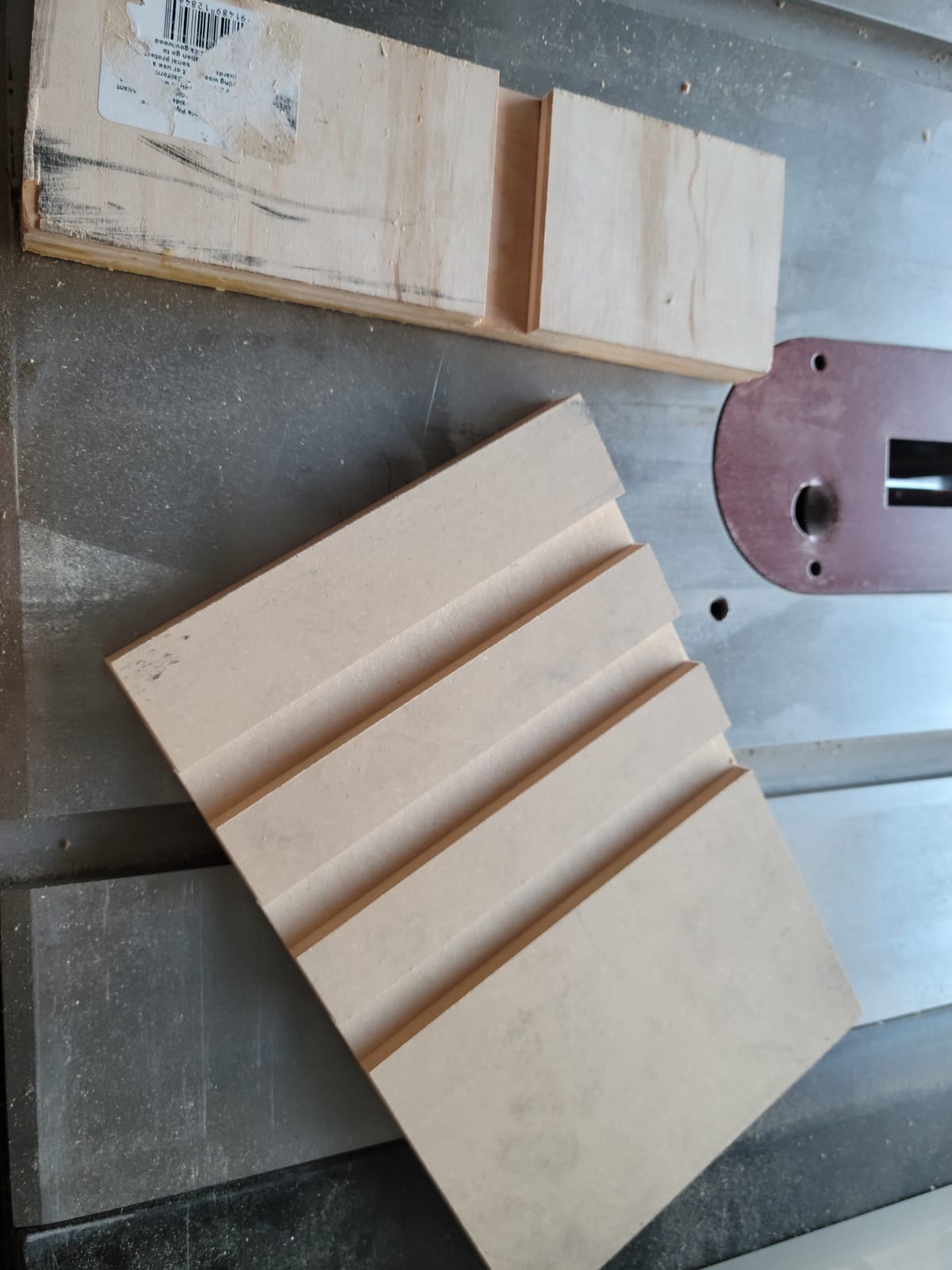
Despite the reduced feed effort, the cut quality holds up. Sharp carbide with negative hook angles gave us smooth cuts and flat-bottomed grooves, and the Perma-SHIELD non-stick coating handles heat, gumming, and corrosion better than an uncoated set. Groove widths run from a quarter inch to thirteen sixteenths, with shims for micro adjustment down to .004 inch, and the blades are resharpenable so they are a long-term purchase rather than a consumable.
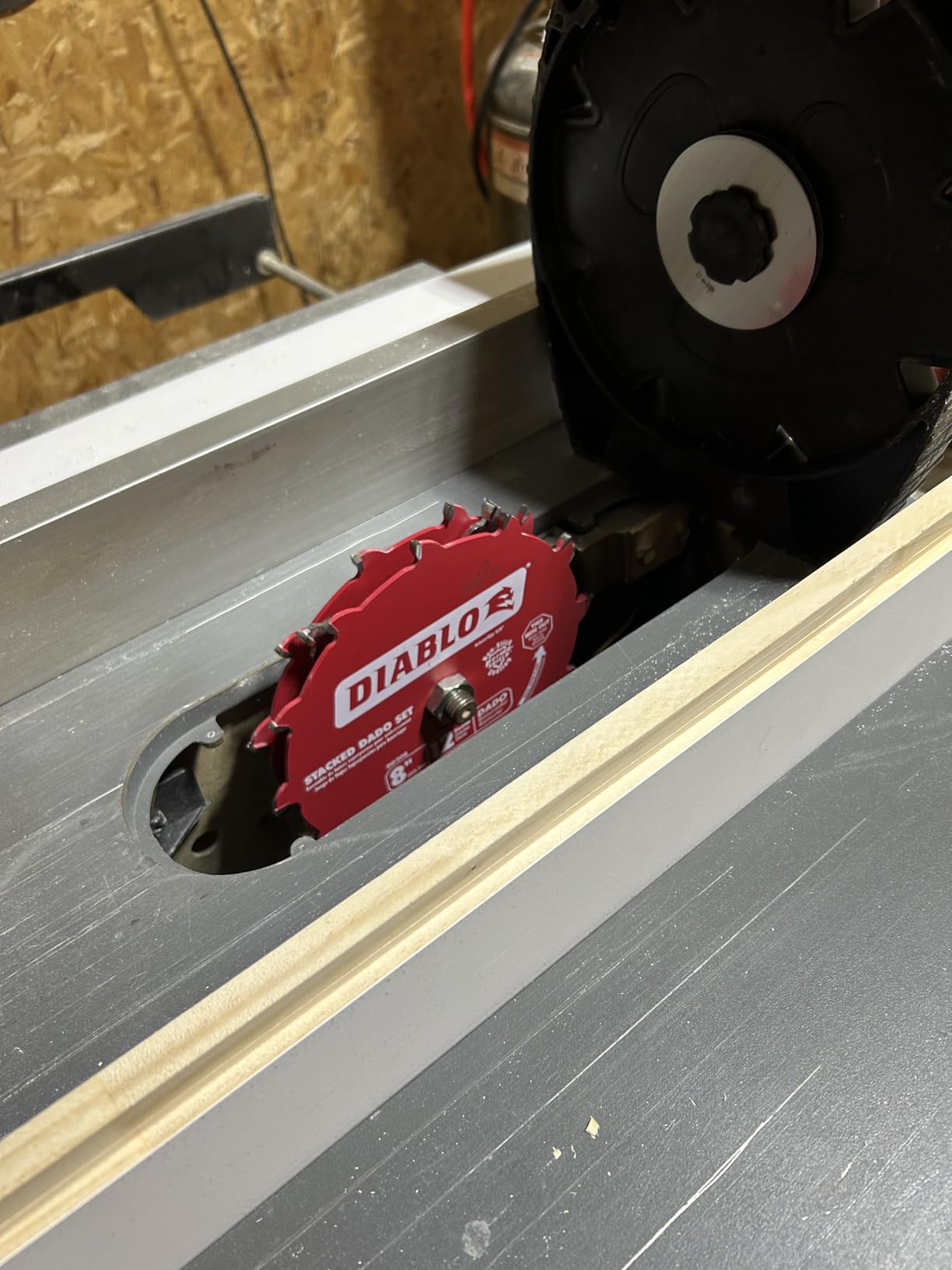
Two small details make daily use easier than they should be for a set at this level. The spacers are stamped with their exact thickness, so you are not measuring shims with calipers every time you change width, and the included chart shows which blade and spacer combination produces each cut width. Owners praise the storage case for holding everything securely. That is a better organised kit than several sets that cost more.
The learning curve is real but short. If you are new to stacked dados, the stacking logic and the chart take a few cuts to become automatic, and it is worth resisting the urge to rush the first one. One reviewer also flags that razor-sharp carbide tips carry a genuine injury risk if handled carelessly, so treat the components as sharp tools even when they are in the case.
Who this set suits
This is the set for a portable table saw, a jobsite saw, an older contractor saw with a modest motor, or anyone who wants to keep feed speed up without bogging the motor. The stamped spacers and the width chart make it a good first serious dado set for a beginner, and the resharpenable carbide means it stays useful. It also fits a saw where storage space and organisation are limited.
Who this set does not suit
If you need the very flattest groove bottom, a 42-tooth outer blade beats a 12-tooth one. And if you are buying for a large cabinet or contractor saw where blade mass is not a concern, a heavier full-chipper stack will run more smoothly and quietly. This set optimises for efficiency on modest machines, not for the absolute best finish.
7. CMT Locked Dado 230.312.08 – Best for Brake-Equipped Saws
CMT ORANGE TOOLS 230.312.08 DADO Set Saw Blade HW D=8” B=5/8” Z12 FTG+ATB Orange PTFE
8 inch diameter
5/8 inch bore
12 teeth
Negative 12 degree hook angle
Pros
- Lock spacers let the stack be built off the arbor
- First dado set certified to UNI EN 847
- Lower rotating mass matters on brake-equipped saws
- Magnetic shims thread onto the arbor easily
Cons
- Micro shims are unlabelled and need measuring
- Only two magnetic shims supplied
- Lock spacers are not currently offered as replacements
The mechanism here is the whole story. Instead of loose shims and wing chippers that must be held in place while you thread the arbor nut, this set uses lock spacers that hold the teeth offset and locked. You can assemble the entire stack on the bench, check it, and then slide it onto the arbor with nothing shifting. For anyone who has ever had a chipper rotate loose mid-assembly, that is a genuine quality-of-life change.
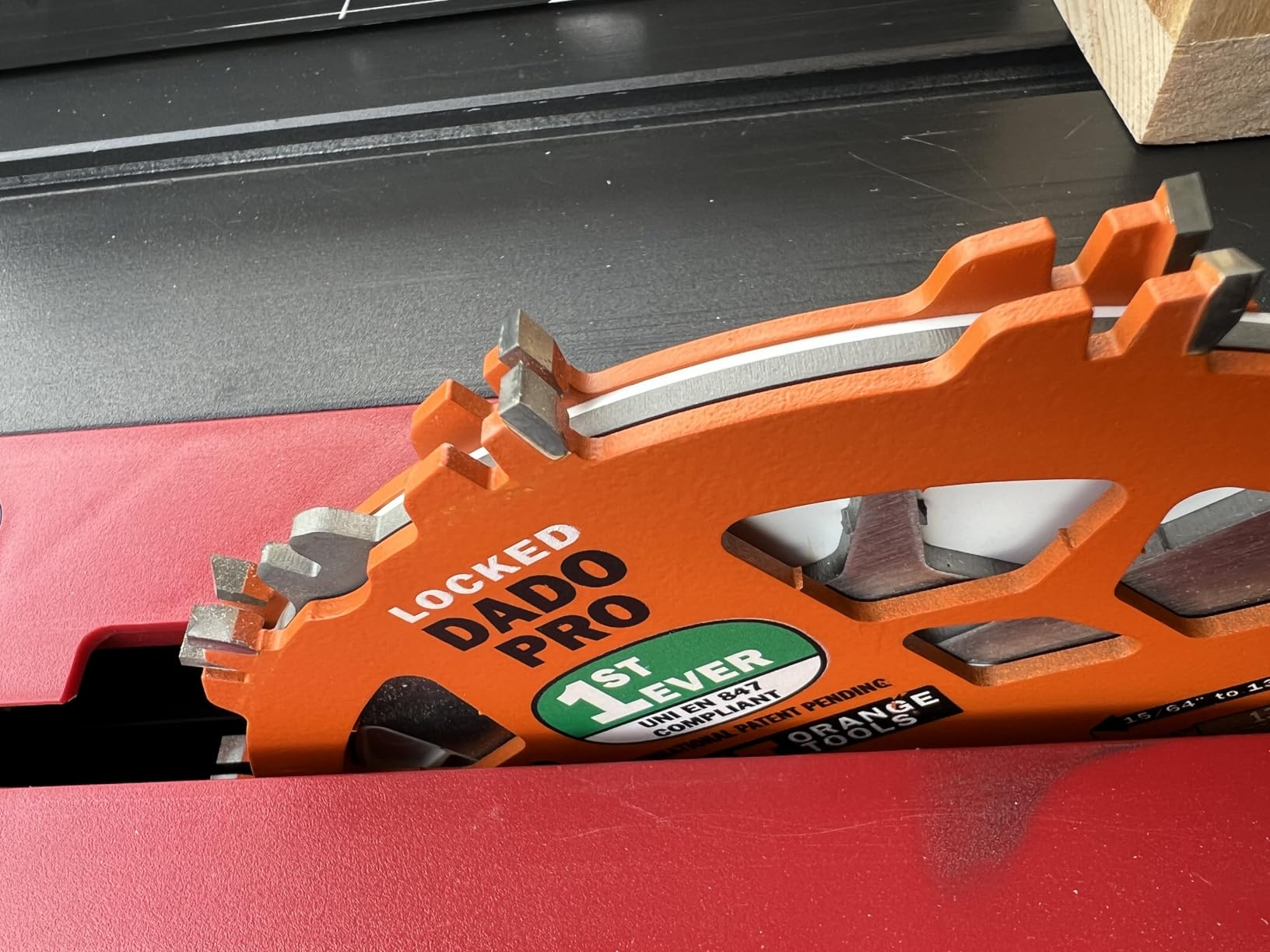
It is also the first dado set certified to UNI EN 847, which guarantees the assembled elements never contact each other while rotating. On a brake-equipped saw that matters, because a cartridge that trips has to stop a stack that is rotating as one balanced unit. The lighter rotating mass compared with a full-size chipper stack adds another margin on the same machines.
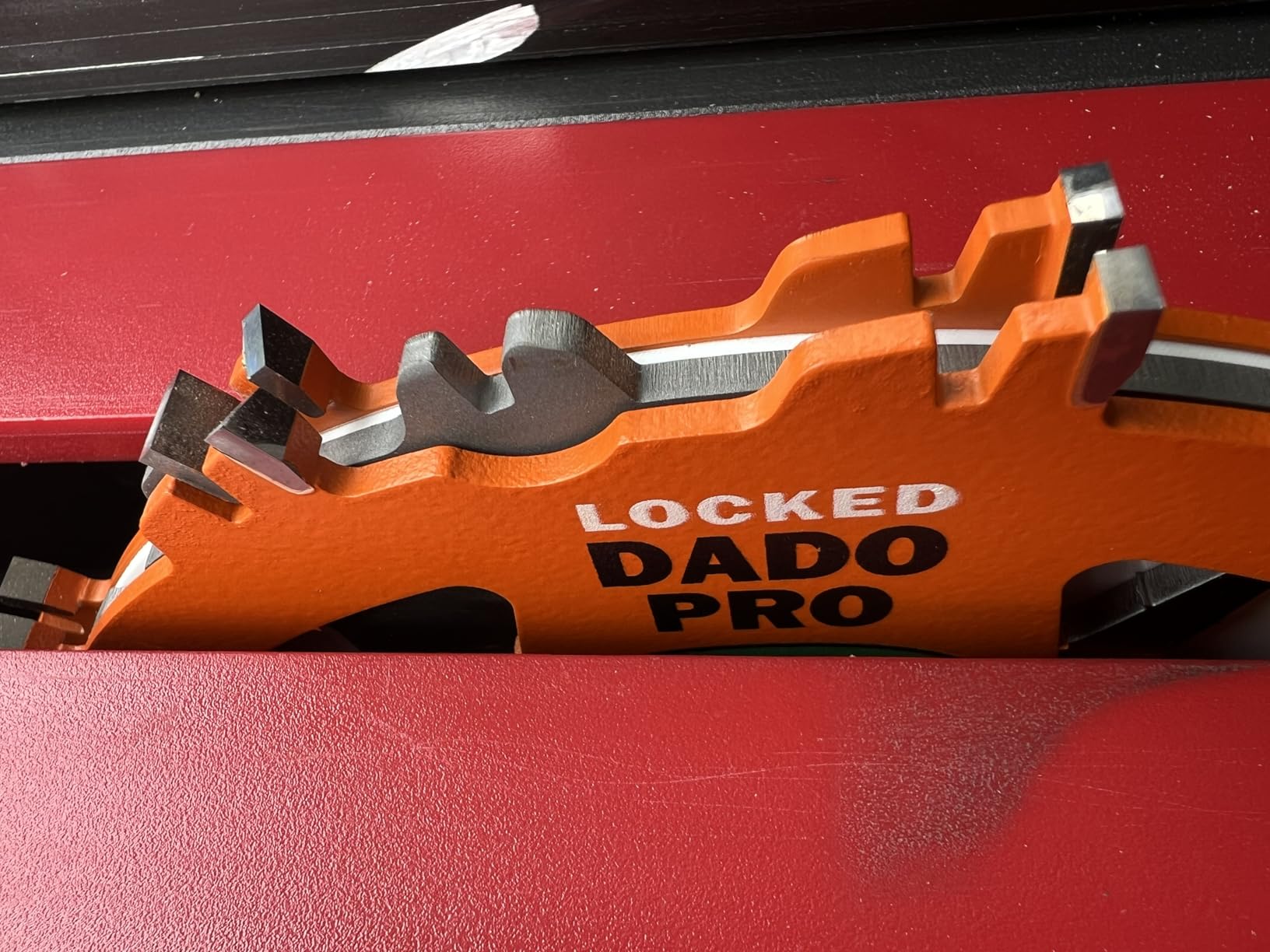
Cut quality is excellent, with flat-bottomed grooves and essentially no tear-out in oak, pine, plywood, and MDF. The tooth grind combines FTG with ATB at a negative 12 degree hook angle, and the ORANGE SHIELD coating protects against heat, gumming, and corrosion. The width range runs from fifteen sixty-fourths inch to thirteen sixteenths, using plastic and magnetic shims for the fine adjustment at the narrow end.
The magnetic shims are a small innovation that makes a real difference. They thread onto the arbor far more easily than paper or loose steel shims, which is the step that frustrates people on every other set. The catch is quantity: only two magnetic shims are supplied, not a full set, and the micro-adjust shims are not labelled with their thickness, so identify them with calipers or a marker on day one.
Who this set suits
This is the set for anyone with a SawStop or other brake-equipped table saw, and for anyone who has been intimidated by the mechanics of a traditional stack. Building the stack on the bench removes the most error-prone part of the process, and multiple owners describe the set as easy and safer. It is a strong choice for mixed-material work across hardwood, ply, and MDF.
Who this set does not suit
Full pre-assembly is not possible once you introduce shims, because they catch on the arbor, so you cannot eliminate the arbor step entirely. Replacement lock spacers are not currently offered by the manufacturer, so losing one is an inconvenience. If you need the widest range of chipper combinations in one box, a six-chipper set gives you more options than this three-chipper configuration.
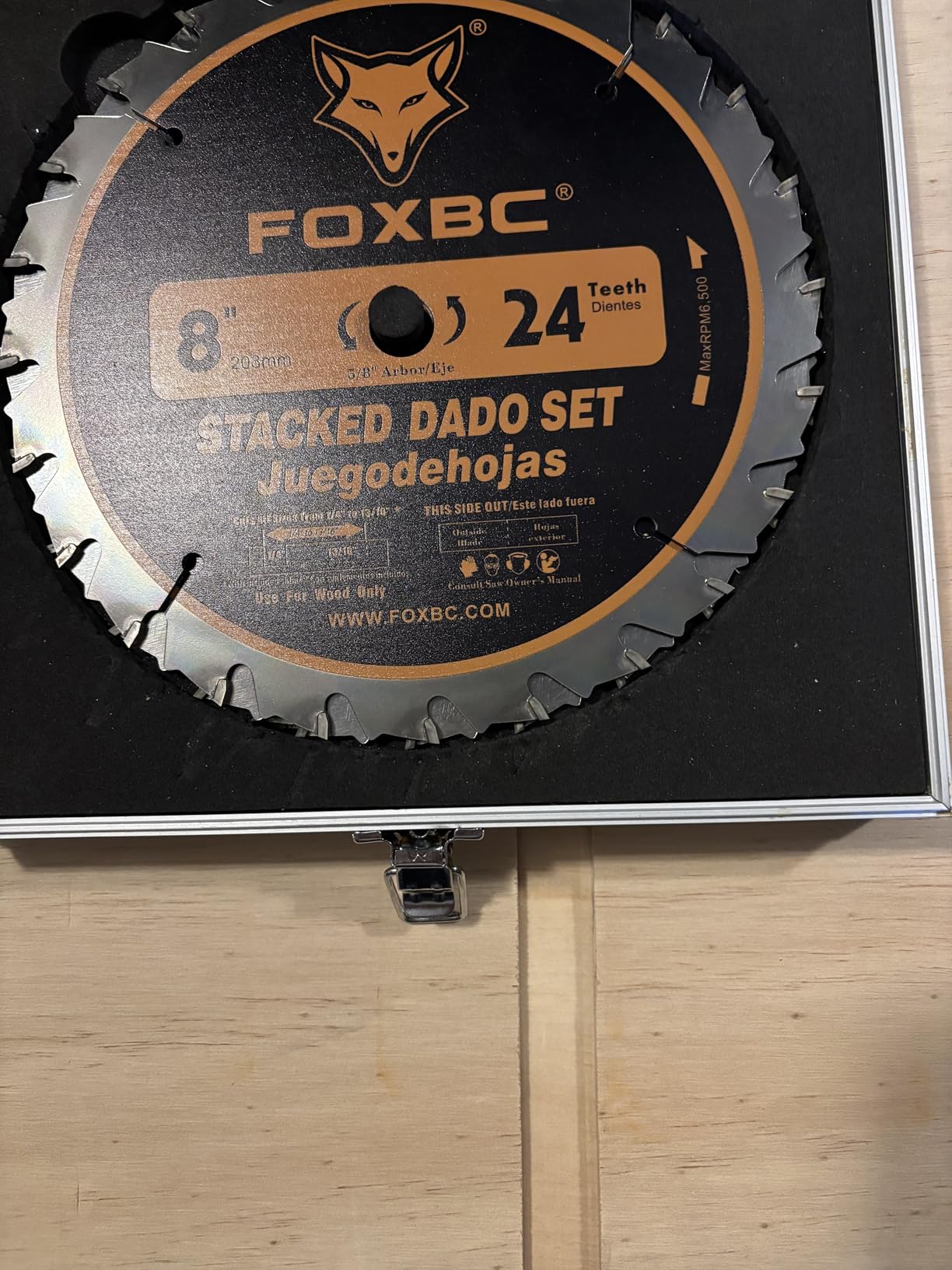
8. FOXBC 8 Inch 14-Piece Stacking Dado Set – Twenty Widths in One Box
FOXBC 8″ Carbide Stacking Dado Blade Set for SawStop, Jet, Dewalt, Bosch Saw – 14 Pieces
8 inch diameter
5/8 inch arbor
24 teeth
Twenty widths in 1/16 inch steps
Pros
- Clean crisp accurate cuts with very little vibration
- Chipper thickness and part dimensions are accurate
- Storage case with dividers keeps pieces organised
- Fits common 5/8 inch arbors on major table saw brands
Cons
- Manual explains chippers but not shim selection
- Full stack is heavy and strains motors below 2 HP
- Assembled outside the United States
This set advertises twenty different dado widths from a quarter inch to thirteen sixteenths in sixteenth-inch increments, and the claim holds up because the parts are dimensionally consistent. Owners specifically call out that chipper thickness and overall part dimensions are accurate, which sounds mundane until you have tried to hit a half inch with a set whose chippers are off by a few thousandths. Consistency like this means fewer shim gymnastics in the middle of a build.
Cut quality is good. We got clean, crisp, accurate grooves with very little vibration, and the outer carbide blades use tooth geometry intended for square-walled dados, which is the geometry you want for cabinet sides and box joints. The set handles dado, groove, rabbet, fillet, and mortise-and-tenon cuts from the same components.
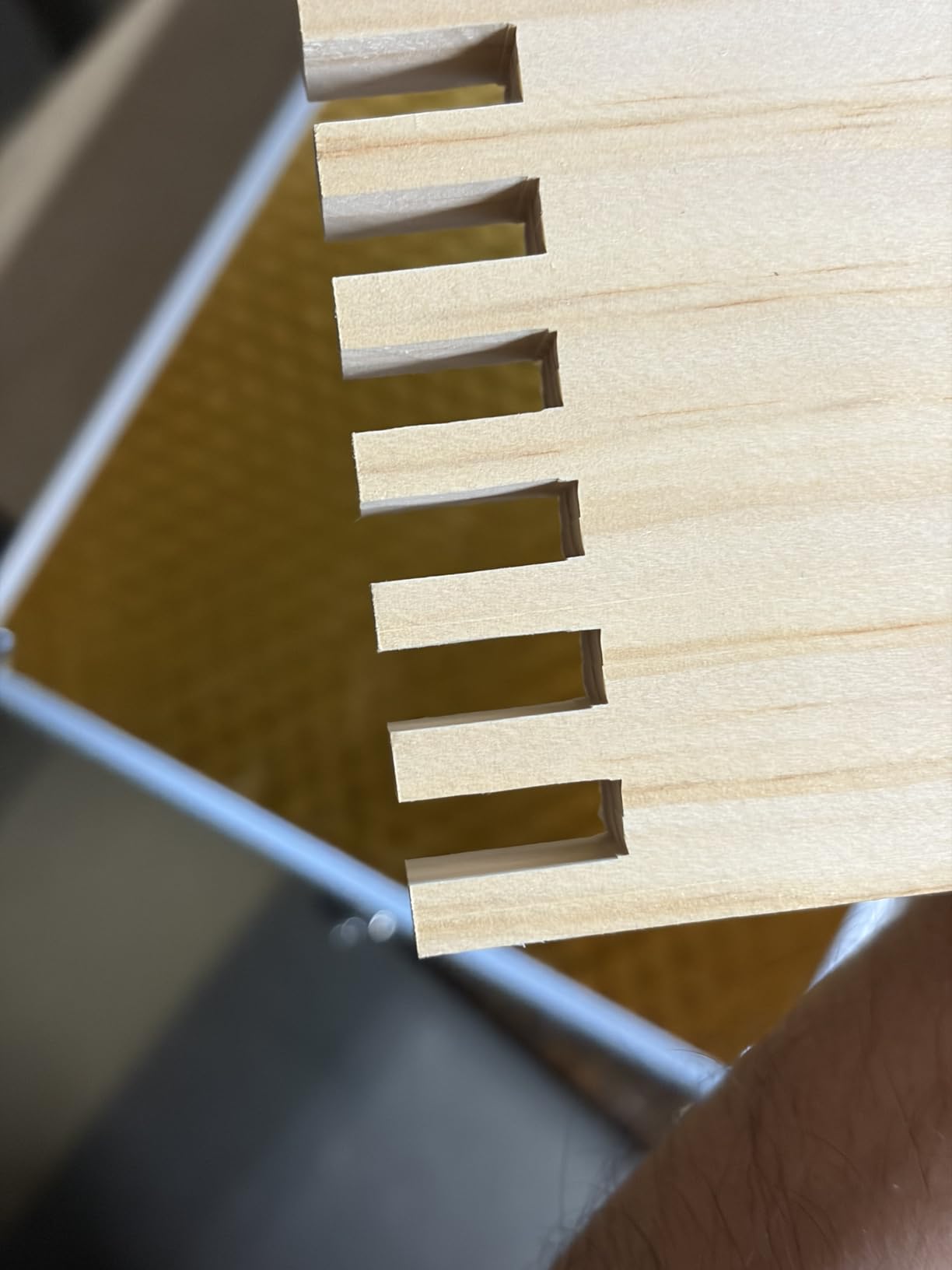
Compatibility is straightforward. The 5/8 inch arbor fits the majority of 10 inch table saws on the market, and the listing names SawStop, Jet, DeWalt, and Bosch explicitly, so you can confirm against your saw before ordering. Negative hook angles on the carbide teeth and chippers are what produce the flat-bottomed, splinter-free grooves, and the storage case with internal dividers keeps everything separated and protected.
Two practical drawbacks. The manual tells you which chippers to use but not which shims, so dialing an exact width is trial and error, and owners flag the full stack as heavy enough to put real strain on a saw motor, with advice against running it below 2 HP. Assembly location is a preference issue for some buyers and nothing at all for others, but it is worth checking if where something is made matters to you.
Who this set suits
This suits a builder who wants maximum width flexibility from a single 8 inch set, especially someone cutting mixed-width cabinet components where changing setups is frequent. The divided case and the accurate parts make it pleasant to use, and the named saw compatibility takes the guesswork out of fitting it to a common machine. It is also a capable set for rabbets and fillets, not just dados.
Who this set does not suit
Avoid it on a low-horsepower saw, where the full stack is more mass than the motor wants. If you dislike working out shim combinations by trial and error, pick a set with a width chart or labelled shims. It is also not the choice when you need the flattest possible bottom on a visible face.
9. DOWOX 8 Inch 23-Piece Dado Blade Set – Best Budget Starting Point
DOWOX Dado Saw Blade Set, 8 Inch Stacking Dado Blade for Table Saws, 24 Tooth with 5/8 Inch Bore for Fine Finish Dados, Grooves and Rabbets, 23 Pieces
8 inch diameter
5/8 inch bore
24 teeth
Anti-kickback tooth design
Pros
- Smooth clean grooves with minimal tear-out across pine oak plywood and MDF
- Plenty of shims for dialing exact width
- Setup repeats quickly across batches of identical dados
- Storage case and manual included
Cons
- Listing does not state which shims give which width
- Arbor nut must be very tight or threads can strip
- Riving knife must be removed before use
- Some stacks do not sum to nominal thickness
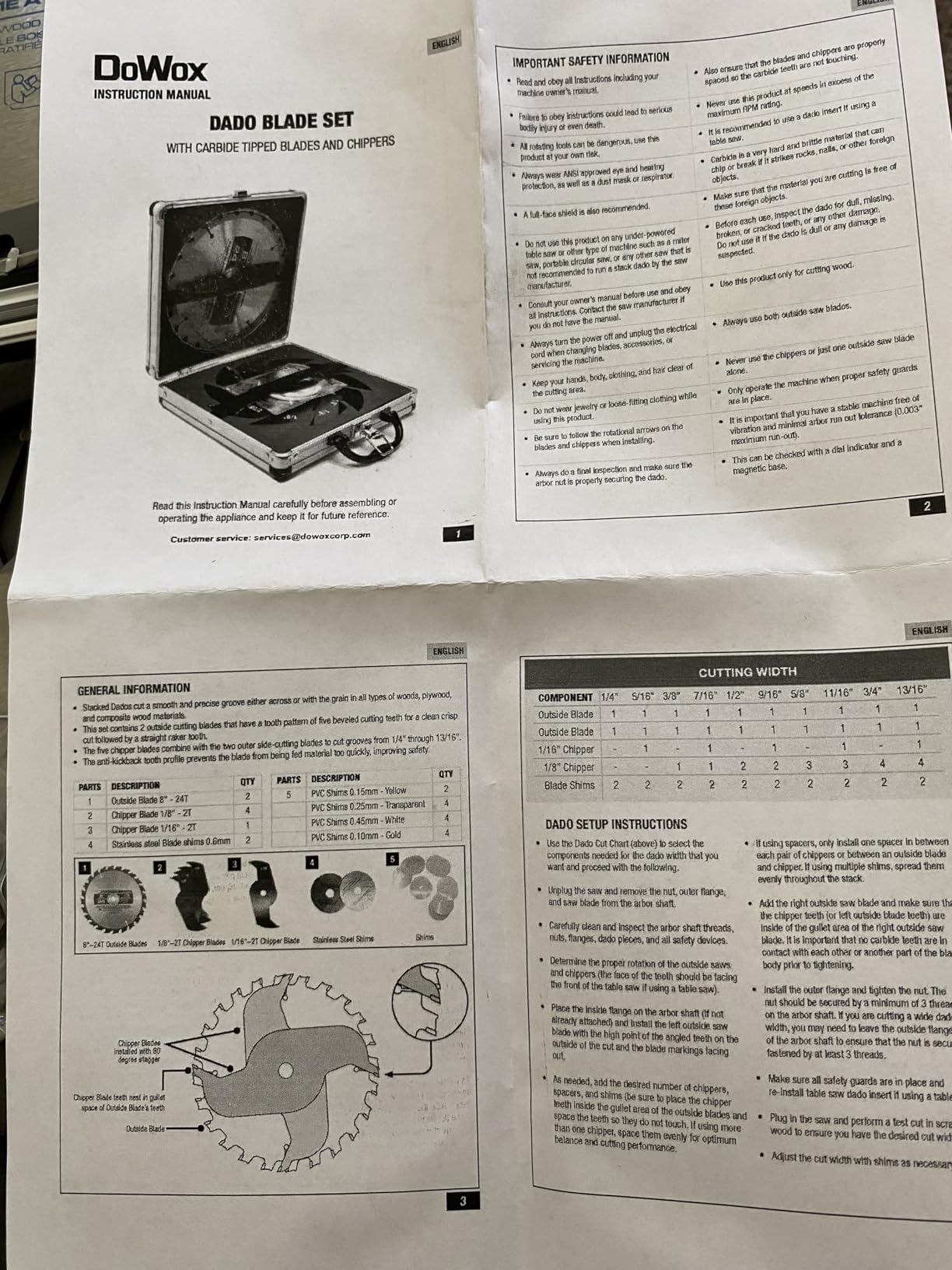
Twenty-three pieces sounds like a lot, and here it genuinely is: two outer blades, four one-eighth inch chippers, a one-sixteenth inch chipper, shims, and a storage case. The practical result is that once you dial a width that works, you can repeat it across a batch without reassembling from scratch, and that is where the time savings in cabinet and drawer work come from.
Cut quality out of the box is good enough that most builders will never feel the need to upgrade. We got smooth, clean grooves with minimal tear-out in pine, oak, plywood, and MDF, and owners report the blade staying sharp with nothing more than routine wiping with a stiff brush and a light oil. For a first dado set or a secondary set for a shop that mostly cuts sheet goods, the value here is hard to argue with.
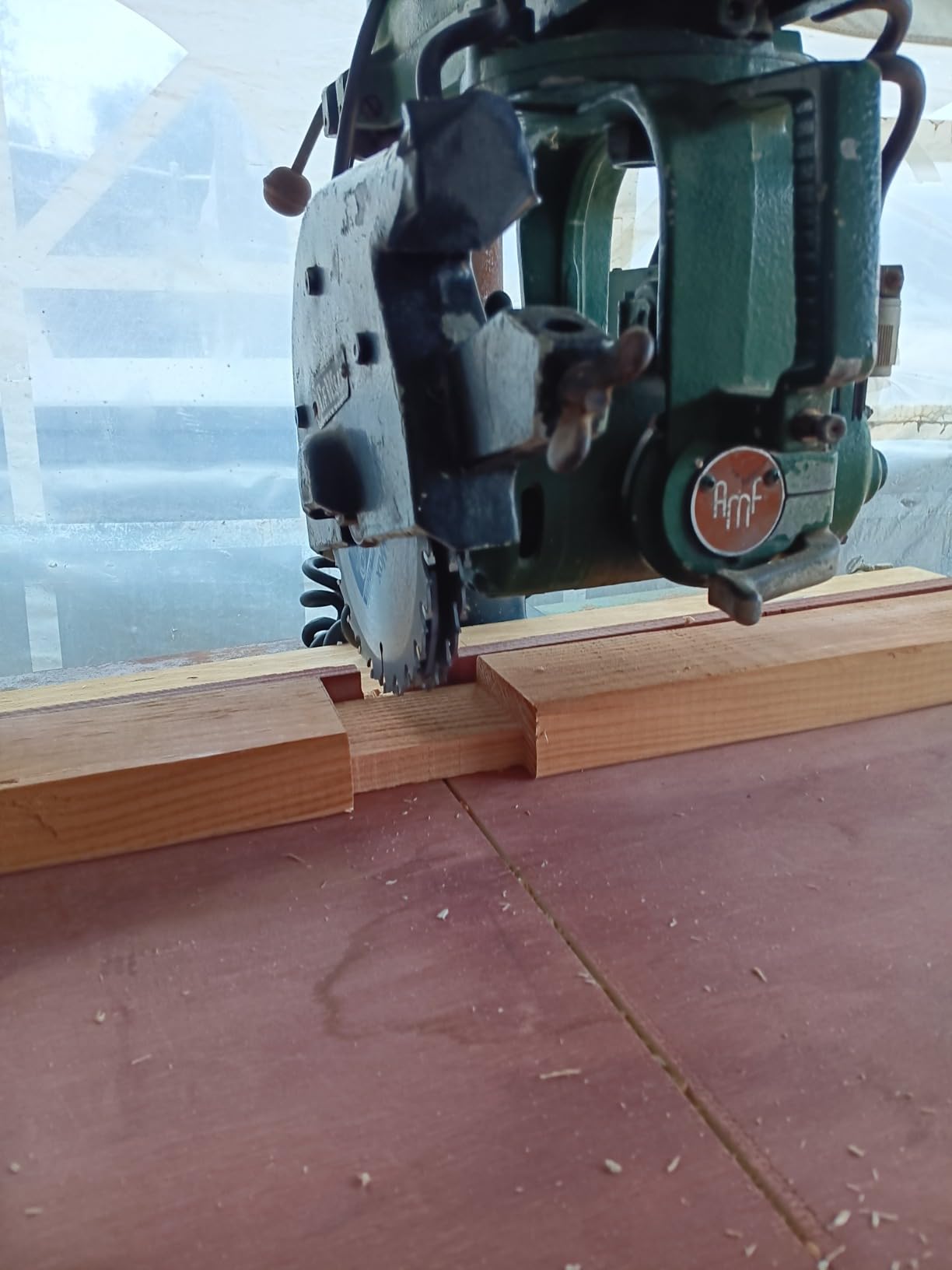
Two cautions before you rely on it for visible joinery. First, the listing does not state which shims to use for a given width, so plan on some trial and error and mark your components once you settle on combinations. Second, some stacked components do not sum exactly to their stated nominal thickness, which means you may need an internal shim even when you are targeting a common width like one-eighth inch. One long-form review raised its own rating after discovering that the specified internal shims resolved both issues.
There is also an installation detail that matters for your saw. The riving knife must be removed and a dado insert fitted before you use the set, and the arbor nut has to be extremely tight, because a loose nut can strip the arbor threads during a blade change. On a saw with a worn arbor, that is an expensive mistake, so take the extra minute to torque it properly every time.
Who this set suits
This is the set for a beginner buying a first dado stack, or a shop that wants a second set so one can stay assembled while the other changes width. The component count supports a lot of work in pine, oak, plywood, and MDF, and the manual and case make it approachable. It also fits the common 5/8 inch bore used by most standard table saws, including SawStop, Jet, DeWalt, and Bosch machines.
Who this set does not suit
It is not the choice when groove width has to hit a dimension exactly without any trial and error, because nothing is labelled and some stacks measure off nominal. Nor is it ideal if your saw has marginal torque, since a 24-tooth set with four chippers is a solid mass. For flat-bottom priority on a visible face, look at a 42-tooth set.
10. DEWALT Stacked Dado Blade DW812DADO – Best for DEWALT Table Saws
DEWALT Stacked Dado Saw Blade 8 Inch 12 Tooth (DW812DADO)
8 inch diameter
5/8 inch bore
12 teeth
Four-tooth chippers
Pros
- Clean flat bottom dados across sheet goods
- Easy setup and installation on DEWALT table saws
- Heavy duty storage case included
- Micro-grain carbide teeth reduce splintering
Cons
- Shim thickness markings are hard to read
- Setup takes a learning period for first-time dado users
If your shop is a DEWALT shop, this is the set that fits naturally into it. Owners consistently call out how straightforward the setup and installation are on a DEWALT table saw, which tells you more than any spec sheet, because a dado set is a mechanical process and a process that fits your machine saves real time. The heavy gauge, laser cut plates are what make that possible.
Cut quality is where DEWALT delivers above its usual reputation. The four-tooth chippers give smooth, flat-bottom cuts, and the micro-grain carbide teeth cut clean and reduce splintering. Reviewers report using it successfully for half-lap joints, rabbets, and dados, with an overwhelmingly positive response and a large share of five-star ratings.
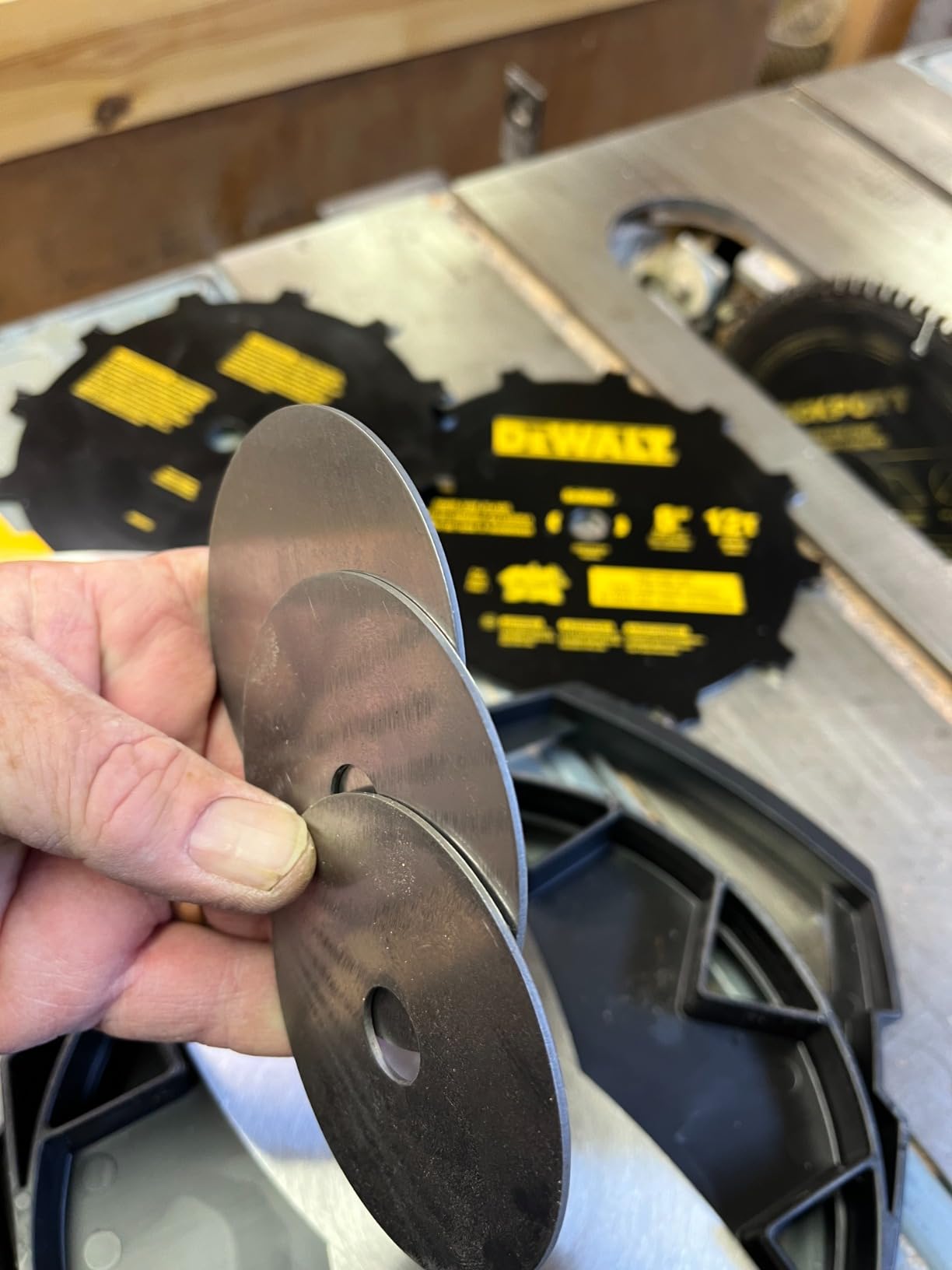
The finishing touch that separates this from a bare-bones set is the stainless steel shims, which allow ultra-fine width adjustments, and the heavy duty storage case that protects the blades against chipped teeth and damage during transport. For someone who moves between job sites or stores blades in a truck, a real case is not a luxury. Owners describe the value for the quality as good, and the blade is resharpenable rather than disposable.
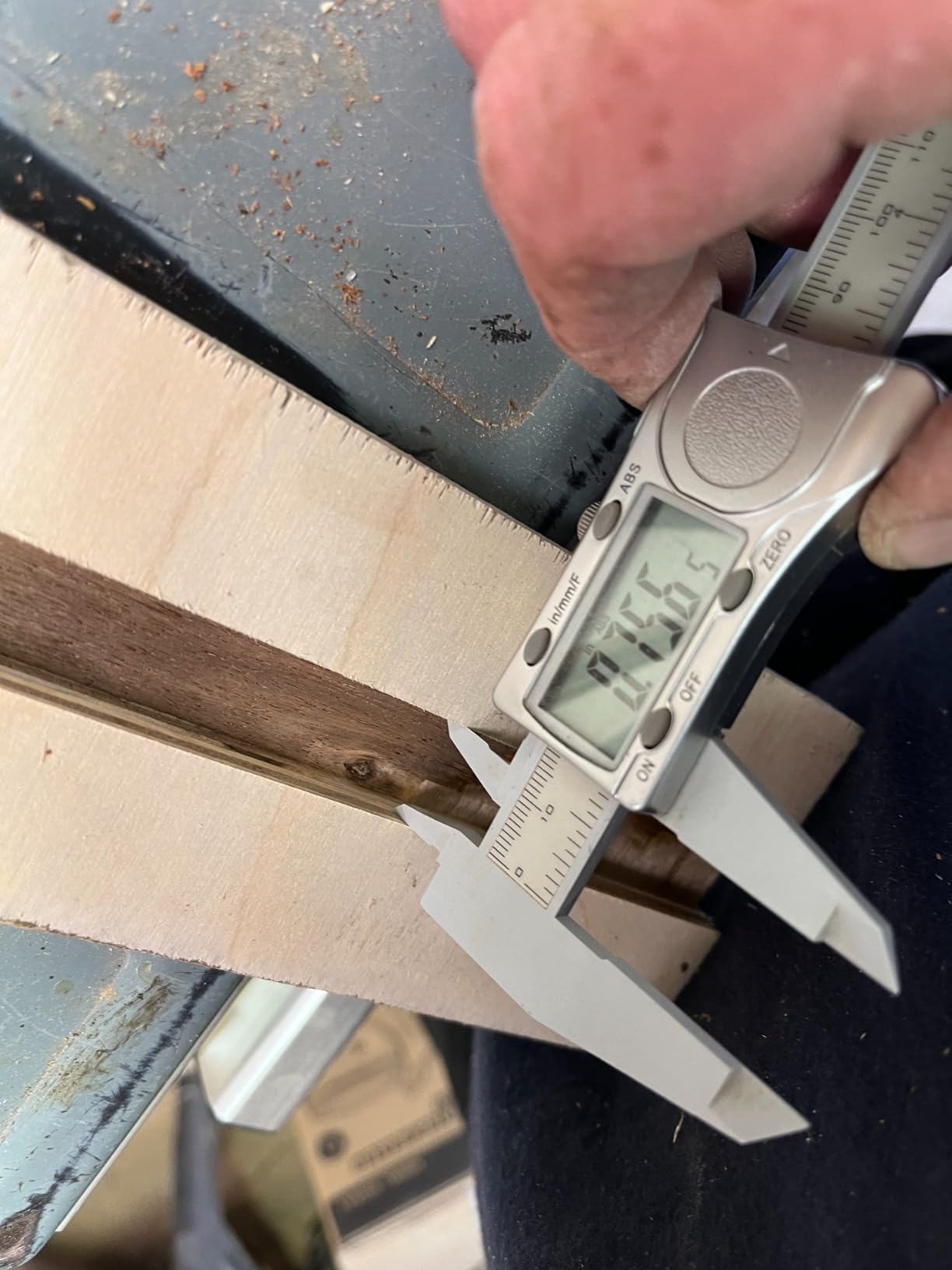
The two reported weaknesses are minor. Shim thickness markings are not clearly visible, so you end up measuring to identify a part, which is the same complaint that shows up on several premium sets. And first-time dado users describe a short learning period on initial setup. Neither issue affects cut quality once you are past the first hour.
Who this set suits
This suits DEWALT table saw owners who want a set that behaves like it was designed for their machine, and it is a solid choice for cabinet and furniture work where the dado shows. The storage case makes it a good travelling set for a mobile installer. If you also use circular saws, our circular saw roundup covers that side of the shop.
Who this set does not suit
It is not the pick for maximum width flexibility, since a four-chipper configuration gives fewer combinations than a six-chipper set. Nor is it the choice for the flattest bottom available, because a 12-tooth outer blade produces a coarser cut than a 42-tooth one. If you cannot read your shims easily, mark them before the first change.
11. CMT Orange Tools Dado Pro Set 230.012.08 – Best for Melamine and Veneer
CMT Orange Tools 230.012.08 – Set Blades for Joints HW D=8 B=5/8 Z12 + 12 K=1/4 -> 13/16 a=-12
8 inch diameter
5/8 inch arbor
12 teeth
1/4 to 13/16 inch widths
Pros
- Splinter resistant in veneer plywood melamine and hardwood
- Designed specifically for underpowered saws
- Carbide construction built for durability
- Full replacement warranty on performance issues
Cons
- Fewer reviews than the leading sets
- Higher cost than hobbyist tier alternatives
This set is specified for underpowered saws, which is an unusual thing for a manufacturer to state and a useful thing to know. At two pounds it is one of the lighter assemblies in this group, and it is built around that constraint rather than in spite of it. If your machine struggles with a full stack, this is a set designed with that machine in mind.
Where it really earns its place is on veneered and laminated material. The tooth geometry is splinter resistant in veneer plywood and melamine, which are the two materials that punish a mediocre dado blade most visibly. We ran melamine through it specifically because that is the test that separates sets, and the edges came out clean enough that we did not reach for sandpaper. Cut widths run from a quarter inch to thirteen sixteenths.
The configuration is notable: twelve-tooth outer blades paired with twelve chippers, which gives a lot of width combinations in a compact package and makes it easier to hit a width between the common fractions. The blades are carbide throughout for durability, and the manufacturer backs them with a full replacement warranty for performance issues on recommended applications, which is a stronger commitment than most hobbyist sets offer.
The limit here is evidence rather than performance. This set has the fewest reviews of the CMT, Freud, and Mibro options in the group, so there is less long-term owner history to lean on. It also sits above hobbyist-tier pricing without the six-chipper breadth of the larger Freud set. Owners who rate it highly tend to be building furniture or cabinetry where that splinter resistance is the deciding factor.
Who this set suits
This is the set for a benchtop or portable table saw with limited power, and for anyone cutting melamine, laminate, or veneered panels where fuzzy edges ruin the finish. The lightweight build and the stated low-power design mean you can keep feed speed up without the motor bogging. It is also a good warranty-backed option if you want manufacturer support behind the blades.
Who this set does not suit
Skip it if your priority is the very flattest groove bottom on exposed hardwood, where a 42-tooth set does better. It is also not the pick if you want the widest menu of chipper combinations, since it carries twelve chippers rather than the six-piece plate chippers found in a full-chipper stack. Check your bore size carefully, because this is a 5/8 inch arbor set.
12. ANGELSWORD 8 Inch 15-Piece Stacking Set – A Sensible First Stack
ANGELSWORD 8″ Stacking Dado Blade Set for Dados, Grooves, Rabbets, 15pc
8 inch diameter
5/8 inch arbor
Tungsten carbide teeth
Slot widths 1/4 to 7/8 inch
Pros
- Fifteen-piece set with a real aluminum case
- Slot widths from 1/4 to 7/8 inch in sixteenths
- Seven metal shims across four thicknesses
- High-quality thin-kerf plate for fast clean cuts
Cons
- Lowest average score of the twelve sets
- Newer design with a shorter review history
- Some quality control variation in negative feedback
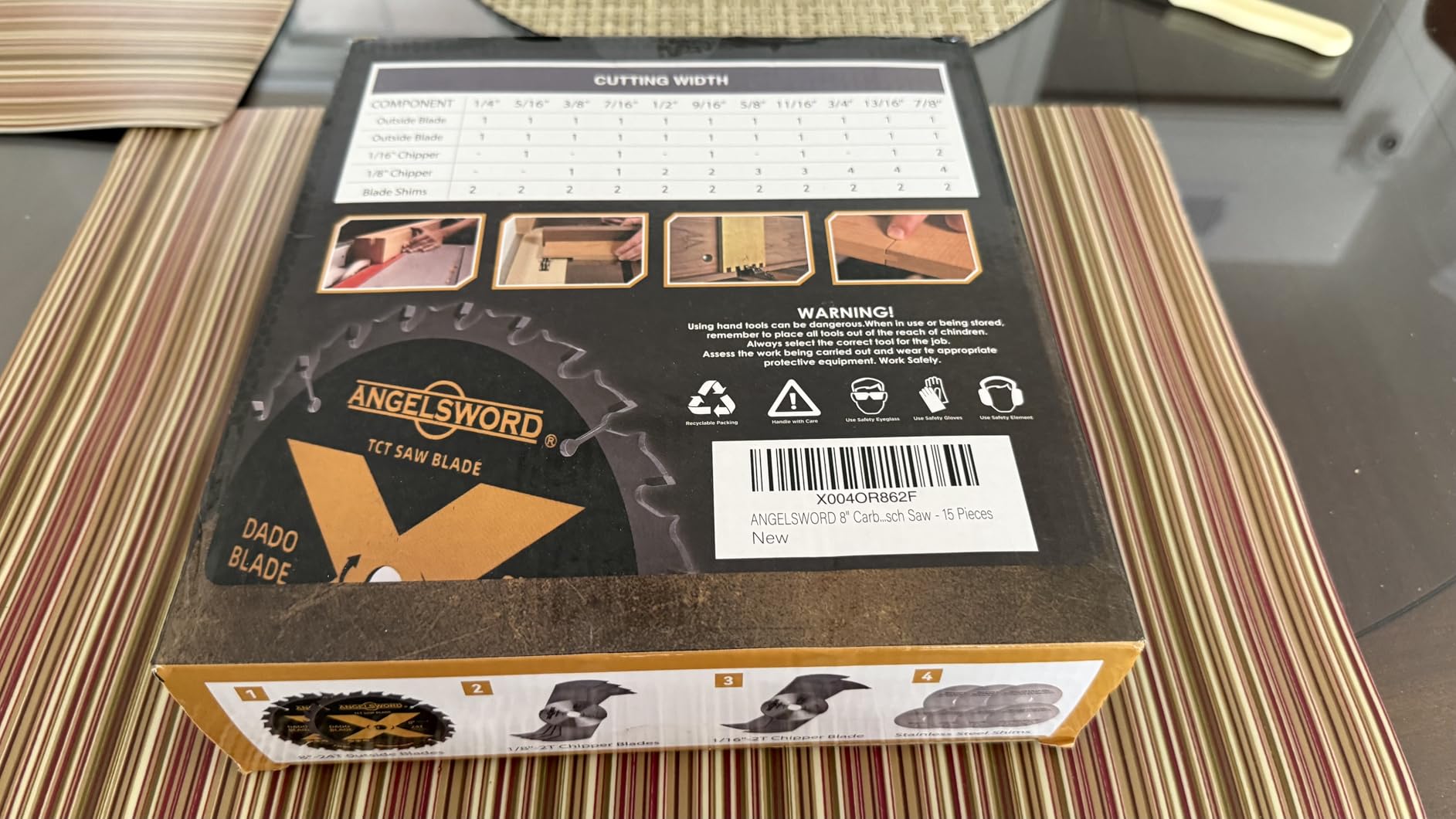
The component list is the attraction here. Fifteen pieces means two 8 inch outer blades, four one-eighth inch chippers, two one-sixteenth inch chippers, and seven metal shims in four thicknesses, all in an aluminum storage case. That case alone is worth noting, because it is a genuine improvement over the cardboard packaging that arrives with some better-known sets, and it keeps carbide from getting knocked together.
The build is respectable. Tungsten carbide teeth give good wear and heat resistance, and the high-quality thin-kerf plate produced fast, smooth, clean cuts in our runs. The 5/8 inch arbor fits the majority of 8 inch and 10 inch table saws, and slot widths run from a quarter inch to seven eighths inch in sixteenth-inch steps, which covers most furniture and cabinet work.
Be clear-eyed about the evidence, though. This is the newest design of the twelve and carries the lowest average score, with a larger share of one-star feedback than the rest of the group. Some of that negative feedback points to quality control variation, and with a shorter review history there is less long-term data to reassure you that a given unit will be well made. Inspect the carbide tips and check every plate for flatness when it arrives.
On the other hand, most feedback is positive about cut quality and about the value of fifteen pieces with an aluminum case. The upper width limit of seven eighths inch is narrower than several sets here, so if you need a wide groove for a thick shelf you will find that limit sooner or later. For a first set on a hobbyist saw, it is a reasonable way to learn the process at low cost.
Who this set suits
This suits a new builder who wants to learn dadoing without a large outlay, and who will value the aluminum case for keeping the components organised. The seven metal shims across four thicknesses give reasonable fine adjustment for a set at this level. If your saw takes a 5/8 inch arbor and your work stays under seven eighths inch wide, it will do the job.
Who this set does not suit
It is not the choice if you need maximum confidence in quality control, because the feedback shows more variation than the established sets. Nor is it right for wide grooves, heavy production work, or a saw where blade mass is already an issue. Once you outgrow it, the component count will make moving up to a fuller set painless.
Choosing the Right Blade Diameter for Your Table Saw
Most 10 inch table saws are perfectly well served by an 8 inch dado set, and that is the diameter every set in this roundup uses. An 8 inch stack cuts a groove deep enough for two-by lumber and most hardwood stock while keeping rotating mass manageable, which is why it has become the default. A 10 inch set makes sense if you routinely rip deep grooves into thick material or your saw has the motor to drive it, and a 6 inch set is the right answer for small portable saws where power is genuinely scarce.
Think about the motor before the diameter. A stacked set is heavy, and heavy is what makes a small motor bog mid-cut. On a saw rated around 1.5 HP, keep the stack light and the chipper count low, and pick a set that is explicitly designed for lower-powered machines. Between 2 HP and 3 HP you have more freedom, and above that you can run a full multi-chipper stack without concern. If you also cut finished trim on the same saw, our best miter saws guide covers that side of the shop.
Arbor Size, Arbor Length and Motor Power
Almost every 10 inch table saw in North America uses a 5/8 inch arbor, and all twelve sets here are 5/8 inch, so bore size is rarely the deciding factor. The exception is a saw designed around a one inch arbor, which is rare but real on some industrial machines. Check your saw’s manual or measure the arbor before you order if you are unsure.
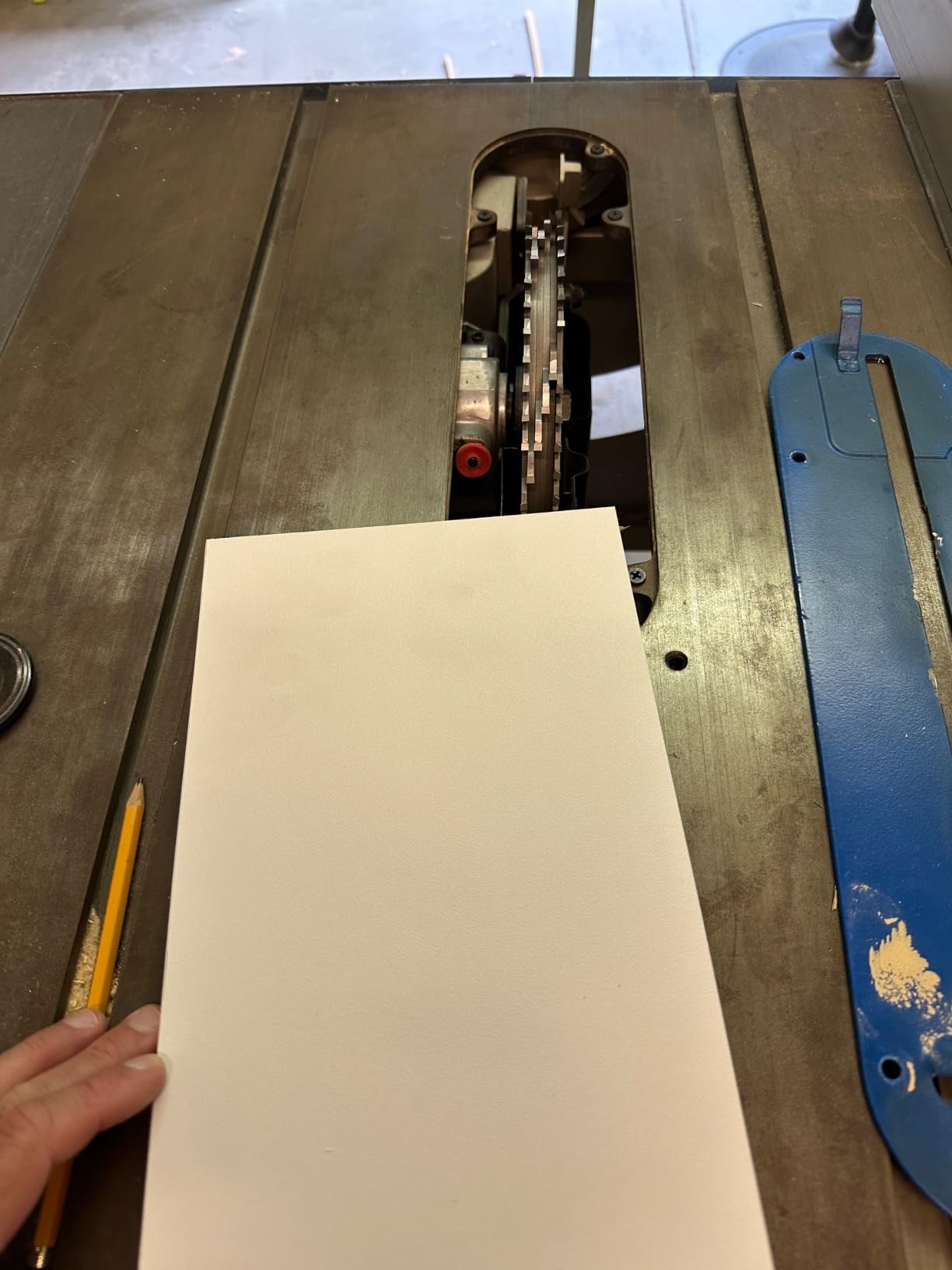
Arbor length is the detail that catches people, and it is a make-or-break item. A wide stack with several chippers and shims stacks up in height, and if the total stack is taller than the space between the arbor nut and the blade flange, it will not go on at all. Measure the clear distance with a ruler before you commit to a wide configuration, and test the widest stack you plan to use rather than the narrowest.
Stacked, Wobble and Dial-A-Width Systems Compared
A stacked set uses fixed components and shims. It is the most common approach, it gives a genuinely flat bottom, and the downside is that each width change means taking the stack apart. A wobble dado uses a single twisted blade that changes width by tilting it, which makes width adjustment nearly instant but produces a rounded or vee bottom, so it is the wrong tool for cabinet backs, box joints, or anything where a shelf needs to sit flat.
Dial-a-width designs use a sloped or angled spacing system so that rotating the assembly changes the effective width. Owners who have moved from shim sets describe the difference as dramatic, particularly because width changes no longer require disassembly. The trade-off is that the mechanism needs more clear arbor length than a conventional stack, and the moving parts are another thing to keep clean. If your workflow involves many different widths in a single project, that convenience can justify the extra arbor requirement.
Freud SD208 vs SD208S vs SD508: How to Choose
This is the most common confusion in the dado blade category, so here is the short version. The SD208 is the classic eight-tooth set: the least expensive entry, resharpenable, and the one with the longest owner history. The SD208S is the updated version with a twelve-tooth outer blade, a crosscutting blend carbide, a coating, and engineering aimed at brake-equipped and lower-powered saws, which is the better all-round buy. The SD508 is the Super Dado, with six chippers including a three-thirty-second inch and one-sixteenth inch chipper and .004 inch adjustment steps, aimed at production work and the widest menu of widths.
Price separates them in that order, and so does the target user. The SD208 is for a first set or a builder who will resharpen and keep it. The SD208S is for the widest range of situations, and it is the one we would hand to a friend. The SD508 is for a shop running repeated production dados in one or two materials and willing to deal with a heavier stack and less forgiving packaging.
Carbide Quality, Tooth Count and Chipper Design
Outer blades on a dado set typically carry between eight and twelve teeth, while chippers carry far more, commonly between twenty-four and forty-two teeth. More teeth on the outer blade means a smoother, more splinter-resistant edge, and fewer teeth means a faster, more aggressive cut. This is the trade-off: higher tooth counts generate more heat and cut more slowly, which is why the heaviest 42-tooth sets in this group are also the ones that load a motor hardest.
Chipper design matters as much as tooth count. Two-wing chippers are small pieces of steel that must be staggered and balanced on the arbor, which is fiddly work. Full body chippers are complete discs that seat against each other, hold alignment on their own, and run quieter, at the cost of more mass. Carbide grade is the last variable, and premium grades with titanium or crosscutting blends hold an edge considerably longer than standard carbide in abrasive material like MDF.
SawStop and Brake-Equipped Saw Compatibility
On a brake-equipped saw, blade mass and stack height are safety considerations, not just comfort questions. A cartridge has to stop whatever is rotating when it trips, and a heavier stack takes more energy to bring to rest. This is why two sets in this roundup stand out for that specific use: the Freud SD208S is engineered to run efficiently on brake-equipped saws, and the CMT Locked Dado is the first set certified to UNI EN 847, which guarantees the assembled elements never contact each other while rotating.
Practical advice if you own one of these saws. Check that your cartridge is rated for the maximum stack height and diameter you plan to use. Measure clear arbor length, because a wide stack on a short arbor will not fit. Do not assume any given stack is approved; the saw manufacturer is the authority on what their cartridge will stop. Several of the sets in this roundup name SawStop, Jet, DeWalt, and Bosch compatibility explicitly, which is a useful starting point before you check your own saw’s documentation.
Setting Up a Dado Stack and Dialing In Width
Start by removing the riving knife and fitting a proper zero-gap dado insert, which most tables include or sell separately. A throat plate with a wide slot will let the workpiece fall into a hole mid-cut, so this step is not optional. Then assemble the stack, making sure every blade, chipper, and shim sits flush. Thread the arbor nut on snugly by hand before you reach for the wrench, so the stack does not skew as it tightens.
To hit an exact width, set the stack close and then use shims to trim it. Add shims on one side only to keep the stack straight, and tighten the arbor nut fully at each adjustment because a loose nut will let the stack shift as it spins. Test cut a scrap piece of the same material and measure the groove, then adjust until the fit is what you want. Once the width is right, make or mark your own chart so the next setup takes seconds instead of minutes.
Common Dado Blade Mistakes and How to Avoid Them
The most common mistake is ignoring arbor length, which shows up as a stack that will not assemble or that sits dangerously high. The second is loading a heavy stack onto a saw with marginal power and then forcing the feed. The third is skipping the zero-gap throat plate insert. The fourth is not making a test cut before committing to a full panel of expensive plywood.
Beyond those, check the orientation of every blade so all teeth cut in the same direction, keep the arbor nut tight enough that it will not strip the arbor threads, and always use a push block on a through cut. A common error is reversing the direction of a shim stack and adding height without adding width, which produces a groove that measures right at the top and wrong at the bottom. Measure the groove at the far end of the test cut, not just at the entry.
Sharpening, Maintenance and Storage
Carbide dado blades last far longer than plain steel ones, but they do need care. Wipe resin and pitch off the blades after each session with a stiff brush and a little light oil, and pay attention to the chippers, which collect buildup faster than the outer blades. If you cut MDF or melamine heavily, expect to resharpen sooner, and budget a professional resharpening as a routine cost rather than a surprise.
Sharpening a dado set properly is a specialist job, and sending the whole set out together keeps the outer blades the same diameter. Storage matters just as much. Several sets in this roundup arrive in thin plastic or in a cardboard box with foam, and carbide chips easily when plates knock together. Keep each set in its own case, keep shims in a small labelled container rather than loose in the case, and do not stack a set on a pile of other blades. Shims that fall into an arbor thread are the single most common bit of damage we saw reported.
Frequently Asked Questions
What size dado blade should I use on my table saw?
An 8 inch set is the right answer for almost every 10 inch table saw, including portable and contractor models, because it cuts deep enough for two-by lumber while keeping blade mass manageable. Choose a 6 inch set only if your saw is a small portable machine with limited power, and a 10 inch set only if you routinely cut deep grooves in thick stock and your motor can drive the extra mass. Match the choice to your saw’s horsepower more than to its blade diameter.
How many teeth should a dado blade have?
Outer blades on a dado set usually carry between eight and twelve teeth, while chippers carry considerably more, commonly twenty-four to forty-two. A higher tooth count on the outer blade gives a smoother, more splinter-resistant edge but cuts more slowly and generates more heat. Fewer teeth cut faster and more aggressively. A 42-tooth set produces the flattest, cleanest bottoms but places the heaviest load on a motor.
What are common dado blade mistakes?
The most common errors are exceeding the clear arbor length so the stack will not fit, running a heavy stack on an underpowered motor, skipping the zero-gap throat plate insert, and not making a test cut before starting on expensive material. Others include assembling blades with teeth facing different directions, leaving the arbor nut loose enough to strip the arbor threads, and forgetting a push block on a through cut.
Is it better to cut dados with a router or a table saw?
A table saw dado set is faster and gives you a flat bottom across a wide groove, which is what cabinet and box joint work needs. A router is slower but gives better control over the start and stop of a cut, which matters for stopped dados and for fitting work where you want to see the layout. Many builders use both, using the table saw for repeated components and the router for one-off or partial-depth grooves.
What is the best dado blade set overall?
The Mibro eight-inch 14-piece set is the strongest all-round choice because it combines flat square-shouldered bottoms, five two-wing chippers, seven metal shims, and a divided storage case at a price that suits most shops. The Freud SD208S is the better buy if you want premium carbide and a set engineered for brake-equipped or lower-powered saws, and the Oshlun 42-tooth set cuts the flattest bottoms of the group.
Final Verdict on the Best Dado Blades for Table Saws in 2026
After running all twelve sets through the same cuts, the Mibro 8 inch 14-piece stacking set is the pick for most people. It has the largest body of owner feedback behind it, the component count is generous for the money, the bottoms are flat, the shoulders are square, and the divided case makes changing widths painless. Buy that one, spend the first fifteen minutes getting the blade orientation right, and you will have a dado that looks like it came off a router table.
Buy something else in three specific situations. If your saw has a brake or limited power, take the Freud SD208S for its coating and its low-power engineering, or the CMT Locked Dado if you want the stack to build on the bench and the EN 847 certification. If the groove shows on a finished face, take the Oshlun 42-tooth set and accept the extra mass. Everything else in this list is a good dado blade, but those three cover the cases where the difference actually shows up in your work.
Whichever stack you choose, measure your clear arbor length, fit a zero-gap dado insert, and make a test cut in scrap before you start on a panel of good plywood. If you are still picking out the machine, our best table saws roundup covers the saws these blades work hardest on.