
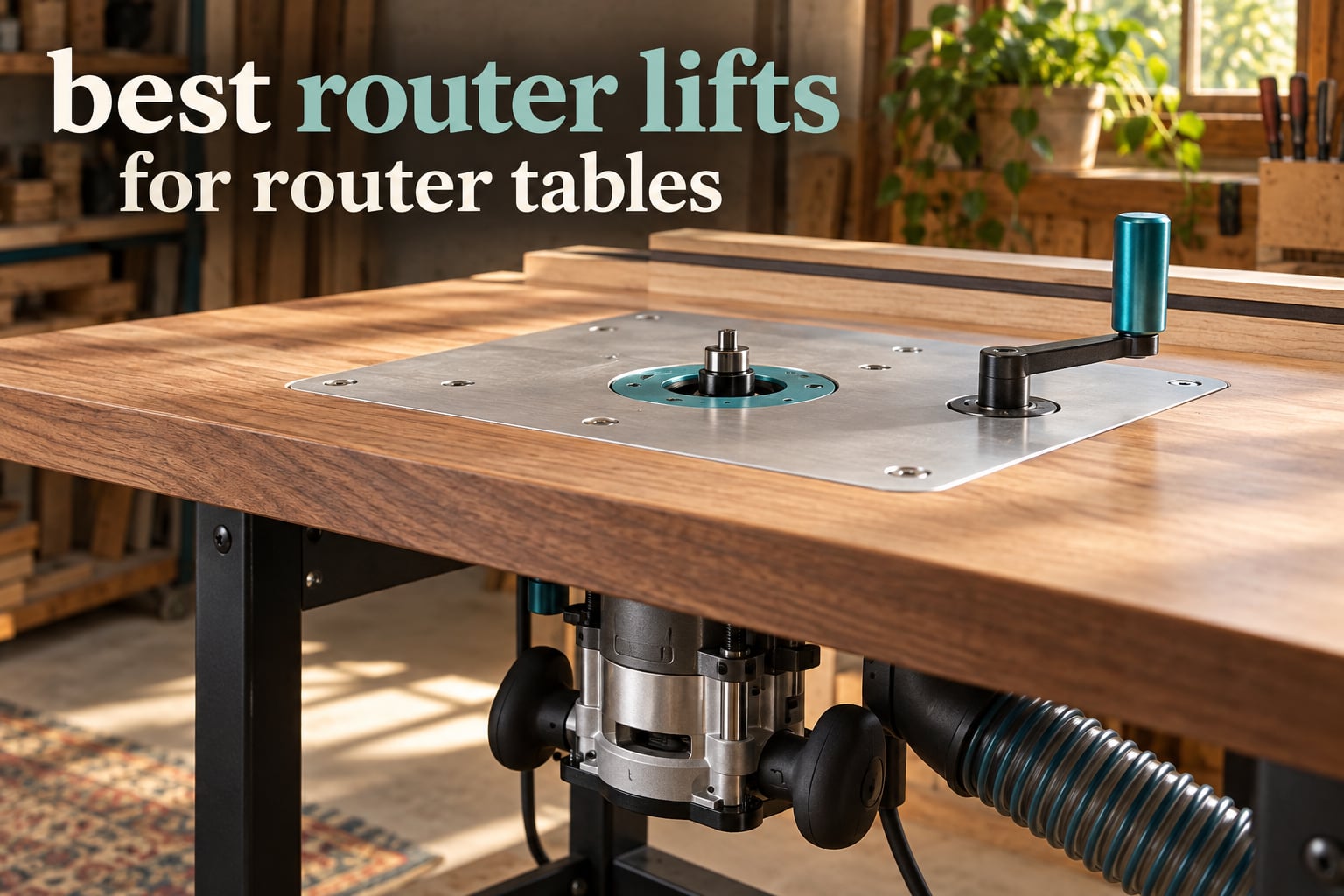
The single most expensive mistake I see people make with a router lift is buying the one with the best mechanism and then discovering the plate will not drop into their table opening. Compatibility decides this purchase before any other factor, and no amount of clever cranking makes up for a plate that needs trimming.
That is the rule behind this roundup. We compared ten router lifts side by side, weighing motor diameter range, insert plate dimensions, the drive mechanism, locking behavior and what actual owners say after a year of use. Every one of the lifts below is a fixed-base lift, meaning the router stays clamped to the lift and rides up and down through the table rather than plunging in place.
If you are still choosing the cabinet itself, start with our router table buying guide, then come back here once you know the opening size you are working with. If you already own a table and just want to know whether your router will fit, jump straight to the fitment checklist further down.
We spent the most time on the details that show up in real shops: whether the zeroing scale survives a repeat cut, whether the insert ring change needs tools, and whether the adjustment crank stays clear of the fence. Those are the things that separate a lift you enjoy from one you tolerate.
Table of Contents
Top 3 Router Lifts for Router Tables in 2026
These three cover the range of what most shops actually need. The Kreg leads on rating depth and compatibility breadth, the JessEm leads on locking precision, and the O’SKOOL RTS05 leads on value per dollar of capability.

Kreg PRS5000 Precision…
- Above-table adjustment down to 1/64 inch
- 3/8 inch hard-anodized aluminum plate
- Anti-backlash compensation
- Fits Kreg tables and many competing brands

JessEm Master Lift II 02120
- Cam locking system
- Preloaded lead screw with near zero backlash
- Double-sealed bearing construction
- 3/8 inch solid hard-anodized aluminum

O’SKOOL RTS05 Router Lift…
- Fits 3-1/2 inch motors
- 20 TPI screw with zeroing index ring
- Five insert rings included
- Locking device resists vibration drift
10 Best Router Lifts for Router Tables (October 2026)
Every lift in the table below fits the same basic job, but the plate size and motor range differ enough that only some of them fit a given table. Read the feature column against your own opening size before you commit.
| Product | Specs | Action |
|---|---|---|
| Kreg PRS5000 Precision Router Lift |
|
Check Latest Price |
| JessEm Master Lift II 02120 |
|
Check Latest Price |
| O’SKOOL RTS05 Router Lift System |
|
Check Latest Price |
 O’SKOOL RTS017 for Bosch RA1181 and RA1171 O’SKOOL RTS017 for Bosch RA1181 and RA1171 |
|
Check Latest Price |
 Incra Mast-R-Lift-II-R for Rockler Tables Incra Mast-R-Lift-II-R for Rockler Tables |
|
Check Latest Price |
 SpeTool SP-RP-L Heavy-Duty Lift Kit SpeTool SP-RP-L Heavy-Duty Lift Kit |
|
Check Latest Price |
 SawStop RT-LFT Four-Post Lift with Lock SawStop RT-LFT Four-Post Lift with Lock |
|
Check Latest Price |
 JessEm Rout-R-Lift 3.5XT System JessEm Rout-R-Lift 3.5XT System |
|
Check Latest Price |
 JessEm Mast-R-Lift II 02121 JessEm Mast-R-Lift II 02121 |
|
Check Latest Price |
 Rockler Router Lift Kit Rockler Router Lift Kit |
|
Check Latest Price |
1. Kreg PRS5000 Precision Router Lift – The Most Proven Lift Here
Kreg Precision Router Lift, Router Table Lift, PRS5000
9-1/4 x 11-3/4 inch plate
Adjustment down to 1/64 inch
10.8 lb
Hard-anodized aluminum
Pros
- Deepest review history in the group at 811 ratings
- Smooth repeatable above-table height changes
- Hard-anodized plate resists sagging and scratching
- Fits Kreg tables and many competing brands
- Straightforward installation
Cons
- Fit varies slightly between production runs
- Thread wear if you drive adjustment with a power drill
Out of everything we looked at, the Kreg PRS5000 has the deepest bench history. With 811 ratings averaging 4.7, this is the lift most first-time buyers end up with, and the pattern in owner feedback is consistent: smooth, repeatable height changes and an installation that most people describe as uneventful.
The plate is 3/8 inch hard-anodized aluminum measuring 9-1/4 by 11-3/4 inch, so it drops into the most common bench-top router table opening. That anodized surface is not a marketing detail. It is the reason the plate holds flat over years instead of creeping, and it shrugs off scratches from a base plate sliding around.
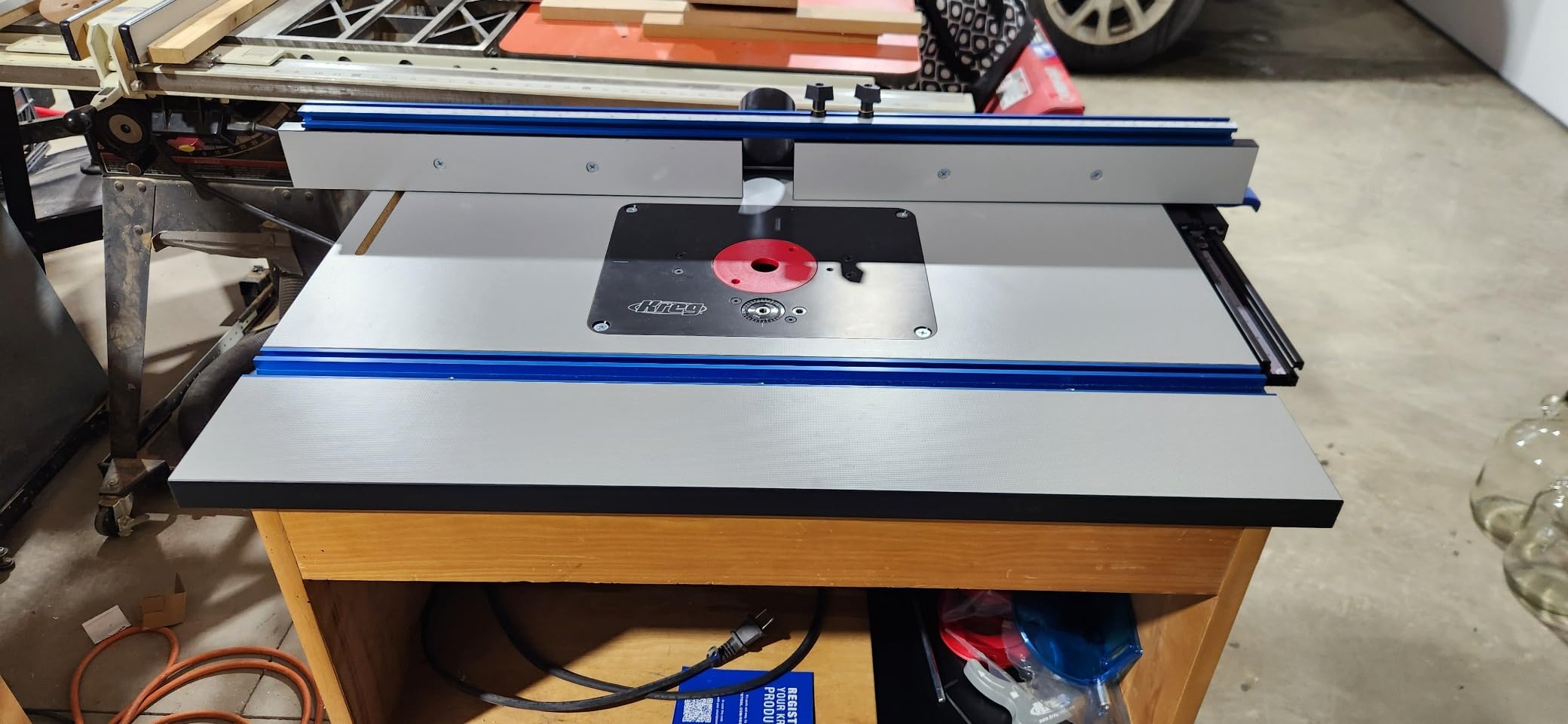
Adjustment goes down to 1/64 inch with anti-backlash compensation built into the drive, which is the reason it does not drift when you come back for a second identical cut. Kreg claims compatibility with more than 20 routers, and in practice that covers the common 3-1/4 and 3-1/2 inch motors that fill most shops.
The one thing to respect is the drive screw. Owners who set height with a cordless drill save time on the first pass and wear the thread over time. Turn the crank by hand, especially once you have a repeatable depth you care about.
What you should check before ordering
Measure your table opening first. The 9-1/4 by 11-3/4 inch plate is the most widely compatible size in this roundup, but it will not drop into an 8-1/4 inch Bench Dog opening without modification.
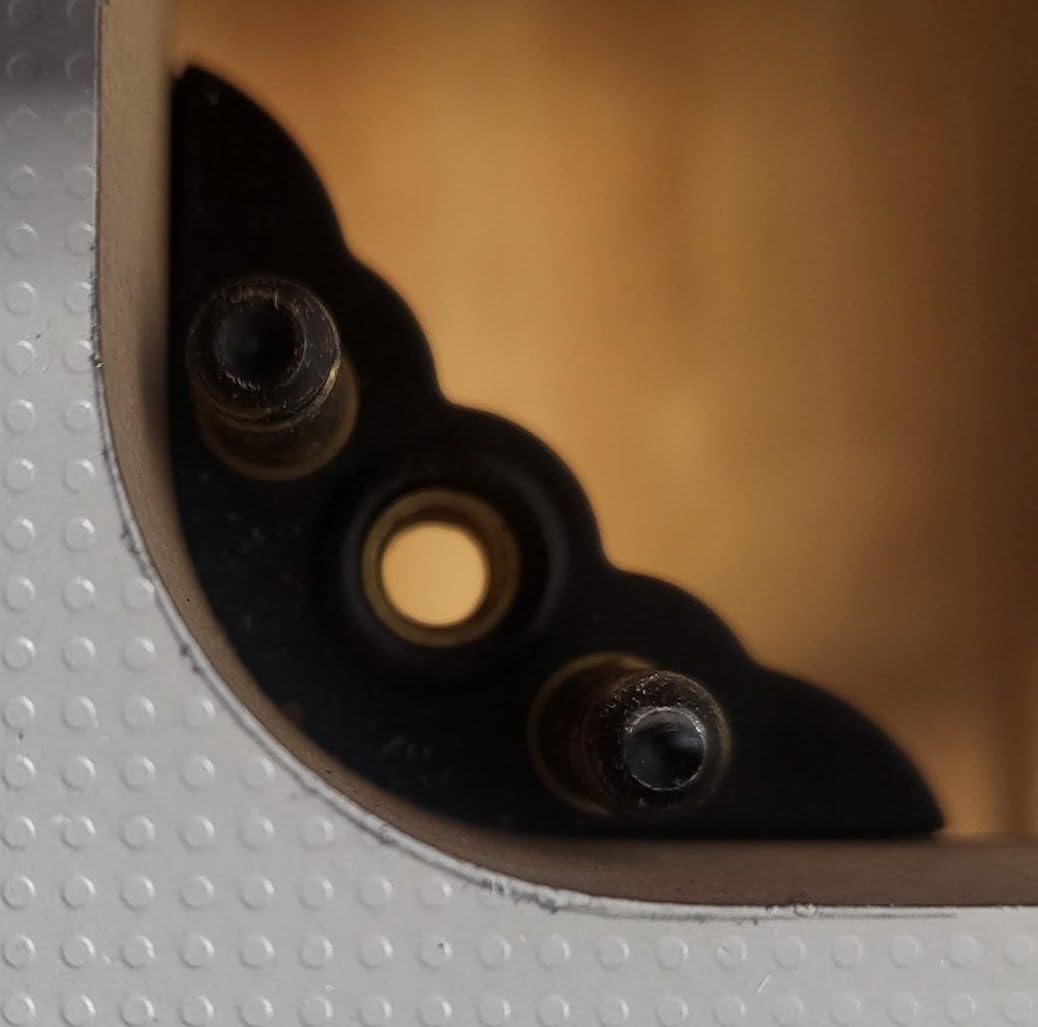
Then confirm the corner screw locations match your table’s mounting brackets. Kreg tables are the natural home for this lift, and the broad compatibility claim covers many competitors, but not every corner pattern lines up.
Where it falls short
At 10.8 pounds it is the lightest-feeling lift among the aluminum units here, and some owners report that the crank feel and adjustment range vary slightly between production runs. If you are chasing the absolute smoothest cranking action, the JessEm models below feel more refined.
It is also a fixed-base system. If you already own a plunge router and use it on the bench for sign carving or flush trimming, the PRS5000 will not add plunge travel to that router. You are buying above-table adjustment, nothing more.
2. JessEm Master Lift II 02120 – The Precision Reference Standard
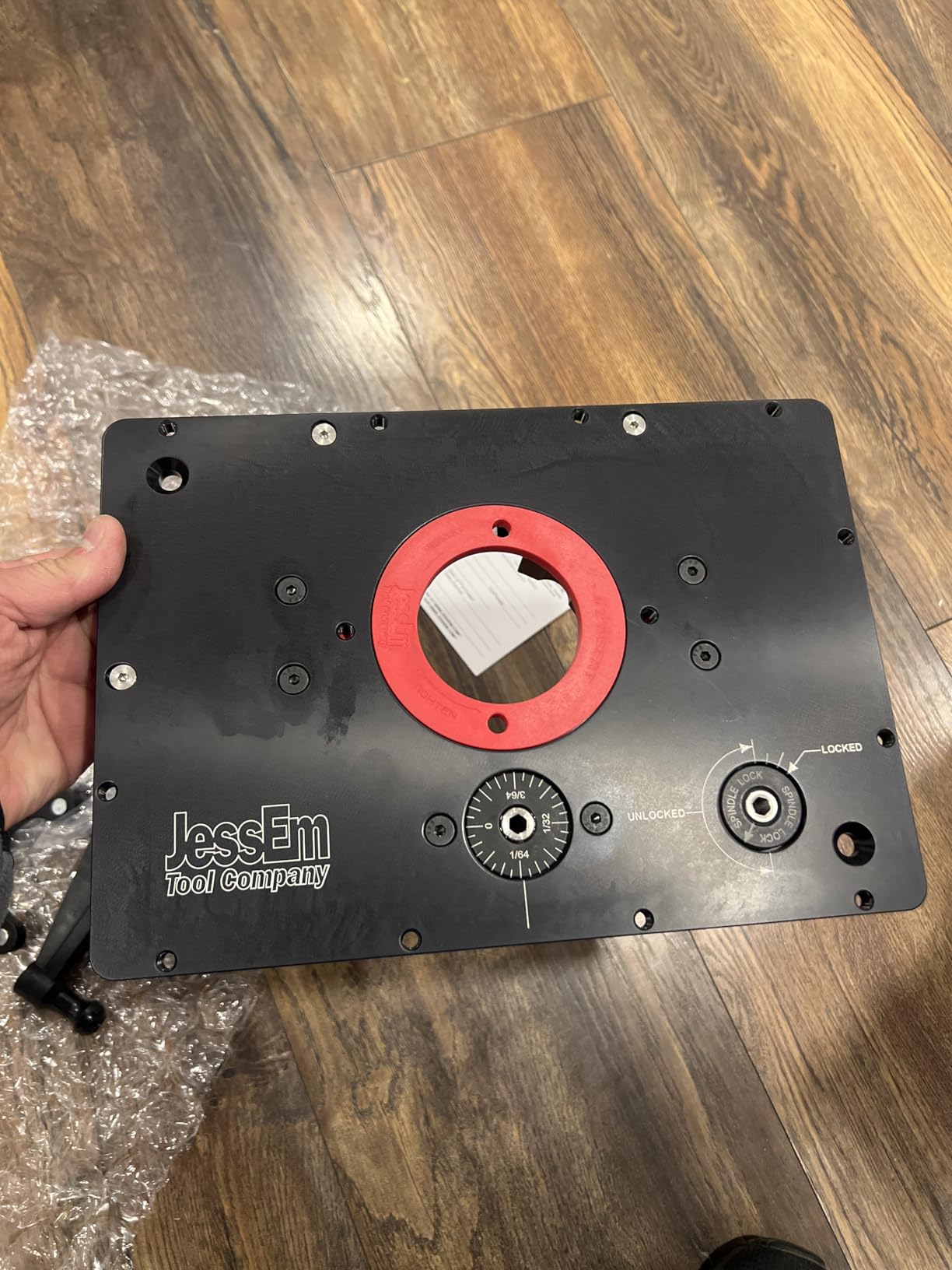
JessEm Master Lift II 02120 Router Lift, 9-1/4-Inch by 11-3/4-Inch, Black/Red
9-1/4 x 11-3/4 inch plate
Cam lock with no creep
13.6 lb
3/8 inch solid aluminum
Pros
- Cam lock holds an exact set height with no creep
- Preloaded lead screw with virtually no backlash in either direction
- Double-sealed bearing construction
- Handles above-table bit changes for all routers
- Adjustable brackets accept a wide range of motor diameters
Cons
- Corner hold-down holes do not match Kreg table brackets
- Some pieces arrive with a stripped or over-tight leveling screw
- Included insert ring tool can miss the hole spacing
- Instructions are thin on first-time setup
Woodworking communities most commonly recommend JessEm, and the Master Lift II is the reason. Across forum threads spanning years, owners describe the same two things: the cam lock holds position dead true, and the preloaded lead screw has virtually no backlash in either direction. For repeat dovetails and matching panel work, that is the whole game.
Construction is 3/8 inch solid aluminum, machined and then hard anodized, with double-sealed bearings through the carriage. At 13.6 pounds it has the reassuring weight of a component that will not deflect, and it fits most fixed-base routers on the market today through adjustable mounting brackets.
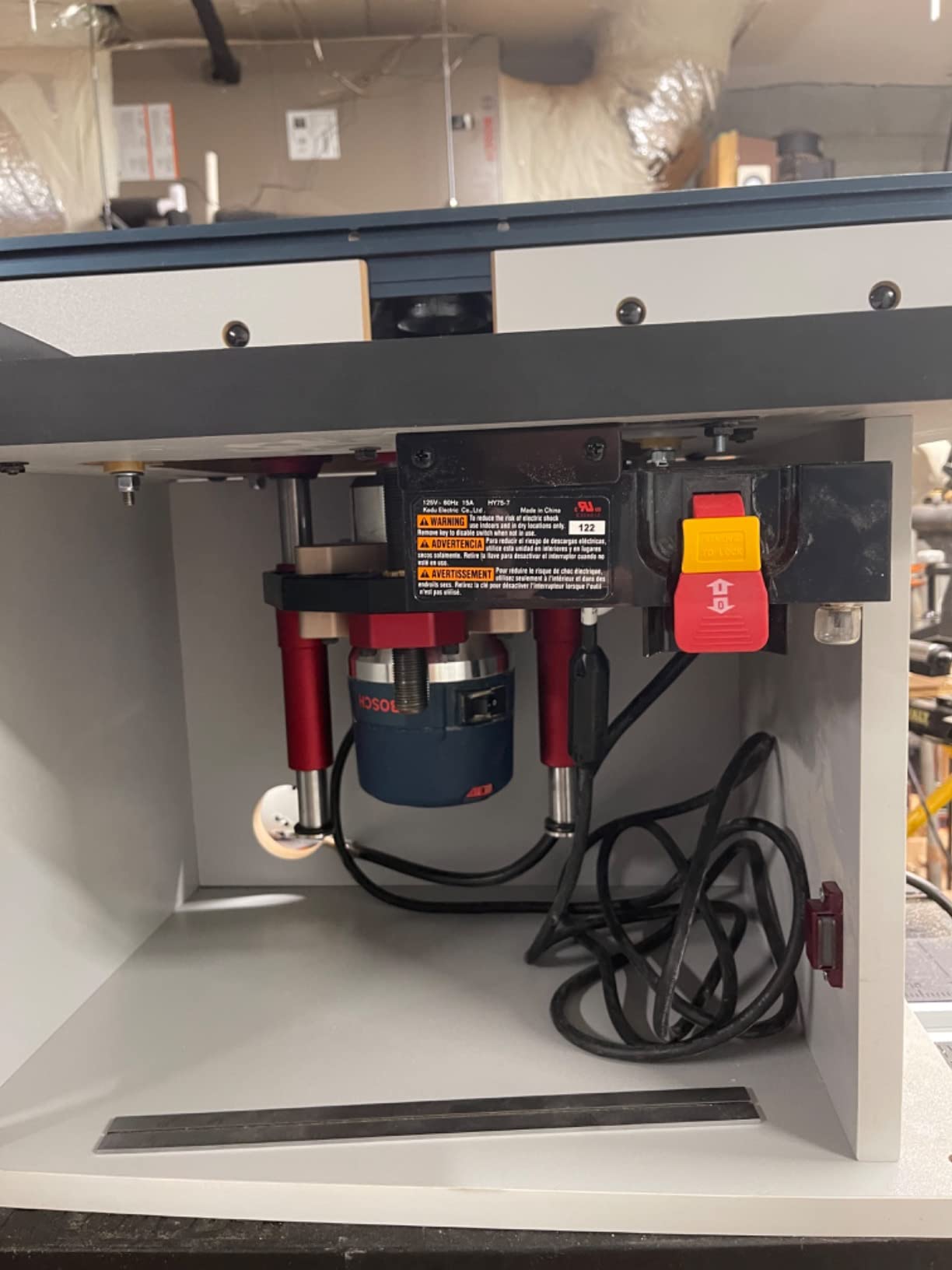
Reviewers repeatedly frame it as a step up in accuracy and rigidity rather than a step up in convenience. Nothing about the operation is faster than a lighter lift. It is simply more accurate, and that difference only shows up after you have made forty identical parts.
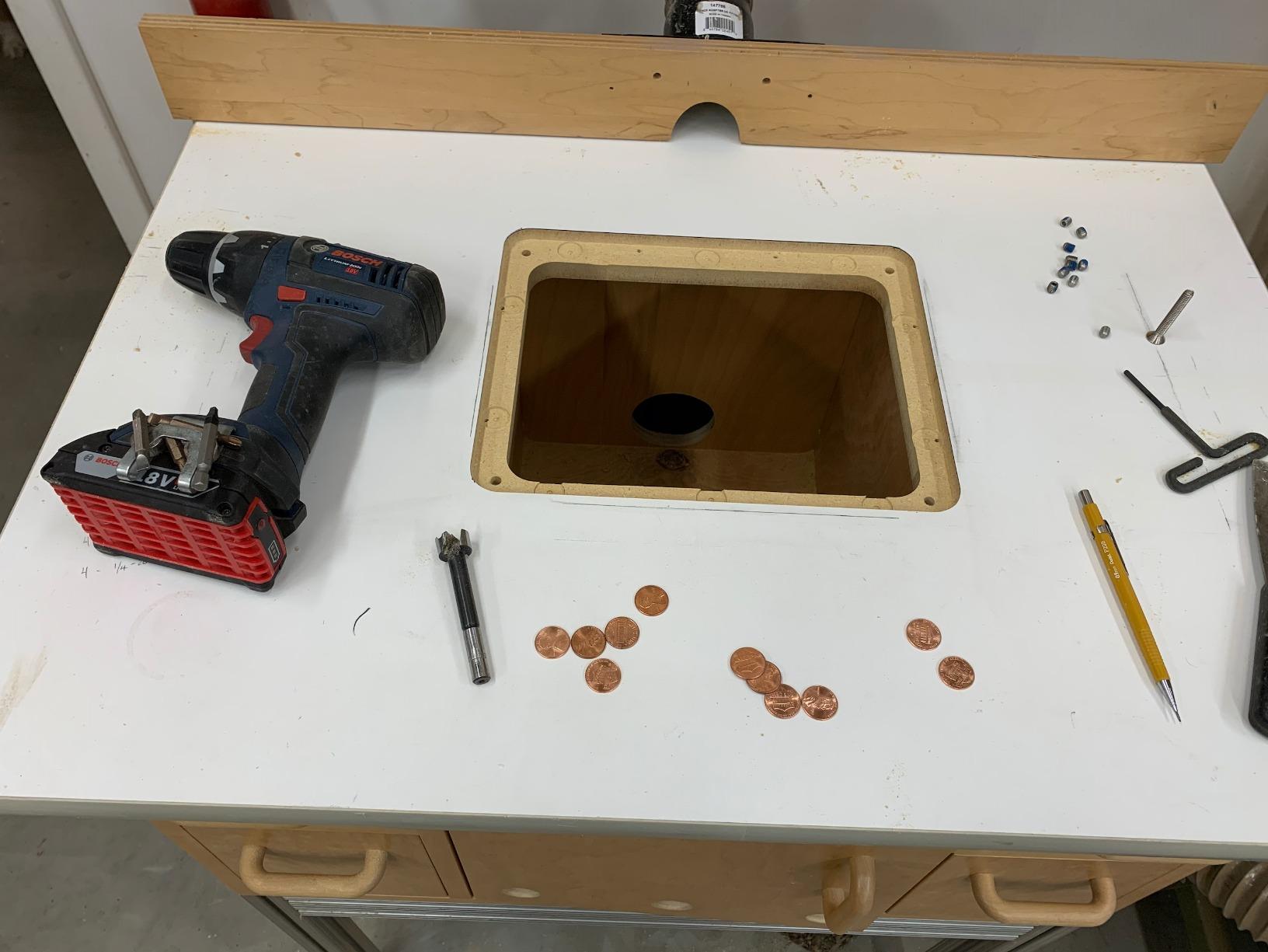
The recurring caveat in owner feedback is fitment rather than mechanism. The plate fits the common Kreg-style opening, but the corner screw pattern differs from Kreg brackets, so some installers relocate holes. A handful of owners also report a stripped or overly tight leveling screw on arrival.
What makes the cam lock worth paying for
A cam lock closes mechanically on the carriage rather than relying on friction alone, so the motor does not creep during a long cut. On jobs where you need the same depth on the first and the fortieth piece, that consistency is the entire argument for this lift.
The preloaded lead screw means the adjustment does not visibly shift direction when you stop cranking. A dial indicator on a test block will show the same reading whether you approached the depth clockwise or counterclockwise, which is the practical definition of zero backlash.
Where it falls short
It is a fixed-base lift, so it does nothing for plunge work on the bench. If your shop is built around flush trimming and template routing away from the table, a plunge base remains the better tool.
Fitment planning is essential. The corner hold-down screw holes do not line up with Kreg table mounting brackets, and the included insert ring tool did not match hole spacing on some pieces. Budget an hour for setup the first time.
3. O’SKOOL RTS05 Router Lift System – Best Value With Real Precision
O’SKOOL Router Lift System, 3-1/2″ Router Motor Fit, Aluminum Plate, RTS05
11-3/4 x 9-1/4 inch plate
20 TPI screw
Five insert rings
0.001 inch indexing
Pros
- Indexing scale supports micro-adjustments as small as 0.001 inch
- Locking device keeps depth consistent under vibration
- Long crank clears typical fences in any position
- Five insert rings plus clamp block and ring wrench included
- Plate stays level and does not sag
Cons
- Small set screws loosen and vanish into sawdust
- Mounting screws are not included
- Insert ring tool is thin wire with a weak handle
- Plate may need trimming for non-standard openings
The RTS05 is the one we would put in front of a first-time lift buyer. Owners frequently compare it favorably to JessEm on cost while describing comparable build quality, and the 3/8 inch aluminum plate stays level in ways lighter phenolic plates do not.
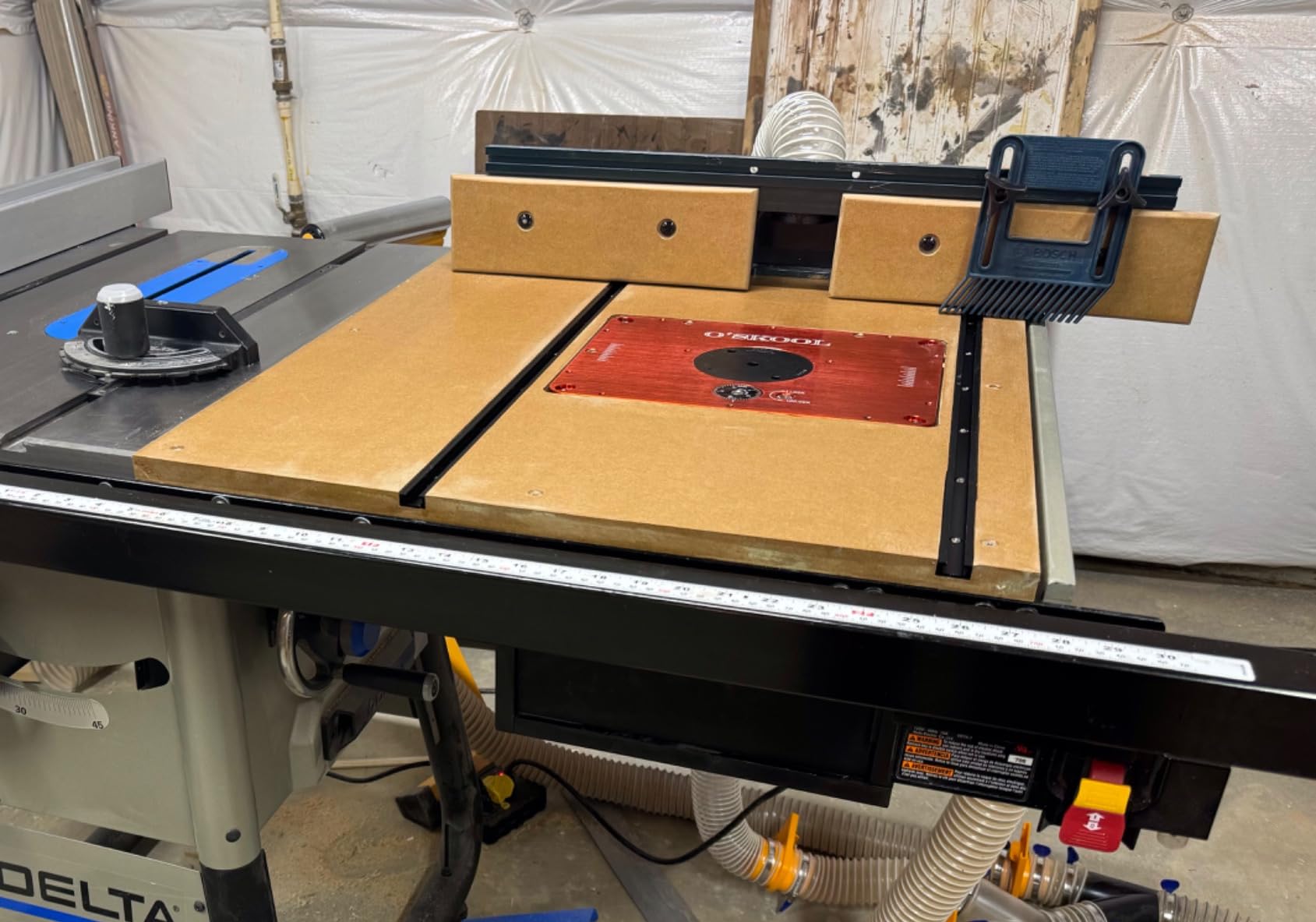
Adjustment uses a 20 TPI screw that moves height 0.05 inch per full turn, paired with a zeroing index ring carrying a 50-angle scale. That combination gives controlled micro-adjustments as small as 0.001 inch, which is finer than most joinery actually demands.
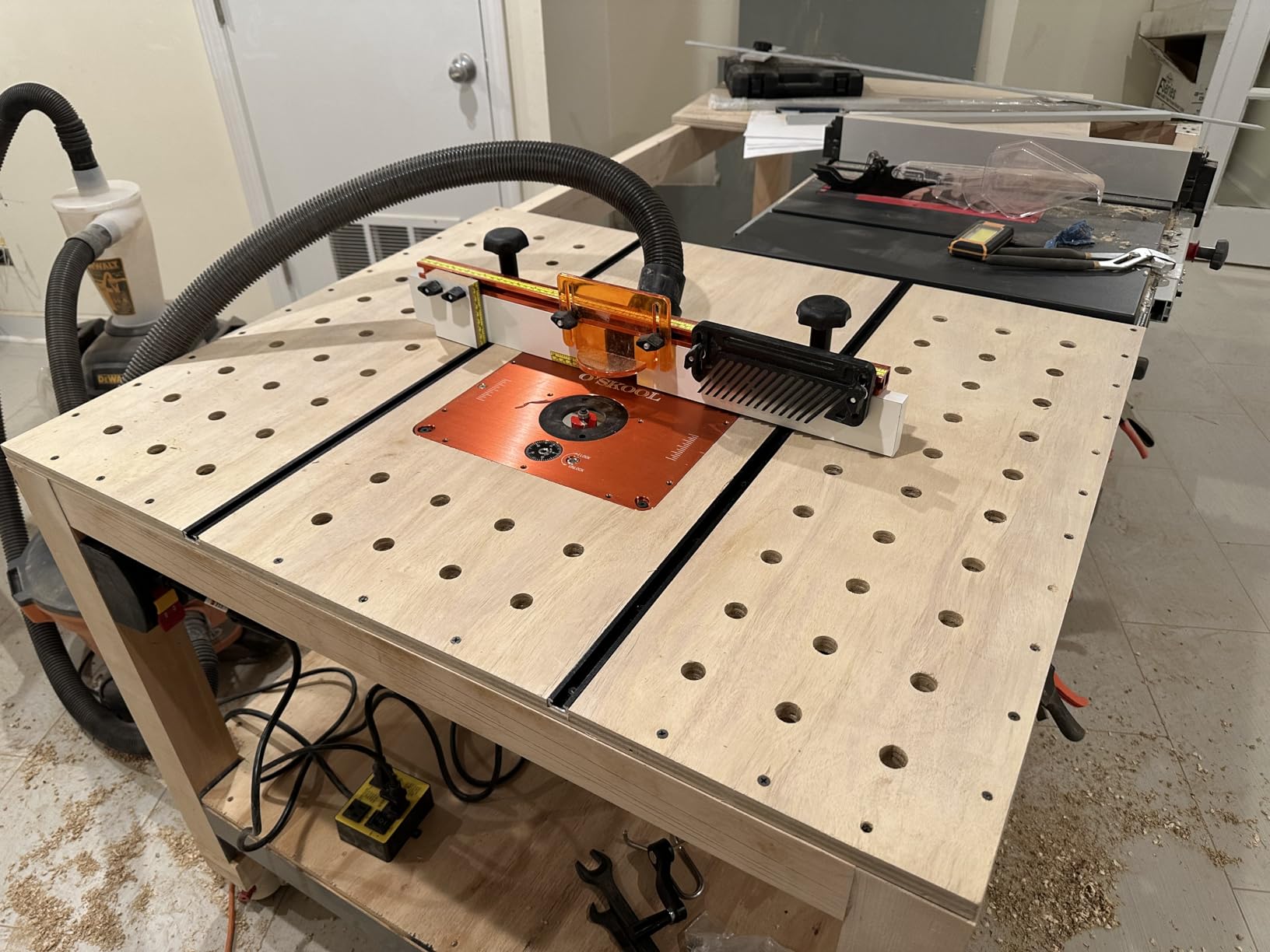
The fit list is the strongest part of the package. It is built for 3-1/2 inch cylindrical motors including Porter Cable 690 and 890, DeWalt 610, 616 and 618, Bosch 1617 and 1618, several Craftsman models and the Skil RT1322-00. Five insert rings cover 3/8, 1, 1-1/4, 1-7/8 and 2-5/8 inch.
Two details show real thought went into the design. The height screw locking device resists vibration-induced drift, which matters during dado work, and the long crank handle clears typical table fences in any position rather than only in one.
Why the indexing ring is the deciding feature
Once you zero the index ring at your reference bit height, every subsequent setting reads as an angle rather than a guess. That turns depth setup from a trial-and-error process into a repeatable step, and it is the reason this lift punches above its class.
Include the clamp block when you install. It holds the motor in position while you tighten the brackets, which prevents the one frustration that lifts with side-clamp designs share: the motor shifting as you cinch it down.
Where it falls short
Mounting screws are not included, and the small set screws have a habit of loosening and disappearing into sawdust. Keep a magnetic tray or a length of tape on your bench during assembly.
The plate may require trimming to fit non-standard or undersized table openings, and the included insert ring tool is a flexible wire loop that most owners replace quickly. Neither issue is structural, but both add an hour to a first install.
4. O’SKOOL RTS017 for Bosch RA1181 and RA1171 Tables
O’SKOOL Router Lift System Compatible With Bosch RA1181 and RA1171
11-1/2 x 9-1/8 inch plate
3 inches of travel
20 TPI screw
CNC machined aluminum
Pros
- Highest average rating among the lifts we compared
- CNC machined 3/8 inch solid aluminum plate with excellent flatness
- Three locking cam wheels close gaps in the table opening
- Three inches of travel handles bit changes without removing the router
- Five insert ring sizes cover most setups
Cons
- Leveling screws are not included
- Does not fit the O'SKOOL router table top
- Plate is smaller than the common opening so some tables need adjustment
At a 4.8 average across 107 ratings, this is the highest-rated lift in the group. Owners single out plate flatness, the cam wheel fit and precise indexing as the reasons, and for repeat joinery those three qualities do most of the work.
The plate is CNC machined 3/8 inch solid aluminum with leveling adjustment, and three locking cam wheels eliminate gaps around the plate in the table opening. That gap elimination matters more than it sounds, because a loose plate shifts under load and changes your effective bit height mid-cut.
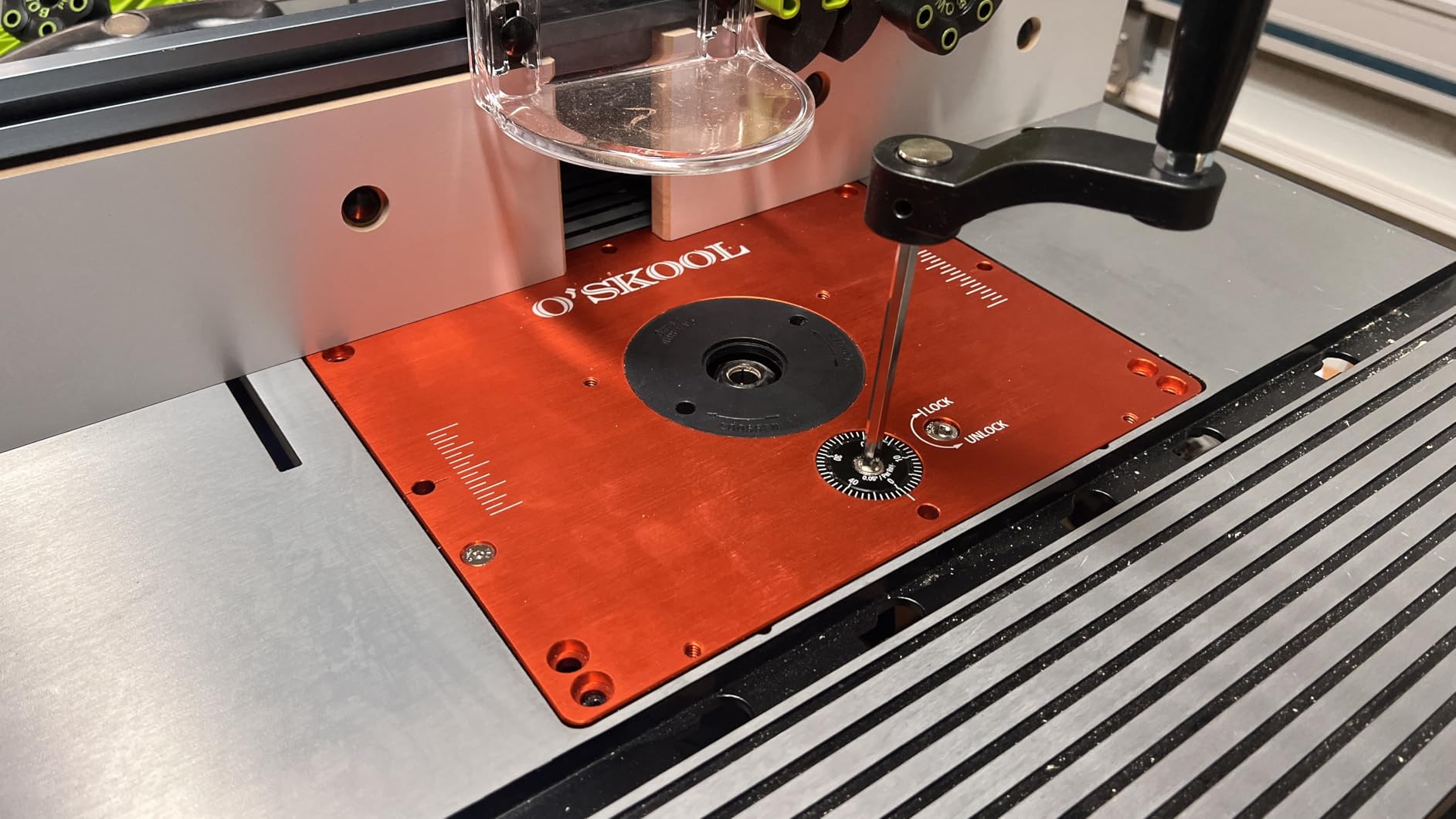
Compatibility targets 3-1/2 inch diameter motors and specifically lists Bosch RA1181 and RA1171 tables, plus Porter Cable 690 and 890, DeWalt 610, 616 and 618, Bosch 1617 and 1618, Craftsman 171.61181 and 1754X series, Skil RT1322-00 and the Hercules he041.
Adjustment is a 20 TPI screw moving 0.05 inch per revolution across 3 inches of travel, with the same 50-angle zeroing index ring found on the RTS05. Five insert rings are included, and the 1-1/4 inch ring is compatible with guide bushings.
When this specific plate size matters
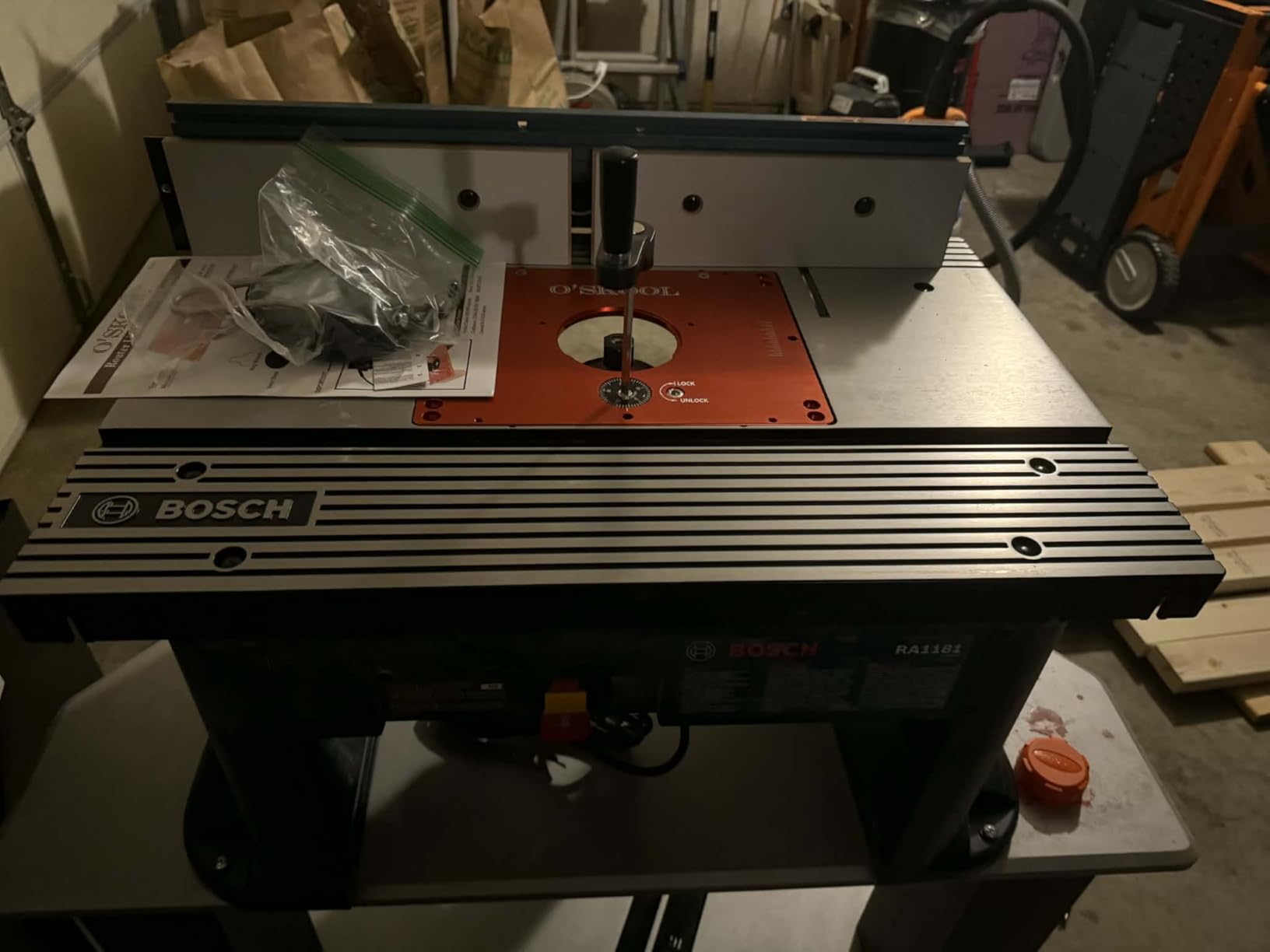
The 11-1/2 by 9-1/8 inch plate is slightly smaller than the common 9-1/4 by 11-3/4 inch opening, which makes it a natural fit for Bosch RA1181 and RA1171 tables. If your table takes the standard larger plate, expect to shim or adjust the opening.
Three inches of travel is enough to raise the collet clear of the plate for a bit change without removing the router. That is the practical floor for comfortable above-table bit changes.
Where it falls short
Leveling screws are not included, so source them before you start. This is the single most common complaint in owner feedback and it is an easy fix, but only if you know about it in advance.
It does not fit the O’SKOOL router table top despite the shared brand name. If you own that table, the RTS05 is the matching system instead.
5. Incra Mast-R-Lift-II-R – Built for Rockler and Bench Dog Tables
Incra Mast-R-Lift-II-R Designed for Rockler Tables
MagnaLOCK ring system
Ball bearing mechanism
16TPI direct drive
15.2 lb
Pros
- MagnaLOCK reducing ring system makes ring changes instant with a solid fit
- Ball bearing mechanism gives very smooth low-friction cranking
- Holds position without creep once locked
- 16TPI direct drive screw supports 0.001 inch adjustments
- Heavy rigid aluminum build resists deformation
Cons
- Designed for Rockler and Bench Dog openings so other tables may need a different plate size
- Insert magnet is very powerful and the pry slot is small
- No way to zero the height gauge on this version
The Incra Mast-R-Lift-II-R is the version you want if your table is a Rockler or a Bench Dog cast iron extension. Owners describe it as essentially a Master Lift II architecture with Incra’s MagnaLOCK reducing ring system, and the ring changes are the part people notice first.
MagnaLOCK holds reducing rings without the usual fiddle, which matters because ring changes are the most frequent adjustment on a working lift. Five steel reducing rings ship in the box at 3/8, 1, 1-5/8, 2-5/8 and 3-5/8 inch, along with the lift crank.
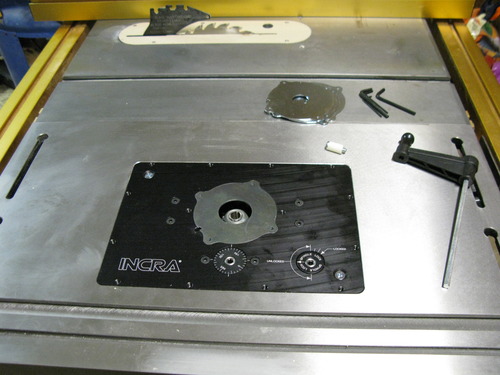
The drive side is a direct-drive 16TPI lift screw running through a ball bearing mechanism, giving very smooth low-friction cranking and 0.001 inch height adjustments. Owners on woodworking forums specifically praise smoothness, quietness and the feel of the crank under Makita 2-1/4 HP class motors.
At 15.2 pounds with an aluminum build, it does not flex under load. Once locked, it holds position without creep, which is what you want when running a full sheet of matched panel stock.
When the MagnaLOCK ring system earns its place
Reducing rings are the part of a lift you touch most, and MagnaLOCK makes the swap a single motion with a solid seat. If you change bits often or run multiple bit diameters, that friction removal is felt dozens of times a week.
The 16TPI screw is coarser than the 20 TPI screws used on several lifts here, so a full turn moves the motor further. That is faster for large moves and slightly less fine for the last thousandth, though the ball bearing drive keeps it precise.
Where it falls short
This is the version built for Rockler and Bench Dog table openings. If your table uses the common 9-1/4 by 11-3/4 inch opening you will need a different plate size, and that is a different product rather than a small accessory.
Two other limitations show up repeatedly. The insert cover magnet is powerful enough that owners find the pry slot too small without raising the motor, and this version has no way to zero the height gauge.
6. SpeTool SP-RP-L – The Widest Motor Range in the Group
SpeTool Router Lift System – Heavy-Duty Aluminum Router Lift Kit for Woodworking, Router Table Lift with Insert Plate 9-1/4″x11-3/4″and Above-Table Adjustment with 3 Magnetic Insert Rings
Fits 2-9/16 to 4-1/4 inch motors
Double-sealed bearings
4-1/4 inch travel
19.8 lb
Pros
- Widest motor compatibility in the group from 2-9/16 to 4-1/4 inch body diameter
- Solid aluminum guide poles with double-sealed linear bearings
- 20 TPI screw with zeroing index ring over 4-1/4 inch of travel
- Two full-size templates make cutting the table opening accurate
- Above-table bit changes and easy router swap
Cons
- Router can shift in the clamp so the bit may sit off perpendicular
- Instruction booklet is minimal
- Template may arrive with a protective film that defeats tape routing
- No bit included to finish the template cut
- Guide posts can occasionally bind while raising
The SpeTool SP-RP-L answers a question the rest of this roundup cannot: what if you want one lift that accepts everything you own. It fits router motors from 2-9/16 to 4-1/4 inch body diameter, covering 1.25, 2.25 and 3.25 HP motors, and it is explicitly listed as compatible with Makita DRT50, SKIL RT1323 and Milwaukee 5615.
The guide poles run in double-sealed linear bearings, which is a heavier-duty arrangement than plain bushings. With a 20 TPI screw and zeroing index ring, you get 0.001 inch precision control across 4-1/4 inch of adjustment range, the most travel of any lift here.
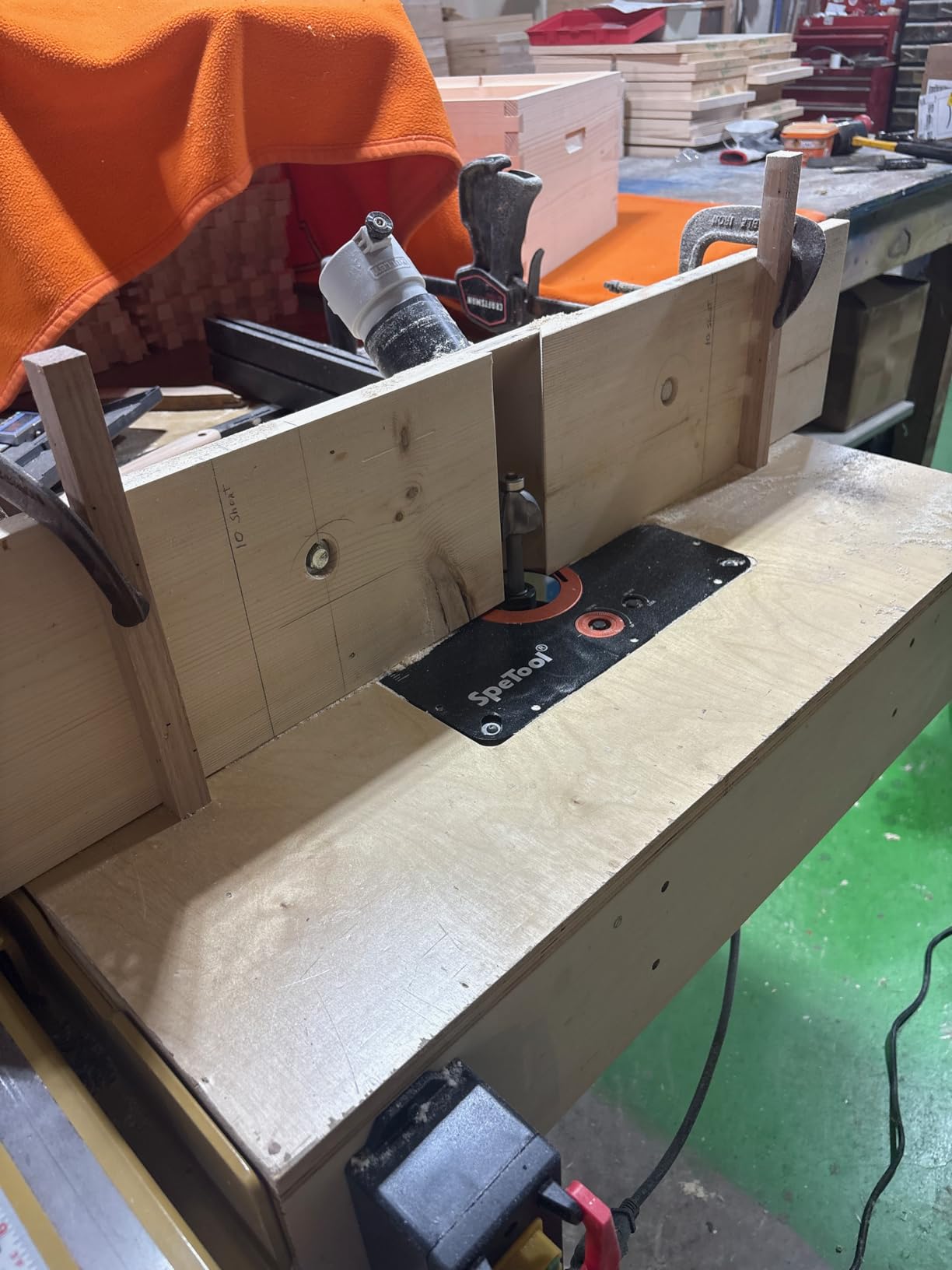
Two full-size templates for cutting a 9-1/4 by 11-3/4 inch opening stand out as a real advantage. Owners repeatedly call the supplied templates a standout versus the paper patterns that ship with other brands, and they are compatible with Kreg and O’SKOOL router tables.
At 19.8 pounds this is the heaviest lift in the group and that weight reads as stability. The heavy all-aluminum construction is scratch-resistant, which keeps the reference surface flat and smooth over time.
Who benefits most from the wide motor range
Shops with a mixed collection of routers. Instead of committing to one motor diameter, you keep a small plunge router on the bench and a full-size fixed-base motor in the table, and the same lift handles both as long as it falls inside the 2-9/16 to 4-1/4 inch window.
Anyone building a new table also gets a real benefit. The included templates remove the guesswork from laying out the opening, which is the step most likely to ruin a solid wood top.
Where it falls short
Clamp rigidity is the recurring complaint. The router can shift inside the clamp, and owners report the bit not staying perfectly perpendicular to the plate. If you rely on identical repeat depth across a full sheet, tighten and re-check before the first cut.
The instruction booklet is minimal, the template may arrive with a protective film that defeats double-sided tape routing, and no router bit is included to finish the template cut cleanly. The guide posts can also occasionally bind while raising until nudged.
7. SawStop RT-LFT Four-Post Router Lift with Lock
SawStop RT-LFT Four-Post Router Lift with Lock
Four-post design
3-1/4 to 4-1/4 inch motors
Integrated lock
16 lb
Pros
- Four-post design supports an unusually wide 3-1/4 to 4-1/4 inch motor range
- Integrated lock keeps the router at a set height for repeat cuts
- Includes reducer collars
- insert ring
- insert wrench and three hex wrenches
- Backed by a limited manufacturer warranty
Cons
- Lowest average rating among the premium lifts we compared
- Uses a phenolic insert ring rather than a thicker aluminum plate
- Highest cost in this roundup
- Only one insert ring diameter included
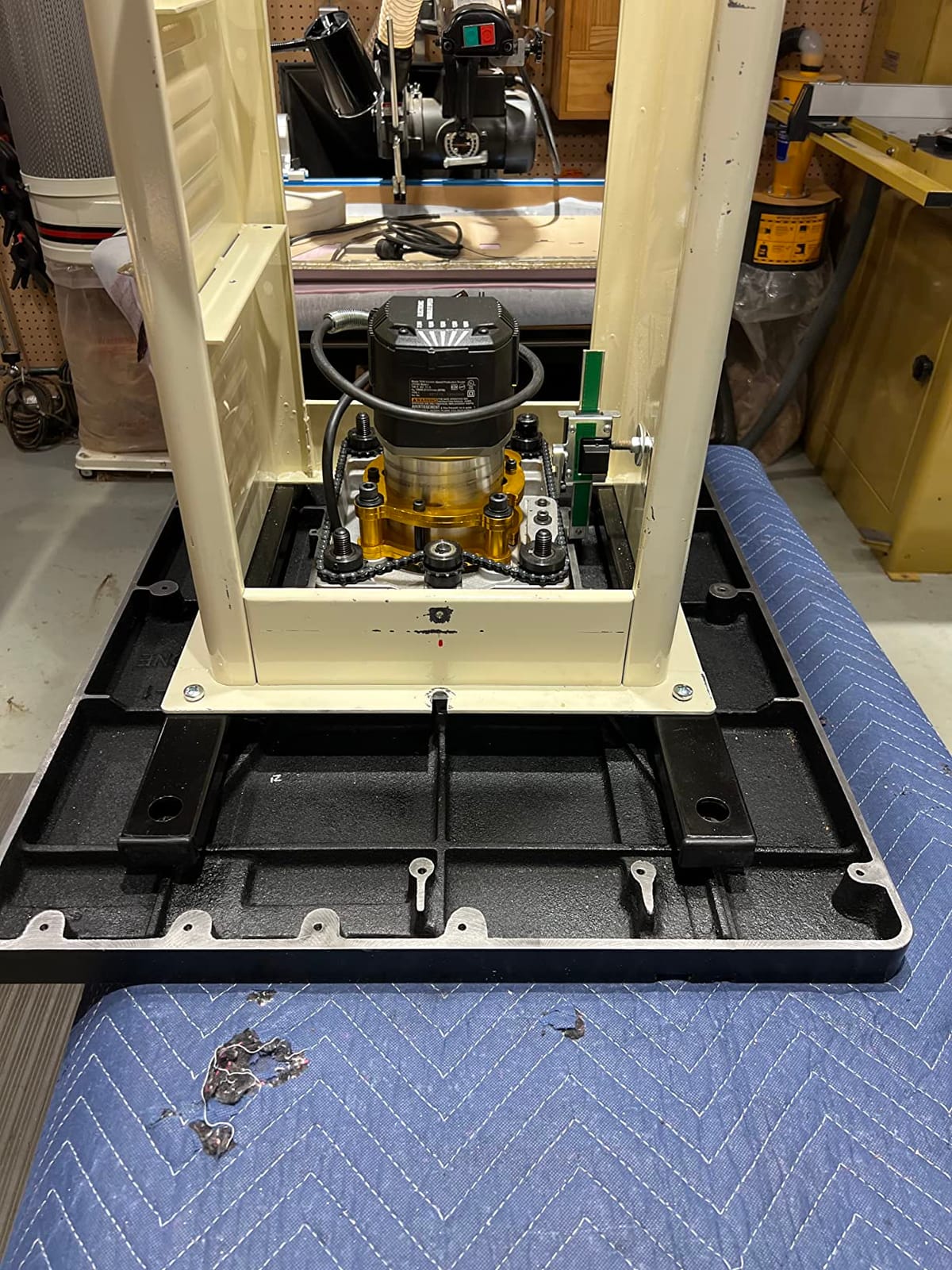
The SawStop RT-LFT is chosen mainly for two things: a four-post design that carries an unusually wide 3-1/4 to 4-1/4 inch motor range, and an integrated lock that holds the set height during repeat cuts. If you own a SawStop table and want the brand-matching system, this is it.
Four posts means the motor is supported at four points rather than two, which is why it accepts motors at both ends of the range. Reducer collars for 3-1/4 and 3-1/2 inch motors are included, along with a 1-1/2 inch phenolic insert ring, an insert wrench and hex wrenches in three sizes.
Owners of SawStop lifts commonly report that this is the best mechanism they have used, and that the four-post layout is stable and quiet. SawStop owners also flag a maintenance point worth knowing before you buy: the chains need routine cleaning and lubrication or they gum up and become hard to move.
The 4.3 average across 63 ratings is the lowest among the premium lifts here, with about 10% one-star feedback. The complaints point at the phenolic ring and the cost rather than at a defect in the mechanism.
What the four-post layout actually buys you
Two-post lifts resist tipping in one direction. Four posts resist it in any direction, which is what allows the RT-LFT to accept a 4-1/4 inch motor that a two-post design would not hold squarely. If you run a heavy fixed-base motor, that stability has practical value.
The integrated lock is separate from the height setting. You set the depth, then engage the lock so the mechanism cannot shift if something bumps the table mid-cut.
Where it falls short
The phenolic insert ring is the main technical compromise. It is adequate for a single included diameter, but it is thinner than the 3/8 inch aluminum plates used by most of the lifts in this roundup, and only one ring diameter is included, so other bit sizes need additional inserts.
It also carries the highest cost in the group. If you are not matching a SawStop table, the trade-off is harder to justify than the Kreg or JessEm options.
8. JessEm Rout-R-Lift 3.5XT – JessEm Build at the Entry Point
JessEm Rout-R-Lift 3.5XT Router Table Lift System for 3-1/2″ Motors
Standard 9-1/4 x 11-3/4 inch plate
3-1/2 inch motors
Double-sealed spindle
Made in Canada
Pros
- Lowest cost in the roundup while keeping JessEm build quality
- Double-sealed bearing spindle operates smoothly and accurately
- Drops into the standard 9-1/4 x 11-3/4 inch opening
- Above-table bit changes are far quicker than under-table adjustment
- Shafts hydraulically pressed into oversized mounts stay rigid
Cons
- Phenolic top plate can sag over time under a heavy motor
- No template included for cutting the table opening
- Thin packaging and one report of bent lift arms
This is the Rout-R-Lift 3.5XT, and it exists because a lot of shops do not need a Master Lift II. It is the cheapest route to JessEm design language, and owners largely agree it delivers: the operation is smooth, and the fit is a genuine advantage.
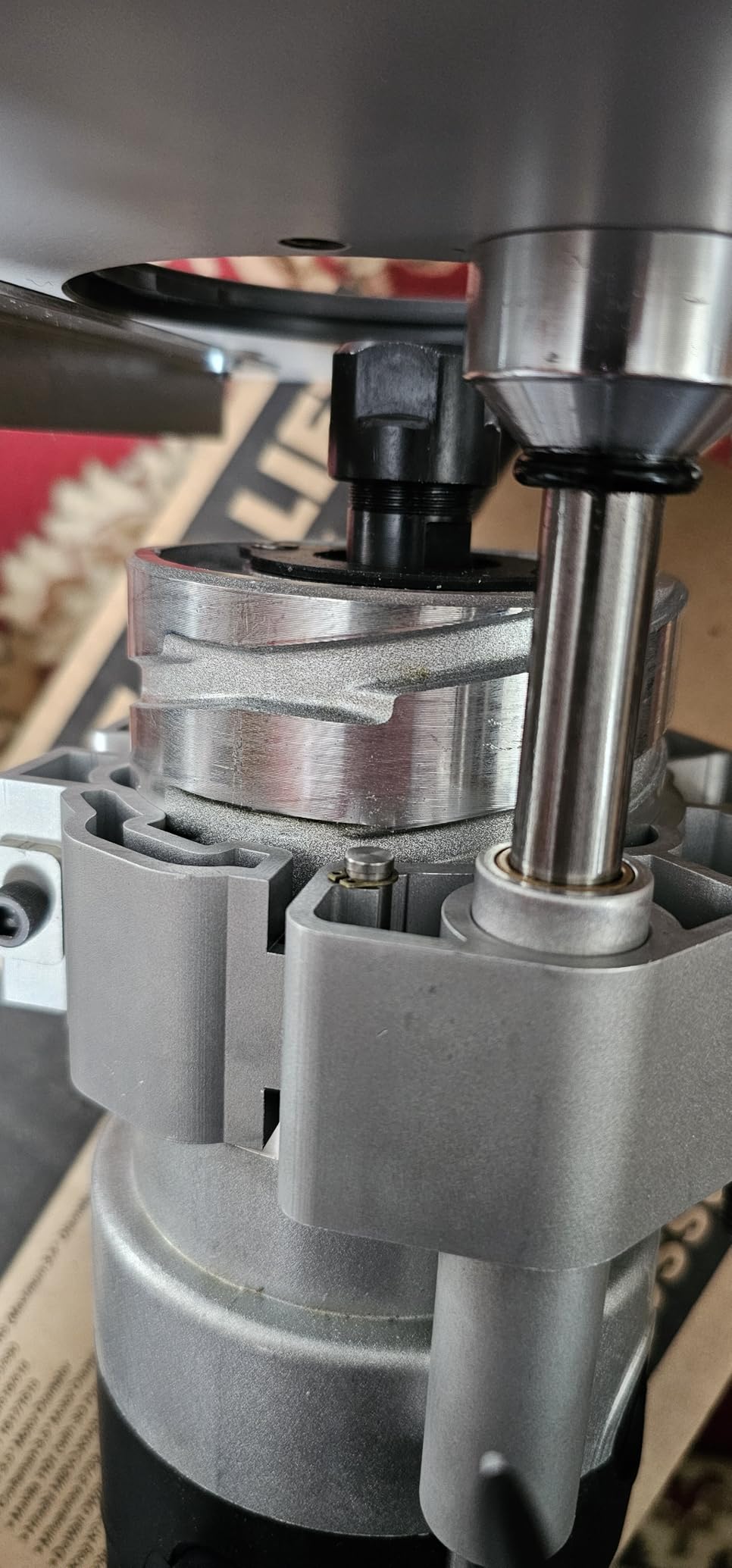
It clamps 3-1/2 inch motors including Porter Cable 690 and 890, DeWalt 610, 616 and 618, Bosch 1617 and 1618, plus Skil and Craftsman fixed-base motors, with no adapter needed. Makita 1101 and Hitachi M12VC fit using an optional printed collar.
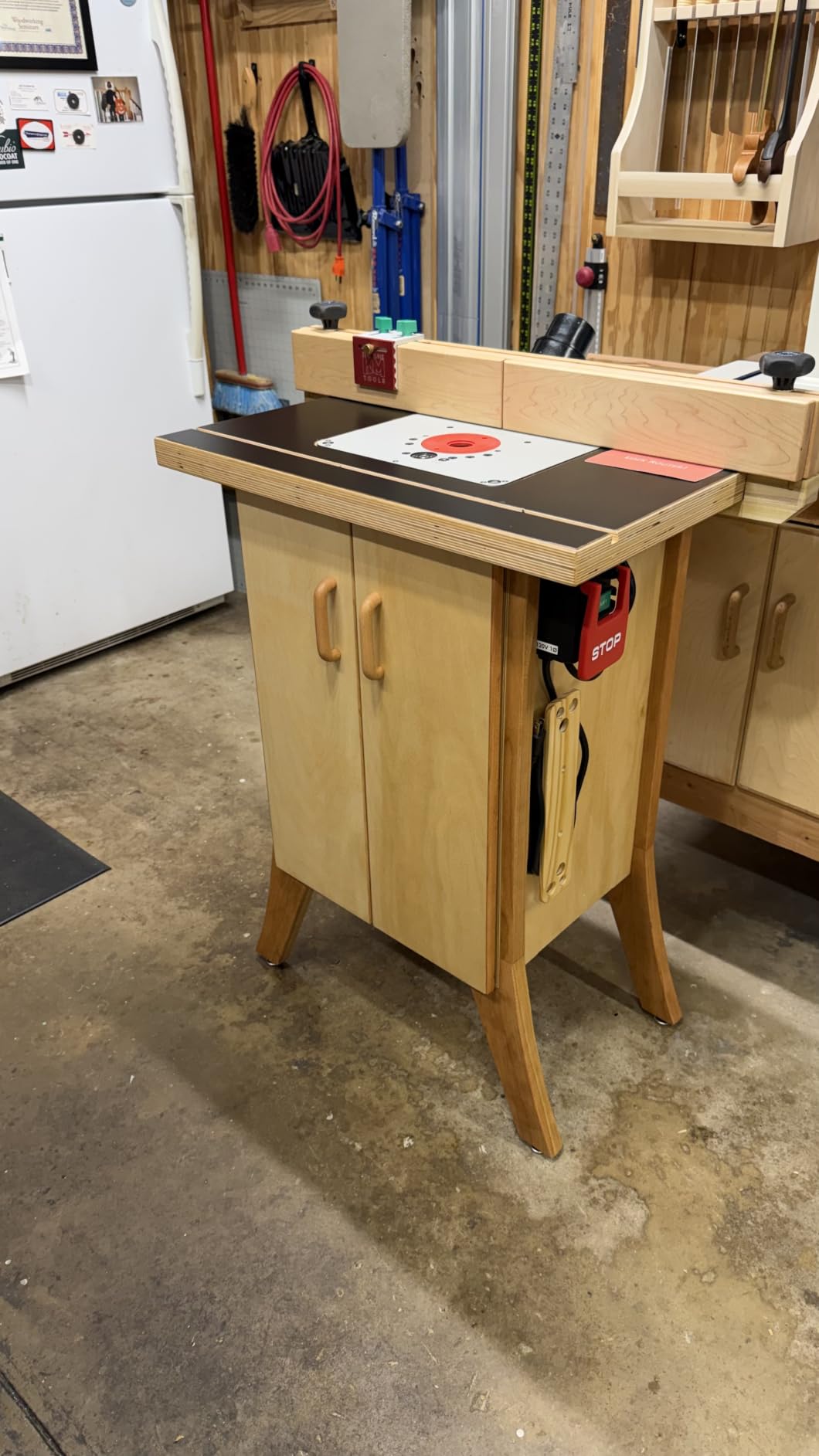
The plate drops into the standard 9-1/4 by 11-3/4 inch opening used by JessEm, Kreg and shop-built tables, so it can upgrade a table you already own. That single fact makes it the easiest recommendation we make for a retrofit.
Raising the collet through the plate lets you swap bits from above, and owners put the speed gain at roughly three times faster than under-table adjustment. Three twist-out insert rings at 1-3/8, 2 and 2-1/2 inch are included, along with the lift handle, ring wrench and hardware.
What you give up compared with the Master Lift II
The top plate is phenolic rather than solid aluminum, and that is the trade-off that defines this model. A stabilizer angle and 10 leveling inserts help, but a phenolic plate can sag over time under a heavy motor, and a sagging reference plate changes your effective bit height.
There is no cam lock. Height is held by the screw, which is adequate and noticeably less rigid than a mechanical cam, and there is no template included if you need to cut a new opening.
Where it fits best
Owners driving a mid-size 3-1/2 inch motor in a table with the standard opening get the most out of it. The hydraulically pressed shafts in oversized mounts keep the lift rigid under a full-size motor, which is the part that usually flexes first on cheaper designs.
It is machined in Canada, and owners on woodworking forums describe the build quality as a genuine step up from generic alternatives. Expect occasional packaging damage, so inspect the lift arms before assembly.
9. JessEm Mast-R-Lift II 02121 – For Smaller Table Openings
JessEm Mast-R-Lift II 02121 Router Lift, 8-1/4-Inch by 11-3/4-Inch
8-1/4 x 11-3/4 inch plate
Cam locking system
13 lb
Double-sealed bearings
Pros
- Cam locking system holds the router dead at the set height
- Smooth accurate action rated as long-lasting equipment
- Enough travel to raise the lock knob clear of the plate for bit changes
- Machined parts at high tolerance with an excellent anodized finish
- Fits Bench Dog cast iron table extensions cleanly
Cons
- Some pieces ship with paint in the leveling screw holes
- Manual may show an older plate style needing 12 leveling screws
- Height dial must be zeroed by hand and is somewhat resistant
- Crank knob can loosen while cranking clockwise
The 02121 is the same cam locking mechanism as the 02120 on a smaller plate. At 8-1/4 by 11-3/4 inch it drops into Bench Dog cast iron router table extensions and other compact openings that will not take the 9-1/4 inch plate.
Owners with decades of professional woodworking describe it as rock solid and accurate enough to dial in repeatable profiles and joinery. The cam lock holds the router dead at the set height, and the double-sealed bearing construction keeps the crank smooth over time.
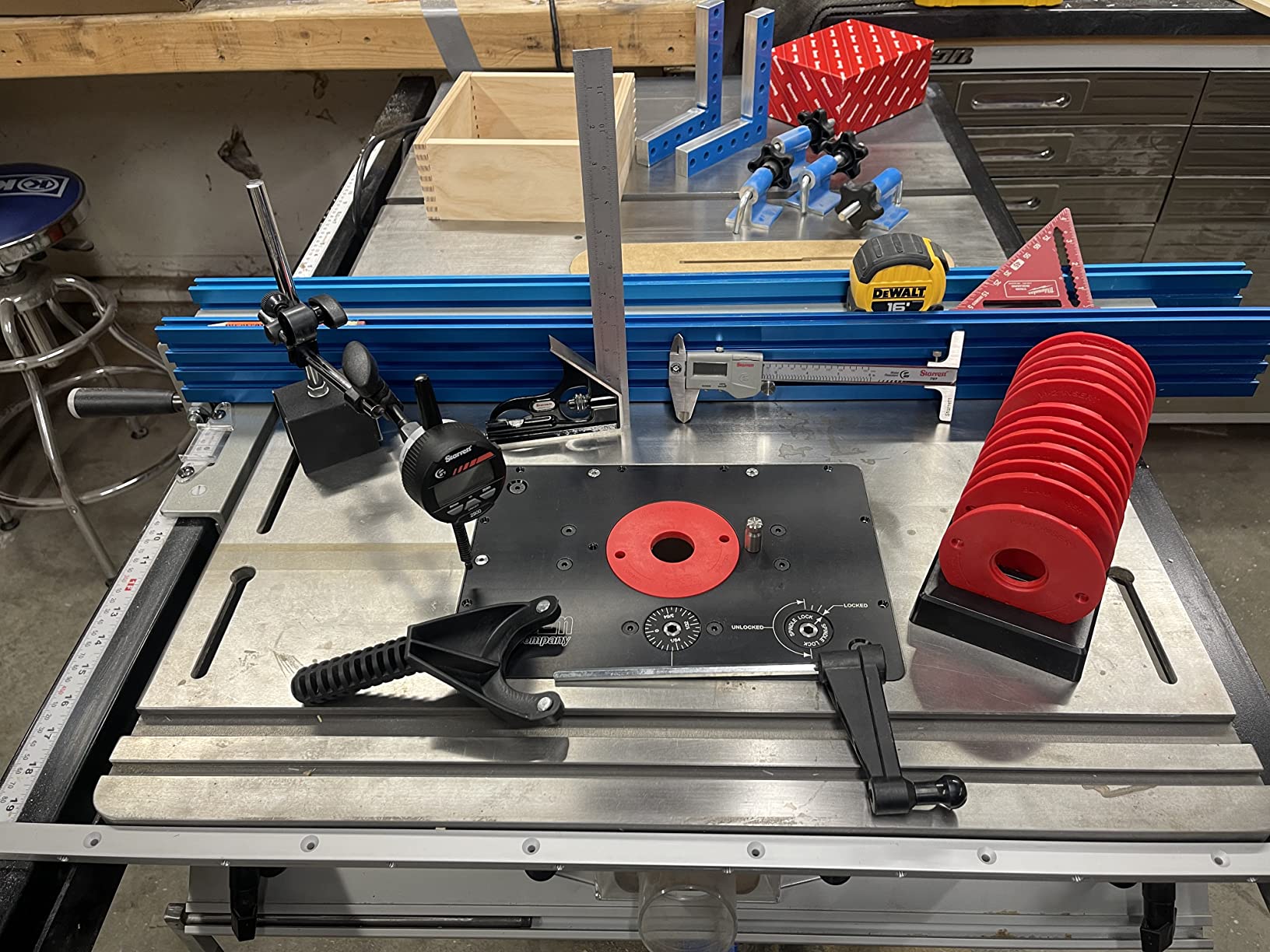
There is enough travel to raise the lock knob clear of the plate, which is a detail that matters more than it sounds. On some lifts the knob stays engaged during a bit change and forces an awkward reach. Not here.
The complaint pattern centers on delivery quality control rather than the mechanism. Owners report paint in the leveling screw holes, which strips or sticks, and a manual that shows an older plate style requiring 12 leveling screws instead of 10.
How to choose between the two JessEm plates
Measure first, then choose. If your opening is 9-1/4 by 11-3/4 inch, the 02120 is the direct match. If it is 8-1/4 by 11-3/4 inch, as on many Bench Dog cast iron extensions, the 02121 is the one that fits without cutting your table.
Both share the cam lock, the double-sealed bearings and the 3/8 inch solid hard-anodized aluminum construction, so you lose nothing in precision by choosing the smaller plate.
Where it falls short
Check the leveling screws before you start. Paint in those holes is the most common first-install complaint on this model, and a stripped screw costs you the plate leveling that makes the lift accurate.
The height dial has to be zeroed by hand and is somewhat resistant to turn. Older pieces also have a reported tendency for the crank knob to loosen while cranking clockwise, so check it during the first few adjustments.
10. Rockler Router Lift Kit – Fast Raising With Tool-Free Ring Changes
Rockler Router Lift Kit with Aluminum Plate 8-1/4 x 11-3/4
Two-speed Quick-Gear
Snap-Lock ring changes
8-1/4 x 11-3/4 inch plate
0.001 inch fine setting
Pros
- Two-speed Quick-Gear for fast coarse raising then precision fine adjustment
- Snap-Lock tool-free insert ring changes with no hex keys to hunt down
- 3/8 inch solid aluminum plate resists sag and scratches
- Kit includes the lift
- plate
- insert ring and hex keys on a key chain
Cons
- Lowest average rating in the group
- Only a single insert ring diameter is included
- Most critical feedback concerns finish and hardware quality
- 8-1/4 inch plate limits it to smaller table openings
The Rockler kit is the only lift here with a genuine two-speed gear. The Quick-Gear raises the router fast, then you down-shift to the precision gear for fine work, and the final height sets to within 0.001 inch. On a 1-1/2 inch insert ring, that is a fast workflow.
The Snap-Lock system is the other headline. Push the button to release the insert ring, wind the Quick-Gear to bring the bit above the table, change the bit, then click the ring back in. No hex keys, no searching for the wrench with a spinning bit nearby.
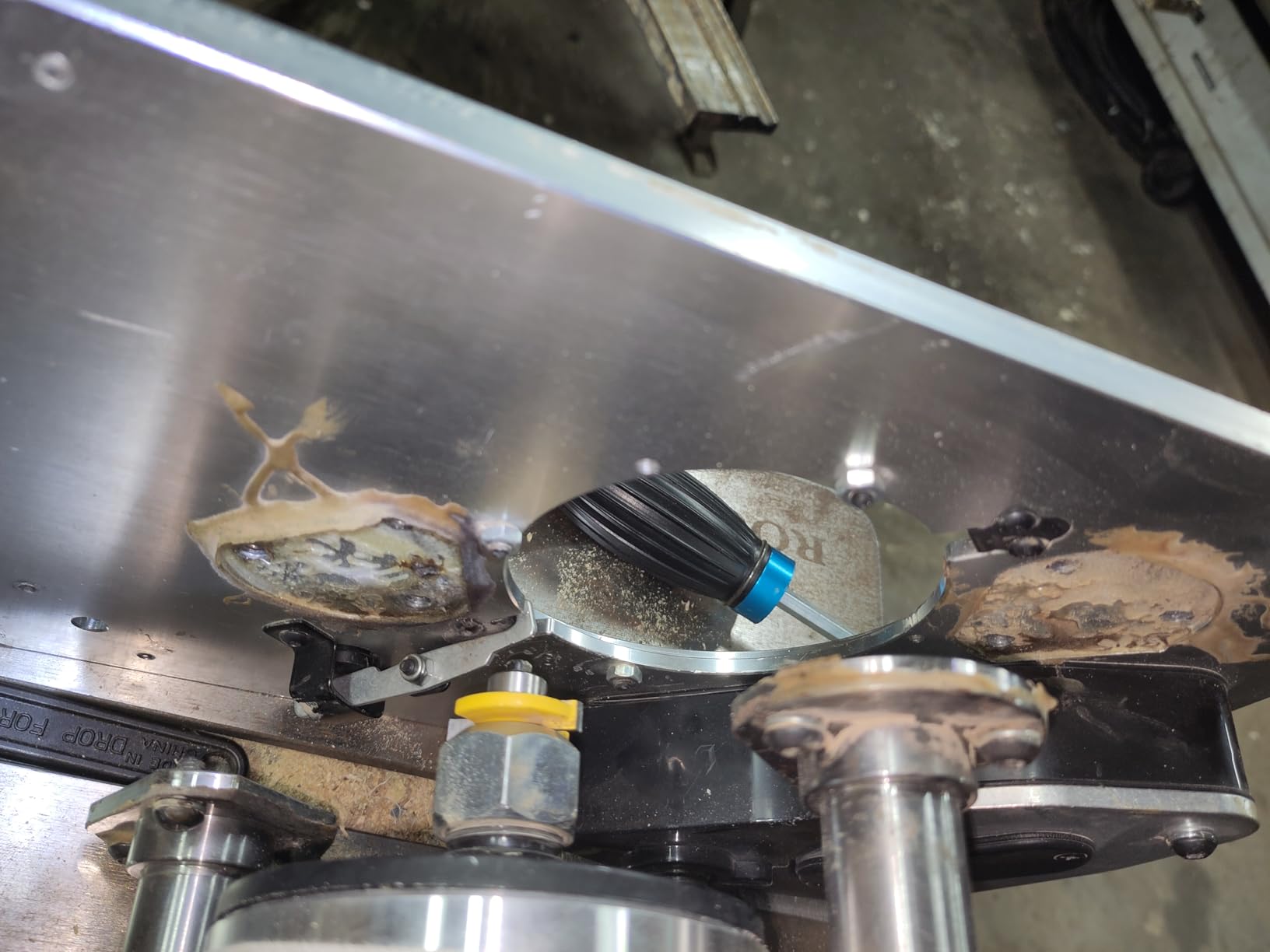
The kit is complete for a fresh install: Rockler Pro lift, a 3/8 inch thick aluminum plate sized 8-1/4 by 11-3/4 inch, a 1-1/2 inch inside diameter insert ring and a set of hex keys on a key chain. That last detail is small and genuinely thoughtful.
The 4.0 average across 30 ratings is the lowest in the group, with about 15% one-star feedback. Reading the feedback carefully, the criticism lands on finish and hardware quality rather than on whether the adjustment concept works.
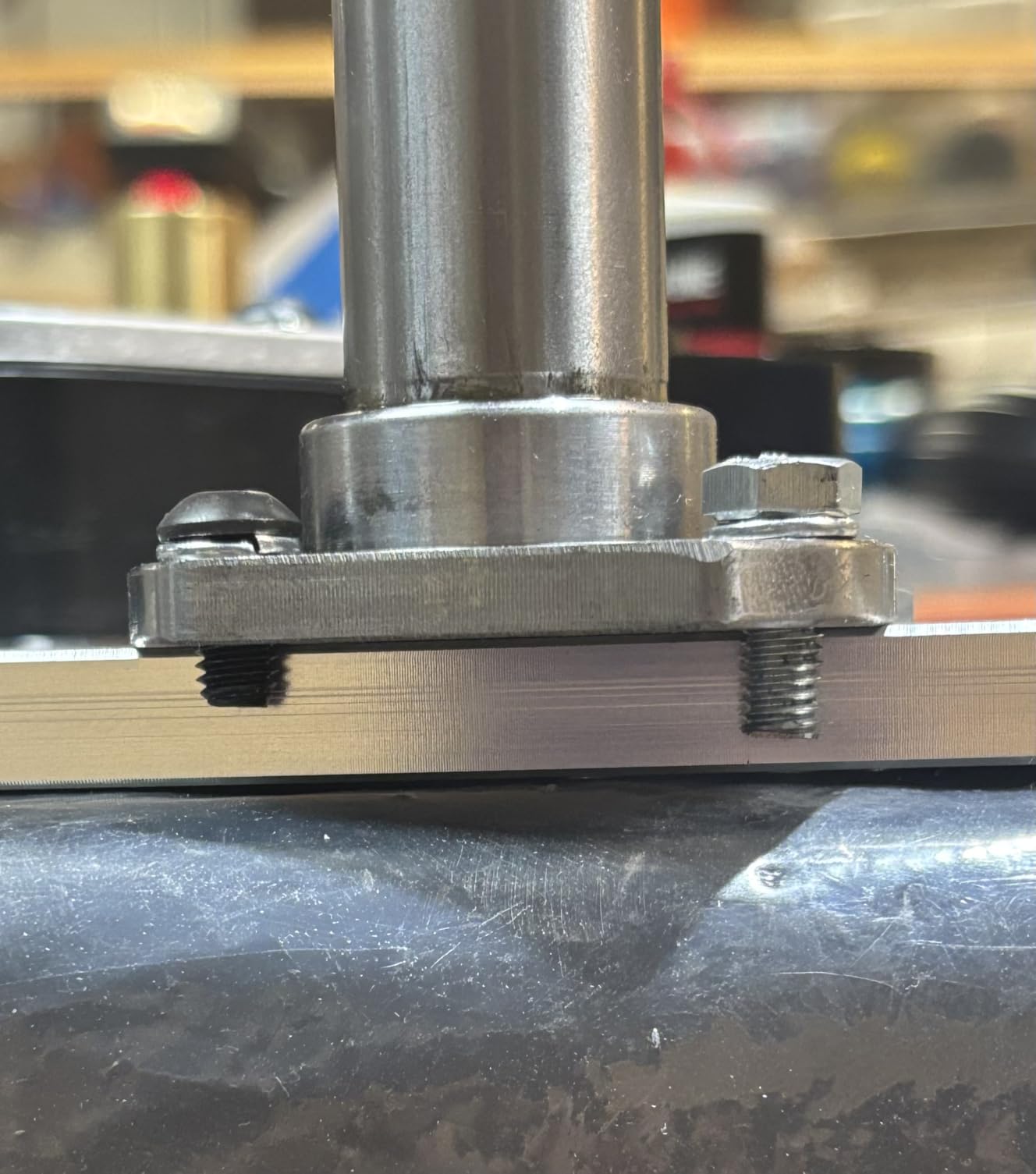
Why a two-speed gear changes the pace of work
A single-speed fine screw makes every bit change slow, because you crank through a long travel with a screw that only moves 0.05 inch per turn. The Quick-Gear skips that entirely, and the fine gear takes over only for the last fraction.
Tool-free ring changes matter for a different reason. Every time you loosen a ring on a competing lift, you need a specific wrench, and doing that with a router running at speed is how dropped hardware happens. Snap-Lock removes the step.
Where it falls short
Only one insert ring diameter is included, so other bit sizes mean ordering more inserts separately. The 8-1/4 inch plate also limits it to smaller openings, which rules out the standard 9-1/4 by 11-3/4 inch bench-top tables without modification.
With 30 ratings the social proof is thin compared with the other lifts here, and the finish and hardware quality draw the most critical feedback. Inspect the hardware on arrival before you start cutting a new opening.
Router Lift Buying Guide: Nine Things That Matter
1. Motor diameter is the first filter. Measure the cylindrical body, not the base. Most handheld routers are 3-1/4 or 3-1/2 inch, and that number removes half the field before you read a single feature. A lift that only takes 3-1/2 inch motors will not accept a 3-1/4 inch router without an adapter collar, and not every brand sells one.
2. Top plate size decides whether you can use your table. The common openings are 9-1/4 by 11-3/4 inch and 8-1/4 by 11-3/4 inch. Buy the plate that matches your opening exactly and you avoid trimming a solid wood top. Buy the wrong one and you are routing a new hole on day one.
3. Corner screw pattern is the hidden compatibility trap. This is the single most repeated complaint in owner feedback. Plates from different brands often use different corner hole spacing, so a plate can fit the opening and still require new screw holes in your table. JessEm users in Kreg tables hit this most often.
4. Understand the drive mechanism. Threaded spindle designs are the norm here, and the number that matters is threads per inch. A 16 TPI screw moves the motor faster per turn, a 20 TPI screw gives finer increments per revolution. Both reach 0.001 inch with a good index ring, but they feel different at the crank.
5. Above-table versus below-table adjustment is the whole point. Every lift in this roundup is an above-table adjustment system. Owners describe above-table bit changes as roughly three times faster than reaching under the bench, and the safety benefit of never putting a hand near a spinning collet matters more than the speed.
6. Locking mechanism determines repeat accuracy. Cam locks close mechanically on the carriage and do not creep during a long cut. Screw-only lifts rely on thread friction, which is adequate for short cuts and drifts during a full sheet. For matched panel work, a cam lock is worth the premium.
7. Check what the box does not include. Across this group, leveling screws, mounting screws, insert rings beyond one size and routing templates are the most common omissions. Add them to your parts list before the lift arrives, not after you are mid-install.
8. Plan for dust and maintenance. Dado work and profile routing throw fine dust straight down the throat opening into the mechanism. Keep the throat clear and vacuum regularly. Chain-driven systems need routine cleaning and lubrication, and cast iron surfaces need protection from moisture if your shop is damp.
9. Consider a plunge router before you buy a lift at all. A plunge base gives you the same height range with less hardware, costs far less and takes up no table space. If your routing is mostly flush trimming and template work away from a fence, a plunge router is genuinely the better tool. A lift earns its place when you need a fence, a miter gauge and repeat joinery depths.
If you are still working out which table the lift goes into, our router table roundup covers the opening sizes and throat clearances that pair well with each lift above.
Where Each Lift Sits in the Budget-to-Premium Range
Entry level. The JessEm Rout-R-Lift 3.5XT and the two O’SKOOL systems sit here. All three deliver above-table adjustment with an index ring and multiple insert rings, and the O’SKOOL RTS017 even carries the highest rating in the group. The compromises are phenolic plates, omitted leveling screws or plates that need trimming.
Mainstream. The Kreg PRS5000 and SpeTool SP-RP-L occupy this range. The Kreg leads on proven reliability and the deepest review history. The SpeTool leads on motor range, travel and included templates. Either is a defensible long-term choice for a working shop.
Premium. The JessEm Master Lift II models, the Incra Mast-R-Lift-II-R, the SawStop RT-LFT and the Rockler kit sit at the top. You are paying for cam locks, ball bearing or double-sealed linear bearing drives, brand-matched plate sizes and wider motor support. The SawStop and Rockler options also carry the lowest ratings in the group, so read the fitment details carefully first.
Frequently Asked Questions
What is the difference between a router table and a router lift?
A router table gives you a flat surface, a fence and an opening for a router base. A router lift mounts under that table and raises or lowers the clamped router through the insert, so you set bit height and change bits from above the table instead of underneath. The table supports the work; the lift controls the height.
Does any router fit any router table?
No. A lift must match your motor diameter, usually 3-1/4 or 3-1/2 inch, and your table opening size, commonly 9-1/4 by 11-3/4 inch or 8-1/4 by 11-3/4 inch. Corner screw spacing also varies between brands, so a plate can fit the opening and still need relocated holes. Measure all three before ordering.
What is the perfect height for a router table?
Most shops set the router table surface between 32 and 34 inches from the floor, which sits near elbow height for an average standing adult and matches the height of a standard table saw. If you work primarily seated, or use the table with a miter gauge and sled, a slightly lower surface gives better control.
What is the best router for router table lifts?
For a 3-1/2 inch lift, the most common fit list includes the Porter Cable 690 and 890, DeWalt 610, 616 and 618, Bosch 1617 and 1618, plus several Craftsman and Skil fixed-base models. Check the lift manufacturer list against your motor diameter before buying. A mid-size motor is usually the best balance of power and weight for table work.
What is the best-rated router lift?
Among the lifts we compared, the O’SKOOL RTS017 has the highest average rating at 4.8, followed by the Kreg PRS5000 and the JessEm Master Lift II 02120, both at 4.7. The Kreg leads on total owner feedback at more than 800 ratings, so it carries the strongest combination of rating and long-term evidence.
What are people saying about the Kreg router lift?
Owners consistently praise the PRS5000 for smooth, repeatable above-table height changes and straightforward installation in Kreg tables, with an 85% five-star share. The most common gripes are slight variation in crank feel between production runs and thread wear caused by driving the adjustment with a power drill instead of the hand crank.
Where are JessEm router lifts made?
The JessEm Rout-R-Lift 3.5XT is CNC machined in Canada according to the manufacturer, and the double-sealed bearing design is a long-standing part of the brand. JessEm has been the most frequently recommended lift brand across woodworking forum threads, which is largely why community consensus favors it.
Which router table is better, Bosch or Kreg?
Both build solid tables and both have a large installed base. Bosch tables use an 11-1/2 by 9-1/8 inch style opening on some models, which suits the O’SKOOL RTS017, while Kreg tables use the common 9-1/4 by 11-3/4 inch opening that accepts the Kreg PRS5000 and most other lifts. Match the opening before matching the brand. See our router table guide for the full comparison.
Which Router Lift Should You Buy in 2026?
Start with measurements, not brands. Confirm your motor diameter, measure the table opening, and check the corner screw pattern before you look at any feature list. Everything else is secondary.
With those numbers in hand, the Kreg PRS5000 is our pick as the best router lift for router tables in 2026. It carries the strongest combination of owner feedback and rating in this roundup, its 9-1/4 by 11-3/4 inch plate fits the most common bench-top opening, and owners report repeatable above-table height changes without complaint beyond crank feel variation.
Buys elsewhere? Take the JessEm Master Lift II for cam lock precision on repeat joinery, the O’SKOOL RTS05 for the best precision-to-cost balance, the SpeTool SP-RP-L if you own more than one motor, or the Incra Mast-R-Lift-II-R if your table is a Rockler or Bench Dog. Check the price on each below before you commit, and hold off entirely if a plunge router already covers your work.