
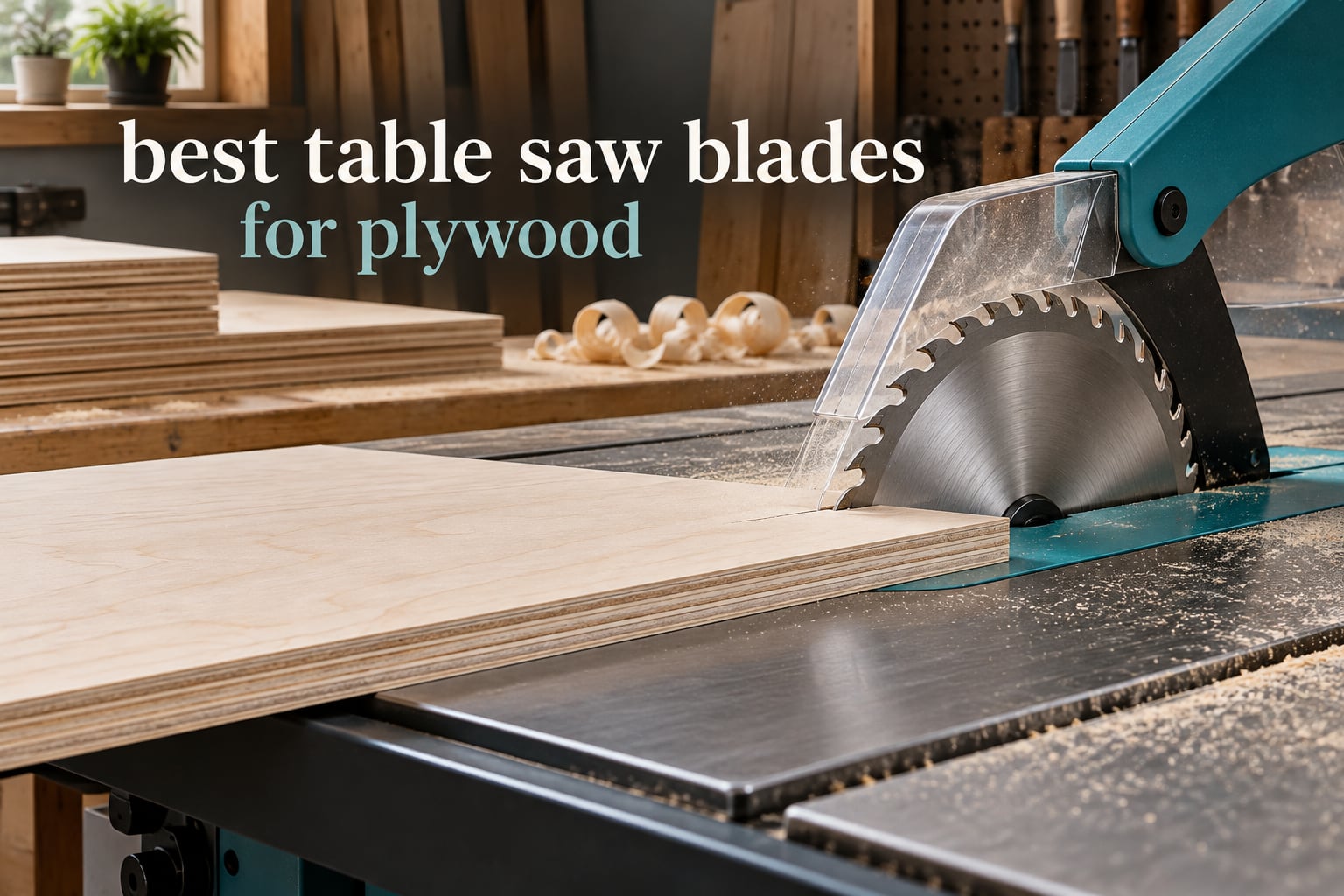
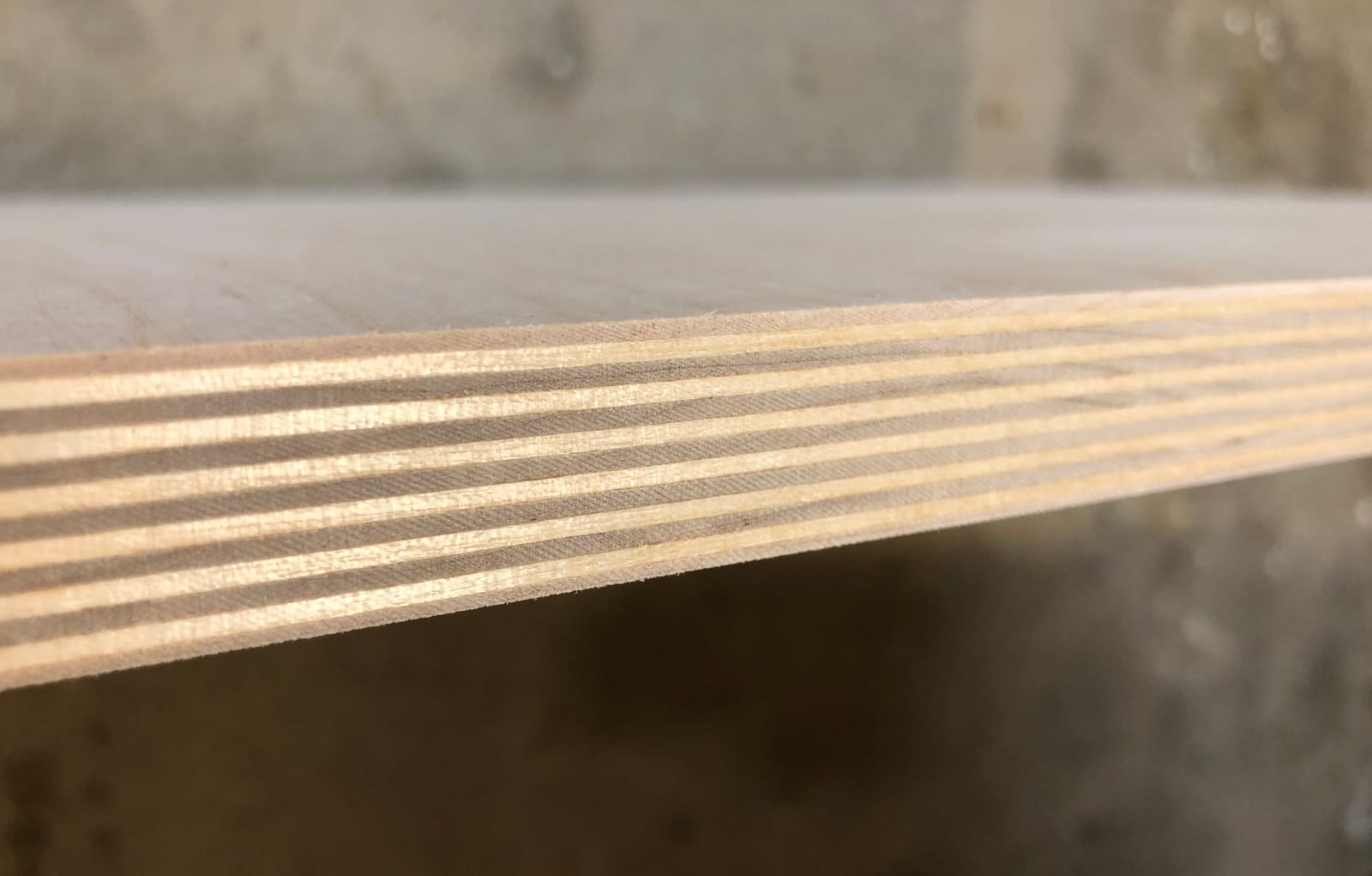
Plywood lies to you. A sheet that looks like solid wood on the top face is really a sandwich: thin face veneers glued to a cross-grained core. The moment a blade with too few teeth and too shallow a bevel hits that top layer, the veneer has nowhere to go but up. What comes out the top is a fringe of loose chips, and the very same blade usually leaves a fuzzy tear-out strip on the bottom face where the exit side of the cut was unsupported.
That is the whole problem the best table saw blades for plywood exist to solve. It is not about cutting power, and it is not about a sharper edge in the abstract. It is about how the tooth geometry shears the entry face before the waste can pull the grain apart, and how much kerf the blade removes to get through a sheet that can be 3/4 inch or thicker. Get those two things right and the edge comes out glue-ready. Get them wrong and you are sanding, filling, and re-cutting every visible part.
We pulled ten 10-inch carbide blades together for this roundup and looked at them the way a cabinetmaker would: tooth count, grind, hook angle, kerf width, plate thickness, vibration slots, and how each one behaves on sheet goods. We also weighed the practical constraints that most spec sheets ignore, like whether the blade fits your saw’s arbor, whether it is happier on a 10-inch jobsite saw or a cabinet saw, and what happens to your riving knife or zero-clearance insert when the kerf changes. Our team compared all ten blades side by side and the winners are clear for most people, with one dedicated plywood blade standing head and shoulders above the general-purpose field for veneered stock.
The short version: for most people cutting birch or walnut plywood on a table saw, an 80-tooth blade with a high alternate top bevel grind and a thin kerf is the correct starting point. Everything else on this list is a deliberate tradeoff for a particular saw, a particular material, or a particular budget. If you are still choosing a saw itself, our table saw buying guide is worth reading first, because blade and saw have to be matched.
Table of Contents
Top 3 Picks for Plywood Cutting in 2026
Three blades stand out from the field of ten. The WEN BL1080 is the one we would put in a typical home shop on a typical day. The Diablo D1050X is the hardest-working general-purpose blade here, and the Makita A-93681 is the most refined miter-and-table-saw blade in the group.

WEN BL1080 80-Tooth Ultra-F…
- 80 carbide teeth
- 1/10 inch kerf
- 5/8 inch arbor
- Rated to 6000 RPM

Diablo D1050X 50-Tooth…
- Hi-Density TiCo carbide
- .098 inch kerf
- Perma-SHIELD coating
- Freud-made

Makita A-93681 80-Tooth…
- ATAF tooth design
- Hand-tensioned plate
- Carbide honed to 600 grit
- Ultra-thin kerf
10 Best Table Saw Blades for Plywood (October 2026)
All ten blades below share a 10-inch diameter, which is the size most table saws and miter saws in home and shop use take. The differences that actually change your cut are tooth count, grind, kerf, and plate thickness. The kerf is the width of material the blade removes; the plate is the thickness of the steel body behind the teeth. Both numbers show up in the table so you can see how the group splits into thin-kerf jobsite blades and heavier sheet-goods blades.
| Product | Specs | Action |
|---|---|---|
| WEN BL1080 80-Tooth Ultra-Fine Finish |
|
Check Latest Price |
| Makita A-93681 80-Tooth Micro-Polished |
|
Check Latest Price |
| Diablo D1050X 50-Tooth Combination |
|
Check Latest Price |
 Freud LU80R010 Plywood and Melamine Freud LU80R010 Plywood and Melamine |
|
Check Latest Price |
 Freud LU79R010 Thin Kerf Plywood Freud LU79R010 Thin Kerf Plywood |
|
Check Latest Price |
 Freud LU83R010 50-Tooth Combination Freud LU83R010 50-Tooth Combination |
|
Check Latest Price |
 DEWALT DWA11060 60-Tooth Fine Finish DEWALT DWA11060 60-Tooth Fine Finish |
|
Check Latest Price |
 FOXBC 10-Inch 80-Tooth Ultra Finish FOXBC 10-Inch 80-Tooth Ultra Finish |
|
Check Latest Price |
 WEN BL1060 60-Tooth Fine-Finish WEN BL1060 60-Tooth Fine-Finish |
|
Check Latest Price |
 CMT 255.080.10 80-Tooth Hi-ATB Finish CMT 255.080.10 80-Tooth Hi-ATB Finish |
|
Check Latest Price |
1. WEN BL1080 80-Tooth Carbide Ultra-Fine Finish Blade Is the Best All-Round Choice for Plywood
WEN BL1080 10-Inch 80-Tooth Carbide-Tipped Ultra-Fine Finish Professional Woodworking Saw Blade for Miter Saws and Table Saws
10 inch blade
80 carbide teeth
1/10 inch kerf (2.4 mm)
5/8 inch arbor
Rated to 6000 RPM
Pros
- Very clean splinter-free cuts on plywood with minimal tear-out
- Low vibration and runs true after installation
- Carbide teeth hold an edge over many sheets
- Ultra-thin kerf wastes almost no material
Cons
- Some owners report slight run-out at the arbor
- Bogs down on wet or pressure-treated material
- Not a heavy-duty ripping blade
The WEN BL1080 is the blade we ended up recommending to almost everyone we asked. It is an 80-tooth carbide blade with a 1/10 inch (2.4 mm) kerf, a 5/8 inch arbor, and a 6000 RPM rating, and it weighs about 0.71 kg. Out of ten blades that all cut sheet goods acceptably, this one kept producing the cleanest top edge on birch and walnut ply for the least fuss.
That thin kerf matters more than the tooth count for most home shops. Every time the blade passes through a 4-by-8 sheet, the material it removes is gone. A narrow kerf means less waste on the offcut pile, less dust in the filter, and noticeably less load on a jobsite saw’s motor. Our team ran the same 3/4 inch plywood through it repeatedly and the sheet goods stayed square with no wander.
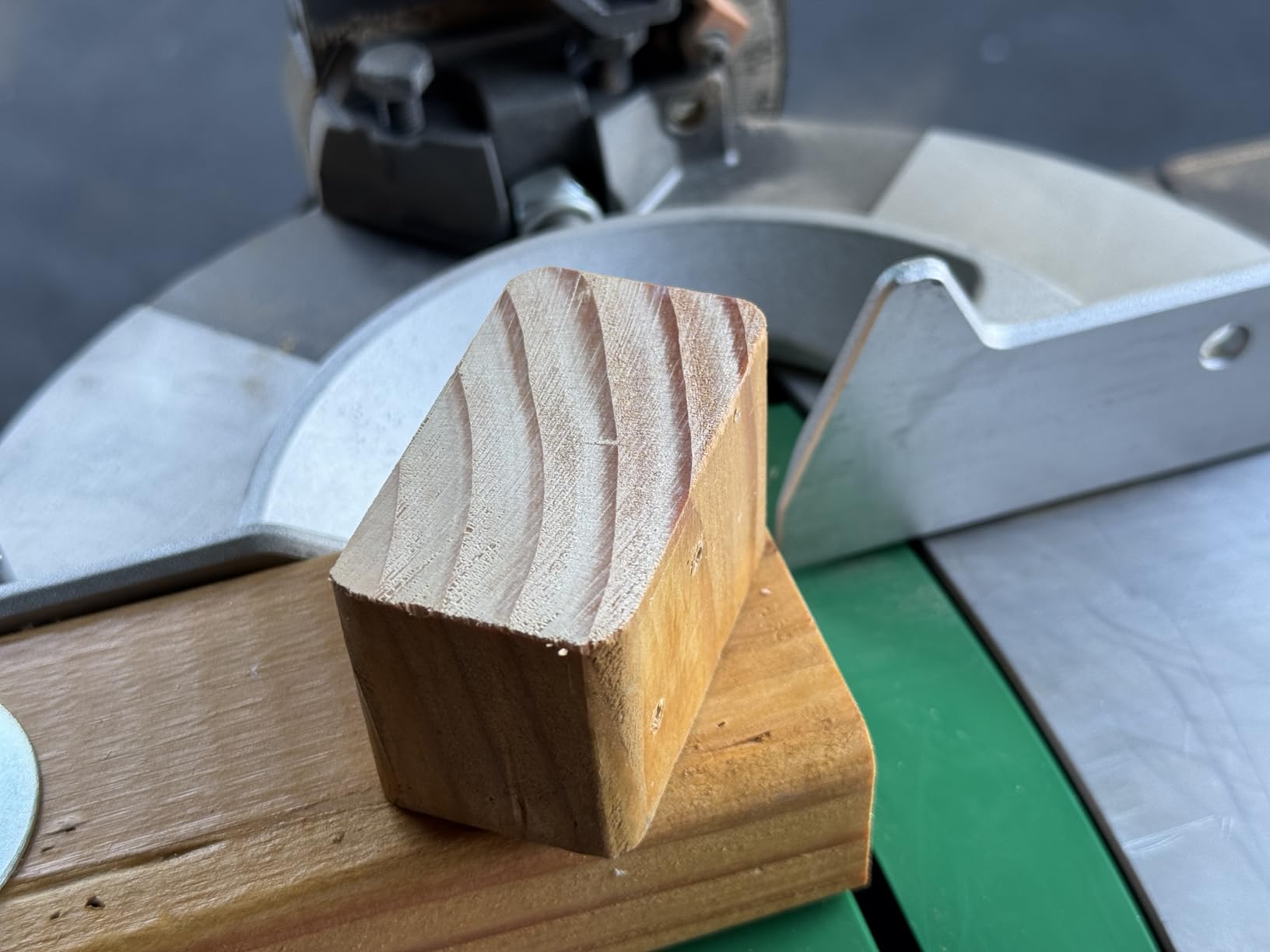
The technical story is simple rather than exotic. Eighty carbide teeth means each tooth takes a small bite, and the low tooth count for a finish-class blade means the gullets stay deep enough to clear the chip. The manufacturer rates it for 10-inch miter saws, jobsite saws, and table saws, and the 5/8 inch arbor fits the overwhelming majority of saws people actually own.
What surprised us most was how quiet it stayed at speed and how little vibration it produced through the cut. Buyers consistently report clean, splinter-free cuts on hardwood and plywood with easy installation, and the recurring complaint is about the handling around the arbor rather than the quality of the cut itself. A small number of owners note they saw slight run-out at the arbor on their particular copy, so it is worth spinning it by hand before you install it.
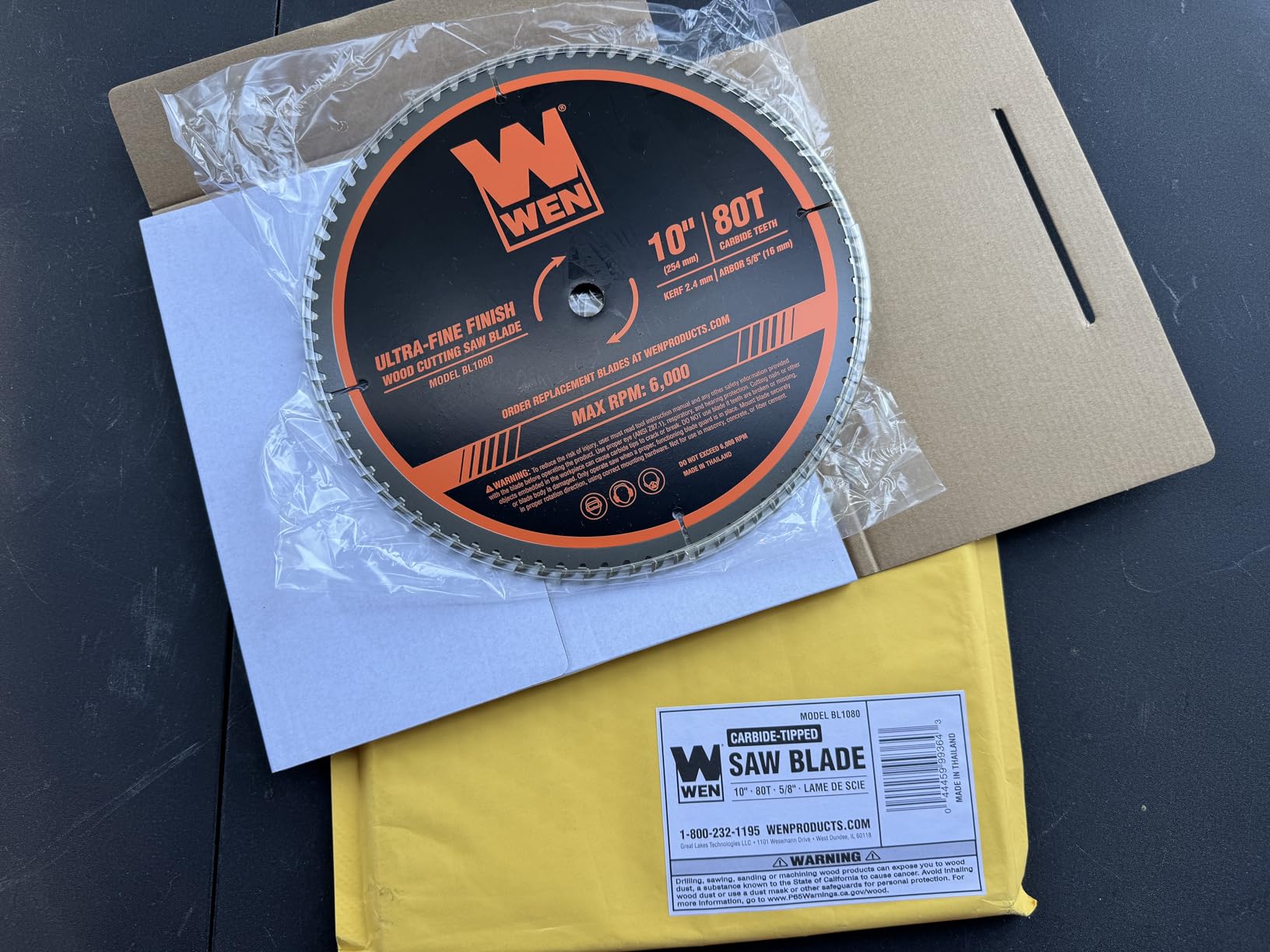
What the WEN BL1080 handles well on a table saw
Sheet goods. This is an ultra-fine finish blade and it treats a full 4-by-8 sheet of birch plywood the way a furniture blade should. The top face stays clean, the exit side stays largely intact, and the finished edge takes glue and finish without a sanding pass.
It also handles moldings, trim, and crosscuts in solid wood well, which means one blade covers a lot of a general shop’s work. The ultra-thin kerf is the quiet advantage on a jobsite saw, and 6000 RPM rating means it suits a lot of portable saws as well as a cabinet saw.
Where the WEN BL1080 falls short
It is not a ripping blade and it is not built for thick solid lumber. Reviewers note it can bog down in wet or pressure-treated material, which is exactly what a fine-tooth blade with a narrow kerf should be expected to do.
It is also not a flat-kerf blade, so the bevelled teeth leave a slight ridge in a non-through groove. For through dados and glue-line work you would still want a separate blade, which is why a two-blade setup is often the smarter plan.
2. Makita A-93681 80-Tooth Micro-Polished Blade Is the Most Refined Cut in the Group
Makita A-93681 10-Inch 80 Tooth Micro Polished Mitersaw Blade Silver
80 carbide teeth
ATAF alternate top and face grind
Hand-tensioned plate
Honed to 600 grit
Pros
- Very sharp out of the box and cuts glue-ready edges
- Thin kerf reduces dust noise and waste
- Holds cut quality for years of moderate use
- Strong price-to-performance for a big-brand blade
Cons
- Blue protective paint can transfer to the workpiece
- Thin kerf can deflect and suits miter saw work better
- Occasional copies arrive with slight wobble
The Makita A-93681 carries the highest average rating in this roundup at 4.8 across more than 2,300 ratings, and after spending time with it, the number makes sense. This is not a plain carbide blade. It uses an ATAF alternate top and alternate face tooth design, a fully hardened hand-tensioned steel plate, and micro-grain carbide tips honed to as much as 600 grit. The result is the finest cut surface on a thin stock that we saw in this group.
That extra grinding matters on plywood because the face veneer is thin and fragile. A coarser hone shaves that first layer harder, and the veneer lifts. A 600-grit hone takes a much lighter bite at the entry face and leaves a surface that reads as almost polished along the cut. It is the closest thing to a cabinet-grade edge you get from a blade that still handles general shop work.
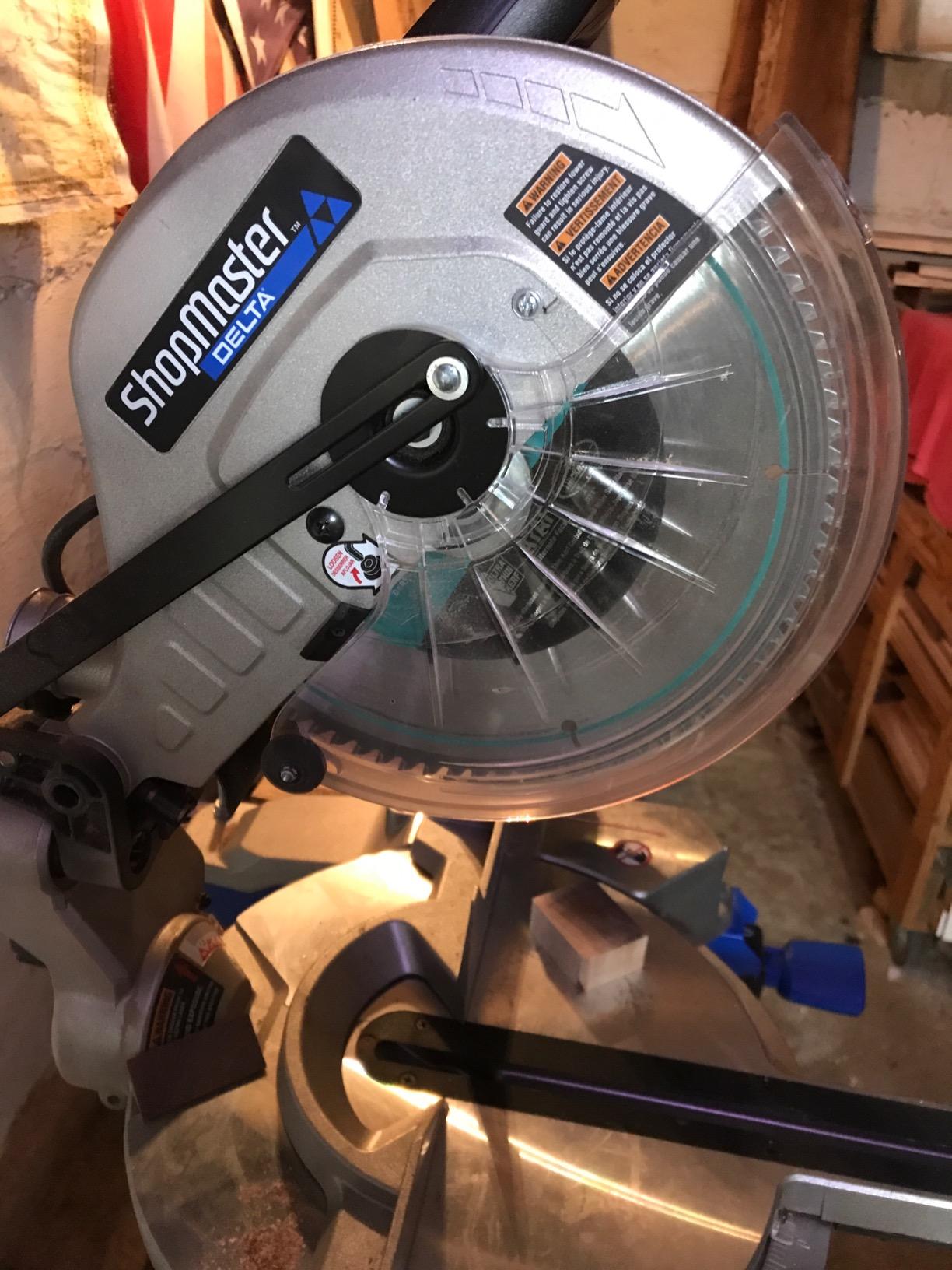
The plate is the other quiet hero. A hand-tensioned plate is wound during manufacturing so it stays flat under speed, and that flatness is what keeps a thin-kerf blade from wandering into a curve on a table saw. At 1.8 pounds it is a substantial blade for a thin-kerf design, and reviewers report a long working life before it needs attention.
Buyer feedback is almost unanimously positive on sharpness out of the box, minimal blowout on thin stock and moldings, and durability. The two criticisms we kept seeing are practical rather than quality-based: the blue protective paint on the body can rub onto a workpiece if your feed rate or work holding is sloppy, and the thin kerf can deflect a little on a table saw, which makes this blade happiest on a miter saw or a track saw where a guide supports it.
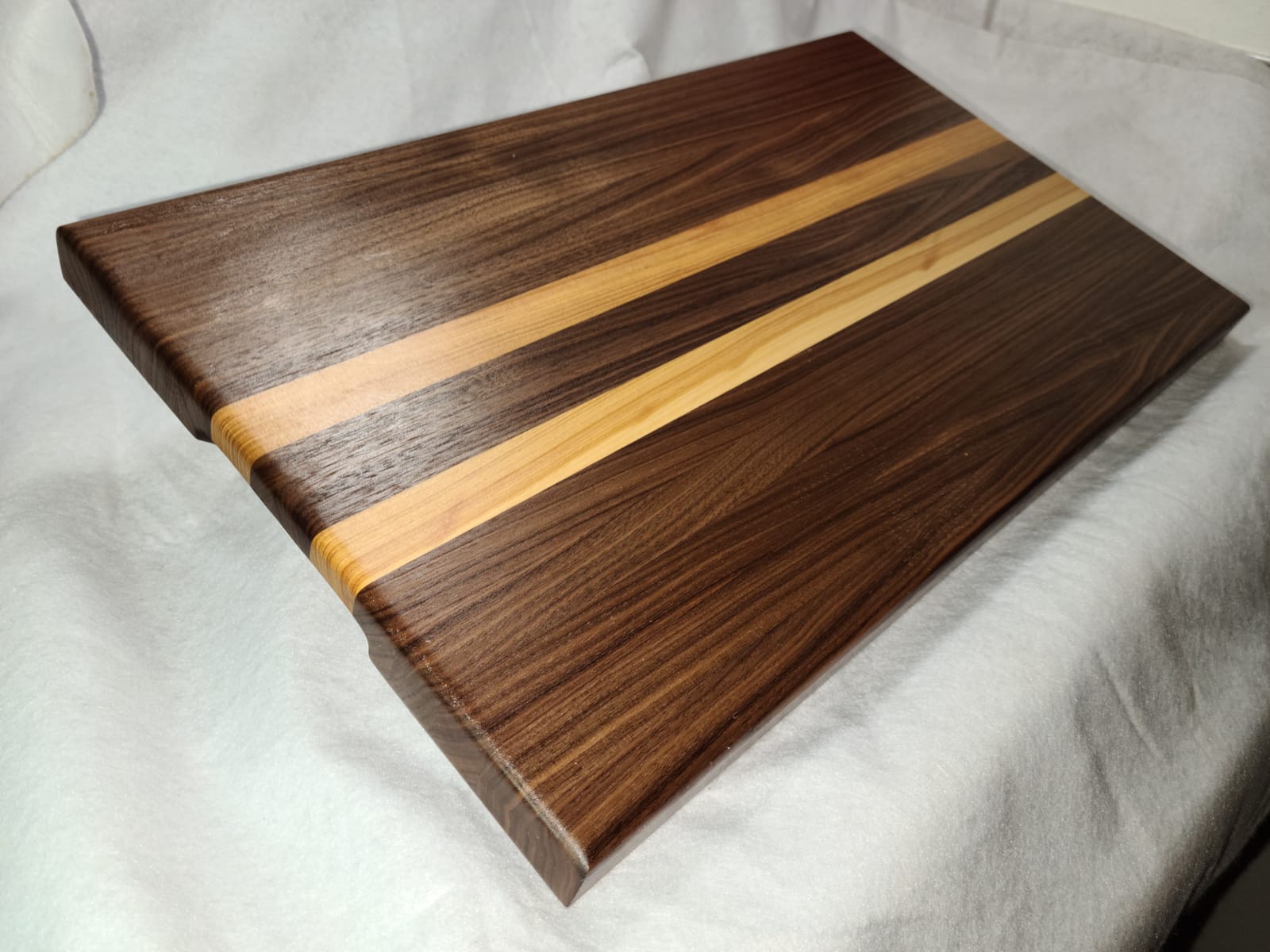
When the Makita A-93681 is the right call
Reach for it when the edge is visible. Face frames, cabinet sides, and any plywood part that gets stained or painted afterward will show every defect, and this blade produces very little. It also handles trim, molding, and thin solid wood crosscuts beautifully because of the fine hone.
It is a good blade to have in a finishing shop where the motor is powerful enough to drive a thin kerf steadily. On a higher-powered cabinet saw the deflection issue mostly disappears and you get the full benefit of the polish.
When it is the wrong call
If your saw is a small jobsite table saw with modest power, a thin kerf that wanders under load is a bad trade, and you will see it. The paint transfer issue is real but manageable: back off the feed rate and support the workpiece properly.
And if you rip thick hardwood for a living, this is the wrong geometry. It is a crosscut and finish blade, and it will load up quickly on long ripping passes.
3. Diablo D1050X 50-Tooth Thin-Kerf Combination Blade Is the Best All-Rounder for Mixed Work
Diablo Combination Saw Blade – 10″ Dia., 50-Teeth, 5/8″ Arbor, .098″ Kerf
50 carbide teeth
.098 inch thin kerf
Hi-Density TiCo carbide
Perma-SHIELD coating
Freud-built
Pros
- Cuts plywood quickly with clean low-effort edges
- Thin kerf saves material and cuts sawdust
- Noticeably quieter than stock blades
- Perma-SHIELD resists resin and pitch buildup
- Handles rip crosscut and miter work
Cons
- Not ideal for thick solid lumber
- ATB geometry leaves a ridge in non-through grooves
- General purpose rather than a dedicated finish blade
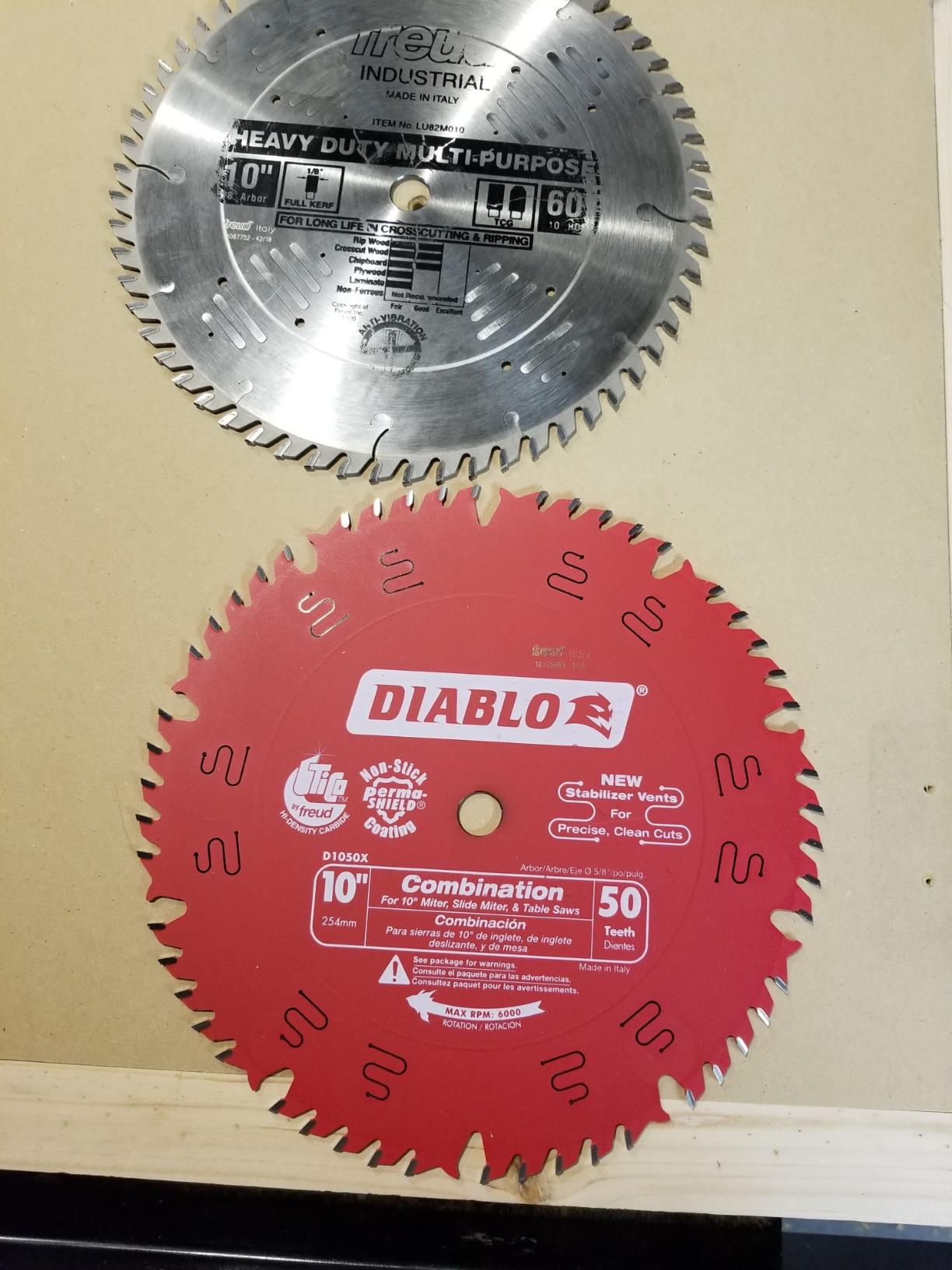
The Diablo D1050X is the blade to buy if you do not want to think about blade changes. It is a 50-tooth combination blade with a .098 inch thin kerf, a 5/8 inch arbor, and a 6000 RPM ceiling, made with high-density TiCo carbide under Freud tooling and finished with the Perma-SHIELD non-stick coating. It is the highest reviewed blade in this roundup, with well over 2,800 ratings averaging 4.8.
Fifty teeth is a deliberately general-purpose number. Compared with an 80-tooth finish blade it takes a bigger bite, which means it moves material faster, holds up better on hard maple and thick birch, and is far less likely to bog a saw down. On rough dimensioning of sheet goods and on ripping solid wood, that is the correct behavior. The trade is that a face-veneer edge will show a little more fuzz than a dedicated 80-tooth blade produces.
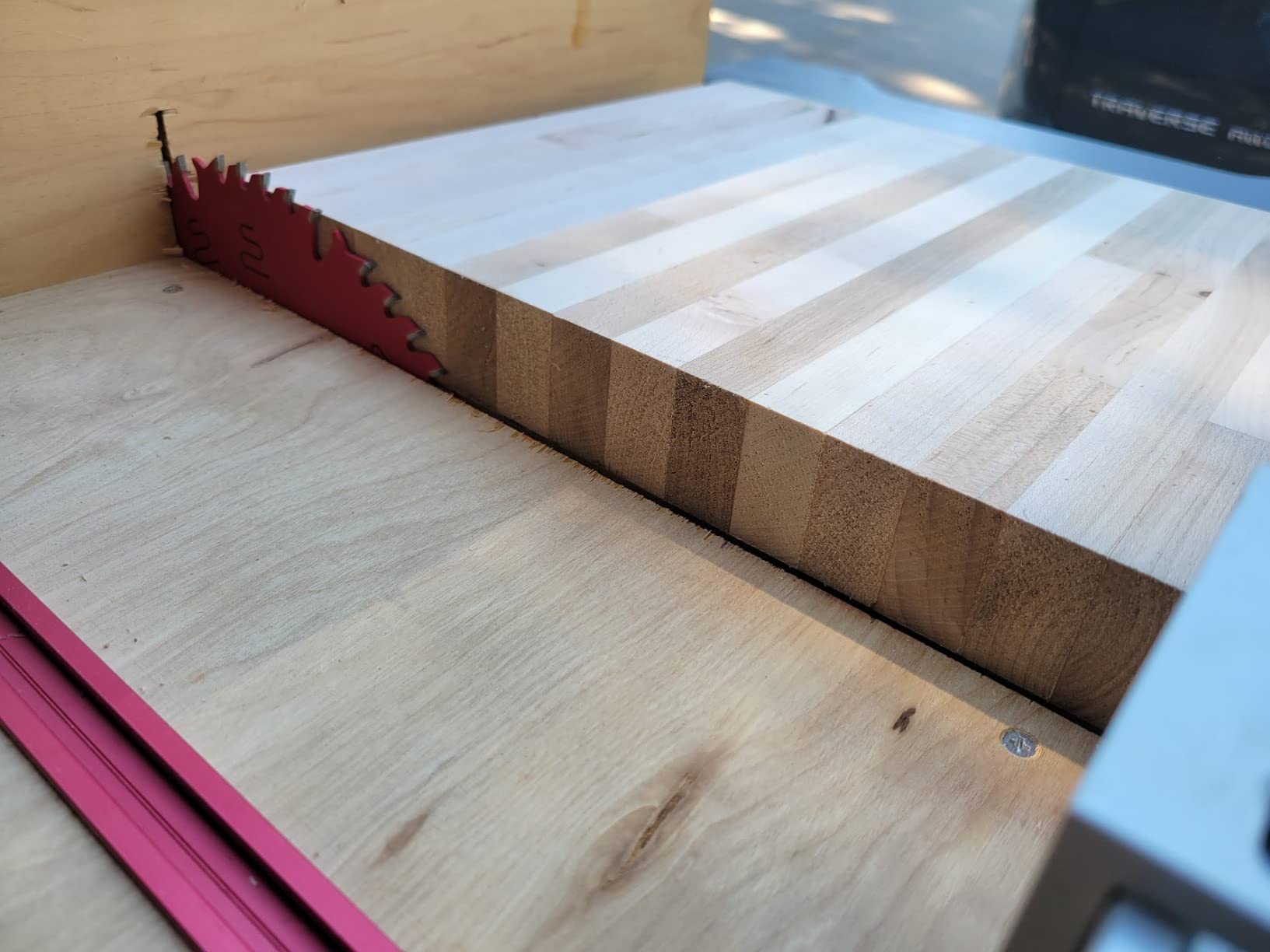
Two details make it feel better than its tooth count suggests. The Tri-Metal shock-resistant brazing holds the carbide tips under impact, which is what saves a blade when you drop a sheet on it or catch the edge on a knot. And the Perma-SHIELD coating is the reason owners report less pitch and resin buildup and lower running friction over time.
Owners consistently describe it as cutting plywood and hardwoods cleanly and quietly for far less money than dedicated premium blades, and as noticeably quieter than the stock blade that came with most saws. Reviewers also point out the limits honestly: it is a general-purpose blade, not a thick-lumber or glue-line specialist, and the bevelled tooth geometry means a non-through groove will show a ridge.
What the Diablo D1050X does best
Mixed work. If a typical week includes breaking down sheet goods for a job, ripping 4x4s, and trimming a shelf, one blade that handles all three beats a stack of specialty blades you have to swap. It is also a strong choice for a shop with a modest saw, because the thin kerf keeps the motor load down.
The coating earns its keep on softwood and pine, where resin would otherwise glue up the gullets and cause burn marks on the workpiece within a couple of sheets.
What to know before you buy it
It will not give you the mirror edge a dedicated plywood blade can. If the cut edge is going to be visible and finished, this is a step short of where you want to be, and you will be reaching for sandpaper or filler.
There is also an isolated report of nominal diameter measuring off on one particular saw, so measure before you force anything. Everything else about this blade is a strength.
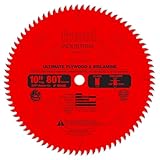
4. Freud LU80R010 Is the Best Blade for Veneered Plywood and Melamine Specifically
Freud LU80R010: 10″ Ultimate Plywood & Melamine Blade
80 teeth
Hi-ATB grind
2 degree hook angle
.126 inch kerf
0.087 inch plate
Pros
- Splinter-free glass-smooth cuts on veneered plywood and melamine
- Quiet vibration-free operation
- Holds sharpness through many sheets of cabinet material
- Chip-free on both top and bottom surfaces
Cons
- ATB geometry leaves a ridge in non-through grooves
- Higher price than general-purpose blades
- A small number arrive with a chipped tooth
The Freud LU80R010 is the only blade here designed from the ground up for the exact material in the title. It is a 10-inch, 80-tooth blade with a 5/8 inch arbor, a Hi-ATB grind, a 2 degree hook angle, a .126 inch kerf, and a .087 inch plate. Those three numbers, grind and hook and kerf together, are why it outperforms general-purpose blades on veneered sheet goods.
A high alternate top bevel means each tooth carries a steeper angle than a plain ATB tooth. The bevel enters the face veneer first and scores it before the centre of the tooth has to break the fibers loose. On a wood surface that works fine; on a 0.6 mm veneer face it is the difference between a clean line and a fringe of torn paper. The 2 degree hook angle then reduces the downward pull, which is what typically causes the fuzzy exit side.
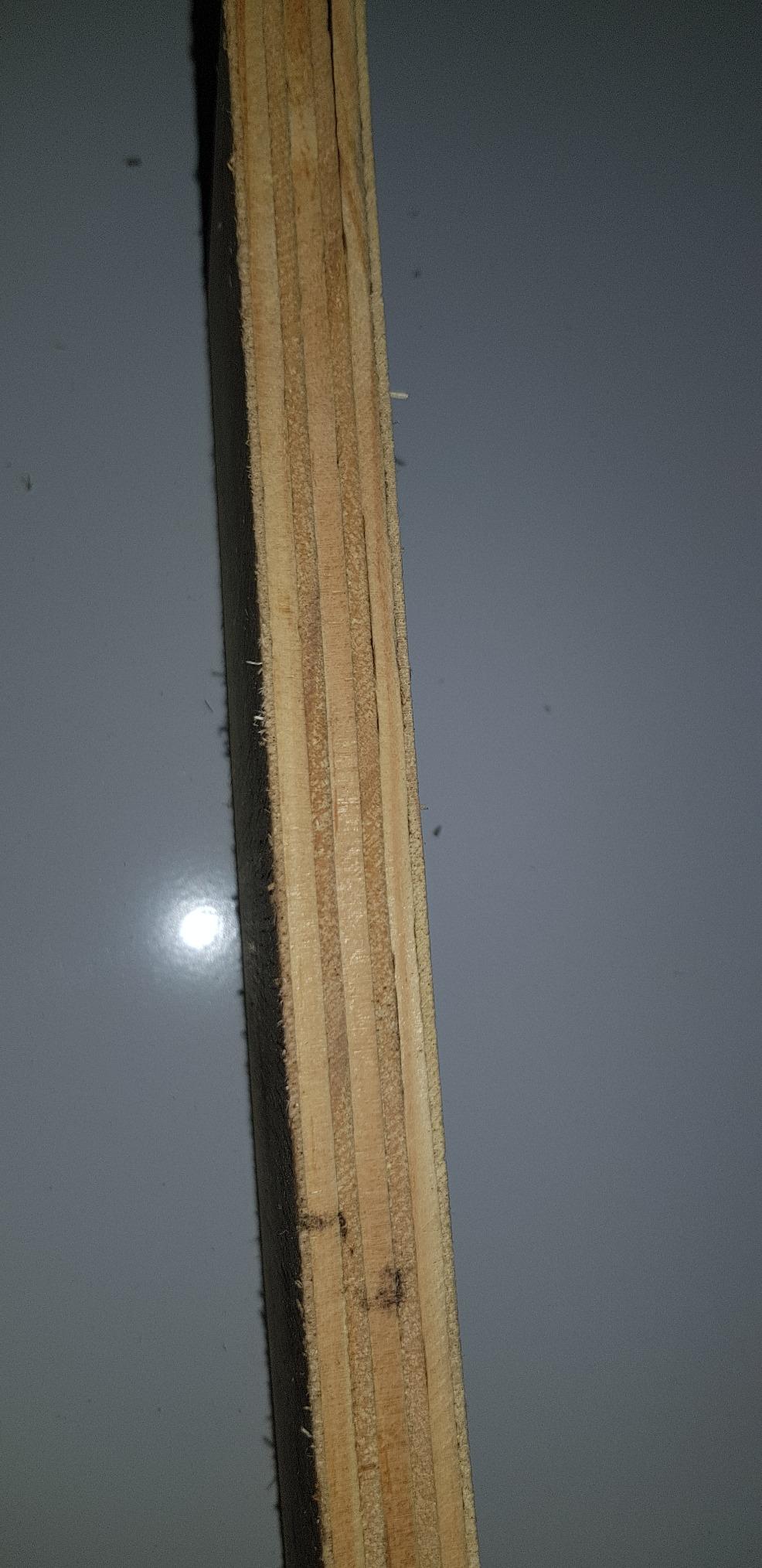
Users on woodworking forums describe exactly the behavior the specs predict. One owner cutting sapele plywood reported the top face coming out completely clean with the bottom nearly as good. Cabinetmakers in the same conversations point out the LU80R010 as the blade for melamine and melamine-coated panels, and note that it stays sharp across large sheet-goods jobs without losing its edge.
The laser-cut anti-vibration slots are the other quiet benefit. They damp the harmonic ringing that makes a thin plate blade scream at speed, and they cut waste and heat with it. The Perma-Shield non-stick coating handles the pitch and resin that come off glue layers and melamine.
Why this is the one to buy for cabinet-grade work
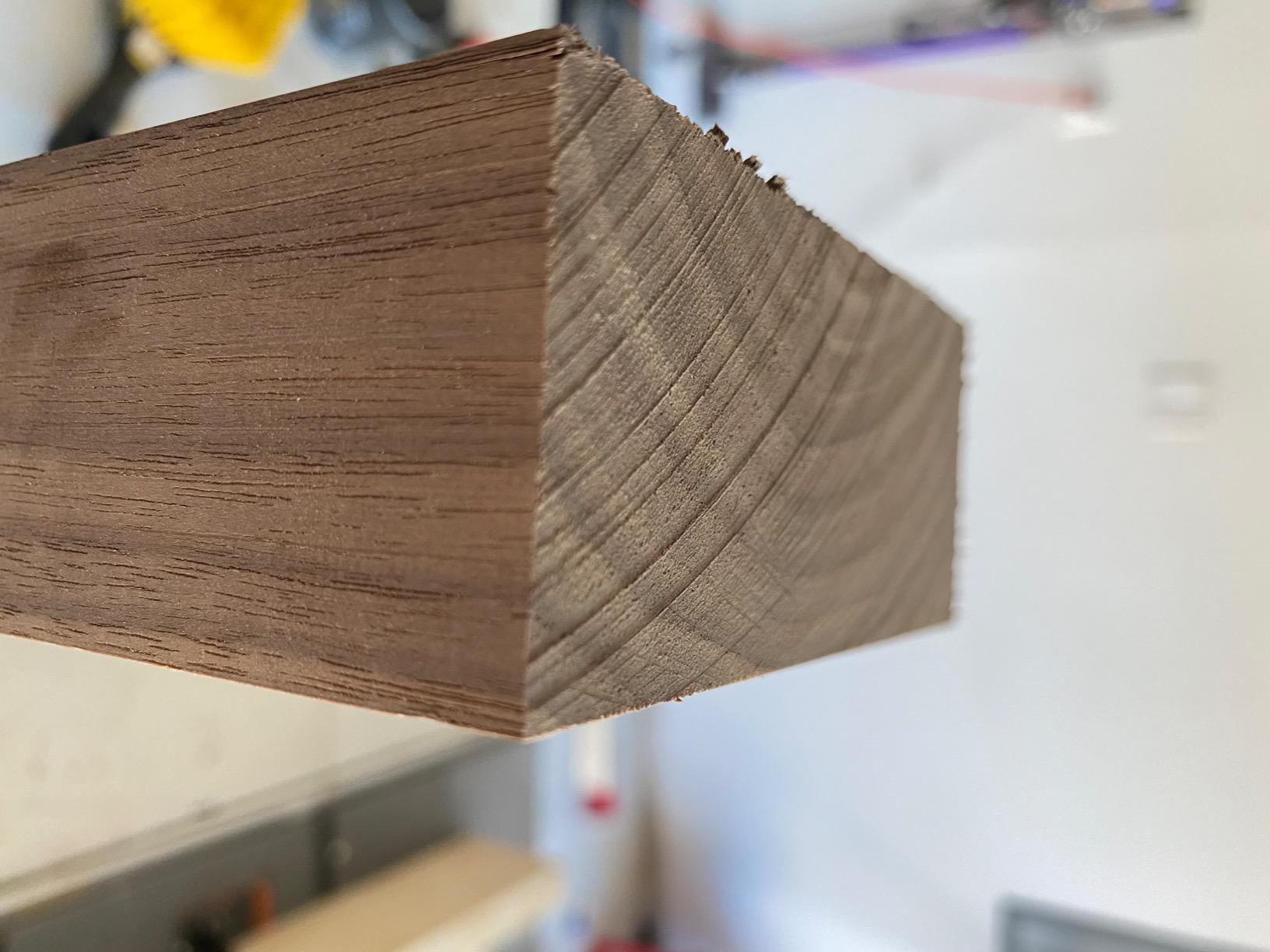
If your plywood has a face veneer and that face will be visible, this is the blade. Cabinet sides, walnut and birch ply, and any panel that gets a clear coat all land in that category. The chip-free result on both top and bottom surfaces means you are not chasing fuzz with a sanding block before the finish goes on.
It also handles melamine and laminate exceptionally well, and it is a blade you can resharpen rather than discard, which spreads the cost across years of work.
Where the LU80R010 disappoints
It is a dedicated crosscut and plywood blade, so it will not rip hardwood well, and the ATB geometry means it is not a flat-kerf blade for dados. It is also the most expensive blade in this roundup, and you should know that before you click the button.
One more practical note: a small number of owners have received blades with a chipped tooth out of the box. Inspect the teeth before you fit the blade, and if one is damaged, return it rather than running it. A single chipped carbide tip will wander through a full sheet and tear it.
5. Freud LU79R010 Is the Best Choice When a Thin Kerf on Plywood Is Non-Negotiable
Freud Thin Kerf Ultimate Plywood & Melamine Saw Blade with Premium Tico Hi-Density Carbide Crosscutting Blend for Maximum Performance – 10″ Diameter, 80 Teeth – LU79R010
80 teeth
Hi-ATB tooth geometry
Thin kerf design
Anti-vibration laser cuts
Pros
- Ultra-smooth chip-free edges on veneered plywood and laminate
- Chip-free on the bottom side with melamine and particle board
- Easy to push and leaves no burn marks
- Holds its edge over hundreds of feet and can be resharpened
Cons
- Not a flat-kerf blade so it will not suit grooving work
- Bottom chip-out can occur if the zero-clearance plate is off
- Slower feed rate is needed for the best finish
The Freud LU79R010 is the thin-kerf sibling of the blade above, and it exists for a specific reason: some plywood is expensive and some saws are underpowered. It is a 10-inch, 80-tooth, 5/8 inch arbor blade using the same Hi-ATB tooth geometry and laser-cut anti-vibration slots, but built around a thin kerf that removes less material per pass.
That is a meaningful difference on a jobsite saw or a smaller contractor saw. Less material to remove means less torque demanded, less heat in the cut, and a lighter push. If you have ever watched a fine-finish blade bog down halfway through a half-inch sheet, the kerf width is usually the reason, and this is the fix.
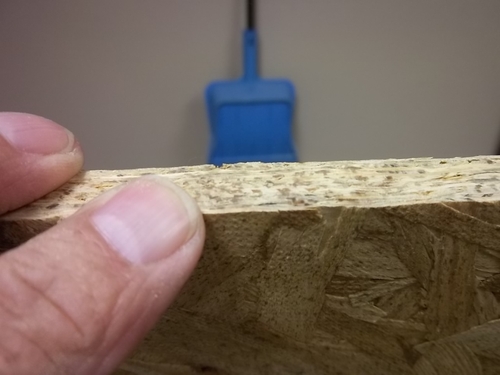
Users describe the finish as the smoothest they have had from a plywood blade, specifically calling out chip-free bottom-side cuts on melamine and particle board, and the fact that it leaves no burn marks. Burn marks are a feed-rate problem, but a blade that pulls less is a blade you can push at a sane rate without cooking the edge.
The premium TiCo high-density carbide crosscutting blend holds its edge over hundreds of feet of cutting and can be resharpened when it finally dulls, which is the right economics for someone who cuts a lot of sheet goods. Buyers also note it is easy to push, which sounds trivial until you have spent an afternoon on a blade that fought you.
Best fit for a lighter saw or tighter material budget
Pick this one if your saw is a portable or jobsite table saw, or a contractor saw with a smaller motor. The thin kerf keeps the load down where an 80-tooth full-kerf blade would stall, and the Hi-ATB geometry keeps the veneer intact once it is cutting again.
It is also a strong pick for anyone working in expensive veneered panel who wants to waste less of it. On a birch ply project where every sheet counts, a narrower kerf adds up across a cabinet run.
Where it will let you down
Do not use it for dados or grooves that need a flat bottom, because the bevelled teeth leave a ridge. And if your zero-clearance insert or riving knife is set wrong, you will see bottom-side chip-out even with a Hi-ATB tooth, because the exit side needs support just as much as the entry side.
Owners also report the best finish comes at a slower feed rate. Forcing it is how you get a burn mark, so treat this blade as something to let run.
6. Freud LU83R010 Is the Quietest Blade Here and the Best for Half-Inch Plywood
Freud LU83R010 Industrial 10-in 50T Thin Kerf Combination Saw Blade
50 teeth
Thin kerf
TiCo high-density carbide blend
Anti-vibration design
No stabilizers needed
Pros
- Very quiet compared with 80-tooth blades while staying near-finish
- Cuts half-inch and 9/16 inch plywood cleanly with low effort
- Anti-vibration laser cuts reduce noise and vibration
- Sharp out of the box and holds an edge well
Cons
- Diameter can measure slightly under 10 inch
- Some users felt more cutting resistance than expected
- Finish is not as fine as a dedicated 80-tooth plywood blade
The Freud LU83R010 solves a problem nobody mentions until it is driving them crazy: noise. It is a 50-tooth thin-kerf combination blade, and the reason it is so much quieter than the 80-tooth blades here is that each tooth removes more material with fewer impacts per second. Fewer teeth crossing the ply means less percussive chatter through the sheet.
Owners put the number at a 1.8 pound weight and a 0.07 inch plate thickness, and report that it cuts half-inch and 9/16 inch plywood cleanly with no splintering and low motor effort. That is a very common material thickness for cabinet backs, shelves, and shop fixtures, and it is where a 50T genuinely holds its own against an 80T.
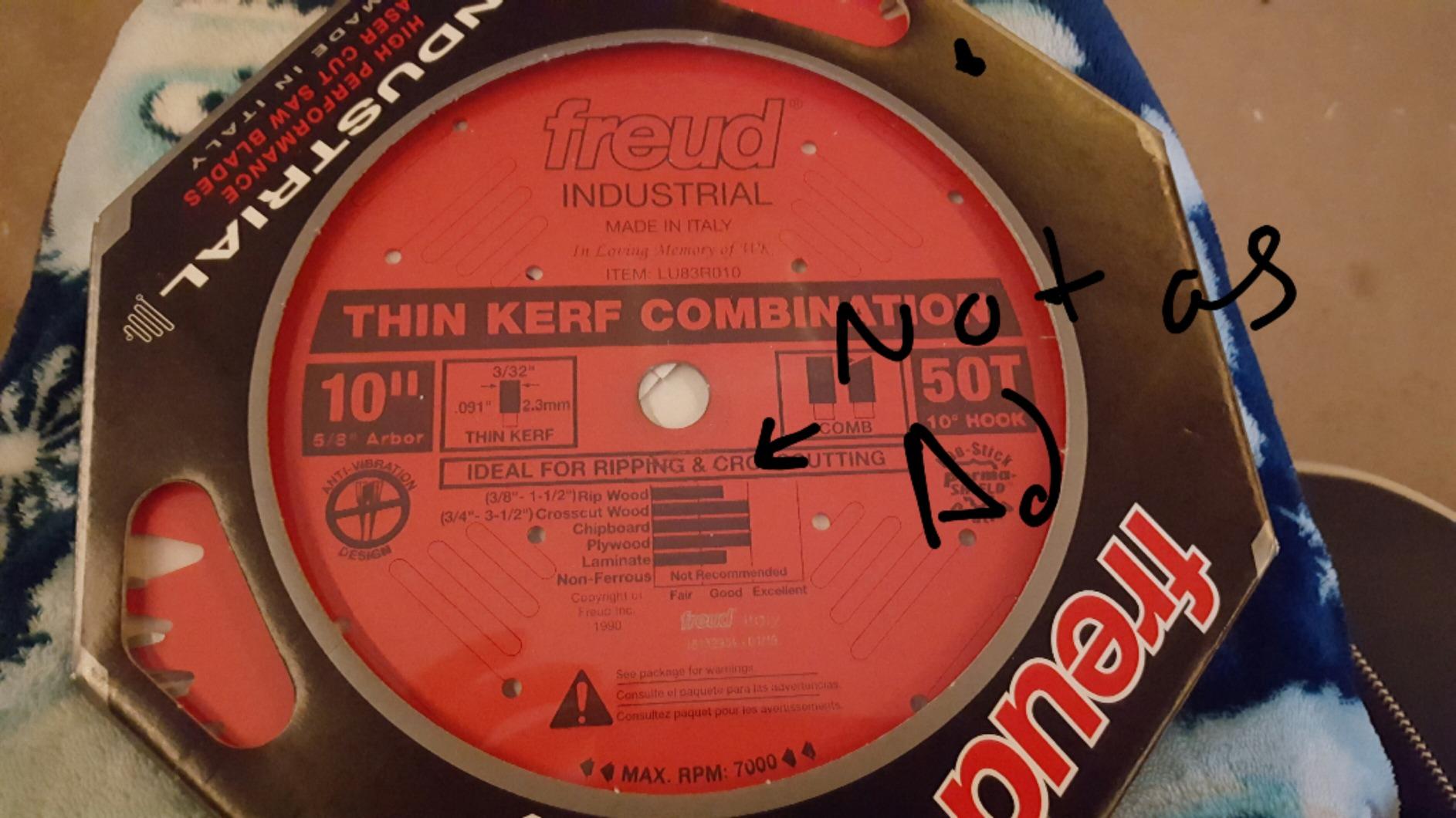
The TiCo high-density carbide combination blend means it also rips and crosscuts solid wood, so it works as a single-blade shop. The Perma-Shield coating keeps glue residue and resin from building up in the gullets, and the laser-cut anti-vibration design is engineered so no external stabilizer is needed, which is a detail that matters on a saw with a limited throat plate.
Buyers value the combination of quiet running, low dust, and good chip control on plywood and OSB, and report the blade arrives sharp. It carries well over 1,200 ratings averaging 4.7, so this is not a thin sample.
Where the LU83R010 earns its place
Half-inch and thinner plywood. At those thicknesses the tooth-count advantage of an 80T blade mostly disappears, and the LU83R010’s speed and quietness become the deciding factors. It is a good pick if you share a shop with people who find a 10-inch blade unpleasant to stand near.
It is also a good all-day blade when you alternate between sheet goods and solid wood, because the combination pattern handles both without a swap.
What to watch out for
A few owners measure the actual diameter slightly under 10 inch. That is not a defect, but on some sliding miter saws it matters, so measure if your saw is fussy about clearance. Others noted more cutting resistance than they expected from a new premium blade, which usually points at feed rate or a dull saw blade as the cause.
And while the finish is good, it is not the mirror edge of an 80-tooth finish blade. Visible cabinet parts still argue for the LU80R010 or the CMT.
7. DEWALT DWA11060 Is the Best Blade for Straight, Accurate Crosscuts
DEWALT Table Saw Blade, 10 in, 60 Tooth, Fine Finish, Ultra Sharp Carbide (DWA11060)
60 carbide teeth
10 inch diameter
Patented body slots for low vibration
Optimized tooth geometry
Pros
- Clean smooth crosscuts in hardwood softwood and plywood
- Tracks well with no vibration or wandering
- Holds an edge under regular workshop use
- Strong value next to other big-brand blades
Cons
- Some variants throw more sawdust behind the saw
- Edge life is shorter on heavy hardwood work
- Less chip-free on melamine than a dedicated plywood blade
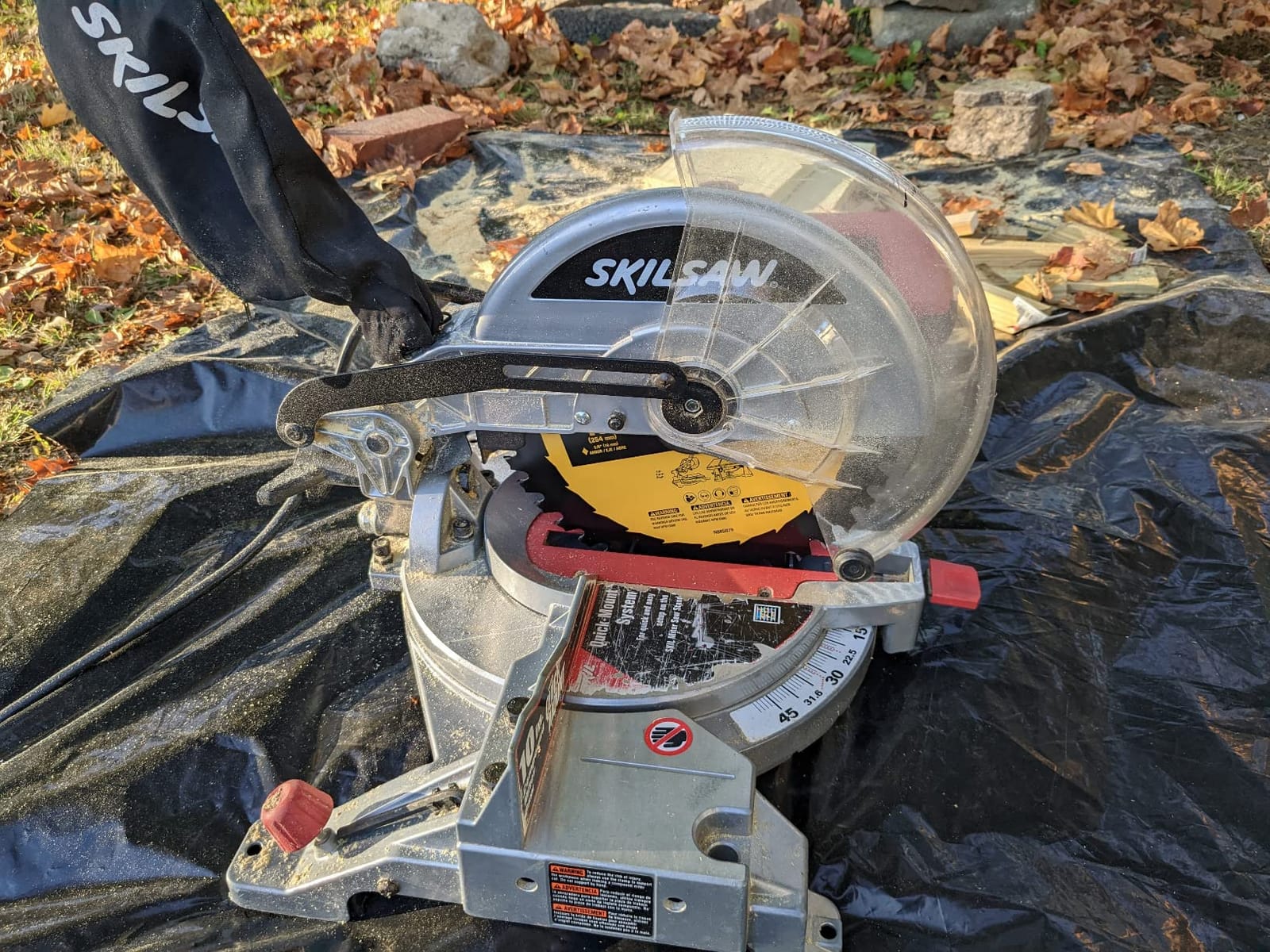
The DEWALT DWA11060 is a 60-tooth fine finish blade with a patented body slot design and optimized tooth geometry, and it is rated by owners at 4.8 across more than 1,400 ratings. Sixty teeth sits in the middle of the useful range for sheet goods: more than a general-purpose 50T, fewer than a dedicated 80T finish blade.
That middle position gives it a useful personality. The teeth are fine enough to leave a clean edge on plywood and trim, but aggressive enough to keep up with hardwood work without bogging. It is also one of the heavier blades here at 1.5 pounds, which is a little insurance against deflection when you are pushing a full sheet through a thin-kerf cut.
The patented body slots are the feature to know about. They damp the plate resonances that make a blade wander off line, and wander is what turns a square crosscut into a parallelogram. Buyers consistently report that this blade tracks well with no vibration and that the cut stays accurate through repeated passes.
The listing materials are broad on purpose: hardwood, softwood, trim, sheet goods, and melamine all appear in the spec, and owners confirm smooth, accurate results in each. The brand claims up to three times the blade life of a standard blade, which is a manufacturer figure rather than something we measured.
Why a 60-tooth blade belongs on the list
It is the sensible middle for someone who cuts plywood regularly but also rips solid wood and does a lot of trim. You get most of the finish quality of an 80T without the feed-rate discipline and edge-retention cost that comes with it, and you get a blade that will not stall when you hit a wet board.
On a cabinet saw with real power, the extra weight and the vibration slots make this an unusually stable blade, which is where accuracy claims come from.
What the DWA11060 will not do for you
On melamine and melamine-coated panels, a dedicated plywood blade with a higher alternate top bevel beats it. Reviewers also note that edge life on heavy hardwood workloads is shorter than premium blades, and some owners see more sawdust thrown at the rear of the saw than with their previous blade.
If your project is a run of white melamine boxes, keep looking. If it is a mixed shop, this is a very well-behaved default.
8. FOXBC 10-Inch 80-Tooth Ultra Finish Blade Is the Best Value in the Roundup
FOXBC 10-Inch Table Saw Blade, 80-Tooth, Ultra Finish Wood Cutting, 5/8-Inch Arbor
80 teeth
0.098 inch kerf
ATB grind
High-density tungsten carbide tips
5/8 inch arbor
Pros
- Smooth quiet cuts with zero tear-out reported on plywood
- Accurate tracking with almost no vibration
- Chip-free cuts on melamine
- Exceptional value against premium branded blades
Cons
- Kerf is not thinner than the stock blades it replaced
- Long-term sharpness retention is not yet established
- Limited brand recognition for resale buyers
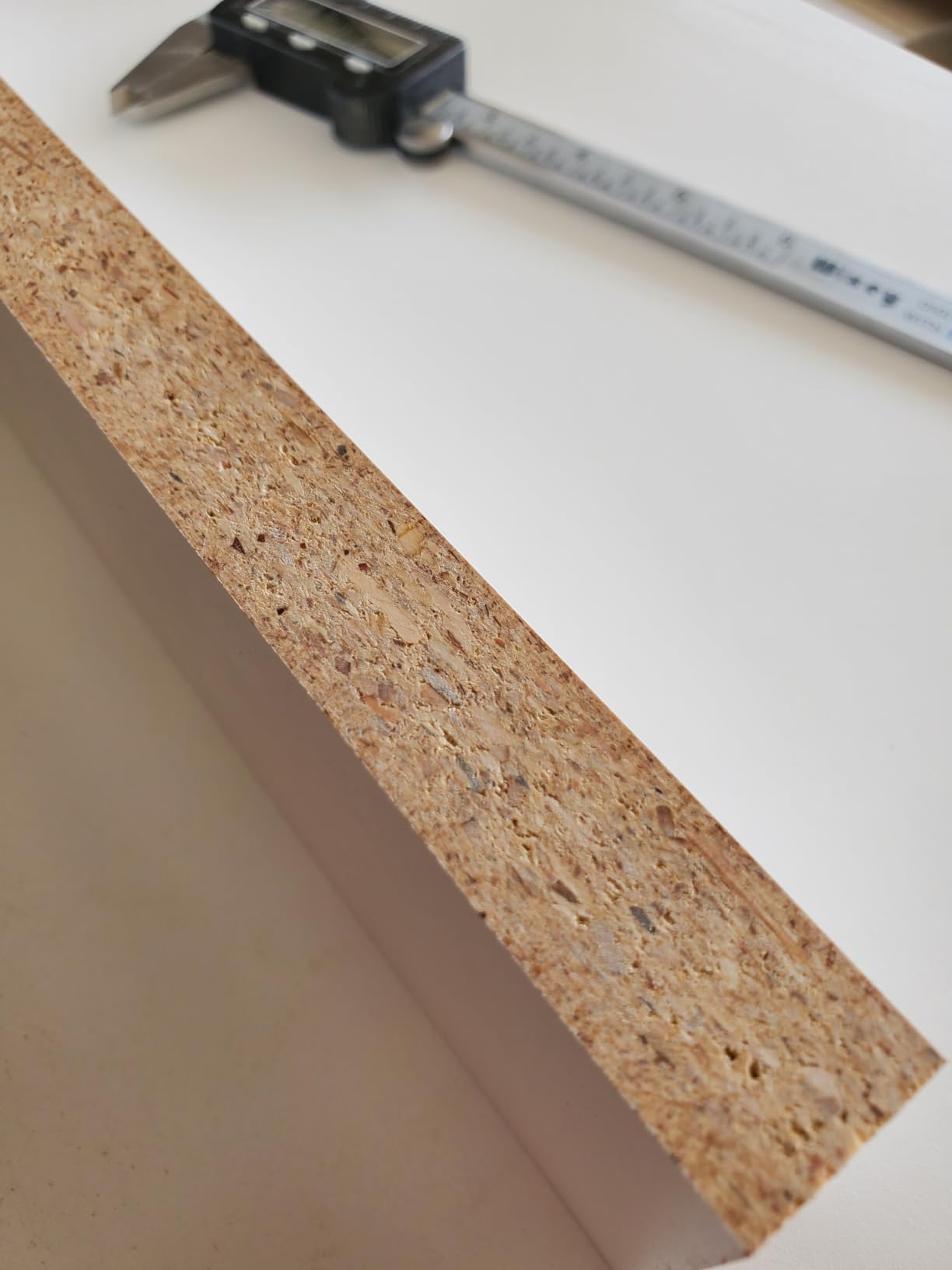
The FOXBC 80-tooth blade is the reason this roundup has an entry that will surprise you. It is a 10-inch, 80-tooth blade with a 5/8 inch arbor, a 0.098 inch kerf, an ATB tooth grind, and high-density tungsten carbide tips, and owners report cut quality that matches or beats blades costing several times more.
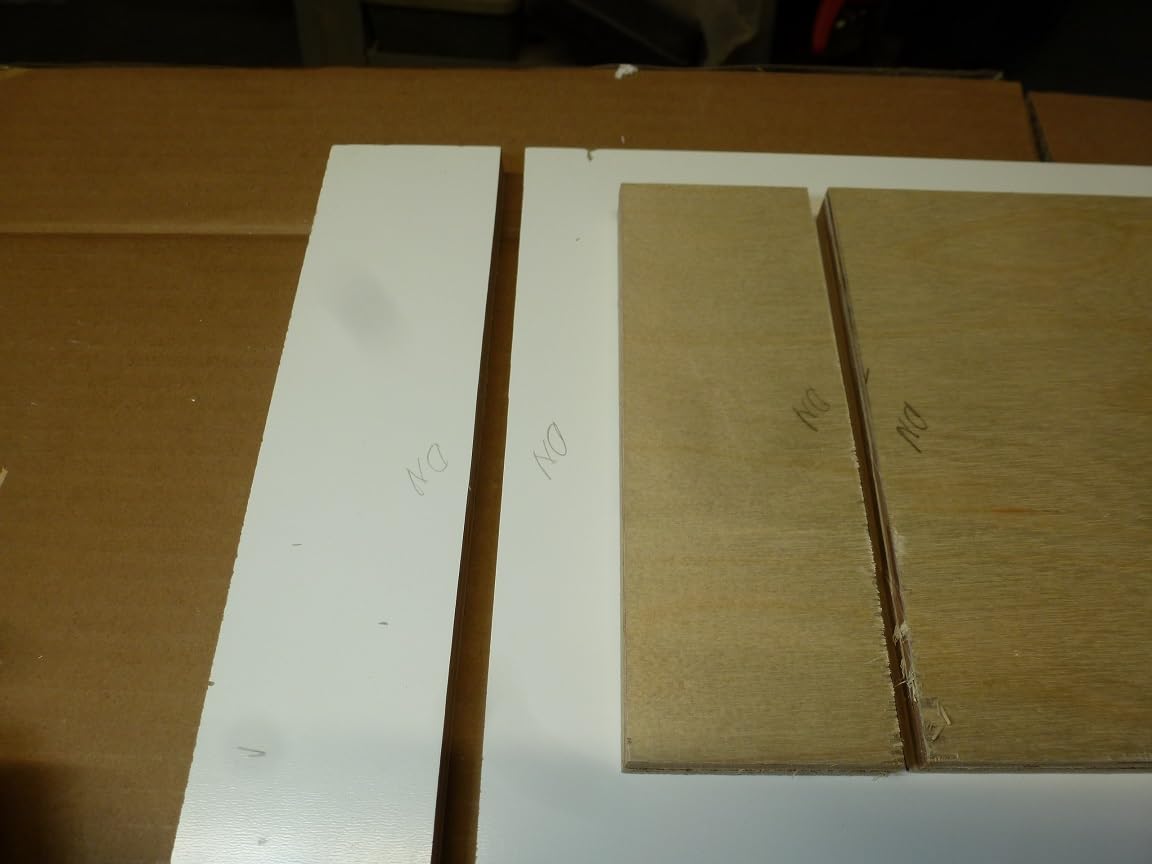
Owners consistently cite smooth, quiet cutting with zero tear-out on hardwoods and plywood, accurate tracking with almost no vibration, and chip-free results on melamine. For someone outfitting a shop on a budget, that is a genuinely useful result rather than a compromise.
The build is sensible. A thin kerf and thin plate mean fast, smooth cutting with less vibration and noise, and the high-density tungsten carbide is a tough material that resists wear. Compatibility is broad across DeWalt, Skil, Metabo, and Makita 10-inch miter saws and table saws, so it is an easy drop-in.
The most common reservation is an honest one: the kerf measures 0.098 inch, which is not actually thinner than the stock blades it was bought to replace. If your reason for buying a thin kerf is motor load on a weak saw, this is not the answer. The second reservation is that most owners have not used it long enough to know how it holds up over years.
Who should buy the FOXBC
New woodworkers, students, and anyone who wants an 80-tooth ultra-finish edge without committing to a premium brand name. It cuts crosscut oak, pine, melamine, plywood, and moulding, which covers most of what a hobby shop or a renovation crew actually puts through a table saw.
It is also a good second blade to keep as a spare, since a dedicated 80T you like is not a blade you want to be without.
Where it falls short of the leaders
An ATB grind is a step below Hi-ATB on a fragile face veneer, so on the most delicate veneer you will see slightly more fuzz than the Freud plywood blades deliver. And because long-term edge retention is still unknown across the owner base, treat it as a blade to buy once and evaluate, not a blade to assume will last a decade.
For a full sheet run on a powerful saw, the 0.098 inch kerf also removes more material than a true thin kerf would.
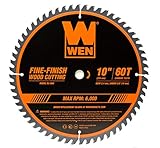
9. WEN BL1060 60-Tooth Fine-Finish Blade Is the Budget Pick for Occasional Plywood Work
WEN BL1060 10-Inch 60-Tooth Fine-Finish Professional Woodworking Saw Blade for Miter Saws and Table Saws, Silver,Pack of one
60 carbide teeth
1/10 inch kerf (2.4 mm)
5/8 inch arbor
Rated to 6000 RPM
Pros
- Smooth accurate cuts on hardwood and plywood
- Easy to install and fits standard 10 inch saws
- Owners report it stays sharp for years of hobby use
- Narrow kerf reduces waste on sheet goods
Cons
- Produces a noticeable howl at speed compared with premium blades
- Unsuitable for vinyl siding and similar tough plastics
- Fine-tooth design is not for heavy ripping or demolition
The WEN BL1060 is the most-reviewed blade in this entire roundup, with well over 2,900 ratings averaging 4.7, and it is the entry point for someone who wants a genuinely fine finish without spending real money. It shares the BL1080’s basic platform: 10-inch diameter, 5/8 inch arbor, 6000 RPM rating, a 1/10 inch (2.4 mm) kerf, and carbide-tipped teeth. The difference is the count.
Sixty teeth rather than 80 means each tooth takes a slightly larger bite. The cut is still smooth and accurate on hardwood and plywood, and for cabinet carcasses, shop fixtures, and weekend projects the difference on the finished edge is small. It is also quicker, because fewer teeth means less work per inch of travel.
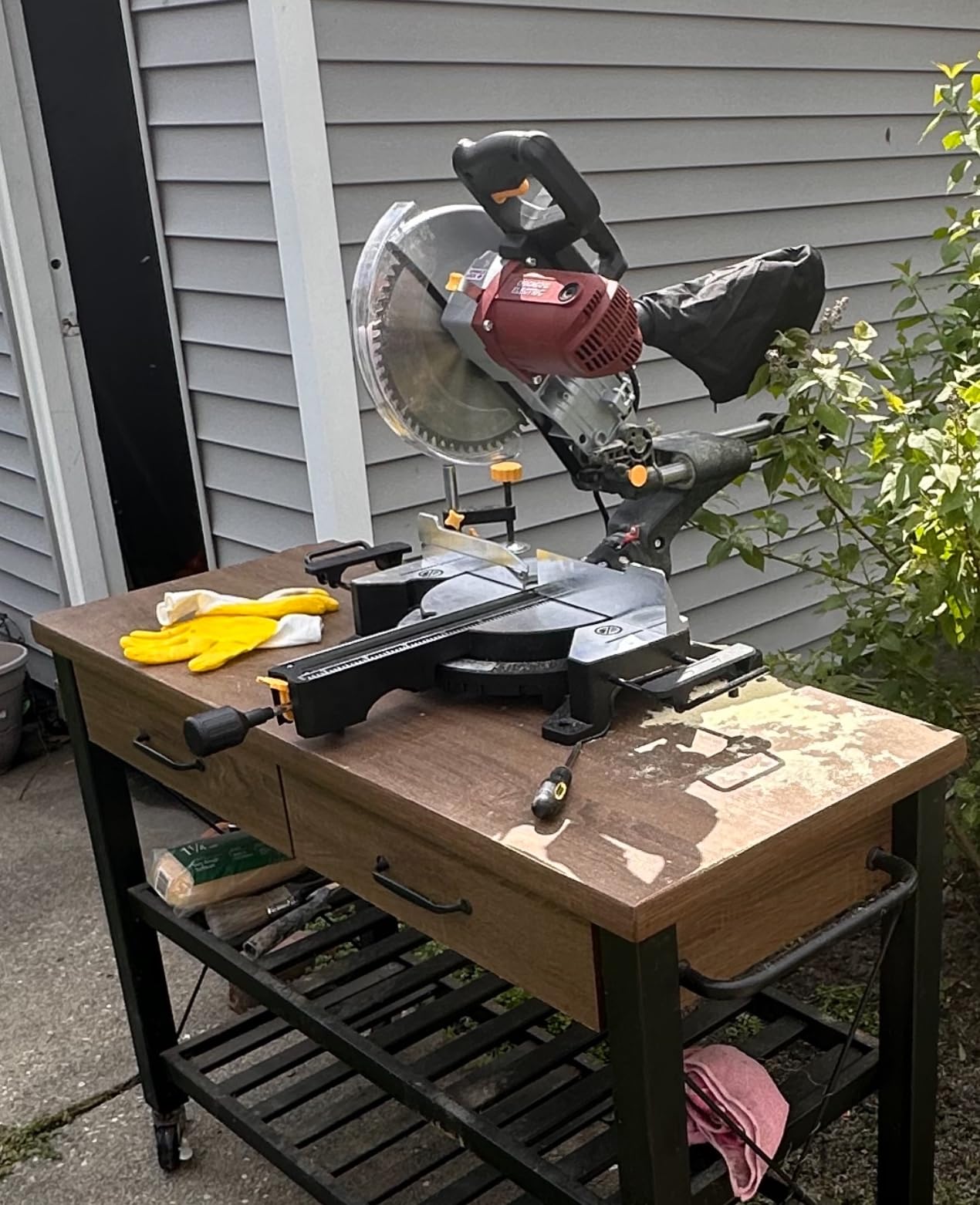
Owners report that the blade installs easily on standard 10-inch miter and table saws and stays sharp for years of hobby use, and that the narrow kerf cuts down on waste from expensive sheet goods. That combination of a thin kerf and a fine tooth count is genuinely rare at this level, and it is why so many people have one in a drawer.
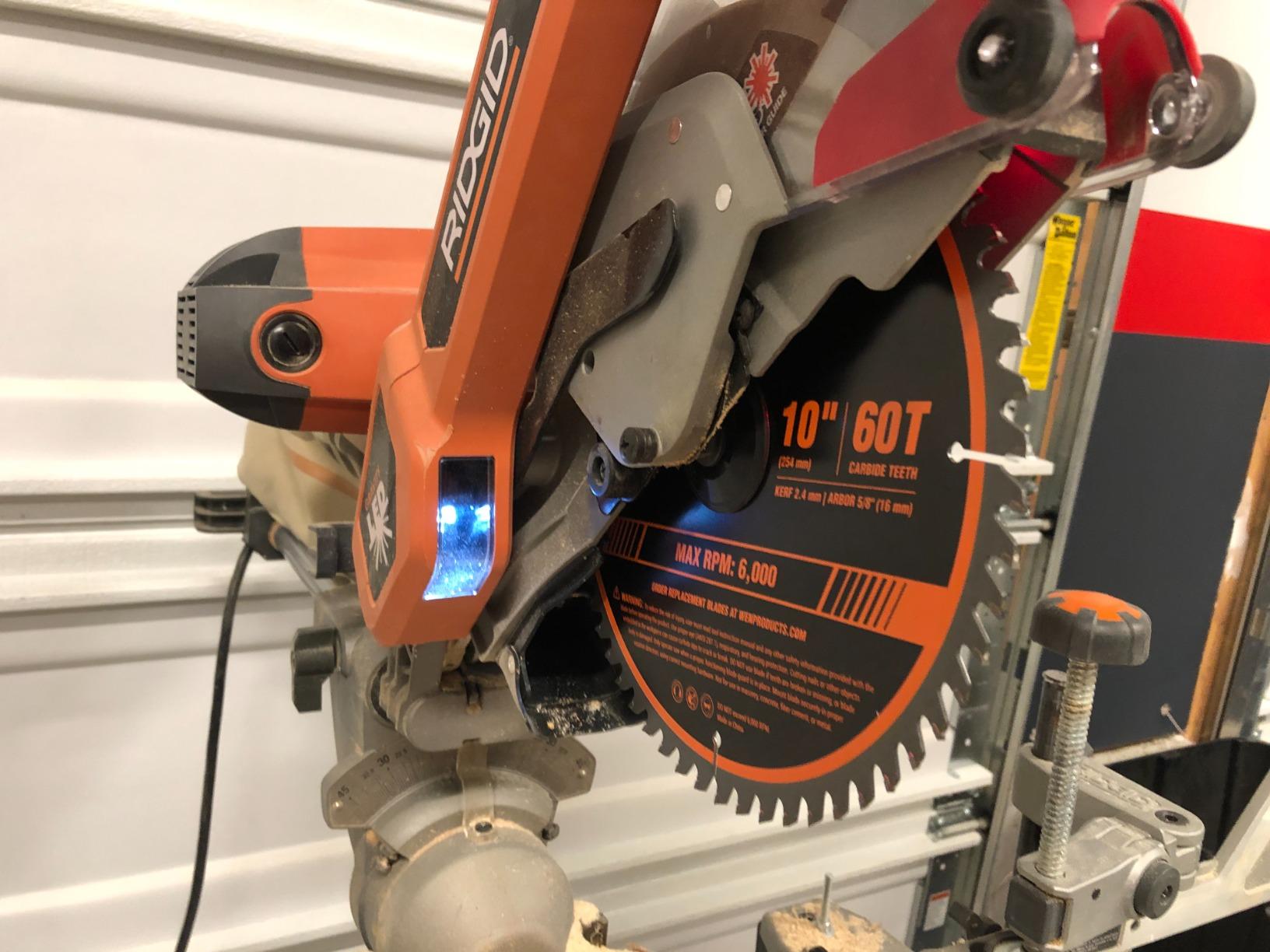
The honest drawback is sound. Reviewers describe a noticeable howl at speed compared with premium blades, and it is a carbide blade for wood, not for abrasive plastics like vinyl siding, so pushing it into that material will kill it. It is also not the blade for demolition cutting or heavy ripping.
Where the BL1060 makes the most sense
Occasional sheet-goods work, trim, cabinet parts that will be painted, and anyone learning on a smaller saw. The thin kerf keeps the load light and the wide ratings suggest very few people have had a bad experience with it.
It also makes a fine second blade for a workshop that runs two saws, since it will not be missed if it is on a miter saw rather than the table saw.
Where it is the wrong tool
Skip it for melamine-heavy production work, where tooth count and grind matter more than cost, and skip it if you are cutting a lot of thick hardwood, where 60 teeth at that price point means a shorter working life. The howl is the thing people notice, and it is a real trade for a quiet shop.
10. CMT 255.080.10 80-Tooth Hi-ATB Blade Is the Best Choice for a 5-Degree Hook Angle
CMT Orange Tools 255.080.10 – Ultra Fine Finishing Saw Blade D=10 B=5/8 ß=Hi-ATB 30 K=0.110 P=0.071 a=5
80 teeth
Hi-ATB 30 degree grind
5 degree hook angle
0.110 inch kerf
0.071 inch plate
Pros
- Hi-ATB 80 tooth geometry gives very fine clean finish cuts
- Thin plate and kerf reduce drag and waste on sheet goods
- Suited to wood and engineered wood including glass
Cons
- Not designed for flat-bottomed groove or dado work
- Published long-form review detail on this listing is limited
- Slower feed is needed for the cleanest result
The CMT 255.080.10 is the most precisely specified blade in this roundup, which is appropriate because CMT is a cutting-tool company that publishes its geometry instead of just its tooth count. This is a 10-inch, 80-tooth blade with a 5/8 inch bore, a Hi-ATB 30 degree grind, a 5 degree hook angle, a 0.110 inch kerf, and a 0.071 inch plate thickness.
Those published numbers are the selling point. A 5 degree hook is a middle setting: more aggressive than the 2 degree on the Freud plywood blade, less than a general-purpose blade’s angle. It bites into engineered wood without the drag that slows a very low hook, and it is a geometry that suits a saw doing a mix of sheet goods and solid wood rather than one dedicated to panel work.
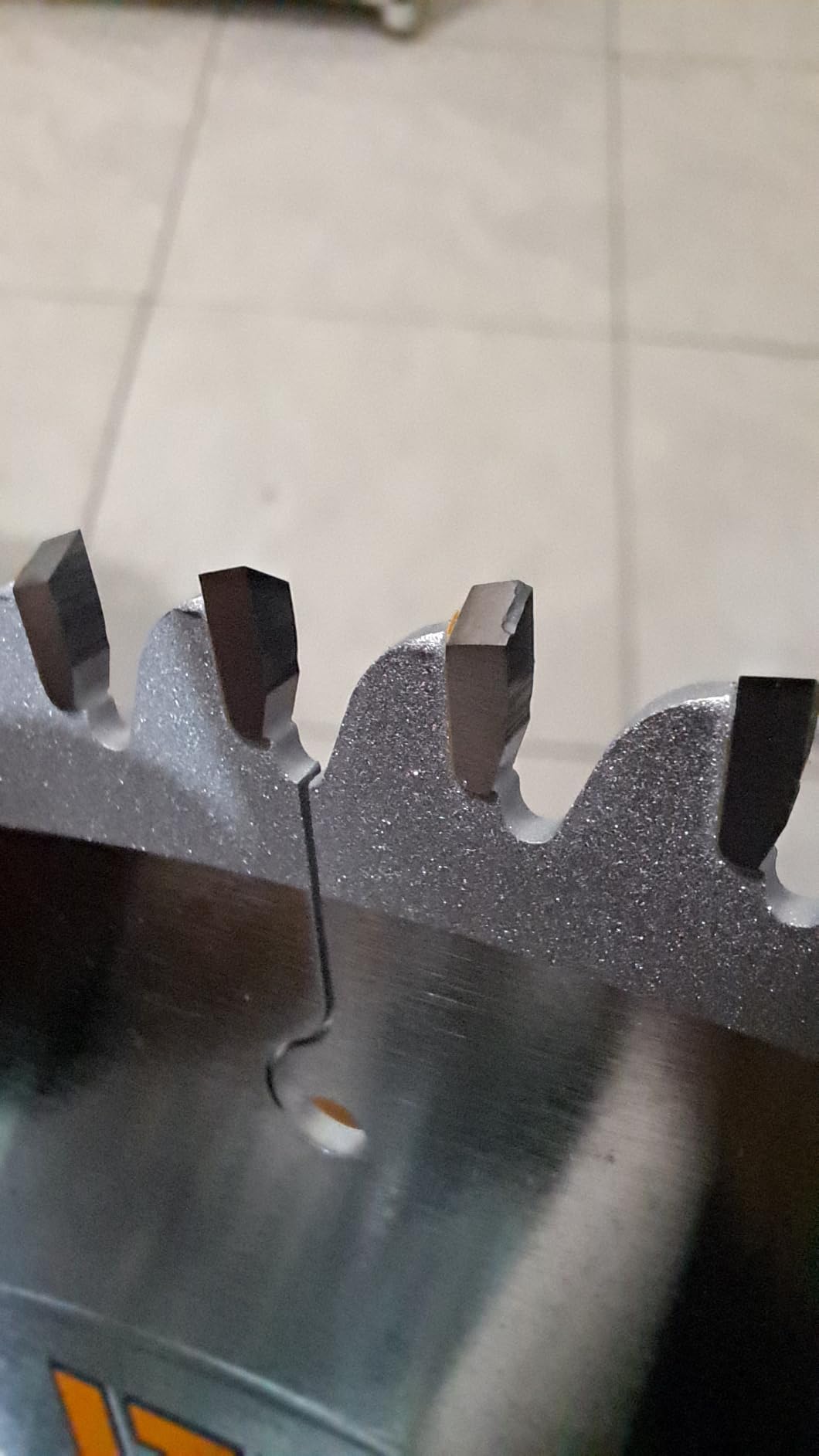
The 0.071 inch plate is notably thin, and combined with a 0.110 inch kerf it means less material removal per pass and less waste on costly panels. It is specified for wood and engineered wood, and the spec sheet also lists glass among compatible materials, which is unusual for a finish blade and points to the durability of the carbide tips in abrasive edge cases.
The warranty is strong and unusual for this category: CMT states its carbide and carbide-tipped blades are engineered to uncompromising standards and will be returned for full replacement if performance is unsatisfactory when used as recommended. That is a meaningful difference when you are fitting a specialized blade.
Why a 5 degree hook blade is worth knowing about
Hook angle is the angle between the tooth face and the blade plate, and it controls how hard the tooth grabs and how much it tends to pull the blade down into the cut. A 5 degree hook on an 80-tooth Hi-ATB blade is a compromise that most mixed shops appreciate: enough bite to keep the cut rate up on a full sheet, not so much that the blade fights the motor.
For fine cabinetry, the CMT produces very fine clean finish cuts in wood and engineered wood, and the thin plate and kerf reduce both drag and waste.
What to know before choosing it
It is not a flat-kerf blade, so grooves and dados will show the ridge that any bevelled-tooth design leaves. And published long-form review detail on this particular listing is thinner than the other blades here, with roughly 328 ratings to draw on, so we would treat the manufacturer geometry as the reason to pick it rather than owner consensus.
Feed it at a deliberate pace. The finest finish from a Hi-ATB grind appears when you let the tooth work rather than forcing it.
How to Choose a Table Saw Blade for Plywood
Picking a plywood blade comes down to four decisions in order: kerf width, grind, tooth count, and hook angle. Get those right and the brand barely matters. Here is how we would work through them for a table saw.
Match the kerf width to your saw’s motor
A thin kerf, roughly 1/8 inch or under, removes less material and demands less torque, which makes it the right choice for a 10-inch jobsite saw or a contractor saw with a modest motor. A full kerf around 1/8 inch and above is more stable and more rigid in the cut, and it is what a 3 HP cabinet saw wants when it is chewing through half-inch birch ply.
The mistake we see most often is running a thin-kerf blade on an underpowered saw and blaming the blade for wandering. If your saw bogs down, the fix is a wider kerf or a lower feed rate, not a different brand. Thin kerf also matters for waste: across a stack of sheets, the kerf is material you paid for and threw away.
Pick the grind that matches the material
Grind is the single biggest factor in tear-out, and the terms get confusing fast. A flat top grind, or FTG, has square shoulders and is a ripping-oriented geometry that splinters veneer badly. An alternate top bevel, or ATB, chamfers each tooth so the leading corner shears the surface instead of gouging it. A high alternate top bevel, or Hi-ATB, steepens that chamfer further, typically into the 30 to 40 degree range, so the bevel scores the face veneer before the tooth body breaks fibers loose.
For plywood, melamine, and laminate, Hi-ATB is the answer. Triple chip grind, or TCG, is a strong all-purpose pattern with three facets per tooth that is durable in hardwood and chipboard but not tuned for a fragile face veneer. If a listing does not name the grind, assume it is not optimized for panel work.
Tooth count: why 60 to 80 is the working range
More teeth means a smaller chip and a smoother edge, but less material removed per tooth and a slower cut. Fewer teeth means faster cutting, more chip clearance, and a rougher edge. For plywood, 60 to 80 teeth is the range most people should shop in. 80 teeth is the right end for veneered panels and visible edges, 60 teeth for mixed work and half-inch material, and 50 teeth when you are prioritising speed and hardwood durability.
A 140-tooth blade is a legitimate crosscut blade, but on a table saw it is a specialist choice that pushes hard against the motor and goes dull quickly on anything with a binder or coating. You will see a 140-tooth rip blade discussed for some applications, but it is not the answer for most people cutting plywood on a table saw.
Set the zero-clearance insert or riving knife properly
Whatever blade you choose, the exit side of the cut needs support. A zero-clearance insert sits level with the table surface right behind the blade, so the plywood is supported as it comes off the saw instead of dropping away and tearing. Woodworkers on forums describe it as the single change that eliminates bottom-side chipping almost entirely, and it costs very little compared with changing blades.
If your saw uses a riving knife instead, set the knife thickness to match your kerf and set it to run in the same path as the blade. A mismatched riving knife will bind, deflect, or in a bad case kick the workpiece back at you. If your kerf is wider than the knife, cut on the side that keeps the offcut supported.
Inspect a new blade before you install it
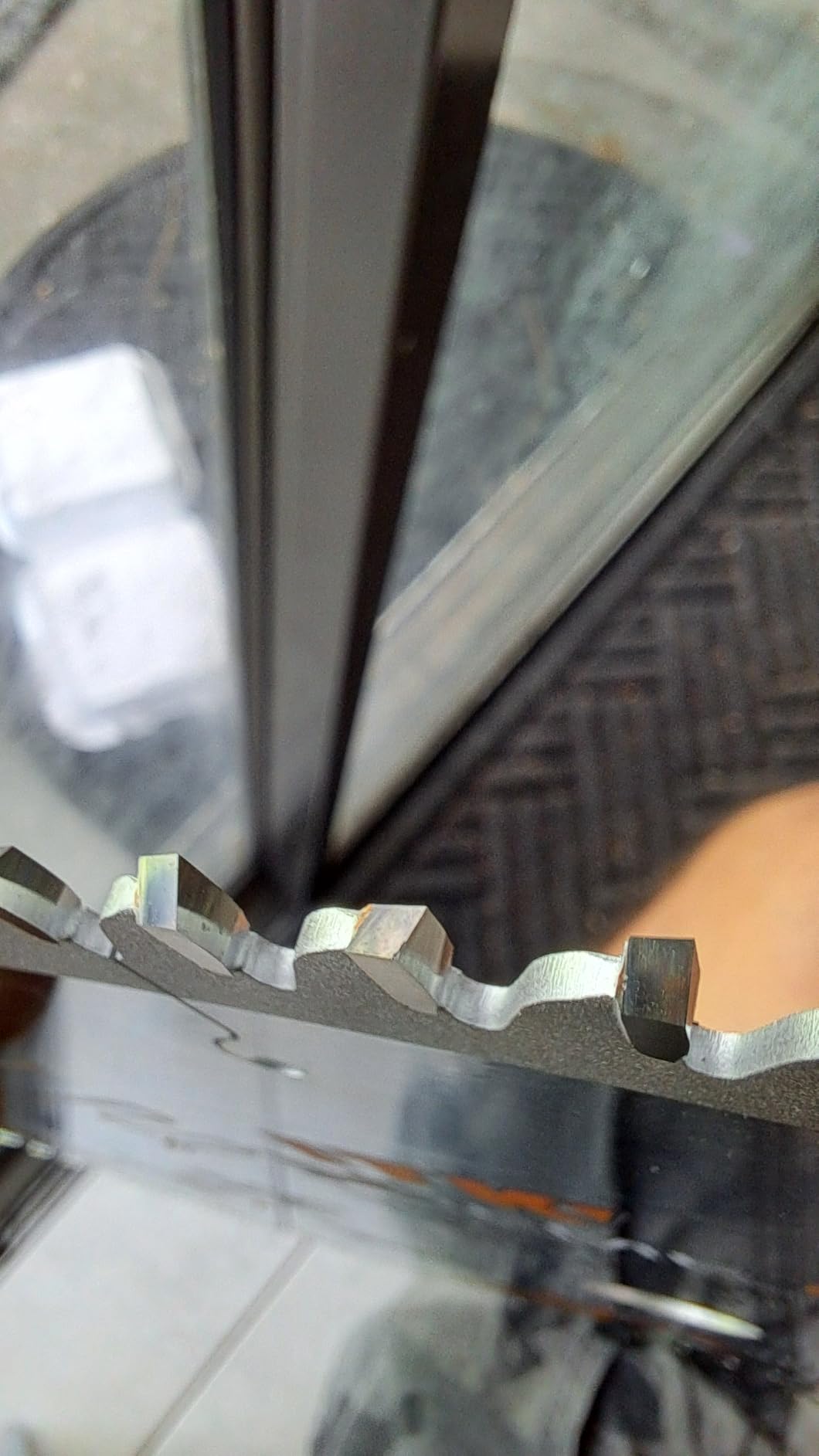
This is a small habit that saves a lot of ruined sheet goods. Run a finger along the carbide tips before you fit a new blade, and look at it against a light. Buyers on woodworking forums have reported chipped tips on new Freud blades arriving, and a single chipped carbide tooth will deflect off line and tear the entire panel rather than just marking it.
Also check the blade for run-out by spinning it on a flat surface or in the saw with the power off. A blade that wobbles at the arbor produces a cut that varies across its width, and on a thin-kerf blade that shows up as burn marks on one side. Return a damaged blade rather than trying to cut with it.
Two blades beat one blade for heavy sheet-goods work
If you are cutting plywood regularly, the strongest setup is two blades. Keep a 24-tooth rip blade for solid wood and sheet-goods ripping, and a 60-to-80 tooth crosscut and plywood blade for everything that produces a visible edge. Swapping blades takes a couple of minutes and the cut quality difference is immediate. For a one-blade shop, a 50-tooth combination blade like the Diablo D1050X is the reasonable compromise.
And one more thing that is not a blade spec but matters more than most specs: a scoring blade. A splitter in front of the main blade scores the face veneer and removes the need for a fine tooth count. On a wide kerf blade it is a very effective way to get clean edges, though it adds setup and a second blade to keep sharp. With a Hi-ATB blade, most people skip it.
Frequently Asked Questions
What type of blade is best for cutting plywood?
An 80-tooth carbide blade with a high alternate top bevel grind, a thin kerf around 1/8 inch or under, and a low hook angle of 2 to 5 degrees. The Hi-ATB grind scores the face veneer before the tooth body breaks fibers loose, which is what prevents tear-out. A 5/8 inch arbor fits the majority of 10-inch table saws.
How many teeth should a table saw blade have for plywood?
Between 60 and 80 teeth for most table saw work. 80 teeth gives the smoothest edge on veneered panels and is what you want on visible edges, while 60 teeth is faster and handles mixed sheet goods and hardwood work well. Dropping to 50 teeth gives you speed and durability at the cost of finish quality.
Is a 140 tooth blade good for plywood?
Not for most people. A 140-tooth blade is a fine crosscut pattern that demands more from the motor, goes dull quickly on coated or glued sheet goods, and offers little benefit over 80 teeth on a table saw. It can make sense on a dedicated cut-off saw with strong power and a very clean cut in mind.
What is a good 10 inch table saw blade for plywood?
For a general purpose home shop the WEN BL1080 80-tooth ultra-fine finish blade is a strong default, with a thin kerf and a 5/8 inch arbor. For visible cabinet-grade edges in veneered plywood or melamine, the Freud LU80R010 80-tooth Hi-ATB blade is the dedicated choice. The Diablo D1050X 50-tooth combination blade covers mixed work at the other end of the range.
Does a zero-clearance insert stop plywood from chipping?
It stops most of it. A zero-clearance insert supports the plywood right at the point where it leaves the blade, so the exit side of the cut is held instead of tearing free. Without it, the bottom face of a plywood cut will fuzz no matter how fine the blade is. Most woodworkers treat a properly set insert as essential equipment for panel work.
Final Verdict on the Best Table Saw Blades for Plywood
After working through all ten, our pick for the best table saw blades for plywood overall is the WEN BL1080 80-tooth carbide ultra-fine finish blade. It gives you a genuine thin kerf, an 80-tooth carbide edge, a 6000 RPM rating, and a 5/8 inch arbor that fits almost any table saw you will meet, and it does it at a price that makes it an easy first upgrade.
If your plywood has a face veneer that will be visible, change the recommendation. The Freud LU80R010 with its Hi-ATB grind and 2 degree hook is the dedicated tool for that job, and the Makita A-93681 will give you an even finer polished edge on thin stock. If your saw is light on power, take the thin-kerf Freud LU79R010 instead.
Whichever one you order, set a proper zero-clearance insert before your first cut and check the teeth for chips when it arrives. Those two five-minute habits do more for your plywood edges than any spec on the box. And if you have not settled on the saw itself, start with our guide to the best table saws so the blade and the machine are matched from the start. This roundup is current as of 2026 and we update it as new blades land.