

Quick answer: the TP-Link Archer AX21 v5 is the best router under 200 dollars most people should buy in 2026. It is a dual-band Wi-Fi 6 router rated at AX1800, it carries the largest owner review base of any router we looked at, and it sits well inside the budget we covered. If your internet plan runs faster than 1 Gbps or you want a 2.5GbE port, the GL.iNet Flint 2 is the stronger pick.
Spending up to 200 dollars on a router gets you a genuinely good machine these days. It gets you Wi-Fi 6 or Wi-Fi 7 hardware, OFDMA and MU-MIMO for busy homes, WPA3 encryption, and app-based management that would have seemed premium a few years ago. What 200 dollars does not get you is tri-band 6GHz mesh with multi-gig on every port.
We compared 12 routers on the things that actually decide whether a network feels good: the Wi-Fi generation, the presence of a 2.5 Gbps port, coverage claims, device capacity, and how much the management software fights you. The list deliberately mixes brands so you are not locked into one vendor’s ecosystem. If you have a bigger house than a single router can cover, read our guide to routers for large homes before you buy.
Table of Contents
Top 3 Picks for the Best Routers Under $200 in 2026

TP-Link Archer AX21 v5
- Dual-band Wi-Fi 6 AX1800
- OFDMA and beamforming
- Five gigabit ports
- Tether app management

GL.iNet Flint 2
- Wi-Fi 6 AX6000
- Dual 2.5 Gbps ports
- Pre-installed OpenWrt
- Handles 100+ devices

TP-Link Archer AXE75
- Tri-band Wi-Fi 6E AXE5400
- 6 GHz band for low latency
- EasyMesh expandable
- Up to 250 devices
12 Best Routers Under $200 (October 2026)
Every router below is a router only, not a cable modem, unless the section says otherwise. Use the Check Latest Price button to see current figures, since these models move often.
| Product | Specs | Action |
|---|---|---|
| TP-Link Archer AX21 v5 |
|
Check Latest Price |
| GL.iNet Flint 2 |
|
Check Latest Price |
| TP-Link Archer AXE75 |
|
Check Latest Price |
 eero 7 eero 7 |
|
Check Latest Price |
 GL.iNet Slate 7 GL.iNet Slate 7 |
|
Check Latest Price |
 NETGEAR Nighthawk R6700AX NETGEAR Nighthawk R6700AX |
|
Check Latest Price |
 NETGEAR Nighthawk RAX36 NETGEAR Nighthawk RAX36 |
|
Check Latest Price |
 NETGEAR Nighthawk RS140 NETGEAR Nighthawk RS140 |
|
Check Latest Price |
 ASUS RT-AX1800S ASUS RT-AX1800S |
|
Check Latest Price |
 Tenda RX12 Pro Tenda RX12 Pro |
|
Check Latest Price |
 GL.iNet Flint AX1800 GL.iNet Flint AX1800 |
|
Check Latest Price |
 TP-Link Archer A6 TP-Link Archer A6 |
|
Check Latest Price |
1. TP-Link Archer AX21 v5: Best Overall Router Under 200 Dollars
TP-Link AX1800 WiFi 6 Router (Archer AX21 V5)
Wi-Fi 6 AX1800
Dual-band
1200 Mbps on 5 GHz
1.1 lb
2-year warranty
Pros
- Largest owner review base in this group
- OFDMA handles many devices at once
- Four fixed antennas with beamforming
- VPN server support
- Tether app plus Alexa control
Cons
- Single gigabit WAN port caps multi-gig plans
- Dual-band with no 6 GHz band
- Router only so a modem is required
The Archer AX21 is the router we end up recommending to people who just want a good network without a project. It is dual-band Wi-Fi 6, with up to 1200 Mbps on the 5 GHz band and 574 Mbps on 2.4 GHz. Owners consistently describe setup as quick and the connection as stable after that.
What stands out is how well documented this model is. With 24.7k+ owner reviews, it has the largest review base of any router on this list, so its strengths and weaknesses are well understood.
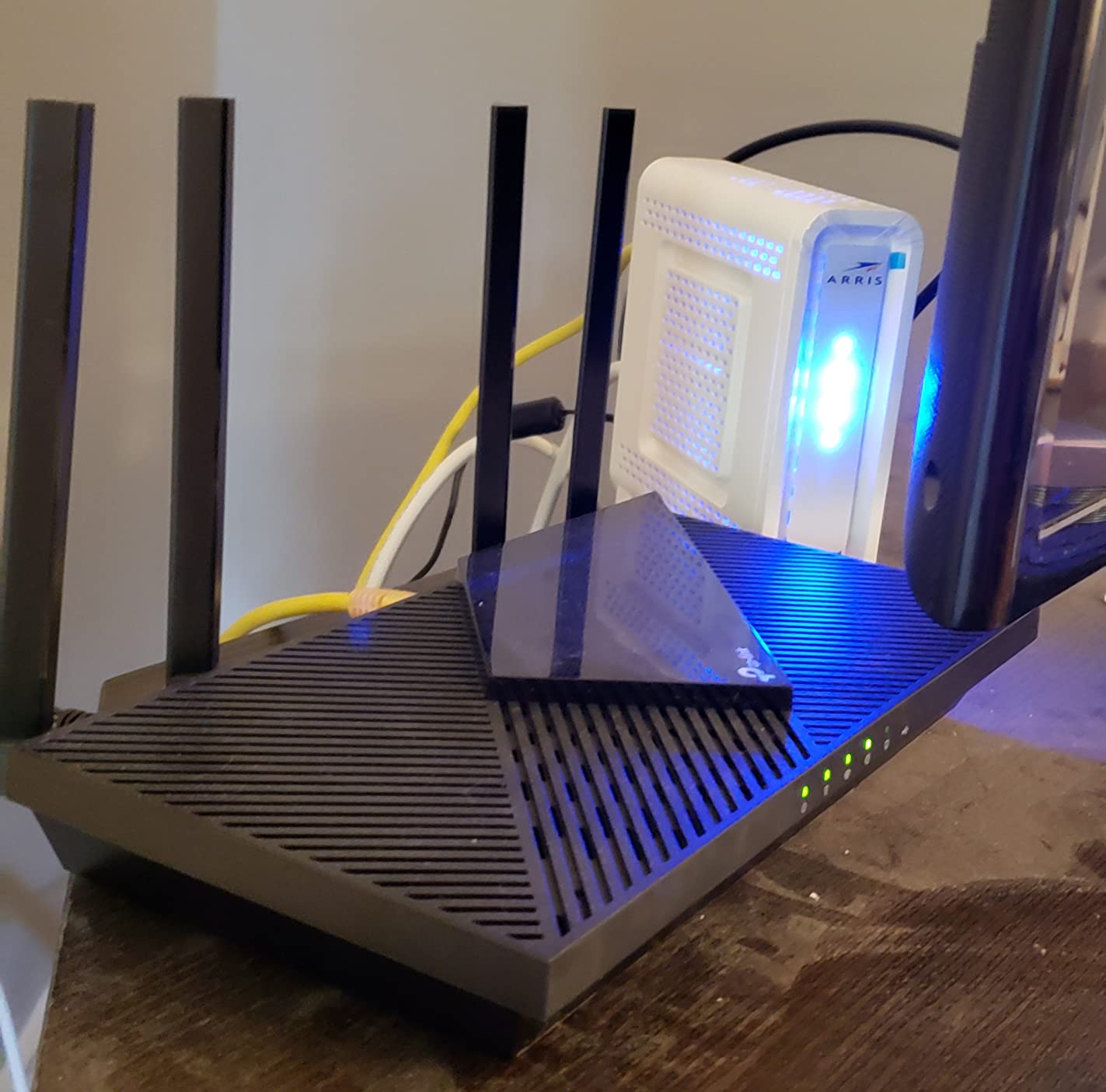
The hardware is unfussy in a good way. Four fixed antennas with beamforming and an advanced FEM chipset handle range, and OFDMA lets several devices transmit in the same window instead of taking turns. It also runs a VPN server for both OpenVPN and PPTP, which most budget routers skip.
On the software side, the Tether app covers setup and daily management, and it works with Alexa voice control. Security supports WPA3 alongside WPA and WPA2, and TP-Link participates in the CISA Secure-by-Design pledge.
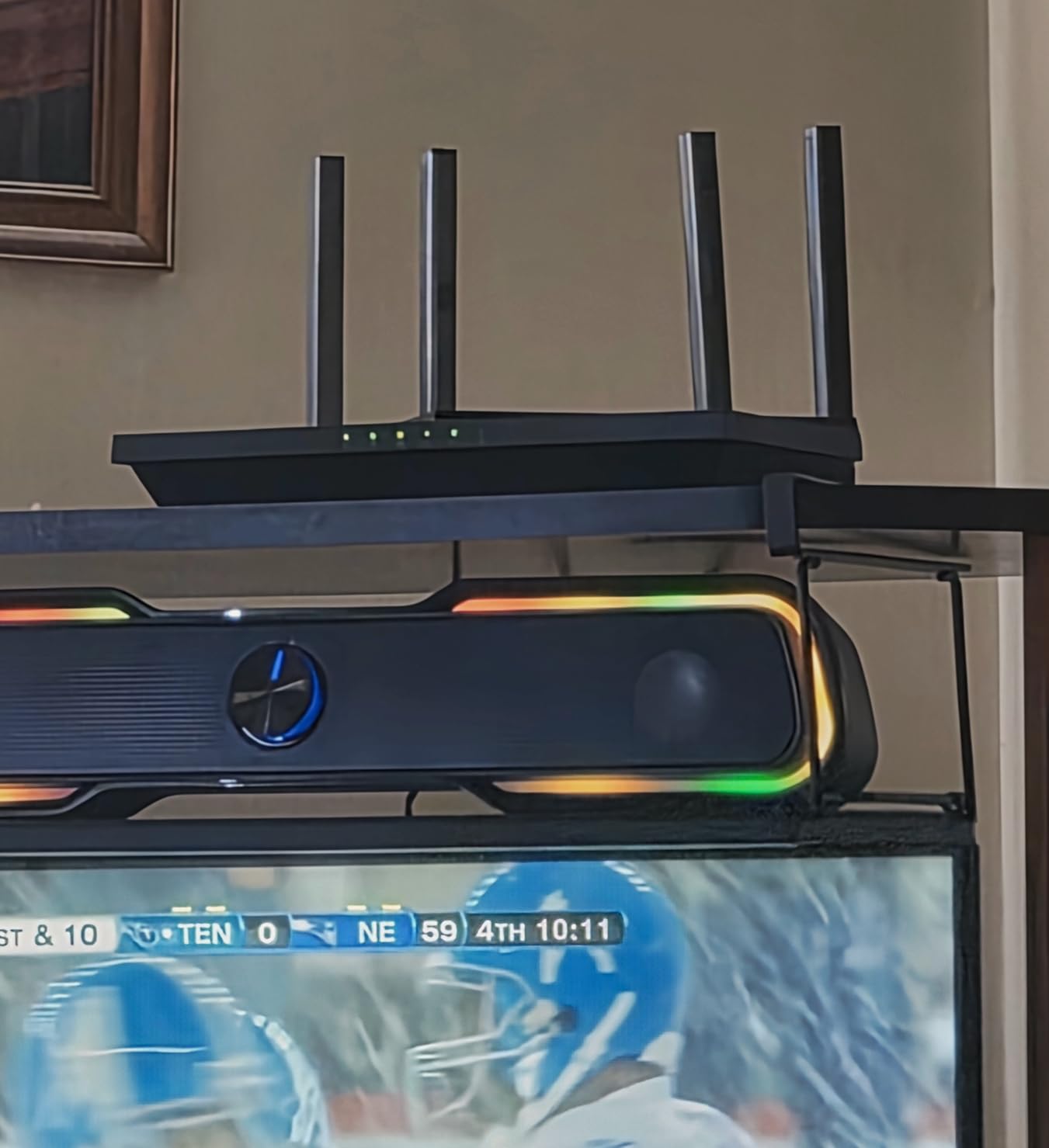
Is the AX21 good enough for a gigabit plan?
For most homes, yes. A gigabit fiber or cable connection will feed the AX21 faster than the Wi-Fi can push it to a single client, so you are not leaving meaningful speed unused.
The catch is the single gigabit WAN port. Once you add a NAS, a PoE camera switch or a wireless backhaul node, that port becomes the ceiling for the whole wired side of the network.
Who should skip the AX21?
Skip it if your ISP plan exceeds 1 Gbps and you care about multi-gig wired throughput. The Flint 2 covers that case with two 2.5 Gbps ports.
Skip it if you are on 6 GHz hardware today. There is no 6 GHz band here, so newer phones and laptops will not get the clean 320 MHz channels that Wi-Fi 6E and Wi-Fi 7 can offer. People who want the 6 GHz airtime should look at the AXE75 or the eero 7 instead.
2. GL.iNet Flint 2: Best Multi-Gig Router Under 200 Dollars
GL.iNet GL-MT6000 Flint 2 Wi-Fi 6 Gaming Router Dual 2.5G Ports
Wi-Fi 6 AX6000
Dual 2.5 Gbps ports
100+ devices
OpenWrt
2-year warranty
Pros
- Two 2.5 Gbps ports for WAN and LAN
- Pre-installed OpenWrt with full control
- AdGuard Home blocks ads network-wide
- Fast WireGuard and OpenVPN
- Handles 100+ connected devices
Cons
- Advanced features assume Linux comfort
- Boxy industrial design
- Antennas fold only front to back
The Flint 2 is the router to buy when your internet plan is gigabit-plus or when you want control over your network. It is dual-band Wi-Fi 6 with 8 streams and 6 Gbps of aggregate throughput, split as up to 4804 Mbps on 5 GHz and 1148 Mbps on 2.4 GHz. It weighs 761 g.
Under the plastic it runs a quad-core 2 GHz MediaTek processor with 1 GB of DDR4 RAM and 8 GB of eMMC storage, with OpenWrt already installed. That is a lot of headroom compared with the 256 MB and 512 MB chips in the cheaper models here.
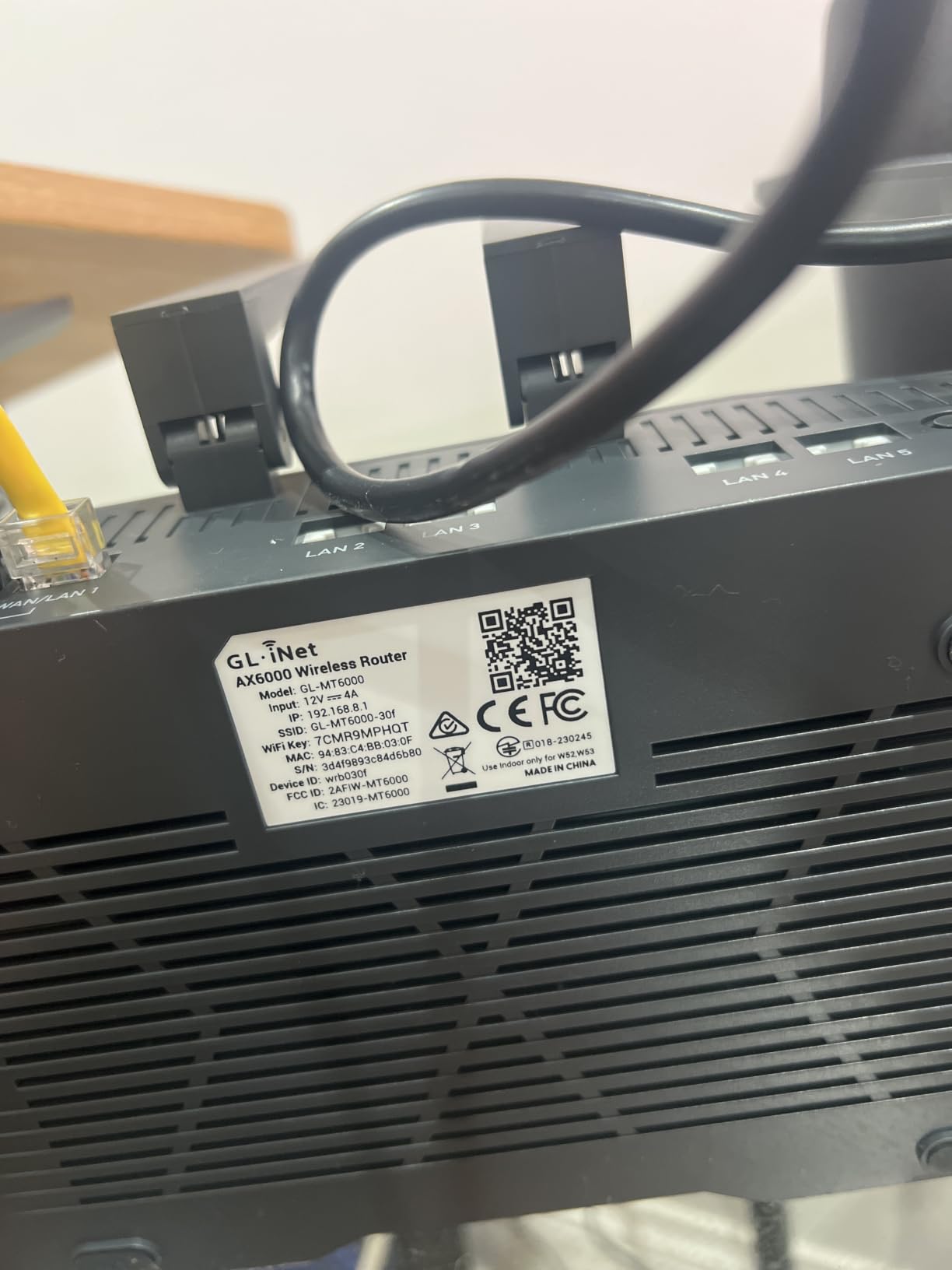
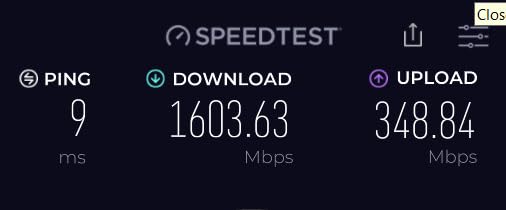
Owners treat this as a step up from ISP-supplied gear, frequently reporting 1 to 1.6 Gbps of Wi-Fi throughput and full saturation of their 2.5 Gbps Ethernet. The recurring praise is for OpenWrt flexibility, the bundled AdGuard Home, and VPN speed.
Wired connectivity is the headline: two 2.5 Gbps ports that you can configure as WAN or LAN, plus four 1 Gbps LAN ports. WireGuard runs up to 900 Mbps and OpenVPN up to 880 Mbps, and SQM and QoS plugin support is included for anyone dealing with bufferbloat.
Do you need a modem with the Flint 2?
No, it is a router only. You need a cable, DSL or fiber modem feeding it over Ethernet, unless your gateway already does that job.
Because it is Linux-based, the two 2.5 Gbps ports give you a real uplink for a NAS, a PoE switch or a second node doing wireless backhaul.
Who should skip the Flint 2?
Skip it if you want a touchscreen-free, app-driven experience with zero configuration. That is the opposite of what this router is for.
Skip it if you need the 6 GHz band. It is dual-band Wi-Fi 6, so owners with newer client hardware get nothing from Wi-Fi 7 features. It is also among the more expensive models in this roundup, which matters if you are buying purely for coverage.
3. TP-Link Archer AXE75: Best Value Tri-Band Wi-Fi 6E Router
TP-Link AXE5400 Tri-Band WiFi 6E Router, 2025 PCMag Editors’ Choice
Tri-band Wi-Fi 6E AXE5400
2402 Mbps on 6 GHz
250 devices
EasyMesh
2-year warranty
Pros
- 6 GHz band adds clean capacity in dense homes
- Excellent range reaching yards and outbuildings
- Handles 20+ devices without buffering
- EasyMesh expandable for whole-home coverage
Cons
- HomeShield extras need a paid subscription
- Tether app popup on every login
- USB drive sharing has rough default naming
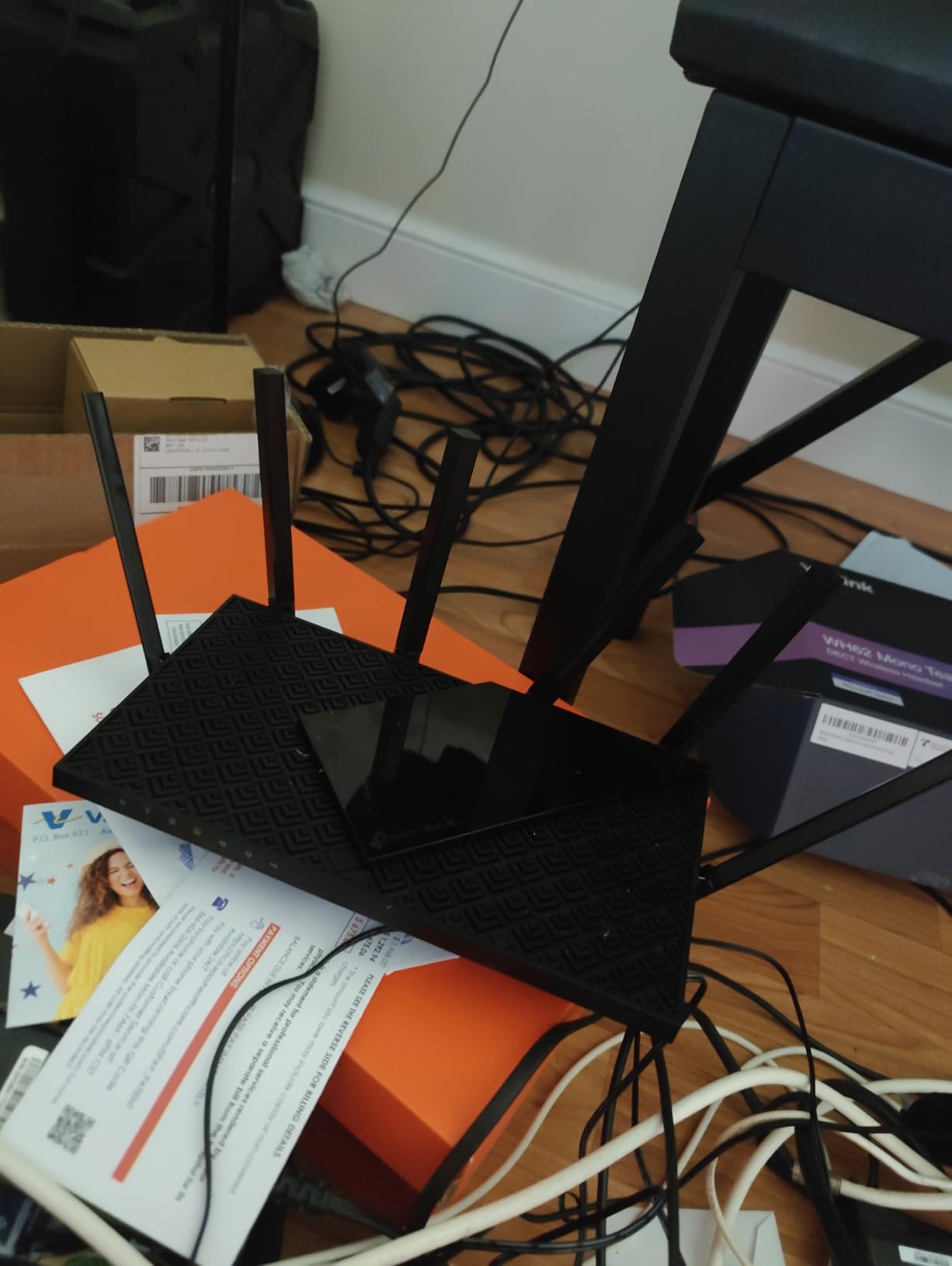
The AXE75 is the pick for a crowded house. It is tri-band Wi-Fi 6E, and the third band is the useful one: 2402 Mbps on 6 GHz, 2402 Mbps on 5 GHz, and 574 Mbps on 2.4 GHz. That 6 GHz band is less crowded than 2.4 GHz and 5 GHz, which is what you want when twenty-plus devices compete with overlapping neighbour networks.
Long-term ownership reports describe the AXE75 as rock solid over years, with strong whole-home coverage that reaches into yards and outbuildings, and gigabit-class speeds once all three bands share one SSID.
Internally it runs a 1.0 GHz dual-core processor with 512 MB of memory and a housing designed for heat dissipation. It supports up to 250 devices, works with EasyMesh for expansion, and includes VPN server and client support over OpenVPN, PPTP and L2TP.
Is 6 GHz worth choosing over a dual-band router?
Yes, if your own devices support it. Modern phones, laptops and TVs that support 6 GHz get access to wide channels and very low latency, which is noticeable for 4K streaming and cloud gaming.
If none of your hardware supports Wi-Fi 6E, the third band mostly benefits the network as a whole by lightening congestion. That is still useful, but it is a subtler gain.
Who should skip the AXE75?
Skip it if you dislike subscription prompts. TP-Link HomeShield’s advanced parental controls and fuller security reporting sit behind a paid tier, and some owners object to the Tether app popup on every web interface login.
Skip it if you need multi-gig wired ports. Every LAN port here is 1 Gbps, so a fast fiber plan will hit a wall on the wired side.
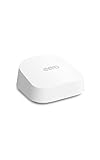
4. eero 7: Best Whole-Home Mesh Router Under 200 Dollars
Amazon eero 7 dual-band mesh Wi-Fi 7 router (newest model) – Supports internet plans up to 2.5 Gbps, Coverage up to 2,000 sq. ft., 1-pack
Wi-Fi 7 dual-band
Multi-link operation
Two 2.5 GbE ports
2000 sq. ft.
3-year warranty
Pros
- Simplest setup and management in this group
- Two auto-sensing 2.5 GbE ports
- TrueMesh keeps connections steady
- Expands an existing eero network node by node
- Three-year warranty
Cons
- Limited advanced configuration
- eero Plus subscription for extra management features
- Dual-band with no dedicated 6 GHz radio
If you have never configured a router in your life and you want a house-wide network that just works, the eero 7 is the answer. Setup takes minutes through the app, and with 74 percent five-star ratings owners clearly value the hands-off experience.
It is dual-band Wi-Fi 7 with multi-link operation, covering up to 2,000 square feet within a 25-foot radius and supporting 120 or more devices. Any single eero device can act as either a gateway or an extender, which makes growing coverage later straightforward.
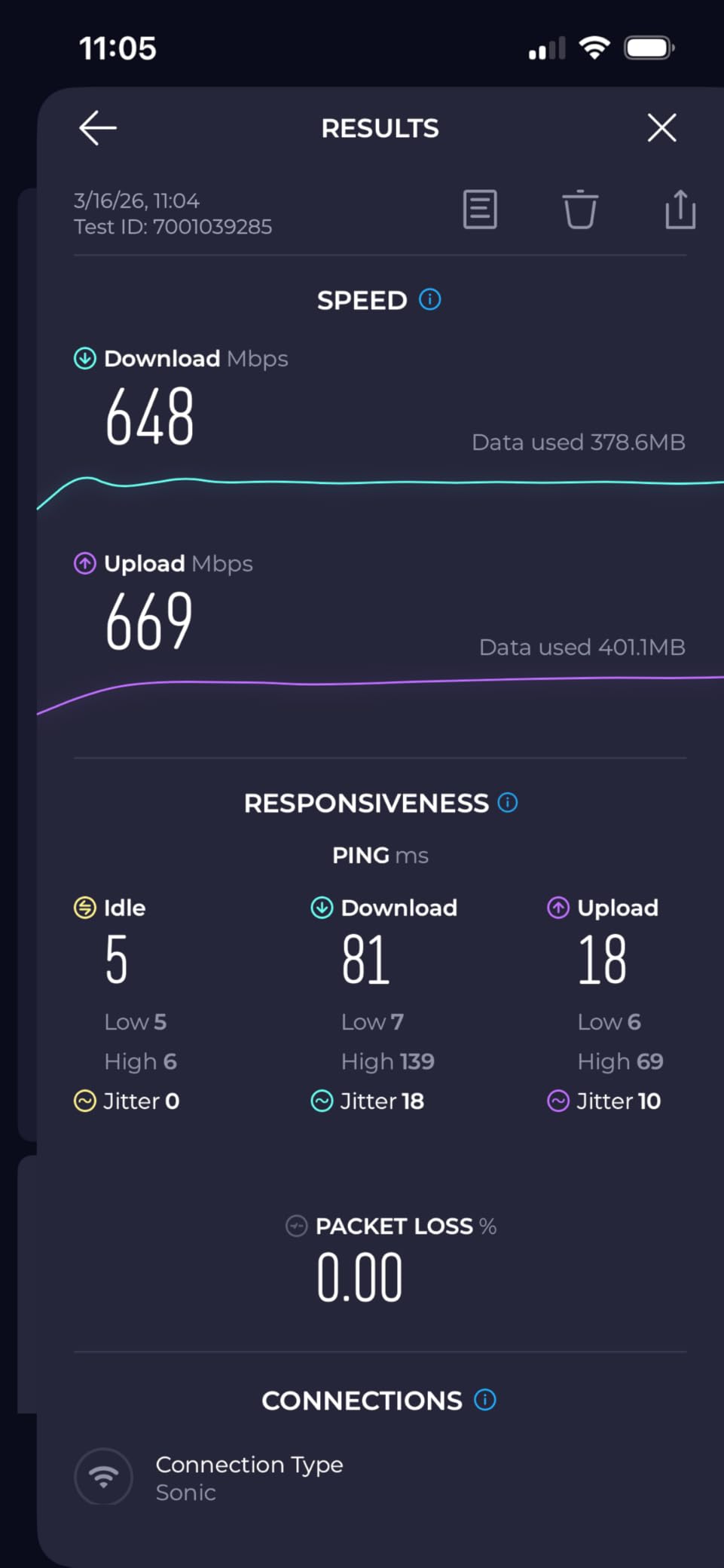
The two auto-sensing 2.5 GbE ports are the part that future-proofs it. They handle internet plans up to 2.5 Gbps, which is well beyond what the wireless side will deliver to a single device, and they let you wire a node instead of relying on wireless backhaul.
Coverage relies on TrueMesh, TrueRoam and TrueChannel software that aims to keep clients on the closest node, and the device works with earlier eero generations and with eero Built-in on select Echo devices.
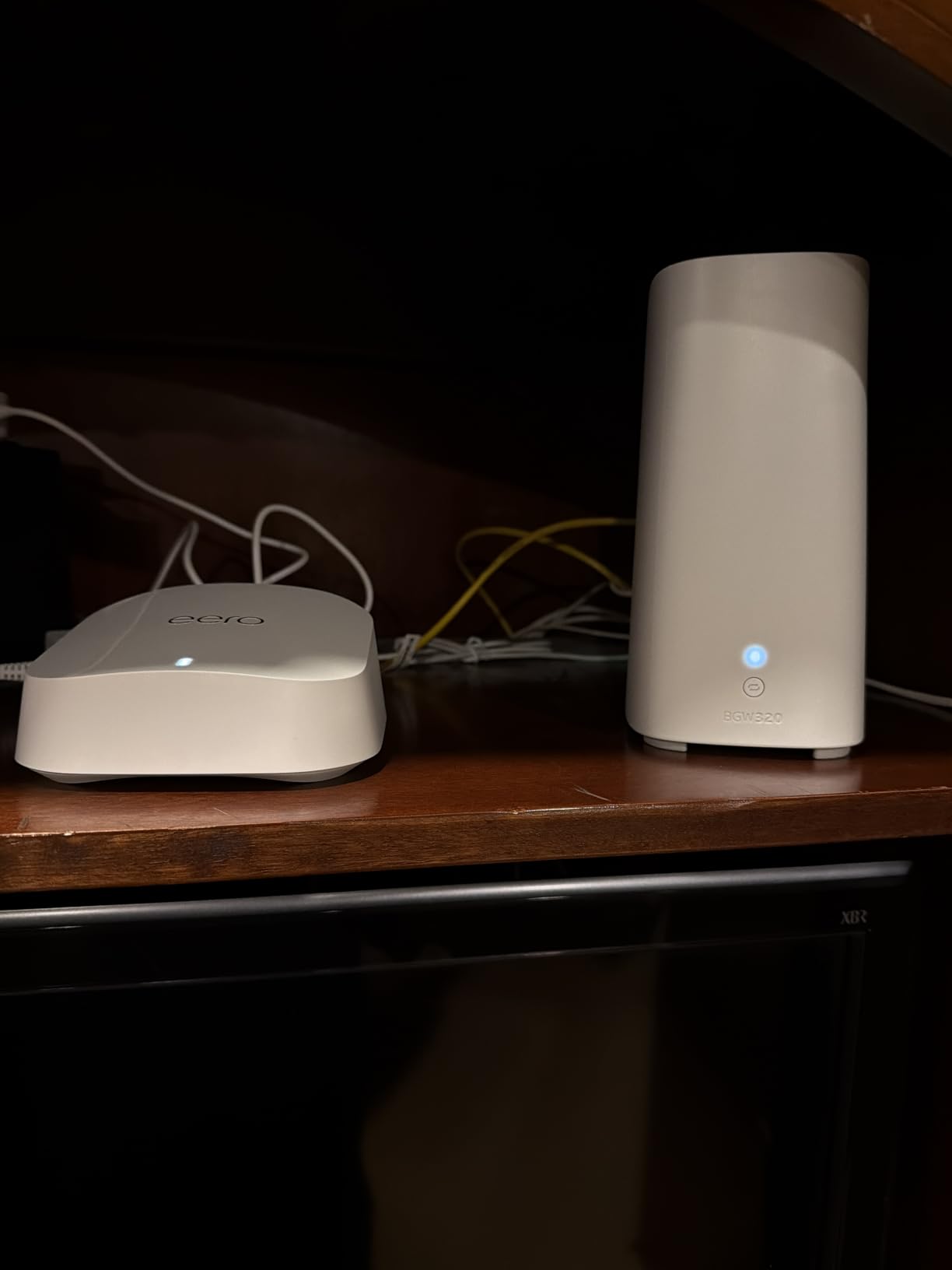
Is the eero 7 a single router or a mesh system?
It is a single unit that behaves like a mesh node. Bought alone it is a capable whole-home router for a space up to about 2,000 square feet, and adding eero devices later is how you extend it.
If you already own eero nodes, this is backward compatible, so it can join that network as a gateway or extender.
Who should skip the eero 7?
Skip it if you want to tune anything. Compared with an OpenWrt-based router, advanced configuration options are limited, and eero Plus is a paid subscription for extra network management features.
Skip it if 6 GHz airtime matters to you. It is dual-band, so there is no dedicated 6 GHz or tri-band radio despite the Wi-Fi 7 label.
5. GL.iNet Slate 7: Best Travel Router Under 200 Dollars
GL.iNet GL-BE3600 Slate 7 Wi-Fi 7 Travel Router Touchscreen 2.5G
Wi-Fi 7 dual-band
One-inch touchscreen
Dual 2.5 GbE ports
0.3 kg
OpenWrt 23.05
Pros
- Compact travel form factor with US UK EU AU plug adapters
- Touchscreen handles VPN and Wi-Fi sharing without an app
- Wi-Fi 7 with 2.5G WAN and LAN
- VPN cascading runs server and client at once
- USB 3.0 for portable storage
Cons
- Fewer ports than a full-size home router
- OpenVPN throughput much lower than WireGuard
- Touchscreen toggles need initial configuration
The Slate 7 is bought for hotels, cruise ships and RVs rather than for a house. It weighs 0.3 kg, measures 3.5 by 1.3 by 5.1 inches, and includes plug adapters for the US, UK, EU and Australia.
Despite the size it is dual-band Wi-Fi 7, with 688 Mbps on 2.4 GHz and 2882 Mbps on 5 GHz and a 2.5 Gbps upstream rate. Two 2.5 GbE ports handle WAN and LAN, and there is a USB 3.0 port for portable storage.
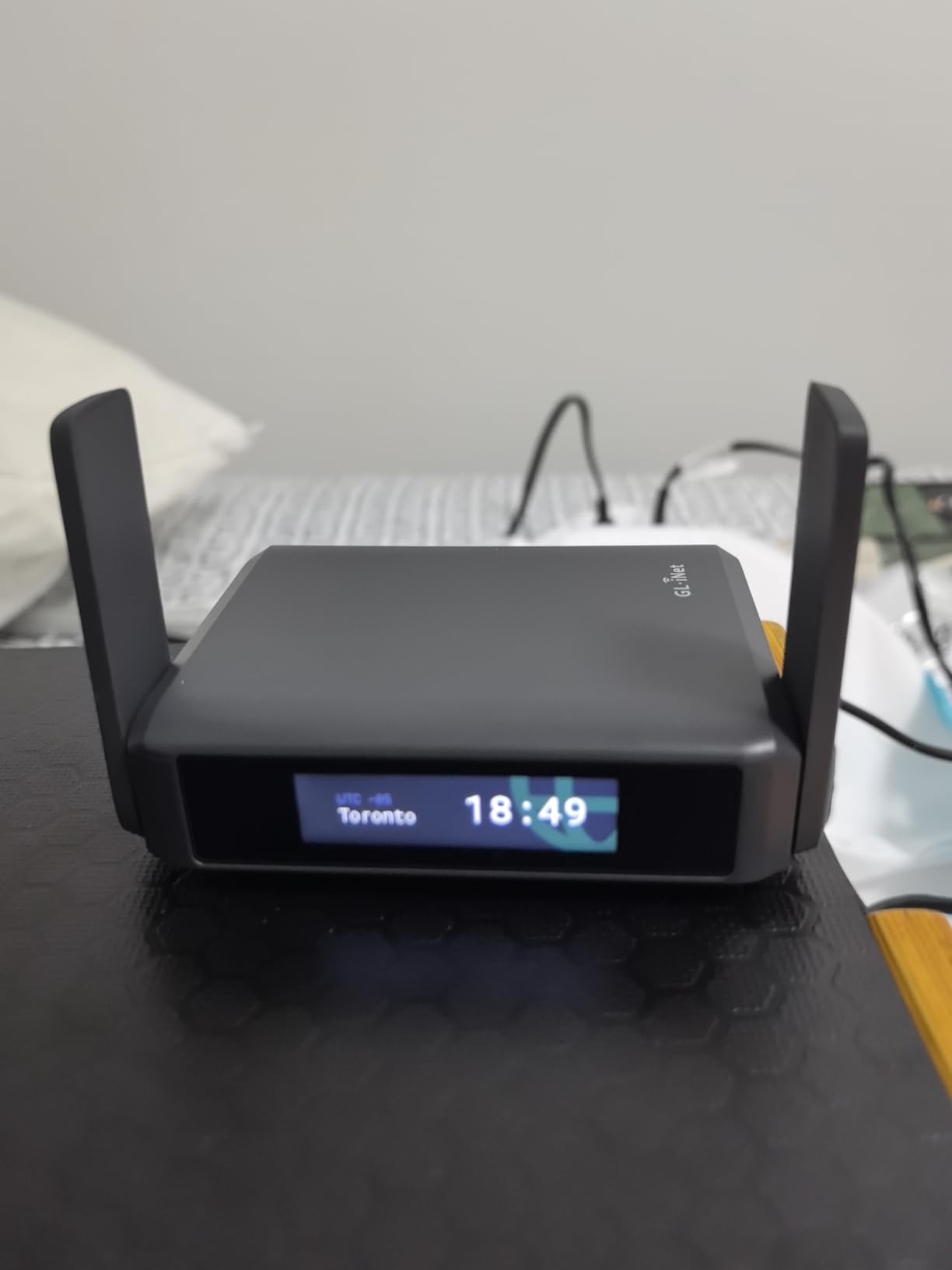
The one-inch touchscreen is the differentiator. It handles QR Wi-Fi sharing, real-time speed monitoring, VPN toggles and provider switching without digging out an app, which is the friction you hit in a hotel room.
Underneath it runs OpenWrt 23.05 with 512 MB of storage and plugin support. OpenVPN reaches about 100 Mbps while WireGuard reaches about 540 Mbps, it is compatible with more than 30 VPN providers, and it can host a VPN server and client at the same time.
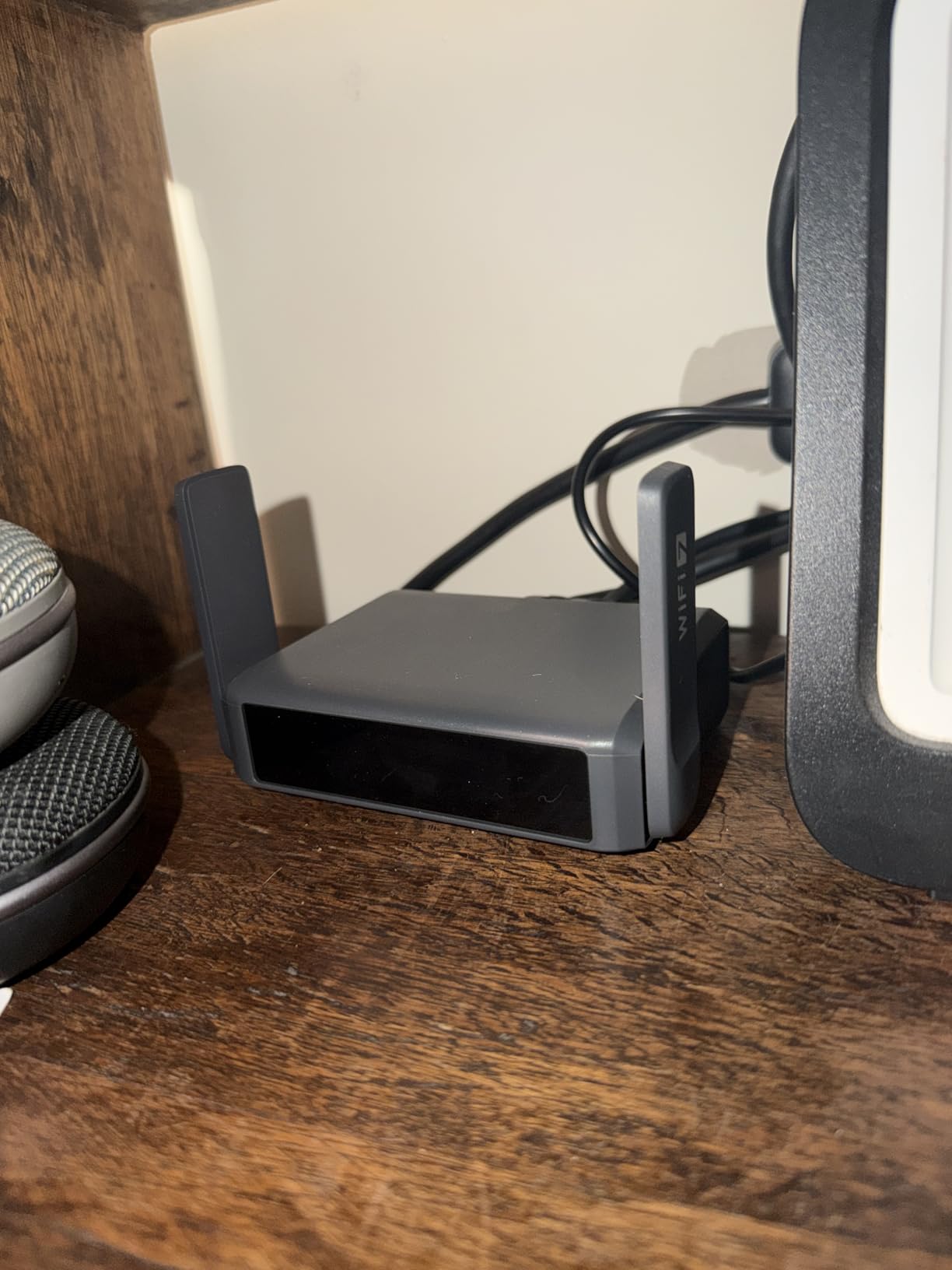
Is the Slate 7 strong enough for a home network?
Technically yes, but it is the wrong shape of device for that job. Two Ethernet ports and a compact case make it awkward to run as a main home router with several wired devices, though its security defaults are strong with WPA3, DNS over HTTPS, DNS over TLS and IPv6 support.
It can be extended into a small network with a second node if you travel and home at once, but the setup is manual rather than app-guided.
Who should skip the Slate 7?
Skip it if you want fast OpenVPN. WireGuard is dramatically quicker, so the Flint 2 is the better choice if VPN throughput at a desk matters more than travel size.
Skip it if you want plug-and-play. The on-screen toggle buttons arrive with no function assigned until you configure them, and you are expected to be comfortable with OpenWrt to get full value.
6. NETGEAR Nighthawk R6700AX: Best Budget Router Under 200 Dollars
NETGEAR Nighthawk WiFi 6 Router R6700AX, Up to 1,500 sq ft, 1.8 Gbps
Wi-Fi 6 AX1800
Covers 1500 sq. ft.
20 devices
0.64 kg
1-year warranty
Pros
- Genuine AX1800 Wi-Fi 6 at the budget end
- App-guided setup that diagnoses connection errors
- Four gigabit LAN plus dedicated WAN port
- Security enabled by default with no required subscription
- Compact footprint
Cons
- A number of boxes restricted to WPA2-AES encryption
- No way to block individual devices
- One-year limited warranty with paid phone support
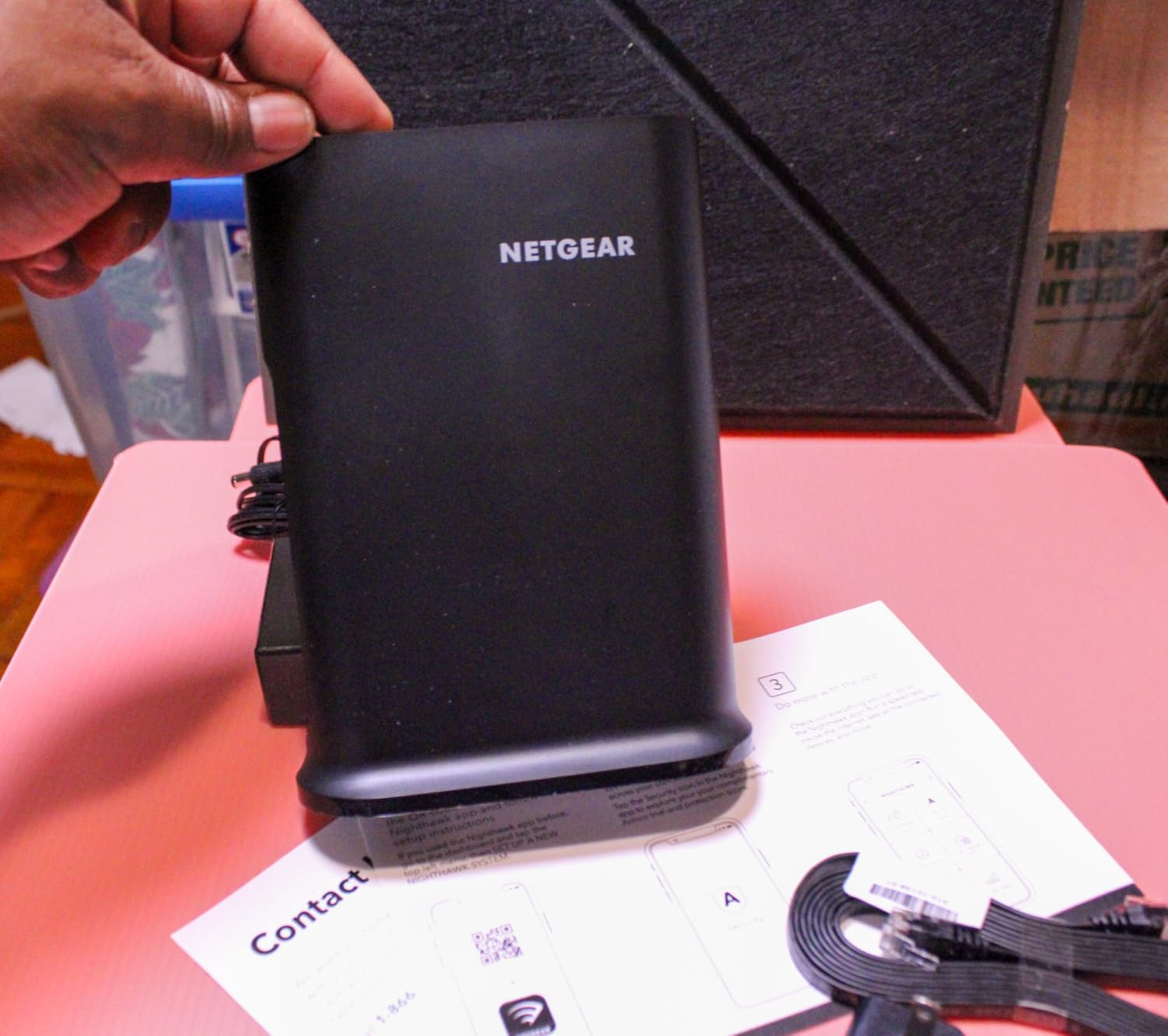
The R6700AX is an inexpensive route to real Wi-Fi 6, and for a small flat or a single-storey house that is all you need. It is dual-band AX1800 with up to 1200 Mbps on 5 GHz and 574 Mbps on 2.4 GHz.
Coverage is stated at up to 1,500 square feet for around 20 connected devices. It has four 1 Gbps LAN ports plus a separate WAN port, which is more wired flexibility than most routers at this tier offer.
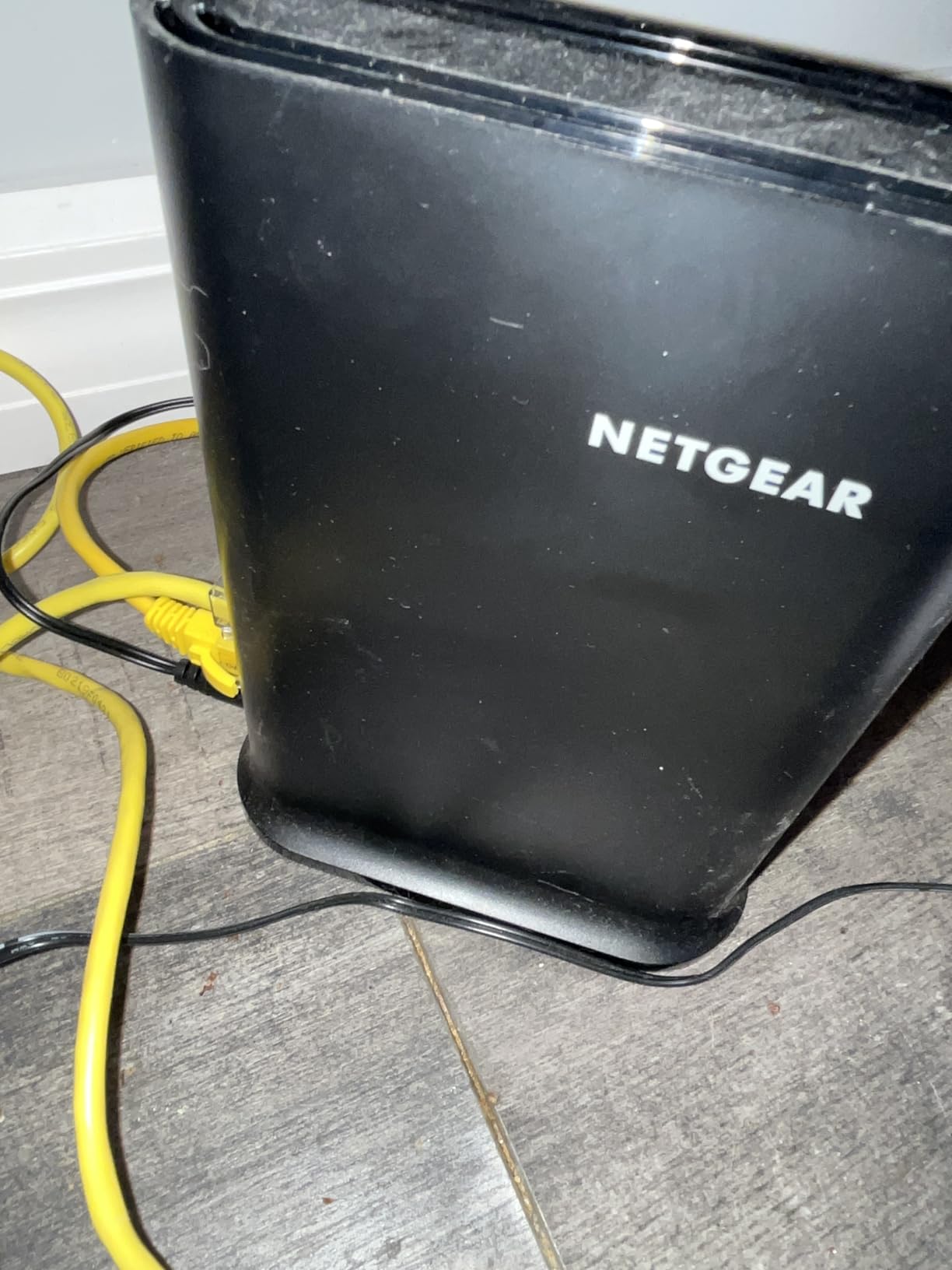
Owners single out the Nighthawk app for diagnosing setup failures with specific instructions rather than generic errors. It handles guided setup, speed tests, device pausing and guest networks, and it works with any cable, fiber, DSL or satellite modem over Ethernet.
NETGEAR Armor is offered as a subscription with a 30-day free trial, but security is on out of the box.
Is a budget AX1800 router fast enough for streaming?
For one or two streaming devices, absolutely. AX1800 is more than a 100 Mbps plan can feed, and it handles 4K streams without trouble in the coverage area.
The realistic limit is simultaneous load. With 20 or more active devices the shared 5 GHz airtime becomes the constraint, not the internet plan.
Who should skip the R6700AX?
Skip it if you need WPA3 on every box. A number of reviewers report models restricted to WPA2-AES encryption only, which matters if you are rolling out a mixed network.
Skip it if you need a long warranty or per-device blocking. There is no way to block an individual device from the Wi-Fi, and the warranty is one year limited with paid phone support once that period ends.
7. NETGEAR Nighthawk RAX36: Best Router Under 200 Dollars for Larger Homes
NETGEAR Nighthawk WiFi 6 Router (RAX36) – Router Only, AX3000 3 Gbps Wireless Speed – Dual-Band Gigabit Internet – Covers 2,000 sq. ft., 25 Devices – Built-in VPN, USB 3.0, Gaming
Wi-Fi 6 AX3000
3 Gbps aggregate
Covers 2000 sq. ft.
25 devices
2.4 lb
Pros
- Higher AX3000 throughput ceiling than cheaper Nighthawk models
- 2000 sq. ft. coverage for up to 25 devices
- Built-in VPN support plus USB 3.0
- Four gigabit LAN ports for wired gaming
- Supports WPA3
Cons
- Router only so a separate modem is required
- All Ethernet ports cap at 1 Gbps
- One-year limited warranty
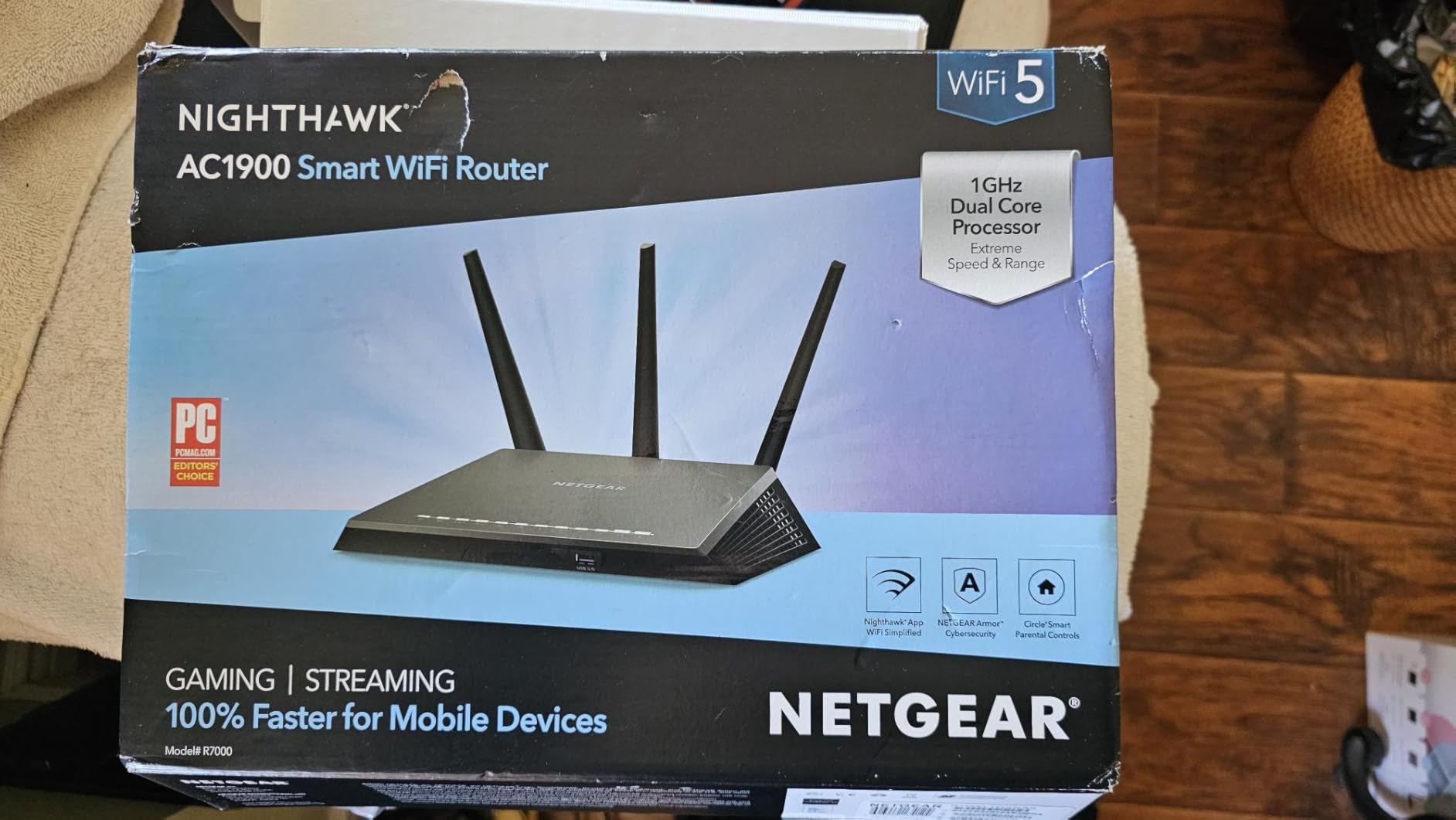
The RAX36 is the step up from entry-level gear for anyone whose previous router was struggling. It is 4-stream dual-band Wi-Fi 6 with an AX3000 class, which works out to 3 Gbps of aggregate throughput. At 2.4 pounds it is a physically larger model than the other Nighthawk routers here.
Coverage is stated at up to 2,000 square feet for up to 25 connected devices.
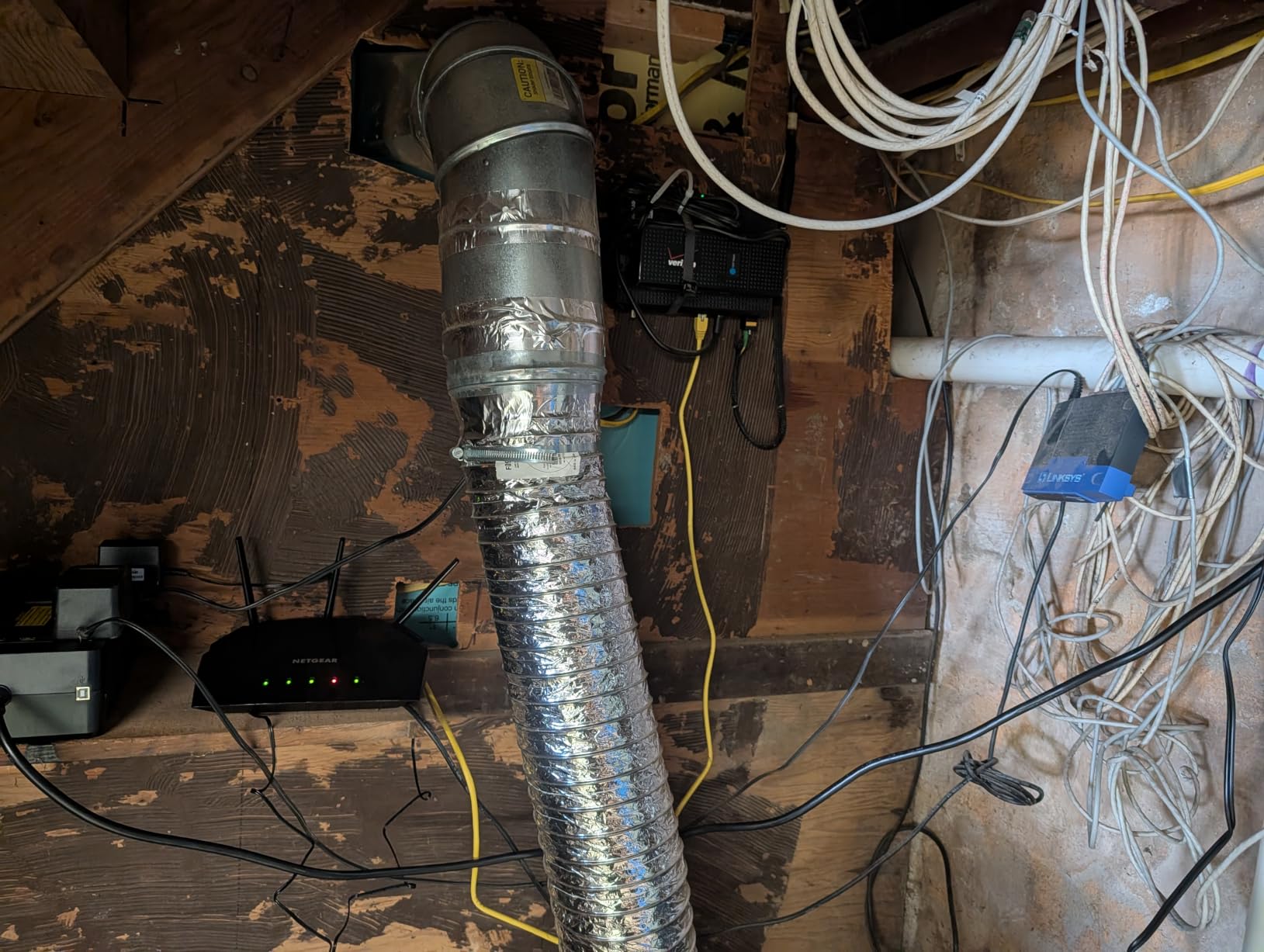
Buyers who upgraded from an older budget router value the higher wireless ceiling and the larger coverage area. Four 1 Gbps Ethernet ports cover consoles, streaming players and desktops on a wired connection, and there is built-in VPN support plus a USB 3.0 port for peripherals. It runs on a Linux-based operating system, supports WPA3, and works with ISPs up to 1 Gbps across cable, satellite, fiber and DSL.
It also carries a gaming focus, with QoS and a dedicated gaming prioritization option, and the Linux core under the interface makes it a target for community firmware work.
Will the RAX36 survive a fiber connection?
It will carry a 1 Gbps plan without trouble, and it is compatible with most ISPs at that tier. The limitation is on the wired side rather than the wireless side.
Every Ethernet port caps at 1 Gbps. Owners on faster fiber plans report limited benefit from the higher wireless number because the ports become the bottleneck.
Who should skip the RAX36?
Skip it if you want a multi-gig uplink for a NAS or PoE switch, since a single gigabit WAN port cannot take advantage of a faster line.
Skip it if you want long-term support coverage. The warranty is one year limited, which is the shortest of the multi-year warranties in this roundup.
8. NETGEAR Nighthawk RS140: Best Wi-Fi 7 Router Under 200 Dollars
NETGEAR Nighthawk WiFi 7 Router RS140, Up to 2,250 sq ft, 5 Gbps
Wi-Fi 7 BE5000
Up to 5 Gbps
One 2.5 Gig WAN port
2250 sq. ft.
80 devices
Pros
- Very easy setup through the Nighthawk app
- Strong stable signal across a large home
- Multi-gig 2.5G WAN port supports faster plans
- Solid throughput for streaming and smart devices
Cons
- A small number of reports of signal dropouts after purchase
- Some mesh extenders reportedly failed to pair
- NETGEAR Armor subscription after the trial
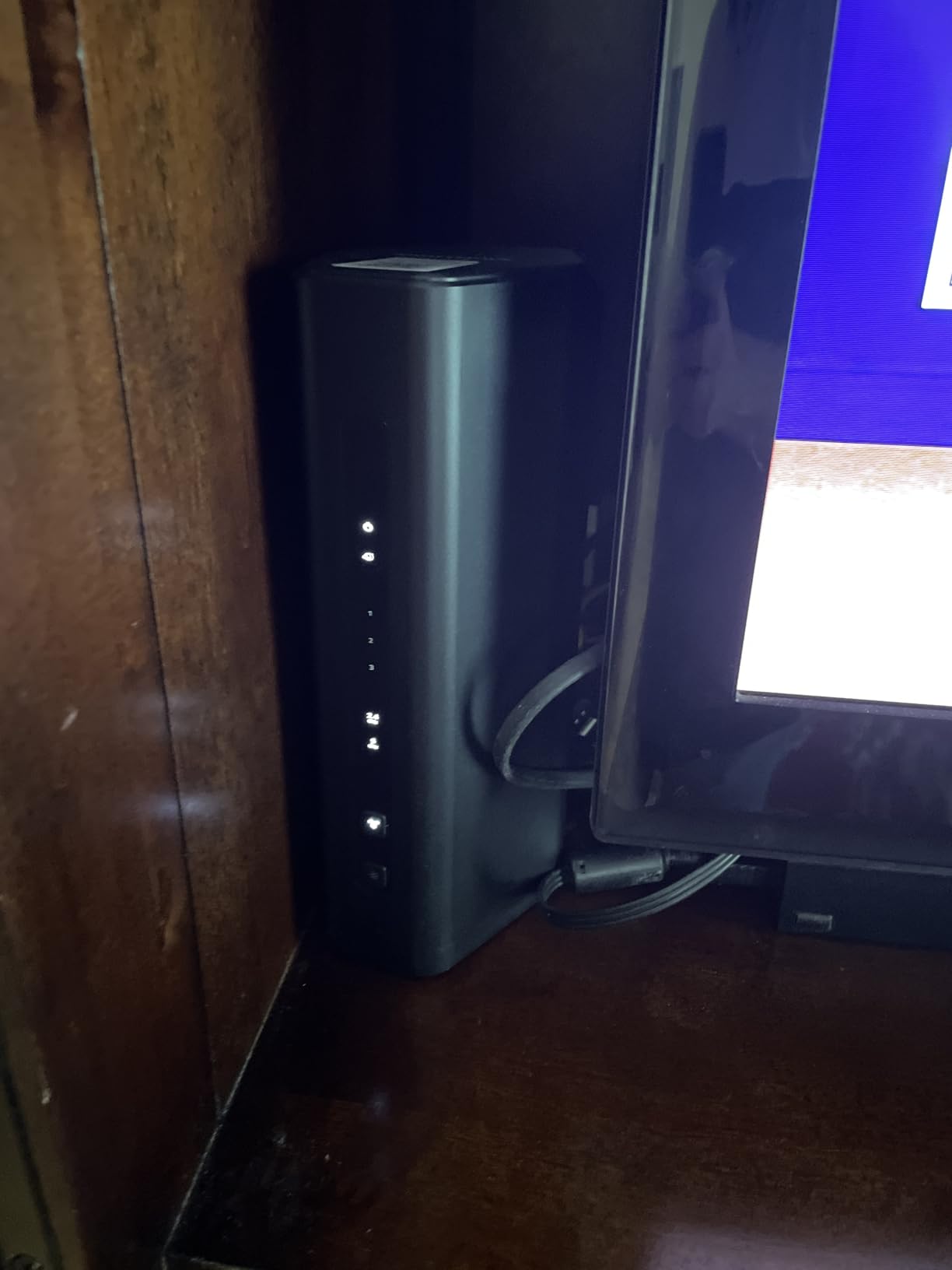
The RS140 is the Wi-Fi 7 option that stays inside this budget. It is dual-band, with up to 5 Gbps aggregate throughput across 2.4 GHz and 5 GHz, which NETGEAR positions as faster than the equivalent Wi-Fi 6 class.
It covers up to 2,250 square feet for up to 80 devices. MU-MIMO and OFDMA handle simultaneous device traffic, and WPA3 is supported with security enabled out of the box.
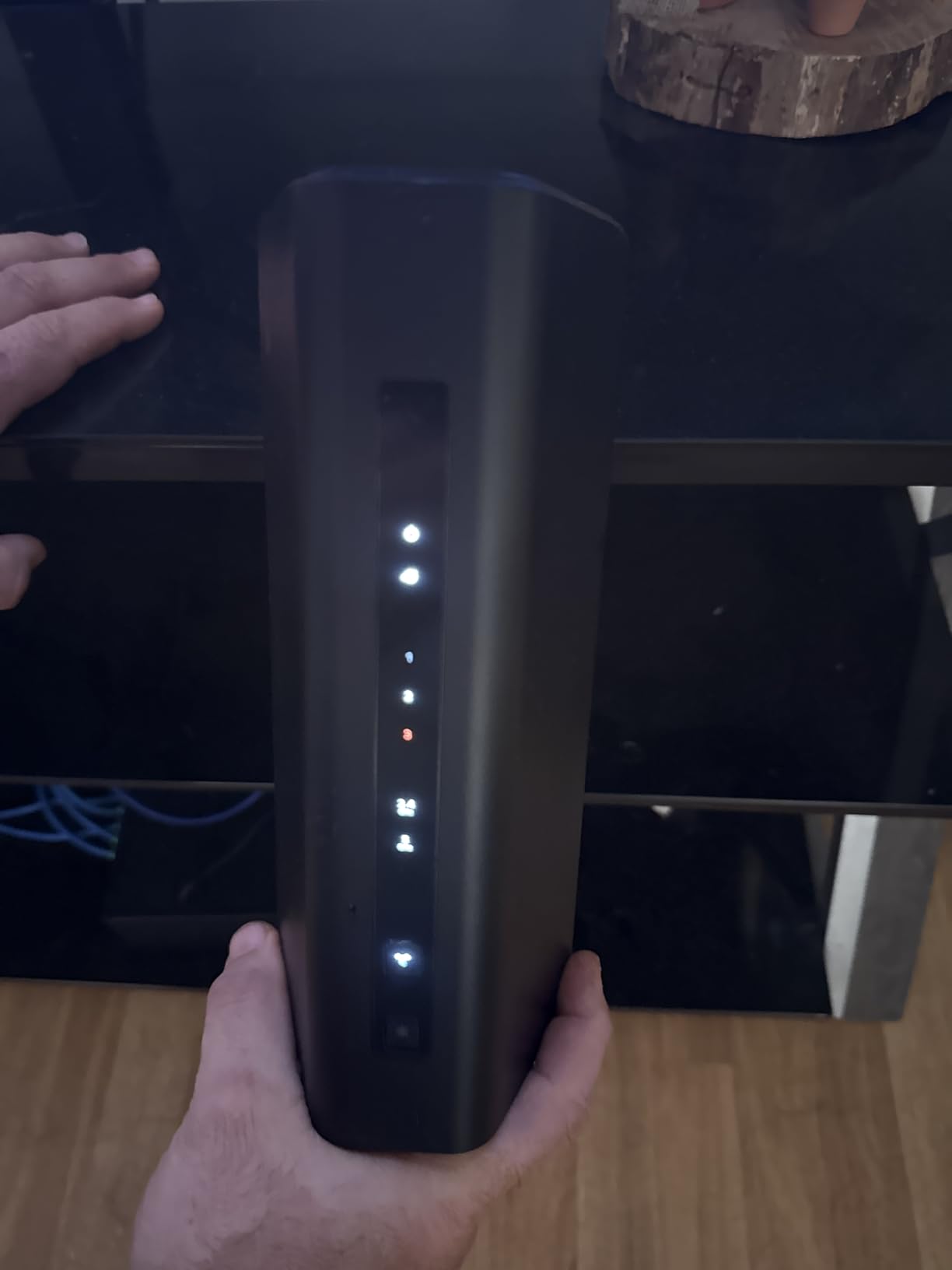
The wired side is where it justifies itself. There is one 2.5 Gig WAN port plus three 1 Gbps Ethernet LAN ports, so a faster fibre or cable plan is not capped at gigabit speed before it reaches your network.
Owners overwhelmingly praise the app-based setup, including from non-technical and older users, and report strong whole-home coverage. A minority report that the signal dropped or speed fluctuated shortly after purchase.
Is the RS140 the right Wi-Fi 7 upgrade?
It is the choice if you already own Wi-Fi 7 client devices and want multi-gig wired throughput at the same time. The 2.5 Gig WAN port is the practical benefit most households will notice.
If your devices are still on Wi-Fi 6, a capable Wi-Fi 6 router such as the AX21 will give you similar real-world results for less spend.
Who should skip the RS140?
Skip it if reliability is your top priority and you cannot tolerate dropouts. A small number of reviews report signal loss and speed fluctuation soon after purchase.
Skip it if you plan to add NETGEAR mesh extenders, since some extenders reportedly failed to pair with it.
9. ASUS RT-AX1800S: Best Router Under 200 Dollars With No Subscription Fee
ASUS RT-AX1800S Dual Band WiFi 6 Extendable Router, Subscription-Free Network Security, Parental Control, Built-in VPN, AiMesh Compatible, Gaming & Streaming, Smart Home
Wi-Fi 6 AX1800
Five gigabit ports
256 MB RAM
13.12 oz
3-year warranty
Pros
- AiProtection security included at no ongoing cost
- App-based setup praised by beginners
- Deep configuration options for QoS and firewall
- AiMesh compatible for mesh expansion
- Three-year warranty
Cons
- Known 2.4 GHz firmware bug on some builds
- Parental controls not granular enough for custom rules
- Some laptops cannot connect to the 5 GHz network
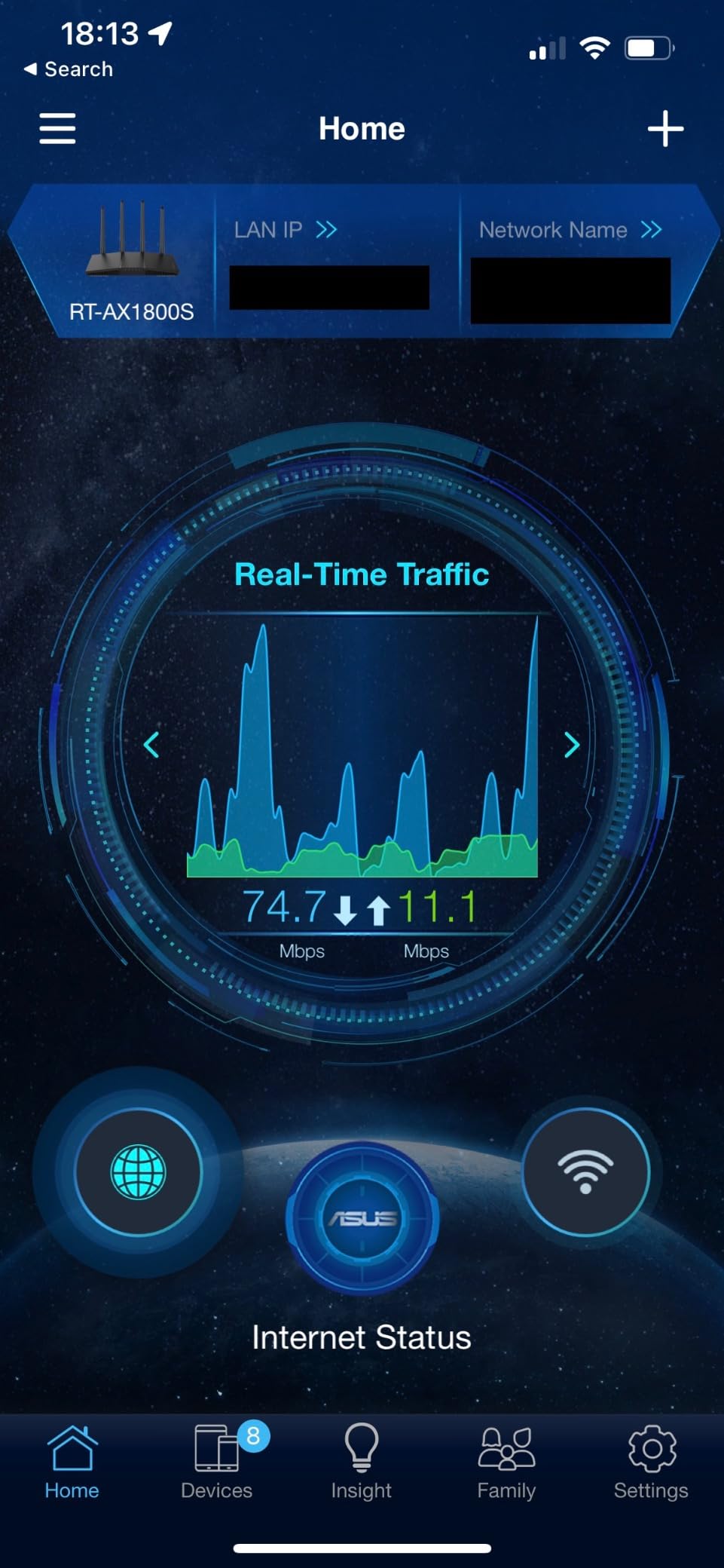
The RT-AX1800S is the pick if you refuse to pay a subscription for network security. AiProtection Classic by Trend Micro is included at no cost, which is unusual at this tier where most rivals put advanced protection behind a paid tier.
It is dual-band Wi-Fi 6 with 1024-QAM, reaching up to 1201 Mbps on 5 GHz, with four retractable antennas, one Gigabit WAN port, four Gigabit LAN ports, a dual-core processor, 256 MB of RAM and a three-year warranty.
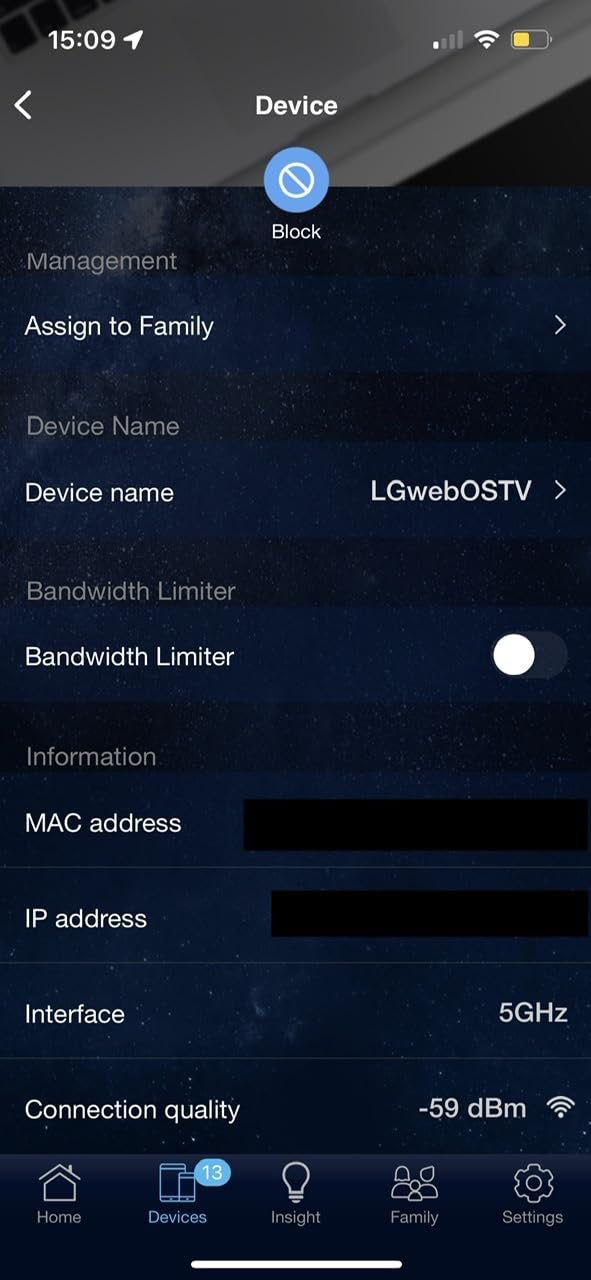
Buyers value the security, configurability and quick ASUS app setup far more than raw speed, and many report it replacing a slower ISP-supplied router. ASUS Instant Guard gives a one-click VPN for connecting back home while travelling, and the firmware is the one community members in home networking forums most often target for third-party builds.
For wired performance it runs a hardware-accelerated NAT engine and adaptive QoS, and the five gigabit ports let you split traffic between a desktop, a console and a TV without adding a switch.
Does the RT-AX1800S need a modem?
No. It is a router only, so it connects to your cable, DSL or fiber modem over Ethernet and works with any ISP that hands off an Ethernet connection. It is also AiMesh compatible, meaning it can extend an existing ASUS router or act as a node in an ASUS mesh network.
That AiMesh path is worth knowing about, because it is one of the few mesh options at this price that can reuse hardware you already own rather than forcing a closed set of nodes.
Who should skip the RT-AX1800S?
Skip it if you need detailed parental controls or a flawless firmware experience. The filtering is not granular enough for custom blacklists, some ASUSWRT builds on MT7915-based models drop the 2.4 GHz radio when Smart Connect and Wi-Fi 6 are both enabled, and some laptops report trouble connecting to the 5 GHz network.
10. Tenda RX12 Pro: Best Budget Router Under 200 Dollars for Smart Homes and Dead Zones
Tenda AX3000 WiFi 6 Router,Dual-Band Gigabit Wireless Internet Router, Mesh & AP Mode, Built-in VPN, NFC Tap-to-Connect, OFDMA MU-MIMO, Secure IoT Network for Home Gaming & 4K Streaming(RX12 Pro V3.0)
Wi-Fi 6 AX3000
2402 Mbps on 5 GHz
7 dBi antennas
4 gigabit ports
2-year warranty
Pros
- Coverage gains in rooms that had dead zones
- Stable speeds on both bands with many devices
- Built-in VPN and a dedicated IoT network
- Access point mode avoids double NAT
- Two-year warranty
Cons
- One reviewer reports dropouts under heavy streaming load
- Router only so a modem is required
- Web interface is more basic than premium-brand apps
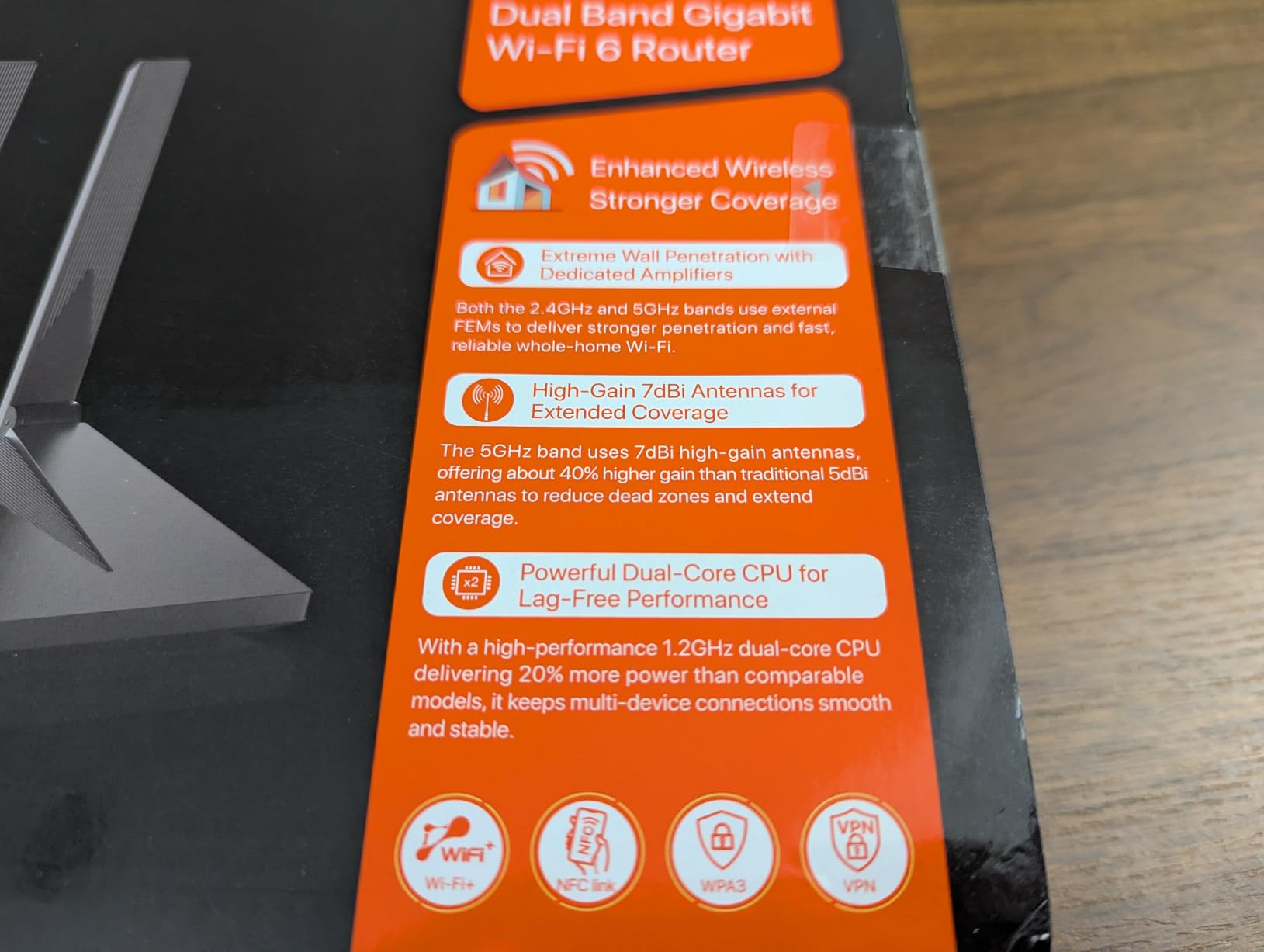
The RX12 Pro pairs large antennas with a fast wireless class. It is dual-band Wi-Fi 6 with an AX3000 class, up to 2402 Mbps on 5 GHz and 574 Mbps on 2.4 GHz, and it uses 7 dBi high-gain antennas with beamforming.
It also supports EasyMesh, so you can expand it later with a matching node rather than replacing the whole router. Four Gigabit ports include automatic WAN and LAN detection, which removes a common setup mistake.
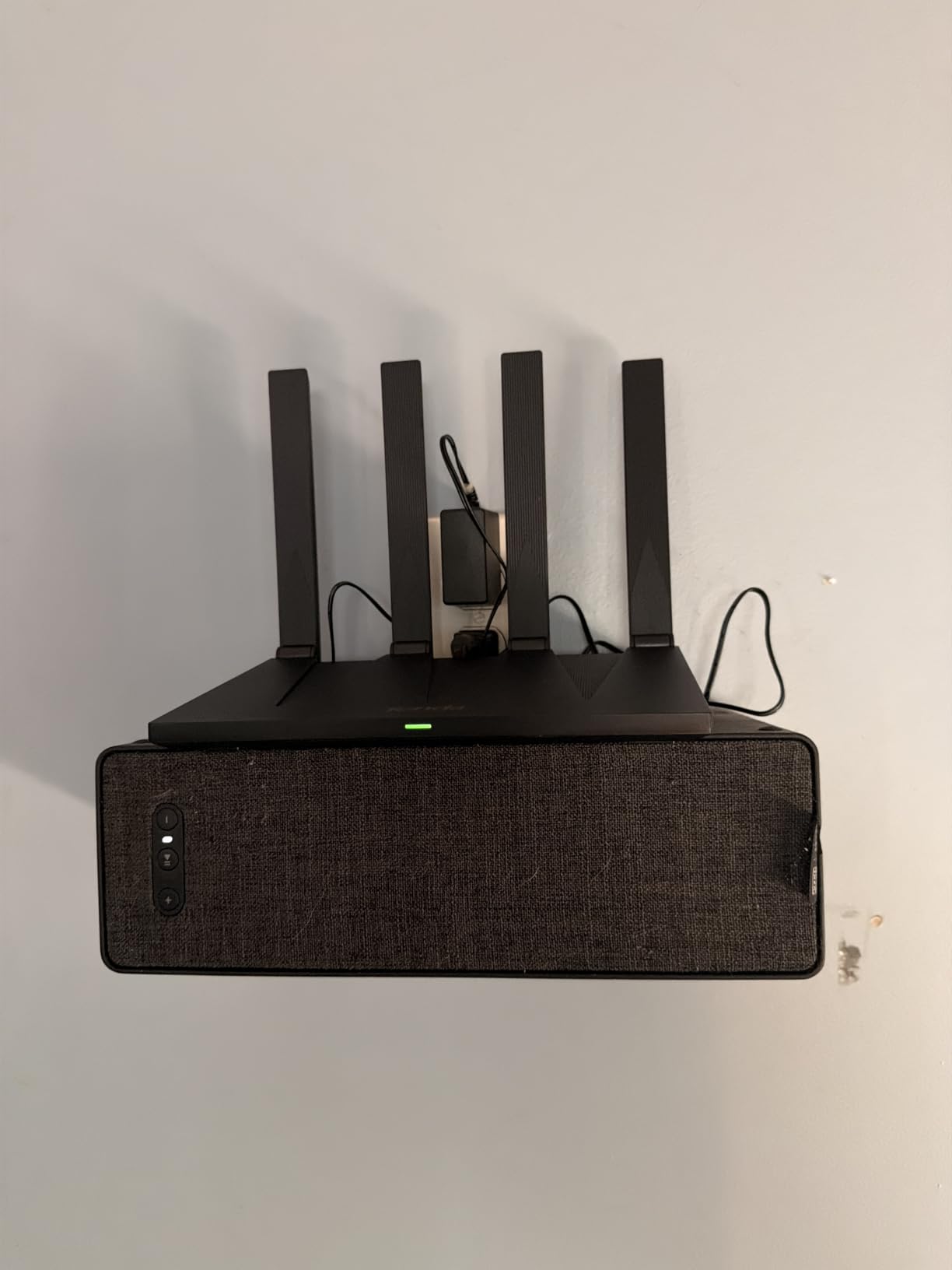
Owners report that coverage and stability improved markedly over older ISP or budget routers at very low cost, with app setup sometimes finished in ten minutes.
It is also the budget pick if coverage in awkward rooms is your main problem, and it adds a dedicated IoT network that isolates smart devices from the main LAN alongside built-in OpenVPN, WireGuard, PPTP and L2TP support.
Will the RX12 Pro handle a smart home with many devices?
OFDMA and MU-MIMO let many phones, laptops, TVs and smart-home devices share the network efficiently, and the separate IoT network keeps cameras and sensors off the main segment.
Access point mode is useful if you already have a wired network and want to avoid double NAT, which can break some games and VPN connections.
Who should skip the RX12 Pro?
Skip it if you want a polished management experience. The web interface works, but it is more basic than the premium-brand apps.
Skip it if you cannot tolerate any instability. One reviewer reports the connection dropping roughly every 15 minutes under heavy streaming load, which matters in a house running multiple 4K streams.
11. GL.iNet Flint AX1800: Best VPN Router Under 200 Dollars
GL.iNet GL-AX1800(Flint) WiFi 6 Router -Dual Band Gigabit Wireless Internet Router | 5 x 1G Ethernet Ports | Up to 120 Devices | OpenVpn&WireGuard
Wi-Fi 6 AX1800
1.8 Gbps aggregate
WireGuard to 500 Mbps
120 devices
5 gigabit ports
Pros
- Fast WireGuard and OpenVPN
- Five Gigabit Ethernet ports for unusual wired flexibility
- Handles large device counts with OFDMA
- AdGuard Home built into the web UI
- Compact and light for travel
Cons
- Setup requires an Ethernet connection to reach the admin panel
- One-year warranty is shorter than competitors
The original Flint is a compact dual-band Wi-Fi 6 router built around VPN throughput. It delivers up to 1200 Mbps on 5 GHz and 600 Mbps on 2.4 GHz, for 1.8 Gbps aggregate.
WireGuard runs up to 500 Mbps with OpenVPN support, and AdGuard Home is integrated into the web interface for network-wide ad and tracker blocking. At 0.45 kg it is easy to move between a home and a small office.
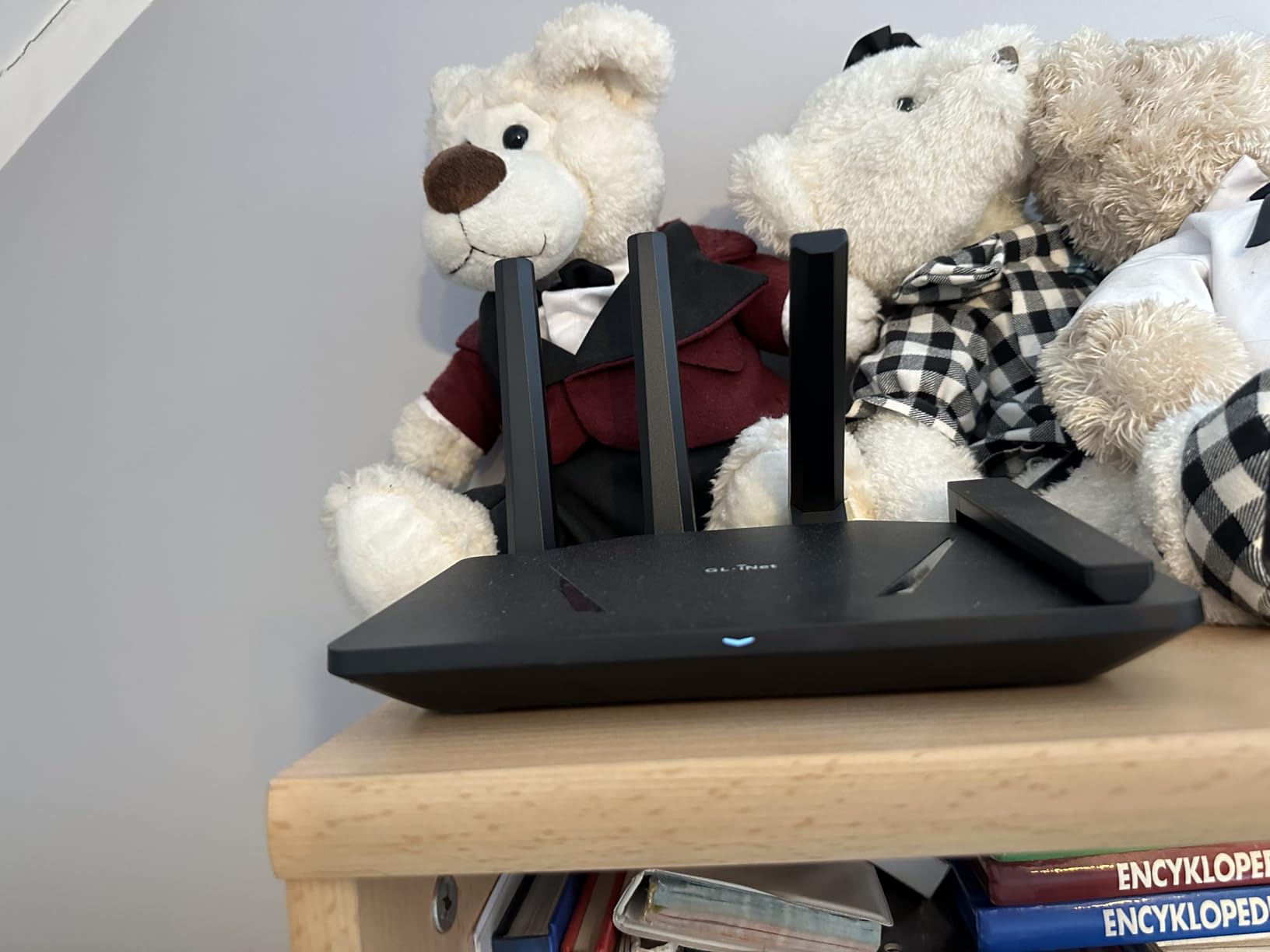
The wired layout is unusual at this tier. Five 1 Gigabit Ethernet ports give more flexibility than most competitors if you are chaining a switch or a second access point, and OFDMA channel allocation supports up to 120 simultaneous devices for a large smart-home fleet or a shared office.
Client-side VPN support lets you pick a server per device, and the same web interface handles DNS overrides, port forwarding and firewall rules, which is more than most budget routers expose.
Is the Flint better than the Flint 2?
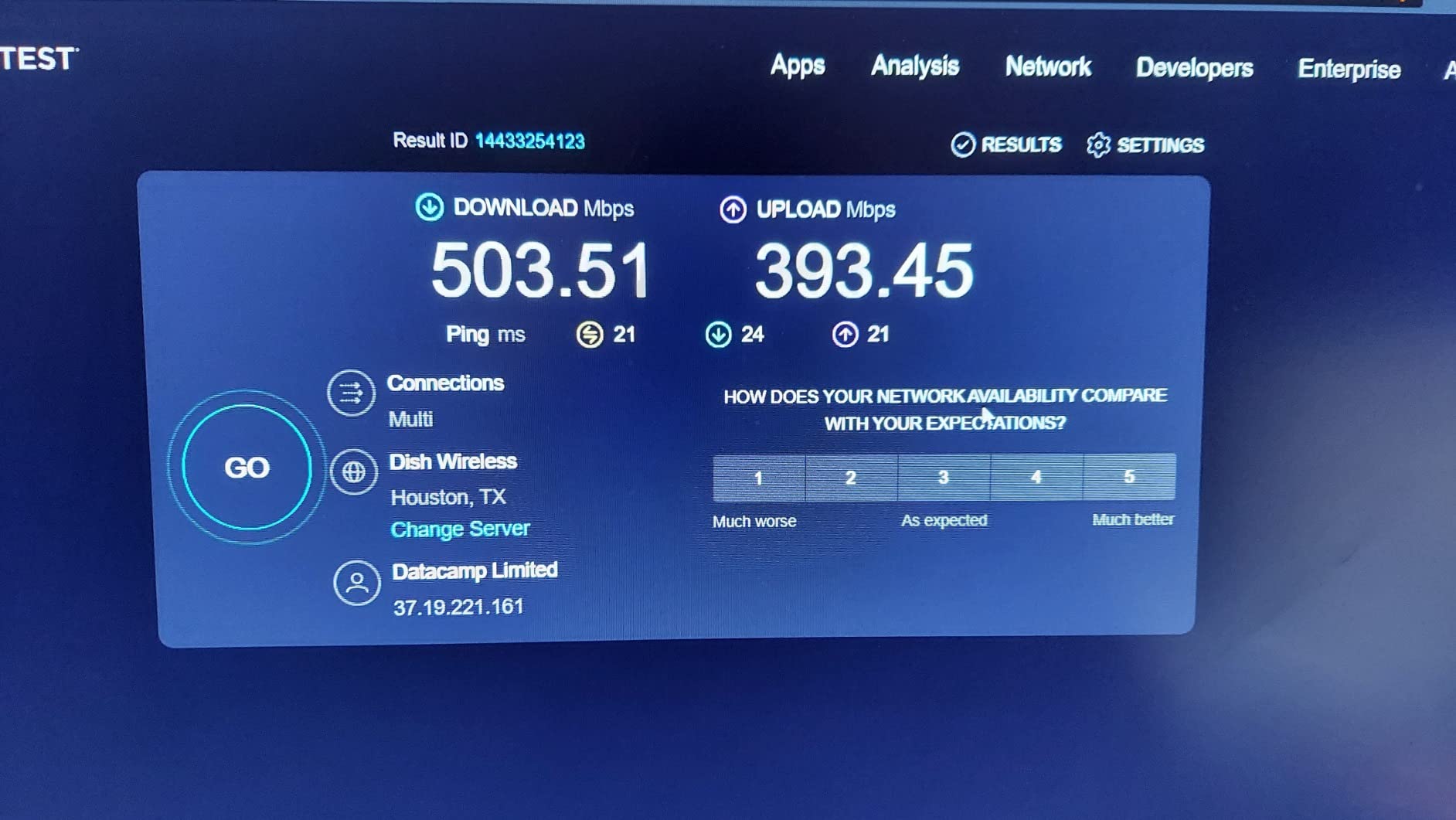
For VPN throughput alone, the Flint 2 is the better machine. It is faster on both Wi-Fi and wired, has two 2.5 Gbps ports, and ships with far more memory, so the original Flint only makes sense if you want the VPN and ad-blocking features at a lower outlay without needing multi-gig.
Who should skip the Flint AX1800?
Skip it if you want a guided mobile setup, since you connect by Ethernet to reach the web admin panel rather than being walked through an app. The one-year warranty is also shorter than the two-year and three-year terms offered by several rivals in this roundup.
12. TP-Link Archer A6: Best Budget Router Under 200 Dollars as a Secondary Access Point
TP-Link AC1200 Gigabit Dual Band WiFi Router (Archer A6)
Wi-Fi 5 AC1200
300 Mbps 2.4 GHz
867 Mbps 5 GHz
Five gigabit ports
Two-year warranty
Pros
- Browser-based setup completed in about ten minutes
- Large throughput jump over older budget routers
- Useful as an access point to extend a wired network
- Solid 2.4 GHz performance for legacy IoT devices
- Compact and durable
Cons
- Coverage falls off across large homes and many walls
- 5 GHz speed drops at the far end without mesh
- Some users hit a confusing initial setup
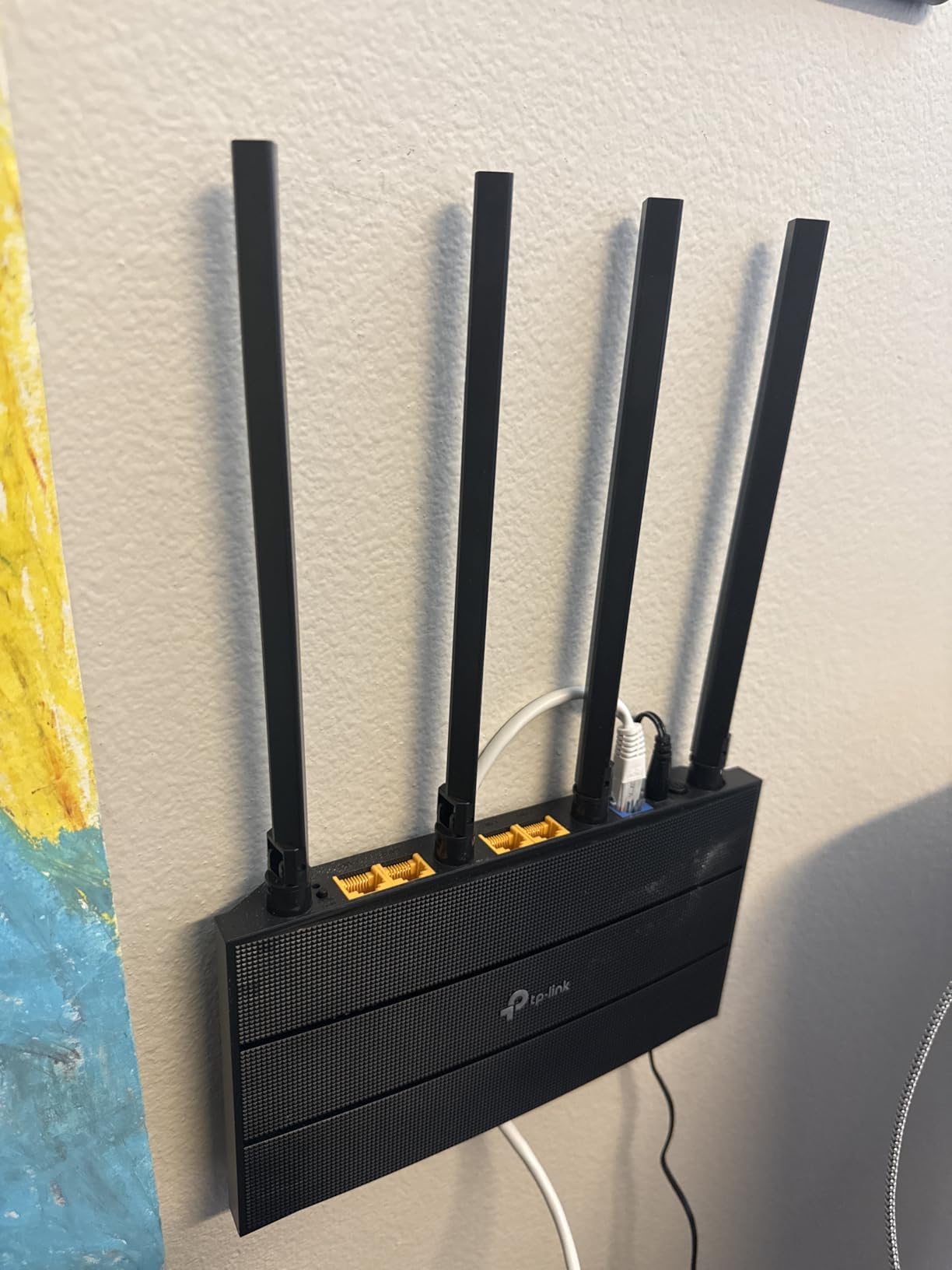
The Archer A6 sits at one of the highest owner ratings in this roundup, and the reason is simple: it is an inexpensive dependable gigabit router. It is dual-band Wi-Fi 5 with 300 Mbps on 2.4 GHz and 867 Mbps on 5 GHz, with four Gigabit LAN ports, a Gigabit WAN port, four external antennas using beamforming, MU-MIMO on the 5 GHz band, and a two-year warranty.
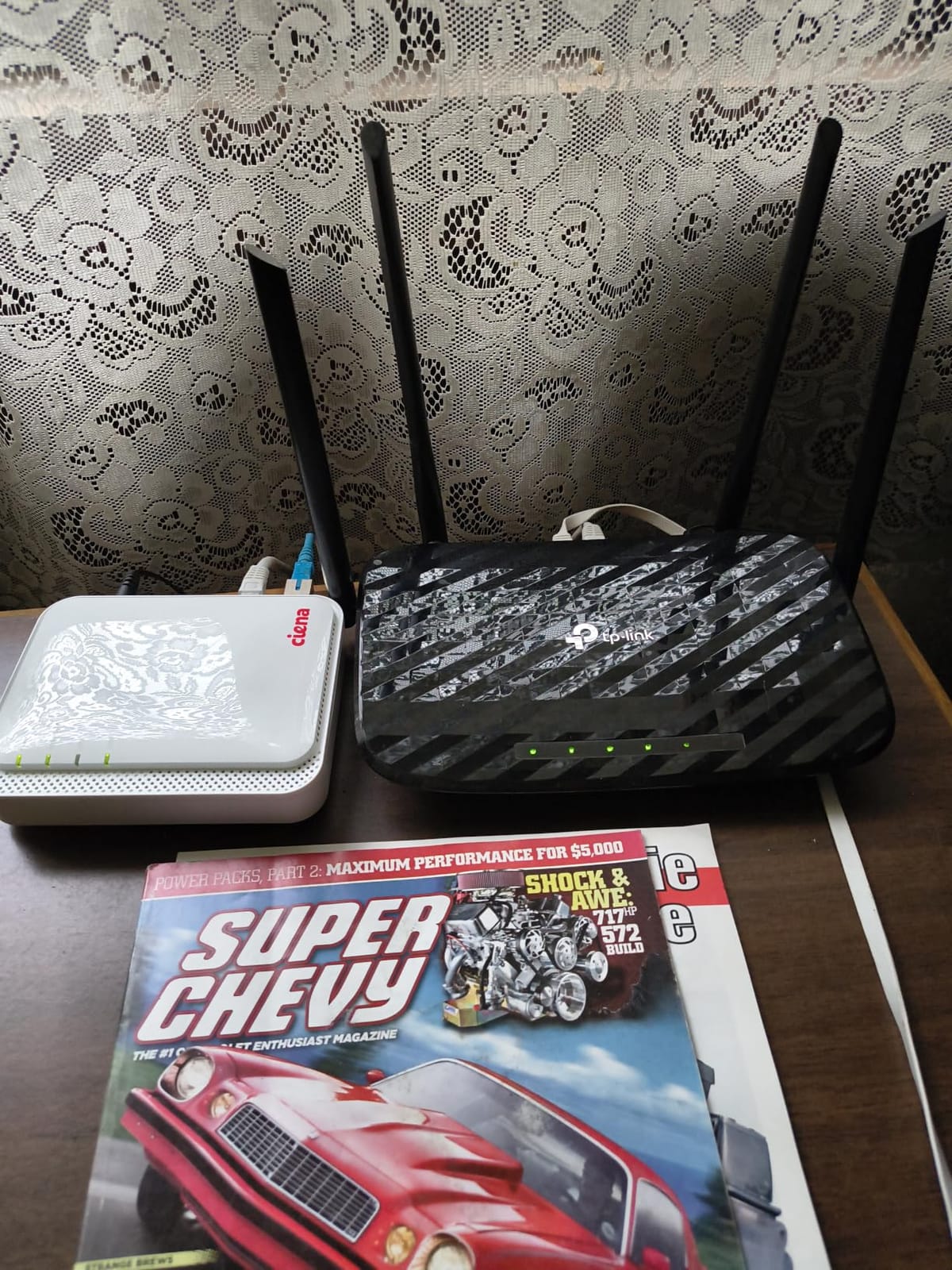
Buyers treat it as a dependable budget workhorse with a big speed jump over older equipment on the same connection, and they also use it as an access point to extend an existing wired network. TP-Link OneMesh lets you add a matching extender later, and parental control, guest mode and QoS are all present.
Legacy 2.4 GHz-only devices such as older smart plugs and printers are the ones that benefit most, since 2.4 GHz is the only band they can use and this router handles that band cleanly.
Is a Wi-Fi 5 router still worth buying?
For a small flat, a second access point or an inexpensive backup, yes. At AC1200 the A6 outruns most gigabit internet plans over Wi-Fi in real conditions, and its browser-based setup takes most non-technical users about ten minutes. It is not right if you have just bought Wi-Fi 6 or Wi-Fi 7 client hardware.
Who should skip the Archer A6?
Skip it for a large house, because coverage falls off across big homes and many walls, with 5 GHz speed dropping sharply at the far end. It suits about 2,000 square feet without mesh, and the recessed reset button is easy to mis-hit when you need a factory reset.
How We Picked and Ranked These Routers
Every router here is a router only, and all twelve were assessed against the same checklist. Configurations shift often, so treat the figures in this article as a snapshot.
The criteria, in order of weight: a 2.5 Gbps port for anyone on a faster plan, Wi-Fi generation, stated coverage against realistic home sizes, device capacity, port count, warranty length, and how much the management software resists you. Review volume was used as a confidence signal, so we lean on models with large owner histories rather than thin ones.
What Matters Most in a Router Under 200 Dollars
Get a 2.5 Gbps port if your plan is faster than 1 Gbps. This is the single most important spec at this budget tier. A router without one bottlenecks your connection the moment you add a NAS, a PoE camera switch or a wireless backhaul node. The Flint 2, the Slate 7 and the RS140 are the three picks with a 2.5 Gbps port.
Match the bands to your house. Dual-band routers serve 2.4 GHz and 5 GHz. Tri-band models add 6 GHz, which is cleaner and faster but only helps if your own devices support Wi-Fi 6E or Wi-Fi 7. In dense neighbourhoods the extra band reduces congestion even for older clients.
Read aggregate throughput carefully. Numbers like AX1800 or BE3600 are the sum of every band’s maximum link rate. They are a useful way to compare models but they are not the speed any single device will see.
Size coverage to the house, not the marketing. Claims around 1,500 to 2,250 square feet assume open floors, few interior walls and one router in a central position. Multi-storey homes with brick or concrete need a mesh approach, and our large home router guide covers that case in more detail.
Count your devices honestly. Stated ratings run from 20 devices on the R6700AX to 250 on the AXE75. A smart home can pass 40 quickly, and OFDMA is what keeps that from falling apart.
Check the subscription model before you buy. AiProtection on the ASUS RT-AX1800S is included with no ongoing fee. TP-Link HomeShield extras, NETGEAR Armor after the trial and eero Plus all sit behind paid tiers. None of them break basic networking, but they differ in what you get for free.
Decide on ISP gear early. Provider-supplied routers often reach full gigabit throughput but have weak management interfaces and, according to owners posting in home networking forums, less reliable behaviour with large smart-home fleets. Reliability tends to matter more than headline speed.
Modem or no modem. Every router on this list is a standalone router. If your provider hands you a gateway that already routes and rebroadcasts Wi-Fi, you can replace the Wi-Fi side with one of these. If you have switched ISPs to avoid rental fees, you also need a compatible cable or DSL modem, and that cost sits outside this budget.
Wi-Fi 7 vs Wi-Fi 6 at the Under 200 Dollar Tier
Wi-Fi 7 adds multi-link operation, wider channels and better handling of interference. At this budget tier the real question is whether your devices can use any of it.
In practice, Wi-Fi 7 hardware such as the eero 7 and the RS140 pair with Wi-Fi 7 phones and laptops, while the Wi-Fi 6 and 6E picks serve today’s hardware just as well. The measurable gain for most households is the multi-gig wired port on the Wi-Fi 7 models rather than the wireless speed itself.
Our advice is to buy Wi-Fi 7 if you already own Wi-Fi 7 client devices or you want a 2.5 Gbps uplink. Otherwise a Wi-Fi 6 router with a multi-gig port gives more of the improvement per unit of spend.
Coverage, Mesh Systems and Router Placement
Mesh systems spread coverage using multiple coordinated nodes. At a fixed budget of 200 dollars, two nodes usually beat one faster router if your home has more than one floor or several thick walls. EasyMesh covers the TP-Link and Tenda models, AiMesh covers ASUS, OneMesh covers the Archer A6, and TrueMesh covers eero.
Placement matters more than model. Put the router on an open shelf or stand near the middle of the house, elevated off the floor and away from metal, appliances and cupboards. Avoid hiding it inside a media cabinet or beside a television.
If you have a dead zone, test three things before buying anything else: move the router, split the 2.4 GHz and 5 GHz SSIDs so your phone can lock onto a usable band, and check for firmware updates that may fix range. Add a mesh node or an access point only after those steps fail.
Frequently Asked Questions
What is the best router for under 200 dollars?
The TP-Link Archer AX21 v5 is our top pick for most homes. It is a dual-band Wi-Fi 6 router rated at AX1800 with five Gigabit Ethernet ports, OFDMA for many connected devices, and a Tether app for management. If your internet plan runs faster than 1 Gbps, choose the GL.iNet Flint 2, which has two 2.5 Gbps ports.
What is the best and most affordable router for home use?
The most affordable router here that still does a genuinely good job is the TP-Link Archer A6 for a small home or as a second access point. It is dual-band Wi-Fi 5 with four Gigabit LAN ports. For a normal family home on Wi-Fi 6 hardware, the TP-Link Archer AX21 v5 sits only slightly above it and is the better long-term buy.
Which router is the best and cheapest?
The NETGEAR Nighthawk R6700AX and the Tenda RX12 Pro sit at the low end of this roundup, and both bring genuine Wi-Fi 6 rather than older hardware. The R6700AX is AX1800 dual-band, covers up to 1,500 square feet for around 20 devices, and includes four Gigabit LAN ports plus a separate WAN port.
What’s the difference between Wi-Fi 6 and Wi-Fi 7?
Wi-Fi 7 adds multi-link operation, wider channels and better interference handling compared with Wi-Fi 6. At this budget the practical difference is small unless your own phones, laptops and TVs support Wi-Fi 7. If they do not, a Wi-Fi 6 router with a 2.5 Gbps port delivers most of the benefit for less spend.
Does Wi-Fi 7 penetrate walls?
No, Wi-Fi 7 uses the same frequency bands as earlier standards, so wall penetration is broadly similar to Wi-Fi 6 and Wi-Fi 6E. Lower frequencies travel further and penetrate better, which is why 2.4 GHz reaches into other rooms while 6 GHz stays short-range. For thick walls and multiple floors, additional mesh nodes are a bigger fix than a faster generation.
Do mesh routers improve internet speeds?
Mesh systems do not raise the speed your provider delivers. They help by placing nodes closer to where you use devices, which reduces signal loss and improves throughput in rooms far from the main router. If your dead zones are caused by distance or walls, mesh helps. If your plan is slow everywhere, the router is not the problem.
Why do people shut their Wi-Fi off at night?
People turn Wi-Fi off at night for security, to reduce signal exposure, or to save power. Many routers offer scheduled Wi-Fi or a guest network you can disable on a timer instead of cutting the whole network.
The Best Router Under 200 Dollars, Our Final Pick in 2026
The TP-Link Archer AX21 v5 is the best router under 200 dollars for most people in 2026: proven Wi-Fi 6 hardware, gigabit ports, and the largest owner review base we found. Buy the GL.iNet Flint 2 if you need multi-gig wired speed or OpenWrt control, and the eero 7 if you want whole-home coverage without touching settings.
Check current pricing before you commit, since budget router pricing changes often, and tell us your home size, internet speed and device count if you want a narrower recommendation.