
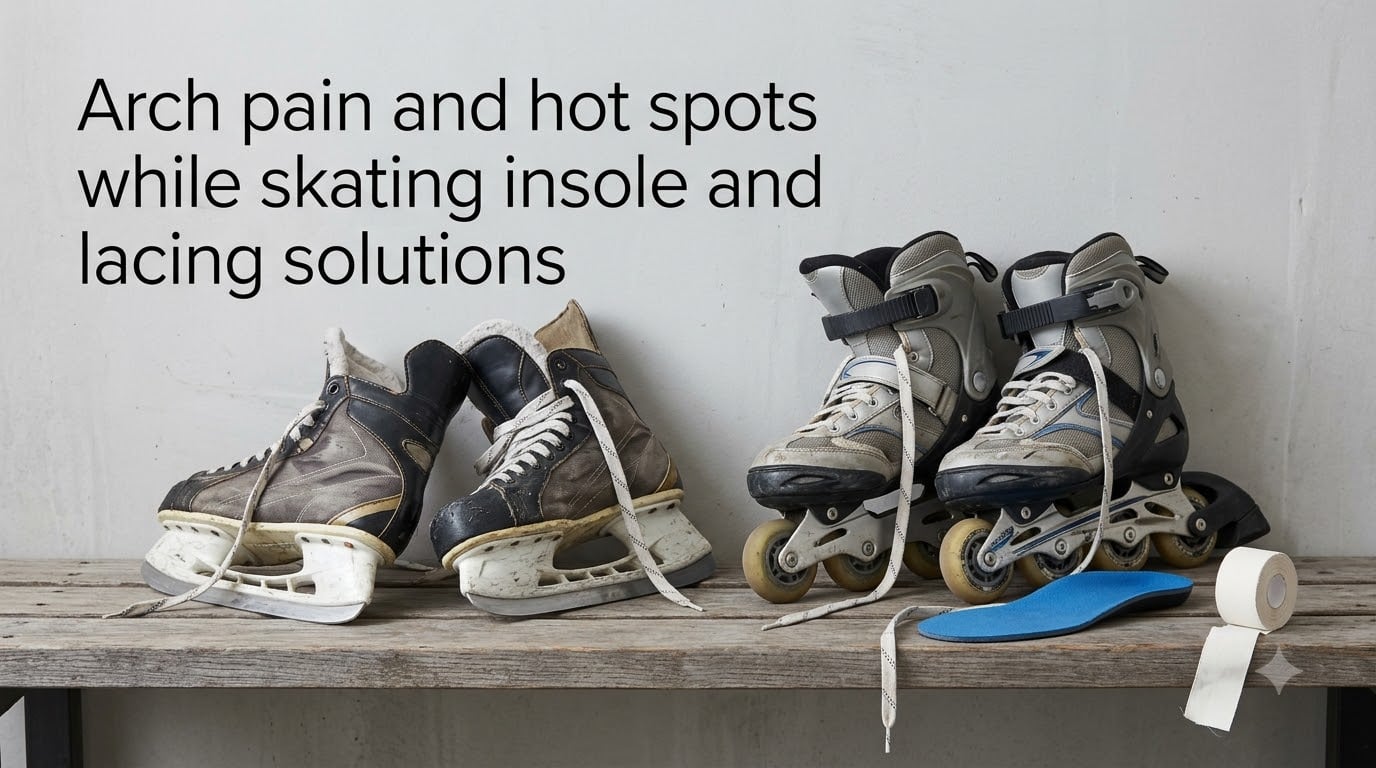
Arch pain and hot spots while skating hit you right in the middle of a session, and suddenly you’re standing at the rink wall unlacing. I get it. I’ve been there with rental figure skates that felt like foot vices, and with brand-new hockey boots that promised “support” but delivered a burning band across my midfoot.
This guide pulls together what actually works. We’ll cover the root causes of arch pain, the insole options that match your foot, the lacing tricks that take pressure off the hot spots, and the DIY fixes skaters swear by on forums. You’ll leave with a clear plan to get back on the ice or pavement pain-free.
Table of Contents
Why Does the Arch of My Foot Hurt While Skating?
Arch pain while skating is usually caused by one of three things: a boot that’s too tight across the midfoot, poor arch support in the stock insole, or a technique issue where your toes scrunch to grip the boot. Sometimes it’s all three working together.
When you lace a skate too tightly across the instep, the laces act like a tourniquet on the plantar fascia. Add in a flat, flimsy stock insole that gives your arch nothing to push against, and your foot has to work overtime to stay stable. That’s the burning, cramp-like feeling most skaters describe.
In my own experience testing inline skates, switching from the stock liner to a thin heat-moldable insole cut my arch fatigue in half within a week. The fix started with understanding the cause.
Understanding Your Arch Type
Before you buy an insole, you need to know your arch height. Skating with a high-arch insole when you have flat feet (or vice versa) can make arch pain worse, not better.
The wet test is the easiest way:
- Wet your foot and step onto a piece of cardboard or dark paper.
- Look at the footprint you leave behind.
- Compare it to the three categories below.
Low arches (flat feet): Your footprint shows almost the entire sole, with very little curve on the inner side. Flat-footed skaters typically overpronate, meaning the ankle rolls inward. You need firmer support on the inner arch.
Medium arches (neutral): You see a clear inward curve about half the width of your foot. Neutral feet do well with most medium-support insoles and rarely need aggressive correction.
High arches: Your footprint shows only a thin strip or a complete break between the heel and forefoot. High-arched skaters need cushioned support that takes pressure off the metatarsal and fills the gap under the arch.
I run a medium arch, and the moment I switched to a high-arch insole “for more support,” my skating arch pain doubled. The shape didn’t match my foot. Learn your arch before you spend a cent.
Common Causes of Arch Pain While Skating
Forum threads across Reddit, SkatingForums, and SkateFresh all converge on the same handful of culprits. If your arch is screaming, the cause is almost always one of these.
Over-tightening the 45-degree strap. The instep strap that crosses the top of your foot is the most common offender. Crank it down too hard and you hyperextend the arch upward with every stride. The fix is simple: snug, not tight. You should be able to fit one finger under the strap.
Toe scrunching from poor weight distribution. This is the hidden cause many skaters miss. When your weight sits too far back on the skate, your toes grip the insole to stay balanced. That constant scrunching shortens the plantar fascia and produces cramp-like arch pain. SkateFresh calls this “fiery pain,” and it’s accurate.
Pronation or supination. If your ankle rolls inward (pronation) or outward (supination) during each push, the arch takes a beating. Pronation needs a posting wedge or firm medial support. Supination needs cushioned neutral support.
Boot breakdown. Even premium boots lose stiffness over time. A skate that’s broken down in the midfoot can no longer hold your arch up, so the arch collapses with every stride. Heavy users report Harlicks and custom boots lasting about a year before this becomes an issue.
Wrong insole shape. Sticking a generic running insole into a hockey skate is a recipe for arch pain. Skate boots are built around a specific stack height, and an insole that’s too tall or too thick shifts your foot into odd angles.
Insole Solutions for Skating Arch Pain
The right insole solves more than half of arch pain issues. But skating insoles are not the same as running insoles. You need something thin, firm, and foot-shaped without huge heel cushioning.
Heat-moldable insoles. Brands like Bauer Speed Plates and Superfeet are popular because they mold to your foot when warmed. Heat them in an oven or with a hair dryer, slip them in, lace up, and stand in the boots for 10 minutes. The insole takes the shape of your arch.
Superfeet (green, blue, or carbon). Superfeet are the go-to recommendation in most skating forums. The green and blue models work for medium arches. The carbon version is stiffer and best for heavier skaters or skaters with severe overpronation. Start with one hour the first day, then add an hour each day. Skipping the break-in is how Superfeet end up blamed for causing arch pain.
Custom orthotics. A podiatrist can cast your foot and build an orthotic that addresses your exact biomechanics. These are expensive but last for years and tackle problems like severe pronation, plantar fasciitis, or leg length differences. Insurers often cover them when skating arch pain is medically documented.
Cork wedges. A simple cork wedge under the insole, on the medial side, can correct mild overpronation. SkatingForums users report success with this low-cost fix when the issue is mostly alignment-based rather than support-based.
One warning: yes, shoe inserts can cause arch pain. If you throw a stiff insole into a boot you’ve been wearing for 200 hours, the sudden change in geometry can trigger soreness. Break in new insoles gradually, and never stack two insoles on top of each other.
Lacing Techniques to Prevent Arch Pain and Hot Spots
Lacing is the most underrated fix for arch pain and hot spots. A few small changes to how you thread the eyelets can move pressure off the midfoot entirely.
Skip-lacing across the arch. Skipping the middle two or three eyelets on the forefoot takes the laces completely off the arch. Lace straight up to the ankle, then continue from the top eyelet down. This is the single most effective move for arch pain caused by lace pressure.
Loose over the instep, tight at the ankle. Your laces should be snug at the ankle cuff for stability and loose across the top of the foot. Many skaters do the opposite because they want “support.” What they get is arch pain.
Heel lock lacing. Thread the lace through the top eyelet back toward the foot, then cross it over to create a loop that pulls the heel back into the boot. This locks the heel and prevents the foot from sliding forward, which removes hot-spot friction on the toes.
Lace bite prevention. Lace bite is the pain where the tongue presses against the top of your foot. It’s a hot spot waiting to happen. Pad the tongue with a thin piece of foam, or use a thicker cushioned tongue if your boot allows. Loosening the top two eyelets helps too.
One Reddit thread I followed saw a skater drop from “unbearable after 20 minutes” to “two-hour sessions with no pain” just by switching to skip-lacing. The insole was fine all along. The laces were the problem.
Hot Spots and Blister Prevention While Skating
Hot spots are the warning sign before blisters. They’re small, warm, sore patches where friction is building up. Catch them early and you can prevent a blister entirely.
Stop at the first sign of heat. Don’t power through. That warm spot is your skin tearing one layer at a time. Stop, take the boot off, and stick a piece of adhesive foam or molefoam on the spot. Cover it with athletic tape for extra protection.
Eliminate the source of friction. Most hot spots are caused by the foot sliding inside the boot. Fix the slide and the hot spot disappears. Heel lock lacing, properly sized boots, and a slick sock made of synthetic fibers (not cotton) all reduce friction.
Pre-tape problem areas. If you know the spot where the hot spot always shows up, preemptively tape it before skating. Leukotape, Elastikon, and moleskin are common choices. Apply to clean, dry skin for best adhesion.
Treat blisters properly. If a blister has formed, drain it with a sterilized needle, leave the skin flap in place, and cover it with antibiotic ointment under a waterproof bandage. Friction blisters heal faster when they’re cushioned and kept moist.
DIY Modifications: Tape, Foam, and Molefoam Fixes
Not every fix needs a new insole. The skating forums have decades of DIY tricks that cost almost nothing.
Adhesive foam under the insole. Stick a piece of molefoam or adhesive foam directly under the insole, right beneath the spot that hurts. This adds a small lift where your foot needs support. Forum users credit this fix for diffusing sharp arch pressure points.
Heel grip pads. A heel grip pad stuck to the inside of the boot’s heel cup stops the foot from sliding. Less sliding means fewer hot spots on the back of the heel.
Bunion or bump pads. If your hot spot sits over a bony bump, a donut-shaped pad that surrounds the bump (rather than covering it) takes pressure off the bone and spreads it to the surrounding soft tissue.
Sock liners. A thin nylon or silk liner sock under your regular skating sock reduces friction dramatically. Skaters with chronic hot spots swear by this layering trick.
Weight Distribution and Body Alignment for Pain-Free Skating
Here’s the content gap most guides skip. The way you stand on your skates directly affects arch pain. Fix your stance and the pain often disappears without touching your insoles.
Keep weight on the front half of your foot. Your weight should sit over the ball of the foot, not the heel. When your weight shifts back, your toes clench to grip the boot. That clenching is toe scrunching, and it’s where the cramp-like arch pain comes from.
Bend your knees. A straight knee locks your weight back into the heel. A soft knee bend shifts your center of mass forward and keeps the foot balanced. You should feel your weight on the front two-thirds of the skate, not the back third.
Relax your toes. Consciously tell your toes to lay flat. This feels weird at first, especially if you’ve been scrunching for years. SkateFresh recommends practicing this off the ice, just standing with your weight forward and toes spread, for a few minutes a day.
Check your shoulders and hips. If your upper body is leaning back, your lower body compensates by shifting weight rearward. Stand tall, shoulders over hips, hips over the balls of your feet. The arch pain you blamed on your boots may actually be a posture issue.
Boot Break-In: How Long Until Skates Stop Hurting?
A new skate should feel snug, not painful. If you can’t stand in them for 10 minutes without sharp pain, the fit is wrong. But snug-and-sore during the first 8 to 15 hours of use is normal.
Heat-moldable boots break in faster. Most modern hockey and figure skates can be heat-molded at a shop or with a careful home oven session. Bake them at the recommended temperature, then wear them for 20 minutes while they cool.
Signs your boots are broken down, not breaking in:
- You have to crank the laces tighter than when the boots were new to feel the same support.
- The eyelets spread apart when you lace up.
- You can fold the boot in half with one hand.
- The ankle pad has compressed flat.
Broken-down boots cause arch pain that no insole will fix. At that point, you need new boots or a rebuild service. Harlick offers rebuilds that restore most of the original stiffness for a fraction of the cost of new custom boots.
Frequently Asked Questions
Why does the arch of my foot hurt while skating?
Arch pain while skating usually comes from over-tightening the instep strap, a stock insole that lacks arch support, pronation during pushes, or toe scrunching from poor weight distribution. A combination of these is common. The fix is usually a better insole plus relaxed lacing across the arch.
Can shoe inserts cause arch pain?
Yes. A stiff insole that doesn’t match your arch height, or one you skip breaking in, can trigger arch pain. Skating boots are also built around a specific stack height. Stacking two insoles, or using a thick running insole, shifts your foot out of alignment and irritates the arch.
How do I make arch pain go away quickly?
Stop skating, lace your boots loose across the arch, and roll the arch on a frozen water bottle for 10 minutes. Long-term, switch to a heat-moldable insole matched to your arch type, skip-lace the middle eyelets, and loosen the 45-degree strap. Most skaters see full relief within two weeks of these changes.
Is heat or ice better for arch pain?
Use ice for the first 72 hours after pain starts. Ice reduces inflammation in the plantar fascia. Switch to heat after 72 hours, or for soreness that returns every session. Heat loosens tight tissue and improves blood flow before skating.
How do I prevent lace bite when skating?
Skip-lace the top two or three eyelets, pad the tongue with thin foam, and avoid cranking the top laces. A heel lock lacing pattern also stops the foot from sliding forward, which removes the pressure that causes lace bite on the top of the foot.
How do I get rid of blisters from skating?
Drain the blister with a sterilized needle, leave the skin in place, and cover it with antibiotic ointment and a waterproof bandage. Stop the friction that caused it by taping the area, switching to a synthetic sock, and addressing the boot fit or lacing that shifted your foot.
How long does it take to break in new skates?
Most skates need 8 to 15 hours of use to feel comfortable. Heat-moldable boots break in faster, often within 3 to 5 sessions. Pain that gets worse after 20 hours of use usually means the fit is wrong, not that the boot needs more time.
Conclusion
Arch pain and hot spots while skating almost always come down to three factors: boot fit, lacing pressure, and weight distribution. The right insole matched to your arch type, relaxed lacing across the instep, and a forward-balanced stance will fix most cases without spending a fortune.
Start by identifying your arch type with the wet test. Then try skip-lacing and a heat-moldable insole before you buy anything expensive. If the pain persists past two weeks, see a podiatrist. Custom orthotics or a boot rebuild might be the answer.
Your feet carry you through every stride. Treat them like the equipment they are, and you’ll get back to the sessions you love.