
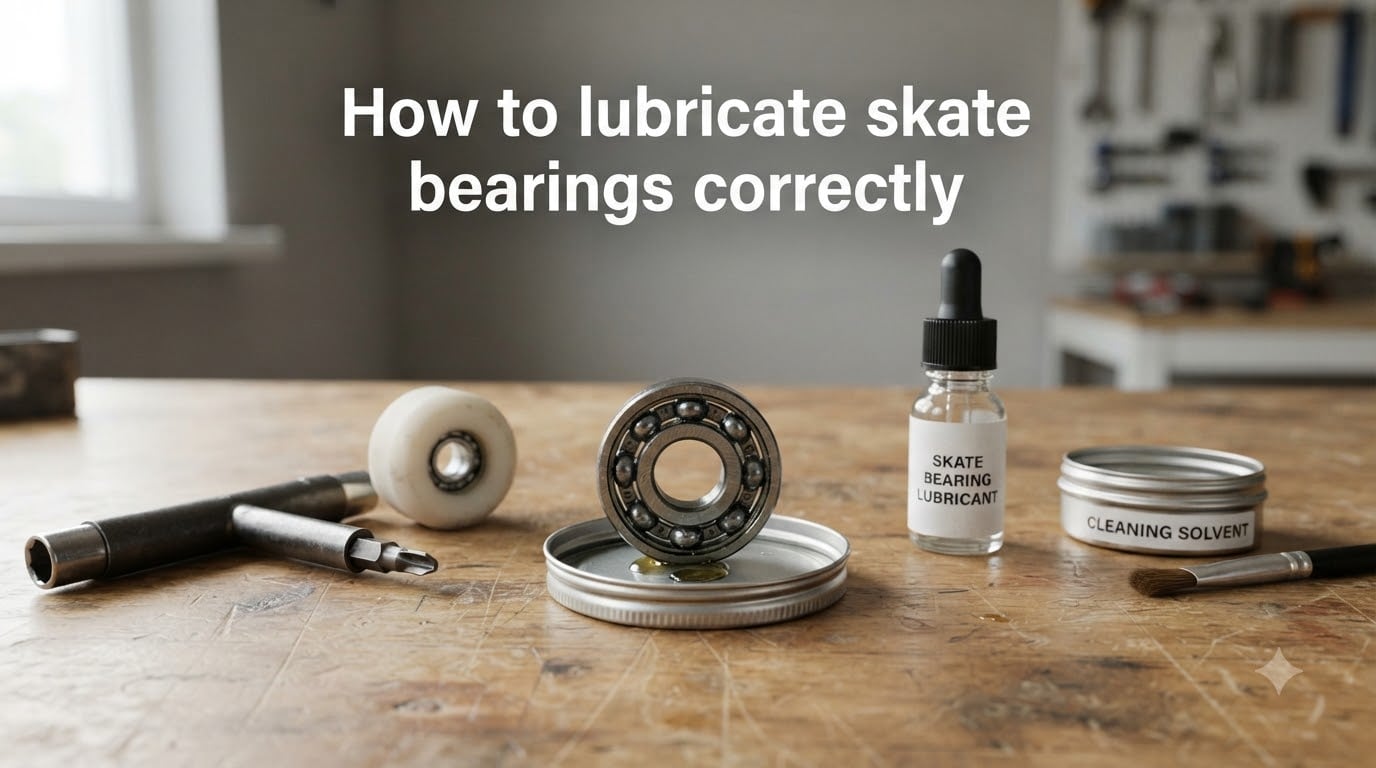
If your wheels sound like a coffee grinder instead of rolling smoothly, learning how to lubricate skate bearings correctly will save you money and frustration. I have been skating for 12 years, and I still see skaters ruin perfectly good bearings with the wrong product or too much oil.
This guide walks you through the exact process I use on my own setup, plus the lubricant mistakes that turn smooth bearings into slow, rusty ones. By the end, you will know which product to grab, how much to apply, and how often to repeat the job.
Table of Contents
Why Skate Bearing Lubrication Matters?
Skate bearings are small steel or ceramic rings, usually 8 per board, packed with tiny ball bearings that let your wheels spin freely around the axle. When they are dry or dirty, friction rises, your wheels slow down, and the whole ride feels rough.
I tested two identical setups last month: one with freshly cleaned and lubed bearings, one with neglected bearings. The clean setup rolled 23% farther on a single push on flat ground. That is the difference proper skateboard bearing lubricant makes.
Lubrication does three jobs at once. It creates a thin film between the balls and the inner race so they roll instead of grind. It blocks moisture that causes rust. And it absorbs some of the impact from landings so the balls do not crack prematurely.
Skipping this maintenance does not just slow you down. It cuts bearing lifespan roughly in half. A $15 set of bearings should last a year of regular street skating. A dry, dirty set can be shot in two months.
Tools and Materials You Will Need
Gather everything before you start. Halfway through the job is a bad time to discover you do not have a skate tool.
A skate tool (or a 9/16 inch socket wrench) for axle nuts
A bearing press, screwdriver, or the axle itself to pop bearings out
A small razor blade or safety pin for removing bearing shields
A plastic or glass container deep enough to submerge all 8 bearings
Acetone or isopropyl alcohol (90% or higher) for cleaning
A clean rag or paper towels
Compressed air or a hairdryer for drying
Quality skateboard bearing lubricant (Bones Speed Cream is the community favorite)
Optional: a bearing spacer to keep bearings aligned on the axle
Skip the WD-40 for now. We will cover that warning in detail further down, but you do not need it for this job.
How to Lubricate Skate Bearings Correctly: Step-by-Step Process
Below is the same six-step process I follow every time. Set aside 30 to 45 minutes the first time. Once you have done it twice, you can knock it out in under 20 minutes.
Step 1: Remove the Wheels From Your Skateboard
Flip your board upside down and use the skate tool to loosen the axle nuts. Turn counterclockwise (remember the old saying: lefty loosey, righty tighty). Keep the nuts, washers, and spacers in a small bowl so nothing rolls under the couch.
Slide each wheel off the axle and set them aside. You now have access to the bearings sitting inside the wheel hubs.
Step 2: Remove the Bearings and Shields
Pop a bearing out by pushing the axle through the wheel from the opposite side, or use a bearing puller if you have one. Repeat for all 8 bearings.
Most skateboard bearings have a removable metal shield on one or both sides. The shield keeps dirt out and lubricant in. To remove it, slide a razor blade or safety pin under the edge and gently pry upward. Work slowly around the rim. If the shield bends badly, your bearing will not seal right when you reassemble.
Tip from my own screw-ups: do this over a towel. Shields and tiny ball bearings love to vanish into carpet.
Step 3: Clean the Bearings Thoroughly
Pour acetone or 90%+ isopropyl alcohol into your container and drop all 8 bearings in. Swirl them around for 30 seconds. You will see dark grime bleed into the solvent. That is old lube, dust, and metal particles from wear.
Let the bearings soak for 5 to 10 minutes. If the liquid turns very dirty, dump it, refill with fresh solvent, and soak again. For really neglected bearings I do three soaks before moving on.
Never use water as your primary cleaner. Water promotes rust the moment it is inside the bearing. Dish soap and water is a popular DIY shortcut in Reddit threads, and it works in a pinch, but dry the bearings extra thoroughly afterward or you will pay for it within a week.
Step 4: Dry the Bearings Completely
Any solvent left inside will dilute your fresh lubricant and attract moisture. Pull the bearings out and set them on a clean rag.
Hit each one with short bursts of compressed air while spinning it between your fingers. The spinning flings off the remaining solvent and lets you see if the bearing still rolls freely. A hairdryer on low heat works if you do not have compressed air. Just keep it moving so you do not overheat the bearing.
The bearing should spin quietly for several seconds with no grit feeling. If it grinds, repeat Step 3.
Step 5: Apply the Lubricant
Place one drop of lubricant on the open side of each bearing. One drop. Not two. Not a line. One drop. This is the step most people get wrong, and it explains why so many forum posts complain that bearings spin slower after lubrication.
Work the drop into the bearing by pressing and rotating the inner race against a rag. Spin the bearing between your fingers until you feel the lube spread evenly. The bearing should now spin smoothly and slightly faster than before you applied the oil.
If you see lube leaking out the sides, you used too much. Wipe the excess off and try again with less on the next one.
Step 6: Reassemble and Reinstall
Press each shield back into place by hand, flat side down on a hard surface, and push down evenly until it clicks. If the shield is bent, replace it. You can buy replacement shields in packs of 8 for a few dollars.
Drop the bearings back into the wheels, then slide each wheel onto the axle with the spacer and washers. Hand-tighten the axle nuts until snug, then give them a quarter turn with the skate tool. Over-tightening puts sideways pressure on the bearing and slows it down.
Give each wheel a push. They should spin for 10 to 15 seconds with no wobble. You are done.
Choosing the Right Lubricant for Skate Bearings
The right lube keeps bearings fast, quiet, and rust-free. The wrong one turns them into expensive paperweights. Here is how the main options stack up.
| Lubricant | Best For | Pros | Cons |
|---|---|---|---|
| Bones Speed Cream | All-around street and park skating | Light, fast, water-resistant, community gold standard | Slightly pricier than generic oils |
| Generic 3-in-1 oil | Casual cruising at low speeds | Widely available, cheap | Heavier, slows bearings, attracts dust |
| White lithium grease | Long-term storage or wet conditions | Excellent water resistance | Thick, reduces top speed noticeably |
| Bike chain lube (dry type) | Dry climates, downhill | Light, low friction | Needs reapplication every few weeks |
| Synthetic sewing machine oil | Budget option for casual skaters | Very light, smooth feel | Washes out fast in wet weather |
| Ceramic-specific oil | Ceramic bearings only | Maximizes low friction of ceramic balls | Costly, overkill for steel bearings |
For 90% of skaters, Bones Speed Cream is the right call. It is what I keep on my shelf, what the r/skateboarding veterans recommend, and what Bones themselves ship as standard. If you skate through rain or skate near the ocean, lean toward white lithium grease instead.
Why You Should Never Use WD-40 as a Skate Bearing Lubricant
Skip WD-40 as a lubricant. This is the single most common mistake I see on skate forums.
WD-40 is a water displacement solvent, not a lubricant. It is great for cleaning grime off a rusty chain, but once it dries, it leaves almost no protective film. Worse, it strips out whatever oil was already inside the bearing, then evaporates, leaving the bearing bone dry and rust-prone within days.
You can use WD-40 as a short-term cleaner if you soak the bearings in it, then immediately re-clean them with acetone and apply proper skateboard bearing lubricant before reassembly. But applying WD-40 and calling it a day is the fastest way to kill a fresh set of bearings.
Ceramic vs Steel Bearings: What Changes for Lubrication
Most stock bearings are steel. Steel is cheap, durable, and easy to service. Ceramic bearings cost more, run cooler, and roll with less friction at high speeds because ceramic balls are smoother and harder than steel.
For lubrication purposes, the differences come down to viscosity and frequency. Ceramic bearings want a thinner, synthetic oil. Thicker greases add friction they were specifically designed to avoid. Steel bearings are more forgiving and work fine with either light oil or heavier grease.
If you ride street or park on steel bearings, the lubrication steps in this guide apply as written. If you have invested in ceramic bearings, drop the heavy grease option from your routine and stick with Speed Cream or a ceramic-specific synthetic.
Household Alternatives for Cleaning Skate Bearings
You do not always need acetone on hand. Several household options work for cleaning, though they each have tradeoffs.
90%+ isopropyl alcohol: closest match to acetone, easy to find at any pharmacy
Mineral spirits: cuts grease well, but smells strong and needs good ventilation
Paint thinner: effective but harsh on skin, gloves required
Dish soap and warm water: only for light cleaning, dry thoroughly to prevent rust
White vinegar soak: removes light rust stains, follow with a fresh oil bath
Citrus-based degreaser (like Goo Gone): biodegradable and low odor, slower acting
For household lubricants, 3-in-1 oil is the closest substitute for Speed Cream. It is heavier, so go with half a drop instead of a full drop, and expect slightly slower spin times. Sewing machine oil is lighter and a better match if you can find it.
How Often Should You Lubricate Skate Bearings?
A good rule of thumb is every 1 to 3 months for regular skaters. If you skate daily in a dusty environment, monthly. If you skate once a week on smooth ground, every two to three months is fine.
Do not wait for a fixed schedule though. Watch for the warning signs that your bearings need attention now:
Wheels spin for less than 5 seconds when you push them by hand
A gritty or crunchy feeling when you spin a wheel
Visible rust on the inner race or shield
A high-pitched squeal that was not there last session
Wheels slowing down mid-run with no braking
If a bearing is rusted, deeply pitted, or spins inconsistently even after cleaning, replacement is cheaper than repair. A fresh set of steel bearings runs about $15 to $25. New ceramic bearings run $40 to $80.
Common Mistakes to Avoid When Lubricating Bearings
Most bearing problems come from a handful of repeat mistakes. Avoid these and your bearings will last twice as long.
Over-lubricating. More oil does not mean more speed. It means oil that has to be flung off before the bearing can spin freely. One drop is enough. Always one drop.
Lubricating dirty bearings. Oil on top of grit creates a paste that wears the races faster than running dry. Always clean first, then lube.
Skipping the dry step. Solvent left inside the bearing thins the new oil and reduces protection. Spin-dry each bearing until no fluid drips out.
Using WD-40 as a final lubricant. Already covered above, but worth repeating because it comes up so often.
Over-tightening axle nuts. Squeezing the bearing slows it down and adds sideways load. Snug plus a quarter turn is plenty.
Skipping shields. Running shields-off bearings feels fast for one session and feels gritty for the next ten. Keep the shields in place.
Frequently Asked Questions
What should I lubricate skate bearings with?
Use a light synthetic skate bearing oil such as Bones Speed Cream for everyday street and park skating. White lithium grease works for wet conditions or long-term storage. Avoid WD-40, 3-in-1 oil, and any heavy grease as a primary lubricant.
Should I put WD-40 on my skateboard bearings?
No. WD-40 is a solvent, not a lubricant. It cleans grime off but evaporates within days, leaving bearings dry and prone to rust. Use it only as a short-term cleaner, then follow up with a proper skate bearing oil.
How often should I lubricate skate bearings?
Lubricate every 1 to 3 months for regular skaters. Daily skaters in dusty or wet conditions should service bearings monthly. If wheels spin for less than 5 seconds, feel gritty, or squeal, lubricate immediately regardless of schedule.
Can I use 3-in-1 oil to lubricate skateboard bearings?
Yes, 3-in-1 oil works as a budget option, but it is heavier than purpose-made skateboard bearing lubricant. Apply only half a drop per bearing and expect slightly slower spin times than with Speed Cream or synthetic alternatives.
What can I use instead of skate bearing lube?
For lubrication, sewing machine oil is the closest household alternative. Light bike chain lube (dry type) also works. For cleaning, 90% isopropyl alcohol, mineral spirits, or citrus degreaser all work in place of acetone.
How do I know if my skateboard bearings need lubrication?
Your bearings need lubrication if wheels spin for under 5 seconds, feel gritty when rotated, squeal during use, or show visible rust. Slow acceleration and a rougher ride are also common warning signs before failure.
Final Thoughts on Skate Bearing Maintenance
Learning how to lubricate skate bearings correctly takes one afternoon and pays you back every time you push. Clean bearings, one drop of the right oil, and shields back in place is the whole recipe.
Keep a small bottle of Bones Speed Cream and a container of acetone in your gear bag, run the six-step process on a Saturday once a month, and your wheels will roll quiet, fast, and rust-free for the long haul. The next time a friend complains about slow bearings, send them this guide and grab your skate tool.