
The best router table for a small shop is the Bosch RA1181. It ships as a complete benchtop unit with a rigid cast aluminum top that stays flat, a machined aluminum fence that holds its position, and more than 5100 owner reviews to back it up. If your shop is tight on floor space, the Rockler ProMAX cast iron table earns its place by replacing an extension wing instead of asking for a new corner.
Most router table roundups rank machines by price and ignore the only question that matters in a 10 by 10 garage: how much bench did this thing eat, and what else do I have to buy before the bit turns? Our team laid every table on this list against a 34 inch workbench, checked the published footprint against the bench space you probably have, and read the owner reviews for the setup complaints nobody prints on the box.
Two things came out of that work immediately. First, the table is never the whole cost. A fence upgrade, insert rings, and a router of your own routinely double what you planned on spending, and the two cast iron options here arrive without a router plate at all. Second, benchtop on a mobile base beats freestanding in almost every small shop, which is why our pick and most of the runners-up are benchtop units. If you want the wider view of the category first, our general router table roundup covers the full range before we narrow it down.
Below that, the picks are ranked for small spaces specifically. We also built the roundup around what actually breaks: fences that drift out of square, MDF tops that scar workpieces, insert plates that need drilling for your router, and assembly instructions that leave you hunting for a bag of screws. No table here is free of one of those, so we tell you which one you are signing up for.
Table of Contents
Top 3 Picks for Router Tables for Small Shops in 2026

Bosch RA1181 Benchtop Route…
- Cast aluminum top
- Extra tall aluminum fence
- 2-1/2 in dust port
- Above-table adjustment
SKIL RT1323-01 Table and…
- Table plus 10 Amp router
- Above-table adjustment
- 24 inch fence
- Two featherboards included

POWERTEC 71402V with Steel…
- Steel stand with rubber feet
- Four reducing rings
- Eight-point plate leveling
- Integrated dust port
The Bosch wins the top slot on rigidity and on needing no modifications. The Skil kit wins on rating and on the fact that the router comes in the box. The POWERTEC wins on included hardware, since the fence, rings, featherboard and bit guard all come in the box.
11 Best Router Tables for Small Shops (October 2026)
| Product | Specs | Action |
|---|---|---|
| Bosch RA1181 Benchtop Router Table |
|
Check Latest Price |
| SKIL RT1323-01 Table and 10 Amp Router Kit |
|
Check Latest Price |
| POWERTEC 71402V Benchtop Router Table |
|
Check Latest Price |
 SKIL SRT1039 Benchtop Router Table SKIL SRT1039 Benchtop Router Table |
|
Check Latest Price |
 Kreg PRS2100 Precision Router Table Kreg PRS2100 Precision Router Table |
|
Check Latest Price |
 RYOBI Universal Router Table A25RT03 RYOBI Universal Router Table A25RT03 |
|
Check Latest Price |
 Kreg PRS1025 Precision Router Table Top Kreg PRS1025 Precision Router Table Top |
|
Check Latest Price |
 Rockler ProMAX Cast Iron Table and ProFence Rockler ProMAX Cast Iron Table and ProFence |
|
Check Latest Price |
 Kreg PRS1200 Beaded Face-Frame System Kreg PRS1200 Beaded Face-Frame System |
|
Check Latest Price |
 SawStop RT-TGP 27 Inch In-Line Router Table SawStop RT-TGP 27 Inch In-Line Router Table |
|
Check Latest Price |
 VIYUKI Universal Electric Benchtop Router Table VIYUKI Universal Electric Benchtop Router Table |
|
Check Latest Price |
Two columns matter more than the rest when space is the constraint. The first is whether the unit is a top, a benchtop unit, or a top that bolts to your saw, because that decides what furniture you also need. The second is what is in the box, since the cast iron and face-frame entries here leave out a plate, a lift, or both.
1. Bosch RA1181 Benchtop Router Table
Bosch RA1181 Benchtop Router Table
30 lb
Cast aluminum top
2-1/2 in dust port
1 year limited warranty
Pros
- Large cast aluminum top resists warping
- Extra tall rigid aluminum fence with adjustable faceplates
- Above-table height adjustment with a plunge router
- Standard 2-1/2 in dust port fits normal shop vac hoses
- Included jointing shims for edge work
- True-to-size illustrated manual
Cons
- Structural plastic base and feet feel less robust
- No 60mm holes for compact trim routers
- Taller than a standard bench when used benchtop
- Fence guard attachment does not stay secure
This is the one we kept coming back to during testing. At 30 pounds the whole unit stays portable, so you can move it between two benches in a shop that has no room for a dedicated station. The cast aluminum surface is the flattest and most warp-resistant top in this roundup, and it will not scar a finished workpiece the way every MDF-topped option here will.
The fence is genuinely rigid, and the faceplates and featherboards both adjust. The jointing shims let you edge joint without buying a jointer, and the 2-1/2 inch dust port is the same size as most shop vac hoses, so dust collection needs no adapter. Above-table height adjustment means a plunge router can be set from the top rather than by reaching under the bench.
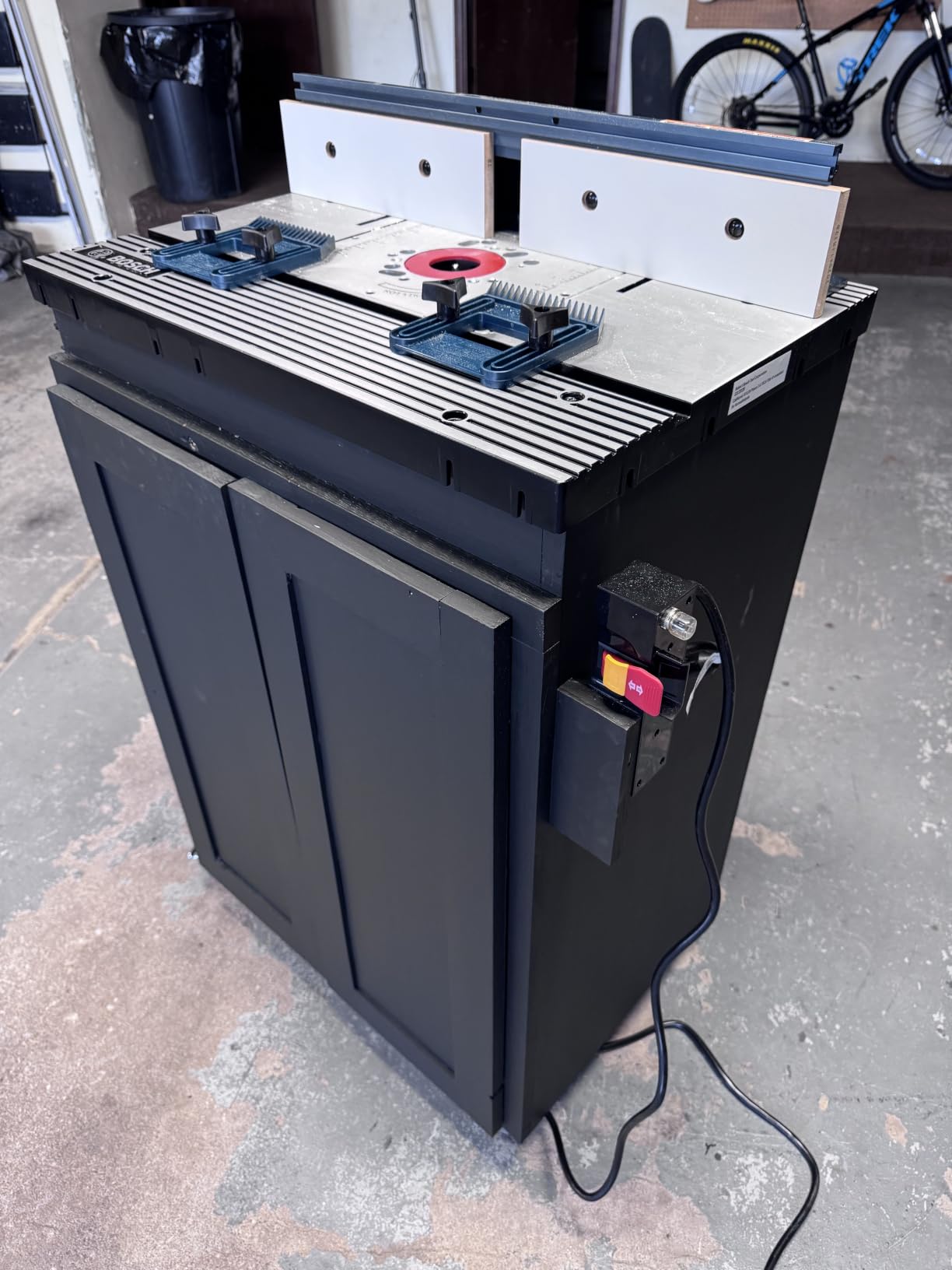
There are three real caveats. The base is structural plastic, and reviewers mention the switch fascia and feet as the parts that feel least substantial. There are no 60mm mounting holes out of the box, so a compact or trim router needs an adapter plate before it will fit. And used as a benchtop unit, the table stands taller than a standard 34 inch bench, which is worth measuring before you commit.
A few copies have arrived with a crowned table top. Bosch replaced those, and support response is described as quick. If you already own a plunge router and want one table that handles jointing, dados, and raised panel work without moving your bench, this is the most complete package on the list.
What you should check before it goes on your bench
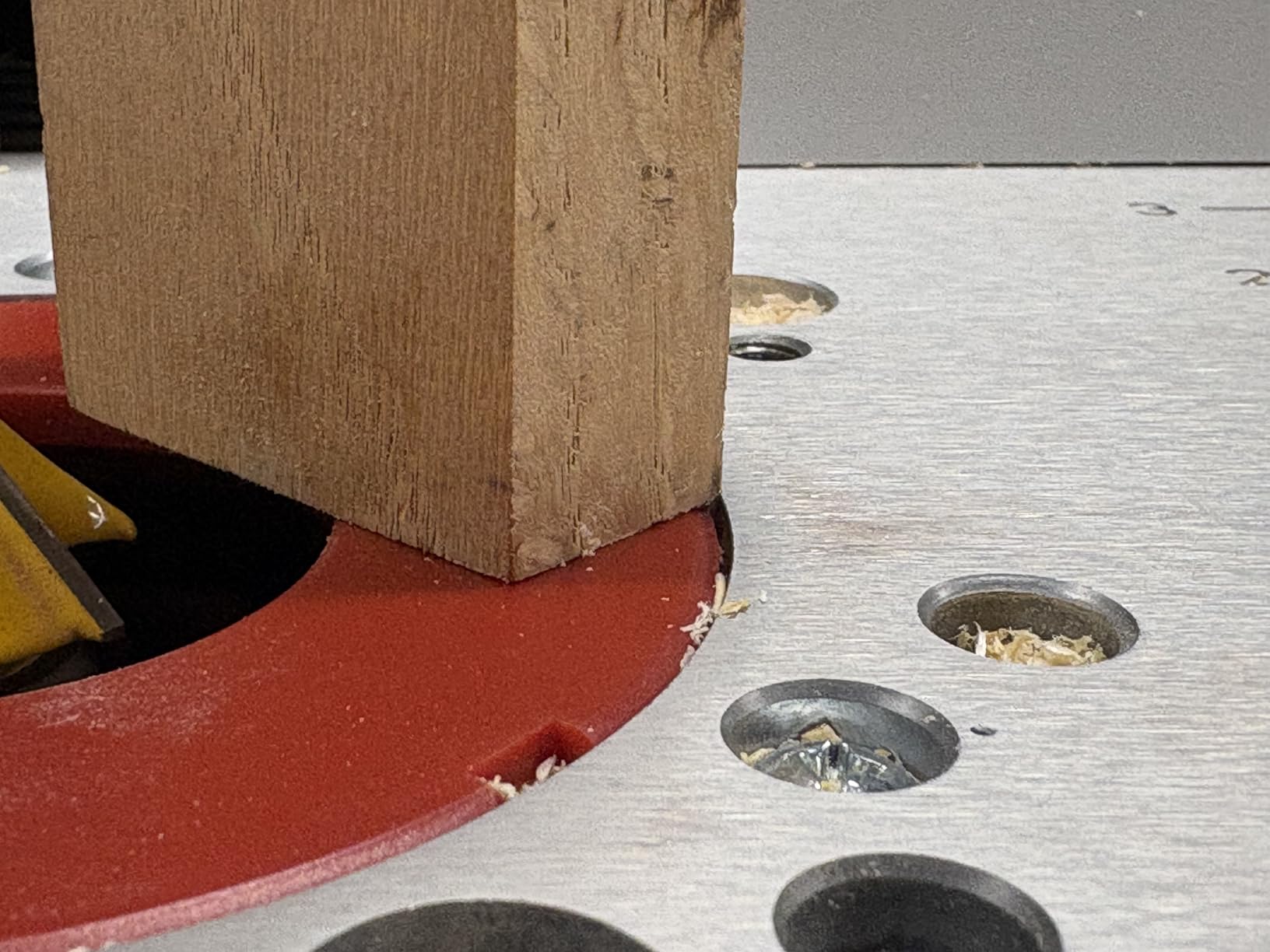
Measure your bench depth first. The published dimensions are 18 by 14.5 inches, so check that against your bench before you commit, and remember you still need a strip beside the table to support the off end of a long workpiece. The accessory slot takes 3/4 inch accessories, so a miter gauge for mitered workpiece support fits, but it is the only slot.
Decide in advance whether you need compact router holes. Owners working with trim routers buy a separate adapter plate, and that extra part is a normal part of ownership rather than a defect. Check the cord wrap too, since the six foot cord storage with power-cord lock is a small thing that matters more in a one-person shop than in a dedicated room.
Where it falls short
The above-table adjustment hole gathers dust and needs an Allen wrench, so cleaning it is part of the routine. The fence guard attachment is described as fiddly and does not stay installed well, which matters for anyone cutting tall stock. And if your workflow depends on plunge routers with a fine depth stop, the round barrel has no micro-adjust collar, so you are dialing in depth by eye.
None of these are dealbreakers for a small shop. They are the cost of getting a rigid cast top instead of a folding MDF one, and the owner reviews are consistently positive about whether that trade was worth it.
2. SKIL RT1323-01 Router Table and 10 Amp Fixed Base Router Kit
SKIL RT1323-01 Router Table and 10Amp Fixed Base Router Kit
Table plus router
10 Amp 2.0 HP
25,000 rpm max
1 year limited warranty
Pros
- Only kit here that ships a capable 10 Amp 2.0 HP router
- Highest rating in the roundup at 4.6
- Above-table adjustment and quick release for fast bit changes
- Soft start reduces the initial torque jerk
- Featherboards
- miter gauge and starting pin all included
- Table switch can run the shop vac at the same time
Cons
- Fence flexes and is poor for precision jointing
- Router must be tilted out for bit changes when mounted as instructed
- Dust port can be blocked by the switch box
- 1/4 in collet nests inside the 1/2 in rather than being one piece
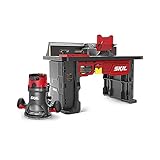
This is the one to buy if you are starting from nothing. The kit pairs the SRT1039 benchtop table with a 10 Amp 2.0 HP fixed base router, so the one item most roundups leave you to source is already handled. At 4.6 across more than 1500 reviews it also carries the highest rating in the group.
The motor has real authority for the work a small shop does. Owners run it through MDF, pine, and cherry on pieces approaching four and a half feet, and the soft start takes the initial bite out of the cut. Speed control spans 10,000 to 25,000 rpm, which lets you slow down for large diameter bits instead of worrying about the router stalling.
The fence is where the cost shows. It is 24 inches wide with adjustable MDF face plates, and owners describe it as flexible, which means it is a poor choice for serious jointing or fine precision work. If your first project is a raised panel, you will feel that. If it is dadoes, rabbets, and hinge boring, you will not.
There is a smaller quirk worth knowing. With the router mounted per the instructions, the switch box can partially block the dust port, so plan your hose routing before you commit the table to a position. The side storage cubbies are also minimal and collect dust, and the 1/4 inch collet nests inside the 1/2 inch collet rather than being a single piece, so a separate small collet is a sensible add-on.
Is the included router good enough to keep?
For most small shops, yes. It handles hardwood edge work, sheet goods dadoes, and repetitive profile cuts without complaint, and it is the reason this kit ranks so high with buyers who had nothing before. If you later want a plunge router for above-table depth changes, the table plate accepts one, though you lose the quick-change convenience of the fixed base setup.
The practical question is what you plan to cut. If you are doing large panels or very hard hardwood, a more powerful three-horsepower router is a better long-term buy and the table half of this kit still works with it. Otherwise, treat the included motor as the reason the total cost of entry is lower than any other option here.
Where it falls short
Above-table adjustment is present, but owners note the router still has to be lifted or tilted out of the table for bit changes when mounted as instructed, which is fiddly. The fence has no independent face adjustment lock worth relying on for fine squareness work. And the instructions could be clearer on exactly how the router and clamp are meant to sit in the plate.
Again, the trade is clear. You give up fence rigidity and get a working router in the same purchase, which for a beginner setting up a first small shop is usually the right way around.
3. POWERTEC 71402V Benchtop Router Table with Steel Stand
POWERTEC Benchtop Router Table with Steel Stand and Adjustable Fence – 24″ x 16″ MDF Laminated Top, Insert Plate, 2-1/2″ Dust Port, Fence Stop, Featherboard & Additional Accessories (71402V)
24 x 16 in top
27.5 lb
Steel stand
2-1/2 in dust port
Pros
- Steel stand with vibration absorbing rubber feet beats plastic legs
- Heavy machined aluminum fence with a dust port built in
- Four reducing rings cover most bit diameters
- Eight leveling points give an exceptionally flat plate
- Flip stop
- featherboard
- bit guard and starting pin included
Cons
- Insert plate hole pattern does not clear every router brand
- No drilling template supplied for the table opening
- Fence locking sticks are thin and hard to grip
- T-slot spacing narrows to 18 inches
Most benchtop tables in this price class stand on plastic feet. This one comes on a powder-coated steel stand with wide stance and rubber feet, and owners consistently single that out as the reason it feels stable rather than merely adequate. For a shop working on MDF at speed, that difference is felt in the workpiece.
The accessory count is the other headline. The fence assembly carries a 2-1/2 inch dust port, an adjustable bit guard, a featherboard, a reversible flip stop, and a measuring scale, and four insert reducing rings are included with a ring wrench for tool-free swaps. Eight leveling points with 3/8 or 5/8 inch screws let you get the plate genuinely flush with the top.
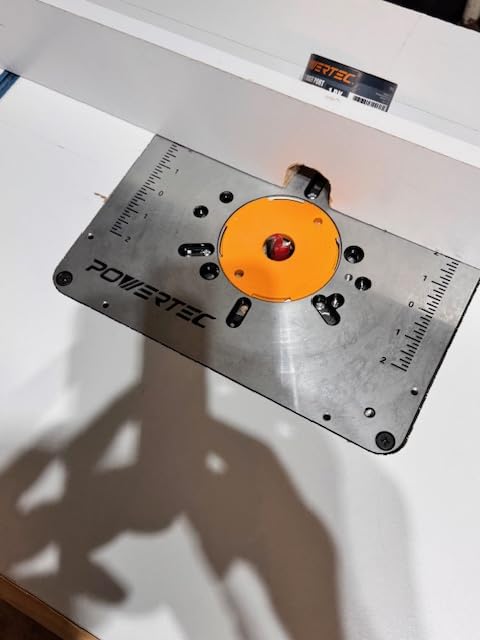
Two fit questions come up in the reviews. The insert plate hole pattern does not clear every router brand without drilling, and no template is supplied for routing out the table opening if you need one. There is a forum pattern here worth naming: owners who drilled their own aluminum insert damaged a new table. Check your router’s mounting pattern against the plate before you buy, and use a step bit with a backstop if you do have to drill.
The fence locking sticks are described as functional but thin, and the T-slot spacing narrowing to 18 inches rules out the narrowest auxiliary table tops. Neither issue affects a single-table setup, which is the normal small-shop case.
How much bench space does this actually need?
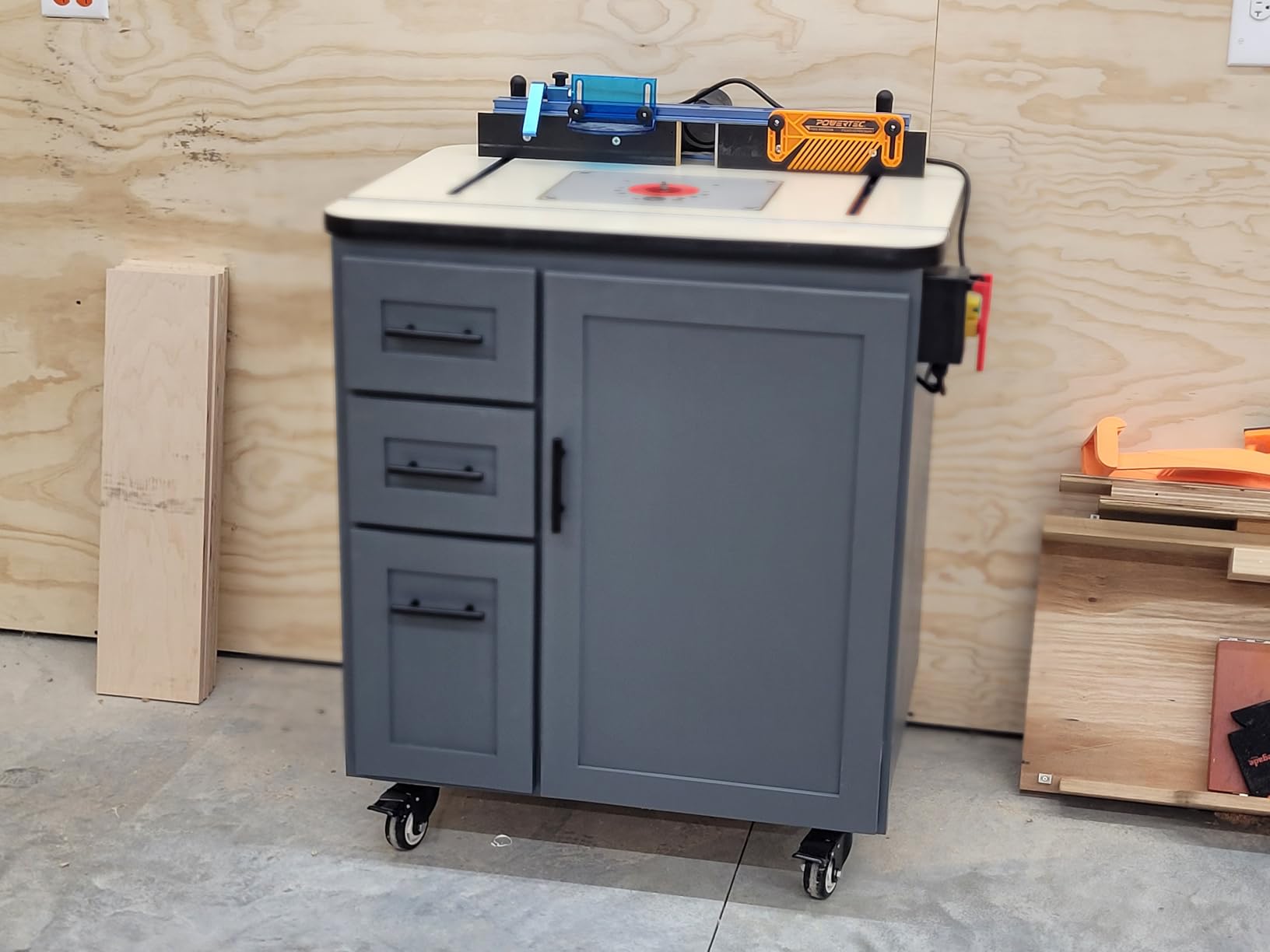
The top is 24 by 16 inches, which is compact enough for a 24 inch deep bench and leaves a usable strip on either side. That strip matters more than it looks: routing a board along the left-hand fence of a table this size means supporting the other end, and a folding outrigger or a second bench closes that gap. If your bench is under 30 inches deep, this is a more forgiving choice than the Bosch.
Because it ships with a stand, it works standing on the floor as a floor-standing unit too, though at 27.5 pounds moving it between positions is a two-person job. Plan a permanent spot near your dust collector rather than treating it as portable.
Where it falls short
The MDF top under the aluminum fence can still scar workpieces, so use a sacrificial bottom board. The included manual is minimal even though assembly itself is straightforward. And the fence dust port improves chip collection but will not replace a real collector on wide profile work, where most debris still exits ahead of the bit.
With 517 reviews averaging 4.4, the pattern is consistent: strong metalwork, correct fit for the router you already own, and less guessing than most tables at this level.
4. SKIL SRT1039 Benchtop Portable Router Table
SKIL SRT1039 Benchtop Portable Router Table for SKIL Routers RT1323-00 & RT1322-00 (Router Not Included)
26 x 16 in MDF top
24.2 lb
Above-table adjustment
1 year limited warranty
Pros
- Lowest cost complete table in this roundup
- 26 by 16 inch top handles longer workpieces
- Above-table adjustment and quick clamp speed up bit changes
- Dual-sided quick-latch bit storage case
- Two featherboards and a starting pin included
- Router clamp fits most major router brands
Cons
- Router is not included
- so the real cost is higher than the table alone
- MDF top marks work and dislikes moisture
- Only one insert ring configuration supplied
- Fence face plates are MDF
Strip this table back and you get the parts that matter: a 26 by 16 inch MDF surface with an aluminum miter gauge slot, a 24 inch fence with adjustable face plates, two featherboards, a starting pin, and an above-table adjustment. For a beginner with an existing router, that is a complete benchtop setup in one box.
The dual-sided bit storage case is the detail owners mention most, because a small shop with one router is usually a shop with eight bits in a drawer. The quick clamp and above-table access cut bit change time noticeably compared with under-table adjustment, which is the single biggest quality-of-life difference between budget and premium tables.
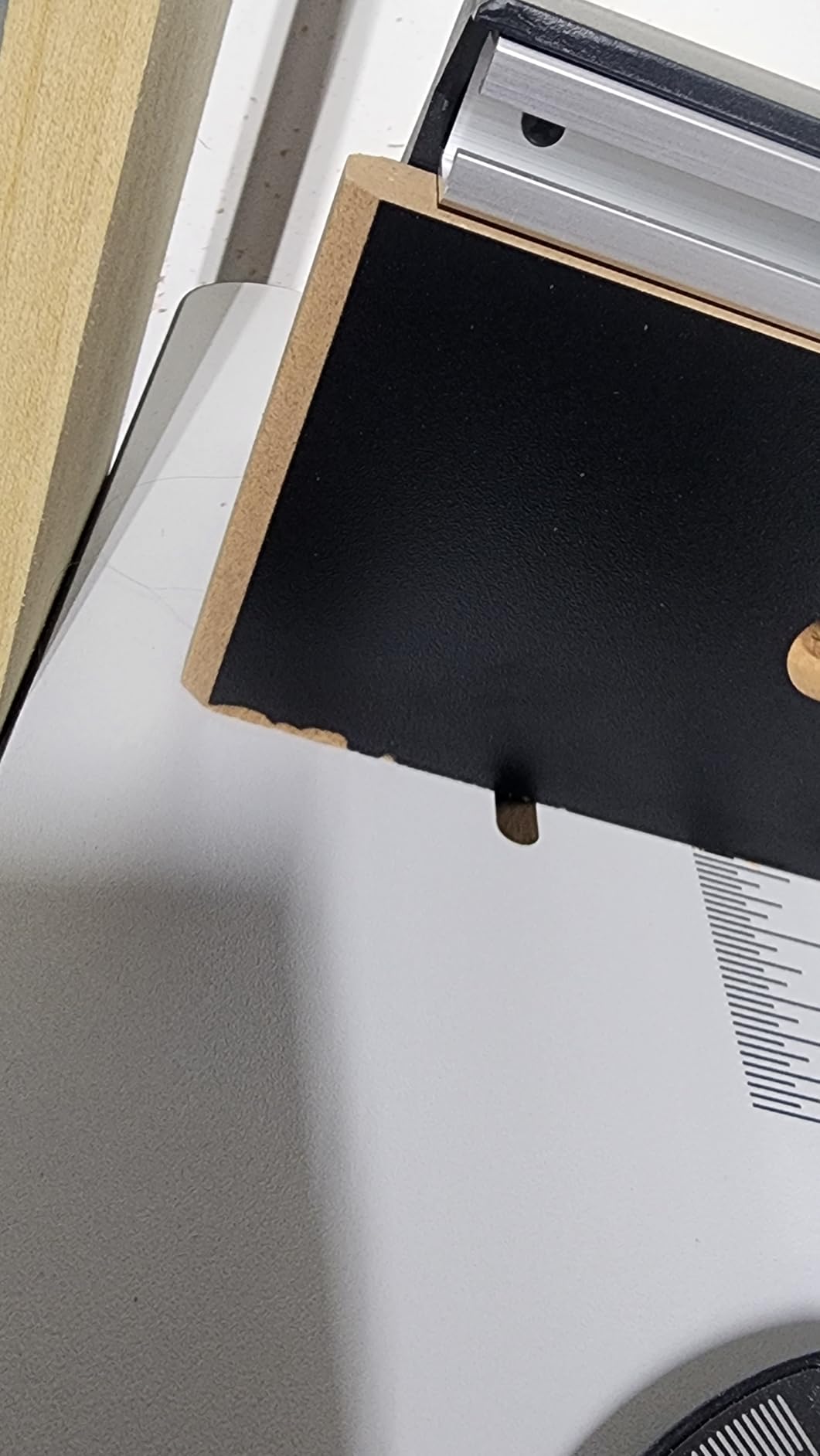
The catch is the total cost. No router is included, so the real number is the table plus a fixed base or plunge router, and once you are adding bits anyway the gap with the all-in-one kit narrows fast. Budget buyers should compare the landed total, not the table price.
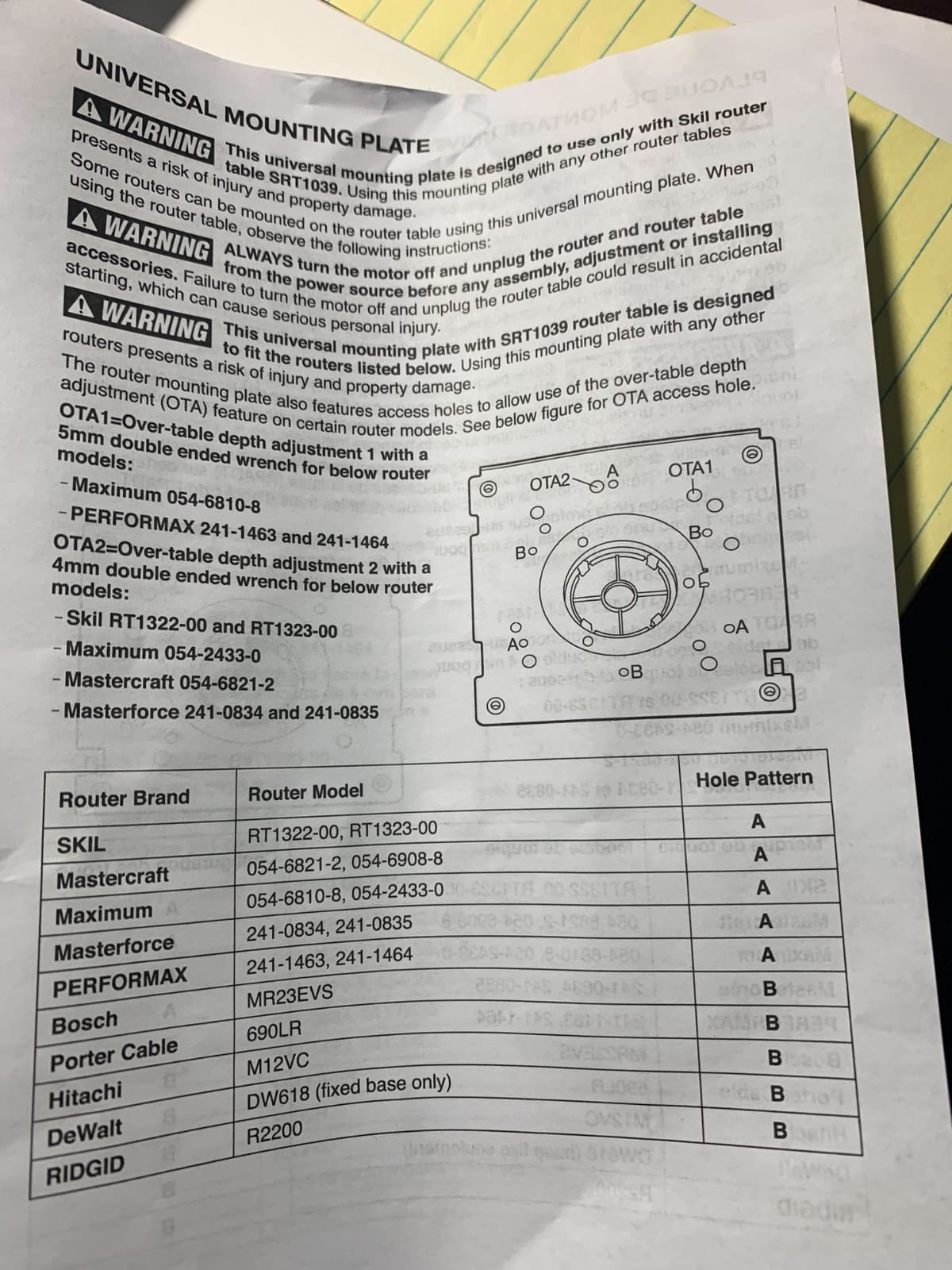
Only one insert ring configuration ships, which limits bit diameter flexibility on the table. And while the quick clamp is broadly compatible, the mount plate and above-table adjustment are clearly designed around SKIL’s own RT1323 and RT1322 routers, so a different brand may mean losing the above-table feature.
Is this enough for a beginner’s first router table?
Yes, with one condition. If your first projects are dados, rabbets, hinge mortises, and simple profiles, the 26 inch top and adjustable fence handle them without drama. The clamp fits most major router brands, so you are not locked into a matching motor. Just budget for a real router separately and treat that as part of the purchase, not an accessory.
Protect the MDF. Owners put a thin sacrificial board or adhesive shelf liner on the surface after the first few projects, which saves the top from dinged workpieces and makes cleanup faster. In a humid garage, keep it covered when it is not in use.
Where it falls short
The MDF face plates flex more than cast or extruded aluminum ones, so fine squareness work is not the strength here. The top marks workpieces readily. And because the fence faces are MDF, tightening a jointing operation across the fence is not a realistic use case on this table.
At 496 reviews and 4.4, the value argument holds up. This is the table to buy when shop space is the binding constraint and money is the second one.
5. Kreg PRS2100 Bench Top Precision Router Table
Kreg PRS2100 Bench Top Router Table – Full Size Portable Router Table for Workshops – Workbench Accessory – Holiday Home Improvement Gifts for Him
30 x 19.25 in top
12 kg
All steel frame
Plate levelers
Pros
- Most stable benchtop frame here with an all-steel structure
- Edge banded MDF top runs noticeably quieter
- Jointing rods let it work as an inexpensive jointer
- Plate levelers hold the insert flush with the top
- Compatible with common aftermarket lift plates
- Owners report a decade of service
Cons
- Assembly is the hardest here
- instructions are weak and bags unlabeled
- Miter track screws are too long and protrude through the top
- Plastic cam-lock fence hold-down flexes out of square
- On/off switch and featherboards are sold separately
This is the table owners describe as the most precise benchtop unit they have owned, and the reviews are unusually long-term, with multiple buyers reporting a decade of use. The all-steel frame and the low friction micro-dot skin on the edge banded MDF top are why it runs quiet, which matters when your router table shares a room with a bedroom wall.
The jointing rods behind the fence are the feature most small shops underuse. Mounted behind the fence, they support the workpiece for edge jointing and glue-ups, which turns the table into a serviceable stand-in for a jointer on boards up to the width of the top. Long-term owners use it exactly that way, and that alone justifies the space it takes.
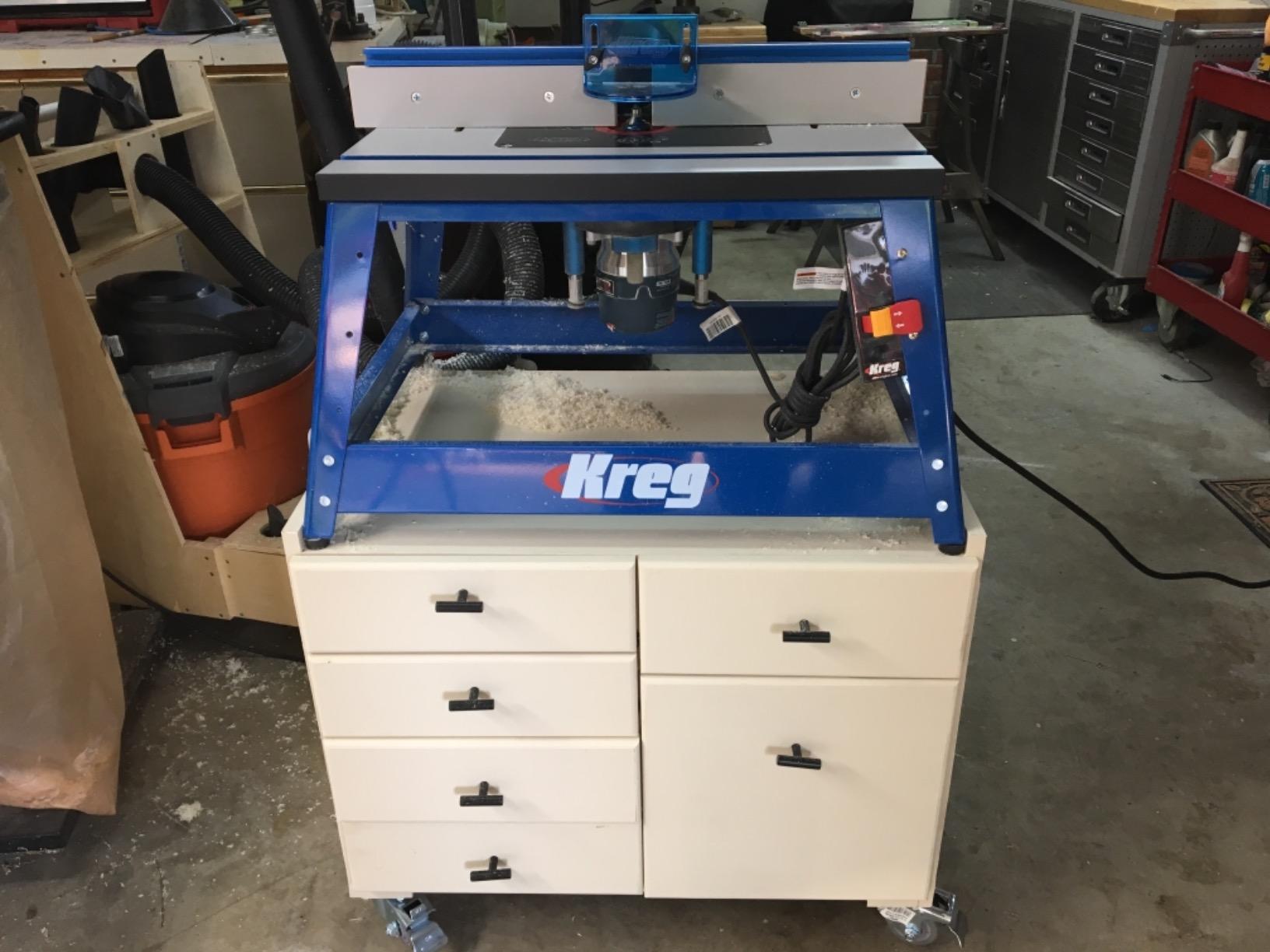
Now the honest part, which is assembly. Owners describe it as the most difficult in this roundup: undocumented steps, unlabeled hardware bags, closely spaced leg screws, and miter track screws that are too long and protrude through the top surface. Plan a full evening and expect to replace the plastic fence cam-lock parts with metal screws, which many owners do and report as a permanent fix.
Something else buyers mention: the on/off switch and featherboards are not included. Budget for a switch plate and a pair of featherboards before the first cut, and dust collection is partial, with a fair amount of debris falling under the table rather than being pulled through the port.
Is 30 by 19 inches too big for a small shop?
It is the second-largest footprint here, so it needs a dedicated bench rather than a corner of a shared one. In exchange you get a workpiece support area that most benchtop tables cannot offer, and the miter slot across the top for featherboard work. If your bench is a full four feet long, this fits with a little room at either end.
Because it is a top rather than a fixed stand, the smart small-shop move is to bolt it to a mobile base with casters. That pattern recurs constantly in woodworking forums, and it solves the storage problem neatly: when you are not routing, roll the whole thing against a wall. Just confirm the fasteners and plate material suit your base, since the top predrills for its own levelers rather than for a specific bench system.
Where it falls short
Beyond assembly, expect to make two modifications: metal screws in the fence hold-down and a replacement for the miter track screws. Neither is difficult, both are predictable. And with an aftermarket lift plate, check the corner hole pattern, because not every lift drops straight in without modification.
If you have the patience for the build and you plan to joint boards, this is the strongest benchtop precision play available here.
6. RYOBI Universal Router Table A25RT03
RYOBI Universal Router Table A25RT03
28 lb
Metal construction
Dual-outlet switch cord
Featherboard and miter gauge
Pros
- Full metal table construction resists flex
- Assembles quickly
- Generous accessory package including fence
- featherboard
- miter gauge and bit guard
- Fits older RYOBI corded routers
- Flat table surface and center plate out of the box
Cons
- Universal is overstated
- some routers need modification
- Will not accept RYOBI One or compact trim routers
- Slide guide is not standard 3/4 inch width
- One fence half floats when pulled out for jointing
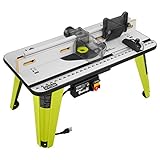
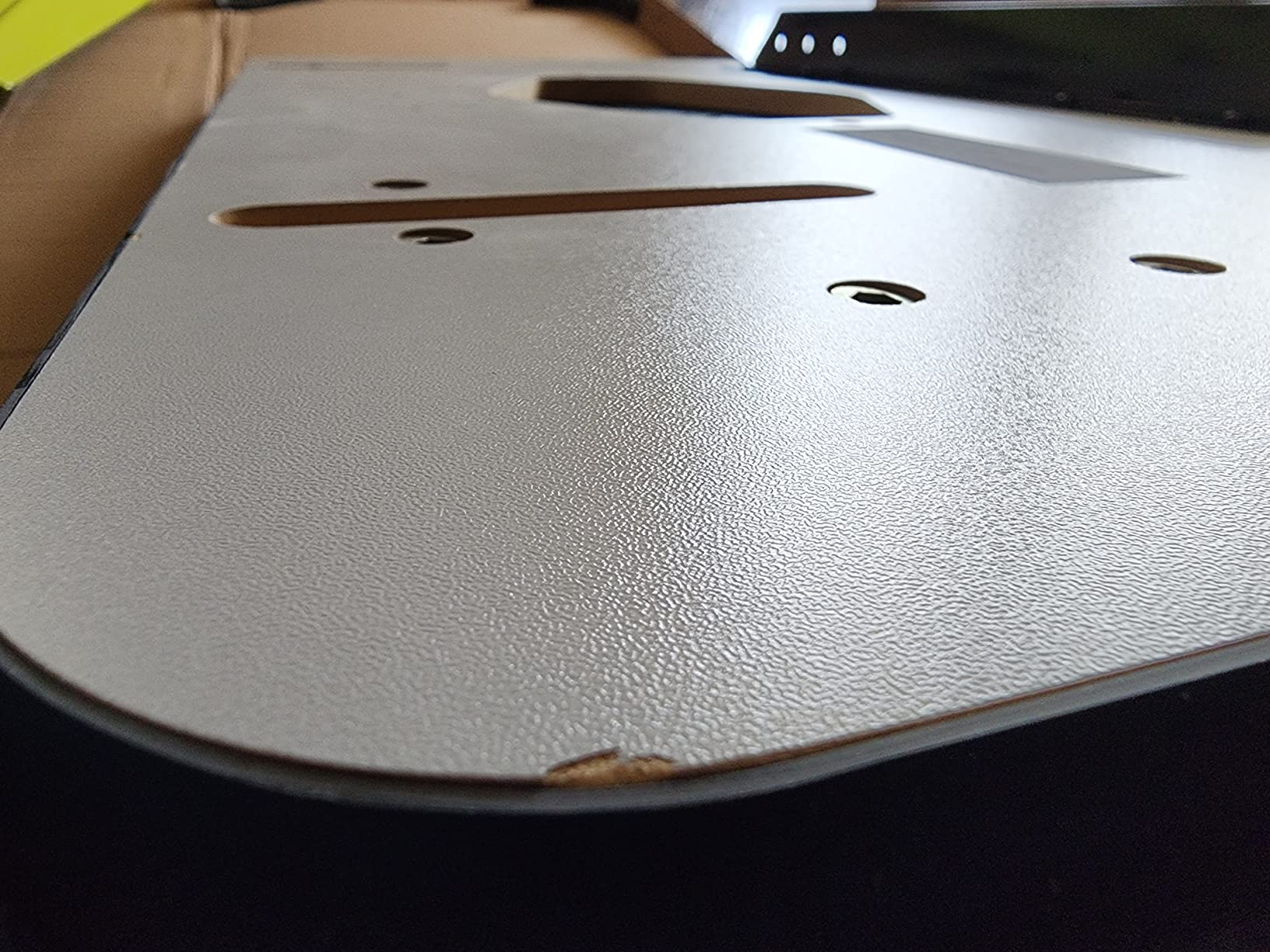
The RYOBI is the only table here built entirely from metal, and that shows immediately on the bench. A metal top does not deflect, does not scar workpieces the way MDF does, and shrugs off a humid garage. For a shop in a damp climate, that is a genuine long-term advantage over every MDF-topped table in this list.
The accessory package is unusually generous for the money. You get an adjustable fence, a featherboard, a miter gauge, and a functional bit guard, plus a dual-outlet switch cord that lets the table switch control the router and the dust collector at once. The table surface and center plate arrive flat, which removes one of the more common first-day problems.
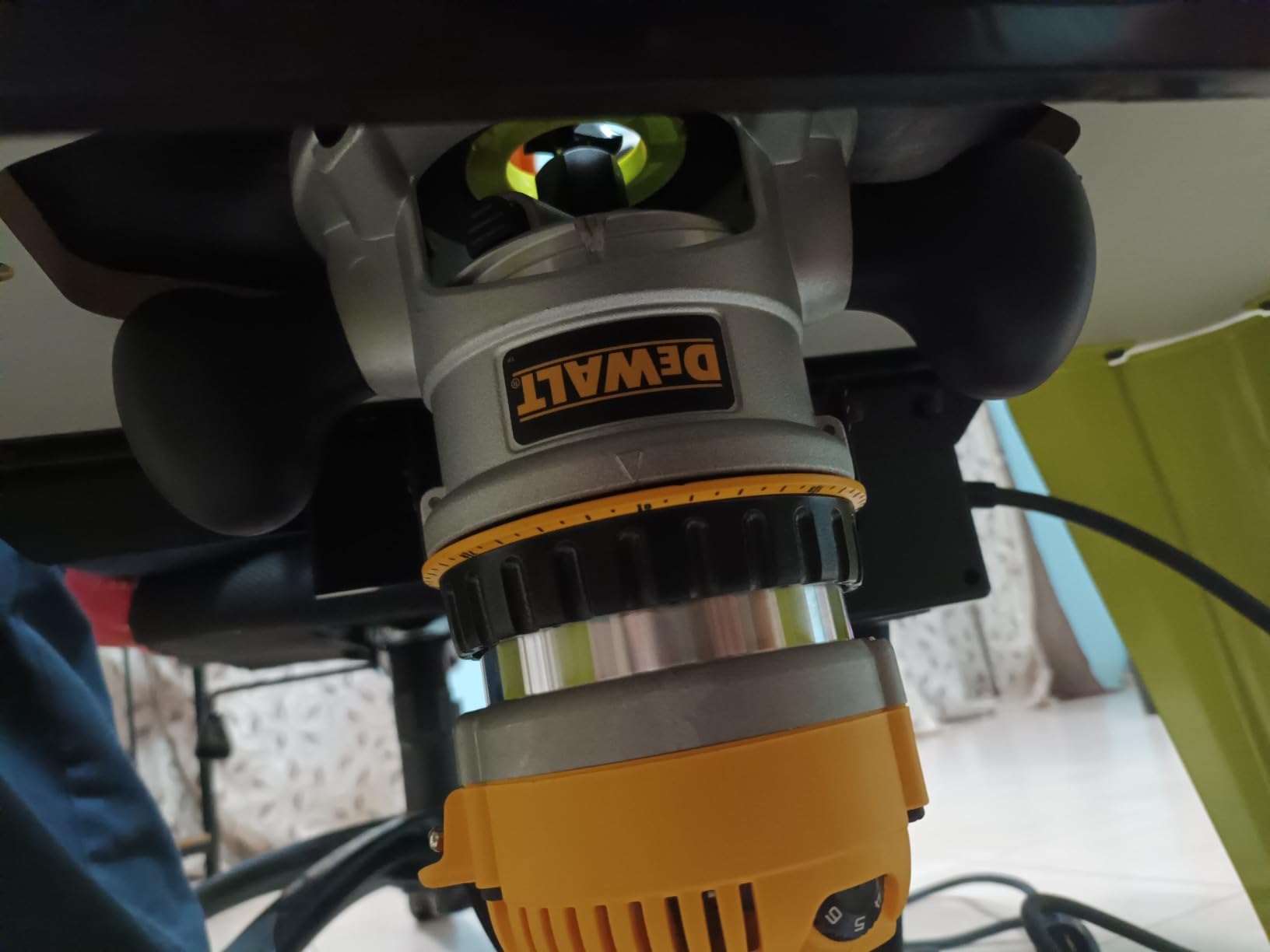
The word universal is the problem. Owners report that despite the name, it does not fit every router without modification, and it will not accept RYOBI One or compact trim routers at all. If you own a modern small-format router, this is not your table. The fit is good for older RYOBI corded routers and works for many other full-size routers, but verify the mounting pattern first.
The slide guide across the top is also not standard 3/4 inch width, so table saw featherboards will not fit into it. That is a small annoyance, but it removes the option of reusing accessories you may already own.
What should a RYOBI owner check before buying?
Pull your router out and measure the base diameter, then confirm the clamp and plate opening suit it. This table is built for full-size corded routers, so anything from the compact class is a no. The switch cord is also described as short, which makes extension cord routing awkward, so plan your power path before you position the table.
Buyers commonly pair this with an older RYOBI router and report a clean fit. If you already own that combination, this is close to the cheapest route to a metal-topped table that will not sag.
Where it falls short
The two fence halves do not align perfectly with each other, and one side floats when you pull the fence out for jointing work, which introduces a pivot under load. Both issues show up on jointing rather than on routing. The bit guard is functional but basic, and the included featherboard is single rather than a matched pair.
At 344 reviews and 4.4, the consensus is a sturdy, quick-assembly table with a generous accessory list, held back by a mount that is less universal than the box suggests.
7. Kreg PRS1025 Precision Router Table Top
Kreg Precision Router Table Top, Woodworking Router Table Top, PRS1025
Top only
26.8 lb
3/8 in insert plate
Three reducing rings
Pros
- MDF top absorbs vibration from heavy routers
- Four precision levelers hold the plate flush
- Combination miter gauge and T-slot track
- Steel reinforcing struts add real rigidity
- Three reducing rings cover common bushing diameters
- Mount it on any bench or stand you like
Cons
- Top only
- no stand legs or frame included
- Requires drilling and hardware to bolt to a bench
- MDF marrs work and needs moisture protection
- Getting the insert plate flush takes patience
This entry is a table top, not a table. What you get is a precision MDF top with steel reinforcing struts underneath, a low-friction laminate surface, a 3/8 inch insert plate with four levelers, three reducing rings with a ring wrench, a brass starting pin, and a combination miter gauge and T-slot track. The base is your problem, and that is the point.
For a small shop with a mobile base, this is arguably the best long-term answer. Owners rate the vibration damping highly, which matters if you are running a heavy three-horsepower router, and the 3/8 inch plate is thick enough to handle large routers without deflection. The four-point leveling is what keeps the plate flush, and flushness is where most cheap tables fail.
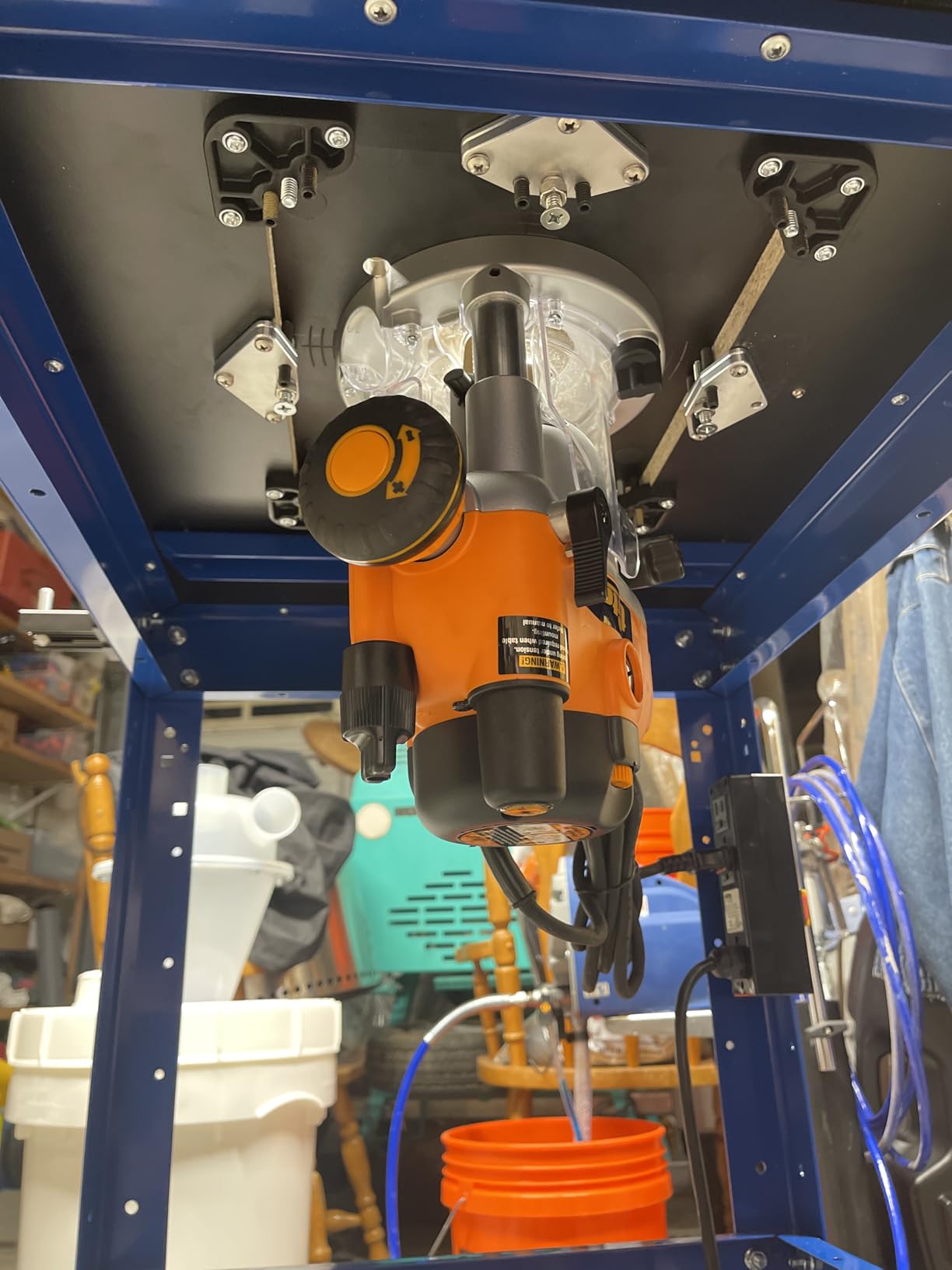
The tradeoff is work. You have to bolt it to something, handle the predrilling yourself, and spend real time on insert plate leveling. Owners describe that leveling as needing patience. Get it right and the payoff is a permanently accurate surface that never moves again, which is exactly the upgrade path a lot of small shops take after outgrowing a benchtop.
MDF durability is the other long-term consideration. Owners mention both marring and moisture sensitivity, so seal the surface and keep it off a damp floor. In an unheated garage, protect the edges, since end grain is where MDF fails first.
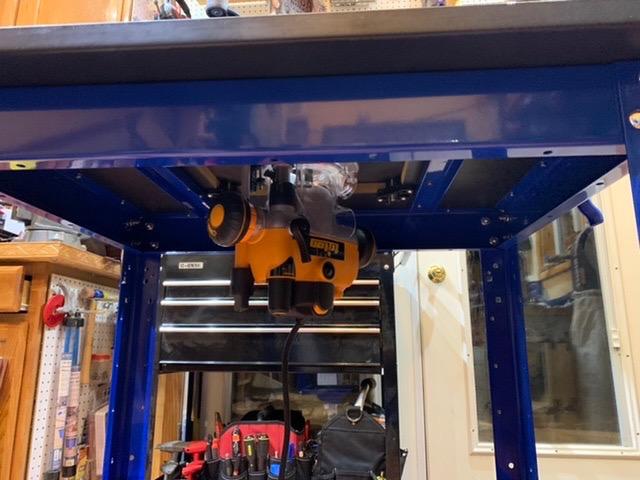
Is building a base harder than buying a table?
Less than most people expect if you already have a bench. The top is predrilled for its levelers and sized to sit on a standard surface, so the base can be a pair of sturdy saw horses, a mobile cabinet, or a purpose-built stand. The harder part is not the woodwork, it is the flush plate adjustment, and that is a weekend afternoon with a machinist square and a straightedge.
The combination track is worth understanding before you commit. It accepts miter gauge guide bars and doubles as a T-slot, so fence stops, hold-downs, and featherboard carriages can be set from either system. That flexibility is why builders on woodworking forums keep recommending a Kreg top as the starting point for a custom router station.
Where it falls short
Nothing here is ready to use. If you are not comfortable with a drill and a straightedge, the setup time will exceed the time saved versus a complete table. There is no switch, no featherboard, and no fence hold-down in the box. And with 203 reviews at 4.5, the feedback skews toward builders, so if you are buying complete you will get less guidance from the reviews.
Buy it for the next stage of your shop, not the first one.
8. Rockler ProMAX Cast Iron Router Table and 28 Inch ProFence
Rockler Router Table w/ 28” ProFence and Plate, Cast Iron Top (40-120)
60 lb cast iron top
18 x 29 in
Limited lifetime warranty
Plate sold separately
Pros
- Cast iron top is nearly vibration free on a cast iron saw
- Replaces an extension wing and frees real floor space
- 28 inch ProFence is rigid and collects dust well
- Dual fence slots let you work from either side
- Ten-point plate leveling gets very flat
- Limited lifetime warranty
Cons
- Router mounting plate is not included and must be ordered separately
- 60 lb is genuinely hard to mount alone
- Not supported on the tilt side of left or right tilting saws
- A few copies arrived out of flat by up to 1/32 inch
This is the one that actually solves a small shop space problem rather than creating one. Instead of asking for another piece of furniture, it replaces the cast iron extension wing on your table saw, so the footprint you gain is the wing you no longer store. Owners who already own a cast iron saw report near-total elimination of vibration, and the table saw becomes a combined saw and router station.
The 28 inch Bench Dog ProFence is the heavy part of the package, and it earns its weight. It locks solid, has a dust collection port, and comes with an adjustable bit guard. A no-slip miter gauge track adjusts for fit, and a third miter slot lets the saw handle crosscut sleds, so you are not giving up saw functionality to gain routing capability.
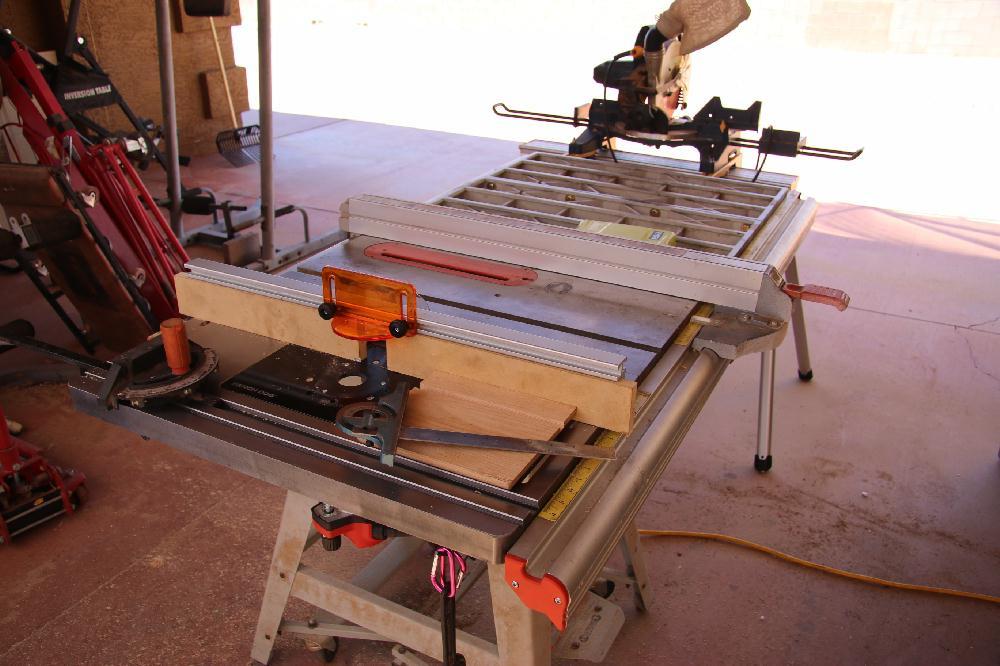
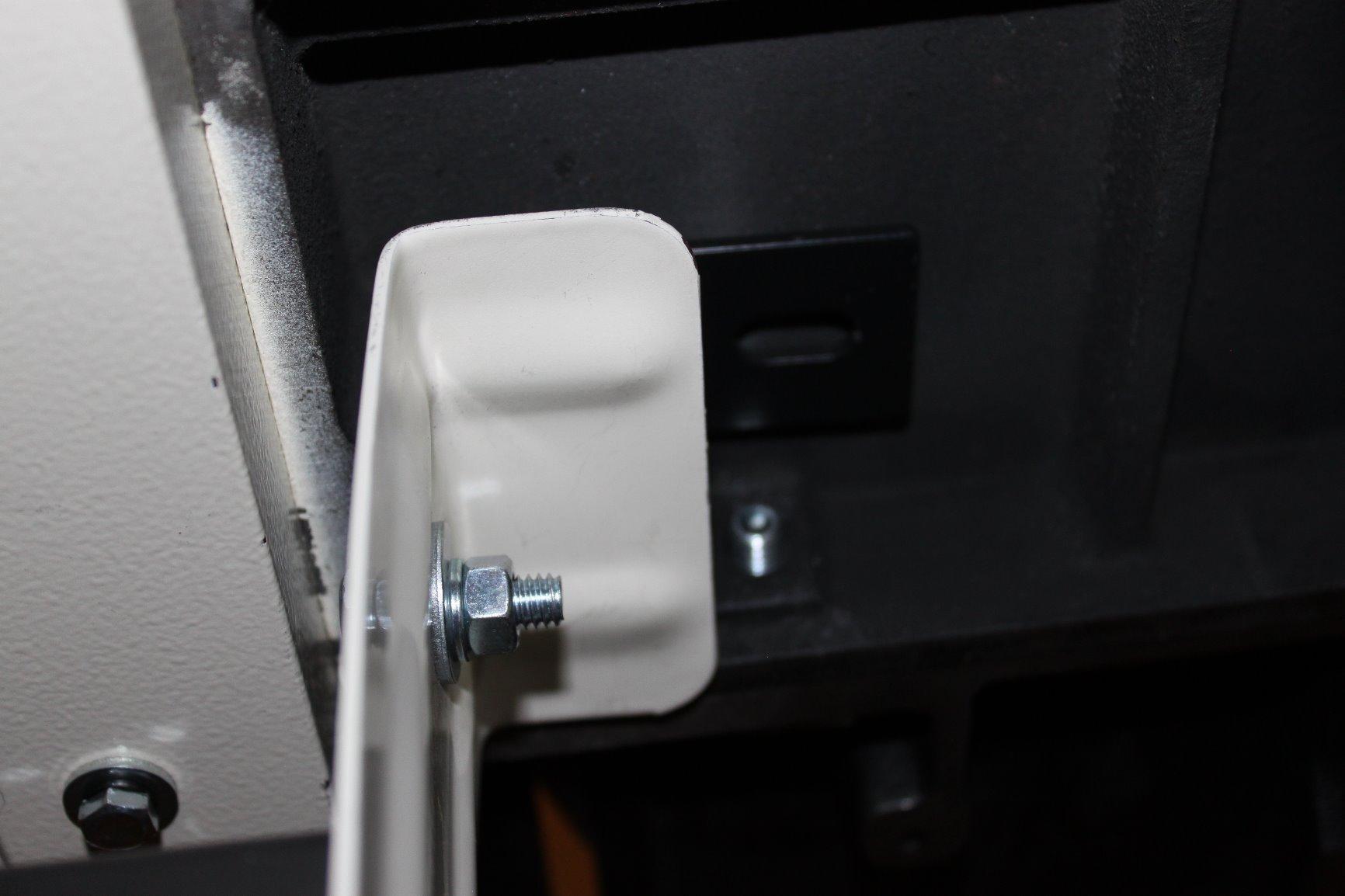
Two things to settle before you buy. The router plate is sold separately, so order it in the same transaction or you will have a 60 pound table with no way to mount a router. And the rail bolt holes on the fence may need enlarging to fit your saw rails, with drilling of the cast iron sides possible for a custom fit, so check your saw model against the fit list first.
Weight is the other practical issue. At 60 pounds, this is not something you install alone, and it is not something you move to clear floor space. The reward is that you never need to move it. There is also a quality variance worth knowing about, with a small number of owners reporting tops out of flat by as much as 1/32 inch, so inspect it on arrival and check it with a straightedge before drilling anything.
Who should skip this entirely?
Anyone without a compatible cast iron table saw, and anyone who cannot get a second pair of hands for the install. It is also not officially supported on the tilt side of a tilting saw, because the center bolt is hard to reach there. And if you have never routed before, a 60 pound casting with a separately purchased plate is a lot of commitment for a first table.
If you do own a cast iron saw, the calculus flips. The dual fence slots let you rotate the fence and work from either side, which effectively doubles your usable surface, and the cast top stays rigid at any bit diameter. Owners also note it holds resale value well and carries a limited lifetime warranty.
Where it falls short
It is a large, permanent commitment. The plate is extra, the rails may need modification, and the install is a project rather than an afternoon. Dust collection is markedly better than small-port tables, but only when a proper hose is fitted, so budget for a 4 inch connection to your collector.
At 187 reviews and 4.3, the rating is the second lowest here, and the complaints cluster almost entirely around logistics and out-of-flat arrivals rather than function.
9. Kreg PRS1200 Precision Beaded Face-Frame System
Kreg PRS1200 Router Table System, Precision Beaded Face-Frame, Steel Base
Steel base
5.44 kg
Built-in router stop
Quick-adjust clamp
Pros
- Built for fast repeatable beaded face-frame cuts
- Integrated router table stop makes repeat cuts consistent
- Clamp adjusts quickly to different board thicknesses
- Control arm guides the workpiece smoothly
- Steel base adds real rigidity
- Uses a router and router table you already own
Cons
- Specialized for beaded face frames rather than general routing
- Requires a compatible router table and router to function
- Only 57 reviews so limited long-term feedback
- Higher cost for a niche system
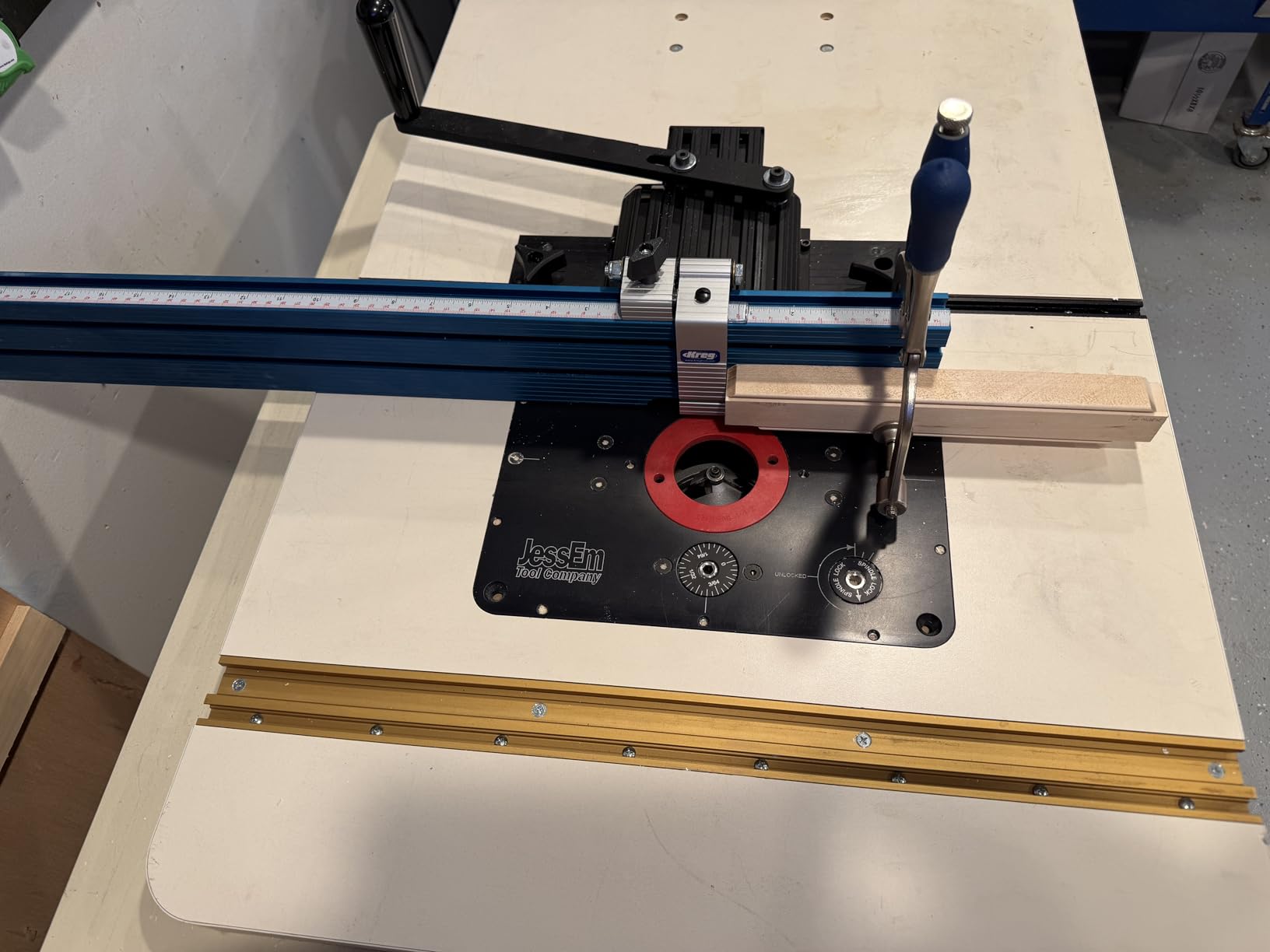
This is not a router table and we would rather say so plainly than pretend otherwise. It is a beaded face-frame system, a jig that mounts to a router table and turns repeated cuts into a repeatable process. If you build cabinets and the specific job is a bead profile on face-frame stock, nothing else here does this.
What it adds is a stop, a clamp, and a control arm. The integrated stop sets cut length so repeat pieces come out identical, the clamp changes quickly between board thicknesses, and the control arm keeps the workpiece tracking straight through the cut. The steel base supplies the rigidity that makes repeatability possible in the first place.
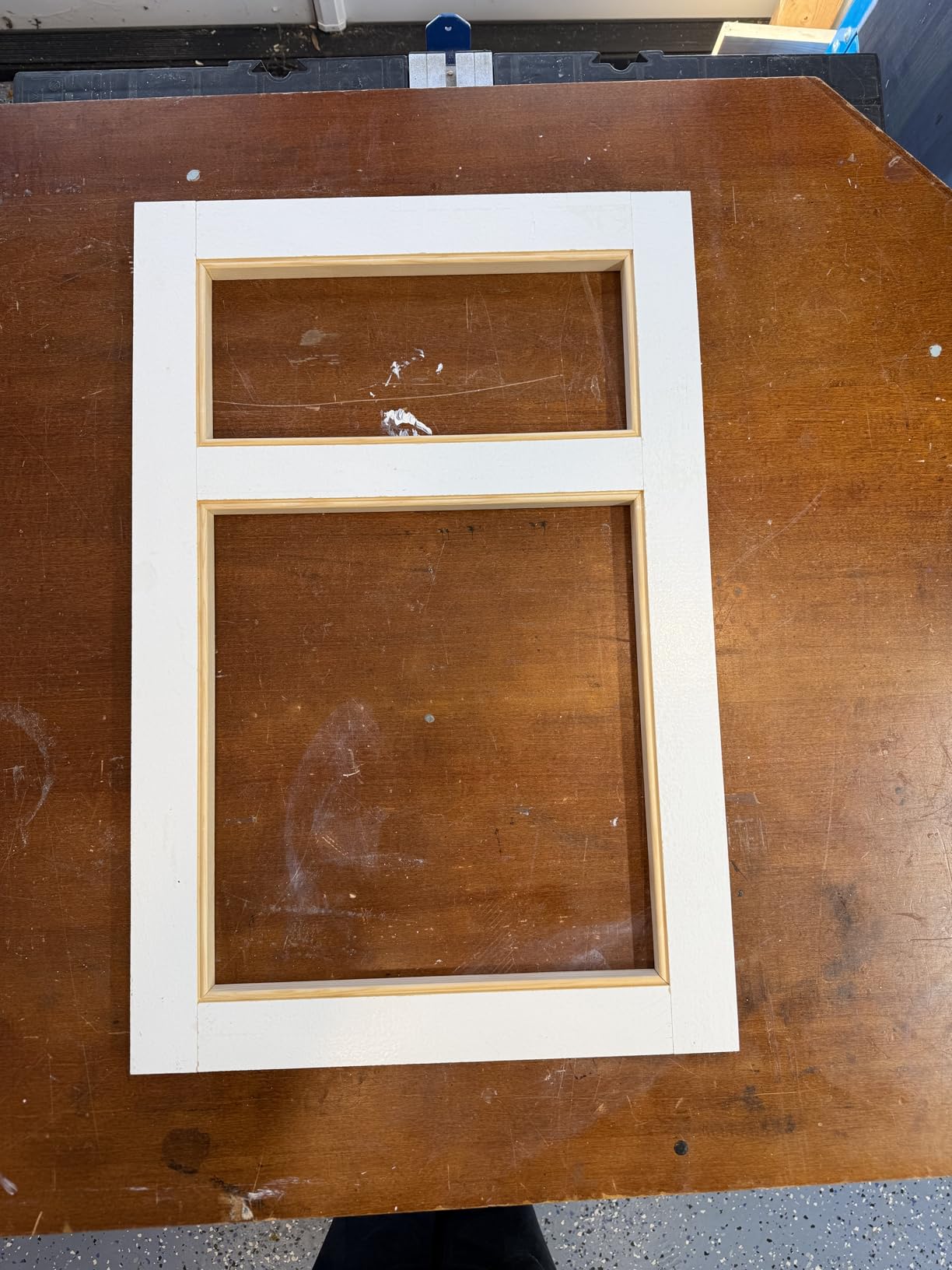
The limitation is scope. It depends on a compatible router table and router, so you are adding a second purchase to a first purchase, and it does nothing for jointing, dados, or general profile work. A one-person shop doing a handful of face frames will get more use out of the money spent on a fence and a router lift.
With 57 reviews and a 4.5 average, the feedback is small but strongly positive, and it centers on exactly what the system was designed to fix. Just know you are buying into a specialty.
Is a dedicated jig worth it if you only occasionally build cabinets?
Probably not. The value scales with repetition. A shop cutting bead profiles on a run of face frames, week after week, will recover the cost quickly because the stop eliminates the measuring and marking step. A shop doing one project a year in a spare bedroom will not, and the same money is better spent on a router lift that improves every cut on every table you own.
If you do buy it, set it up on the most rigid table you own, because the whole premise is repeatability and a table that moves undermines the stop. The control arm is the part that keeps the cut identical piece after piece, so make sure it is adjusted and locked before the first cut rather than mid-run.
Where it falls short
It is a single-purpose tool priced for that purpose, and the price per useful cut is high if your work is varied. There is also a thin long-term evidence base at 57 reviews, so you are trusting the design more than a broad owner history.
For cabinet shops it earns its place. For general small-shop work, it does not, and the top 8 entries on this list are the better buys.
10. SawStop RT-TGP 27 Inch In-Line Router Table
SawStop RT-TGP Assembly: TGP2 27″ In-Line Router Table
83 lb cast iron
27 x 16 in top
10 leveling screws
2 year warranty
Pros
- Exceptionally flat casting with excellent milling
- Workmanship and fit praised as best in class
- Extruded aluminum fence with independently adjustable faces
- Ten leveling screws make lift setup precise
- Two extruded shims included for jointing
- Converts a saw into a combined router and saw station
Cons
- Router lift not included and sold separately
- Additional cast iron or fabricated insert needed to finish the top
- Older saws need modified or replacement rails
- Fence can only face one end
- No featherboards included
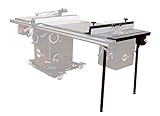
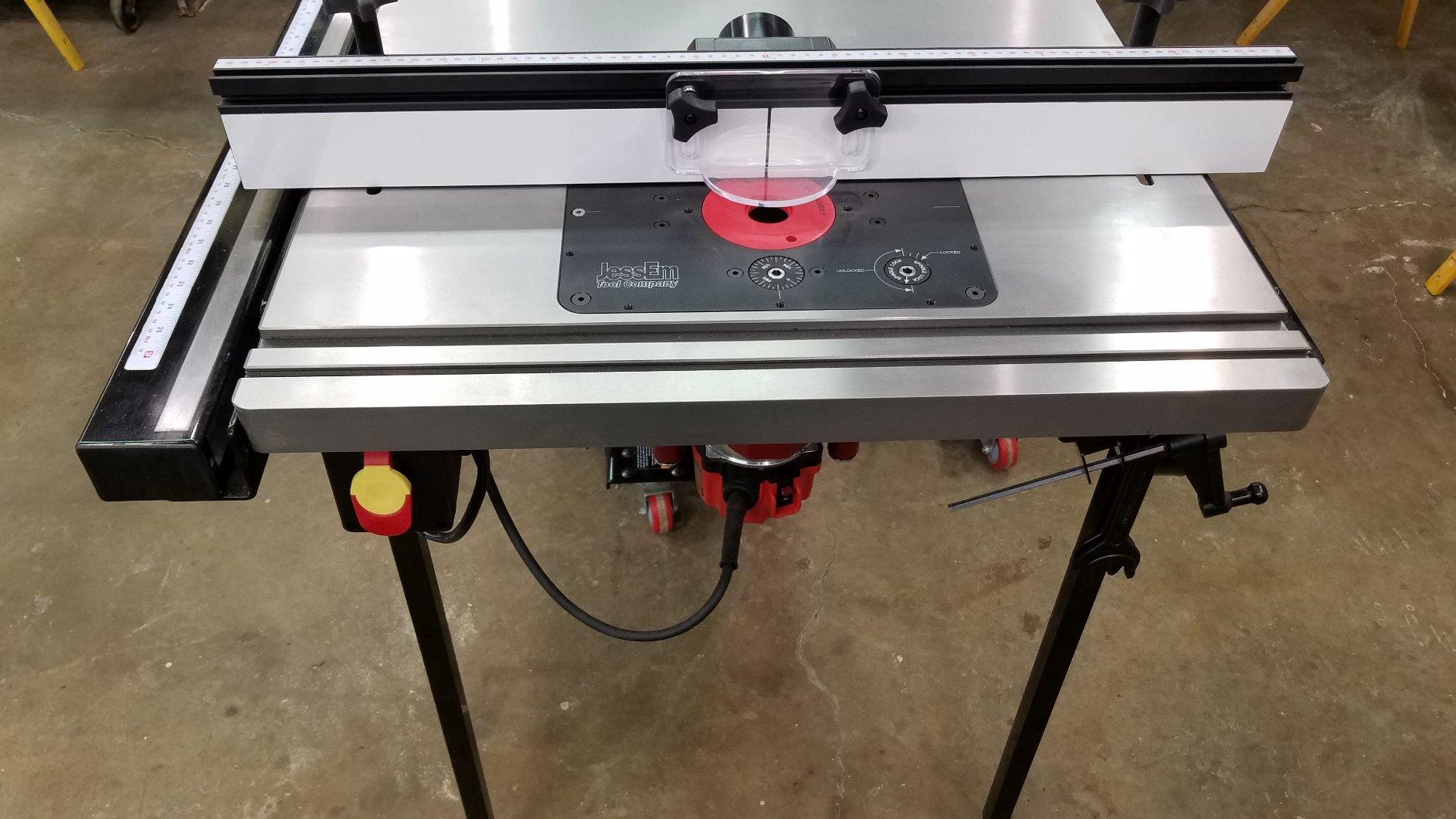
The SawStop is the most precisely made table in this roundup, and at 83 pounds it is also the heaviest. Owners with a SawStop PCS describe the casting quality, flatness, and fit as best in class, and the ten adjustment screws under the router lift let you dial the lift into position with real precision. If your saw is already a SawStop, the fit is designed.
Converting the saw into a combined station is the small shop argument. You give up one extension wing, gain a full 27 by 16 inch cast iron routing surface, and free the floor space a freestanding table would have taken. The fence is extruded aluminum with independently adjustable faces, and two extruded shims come in the box for jointing.
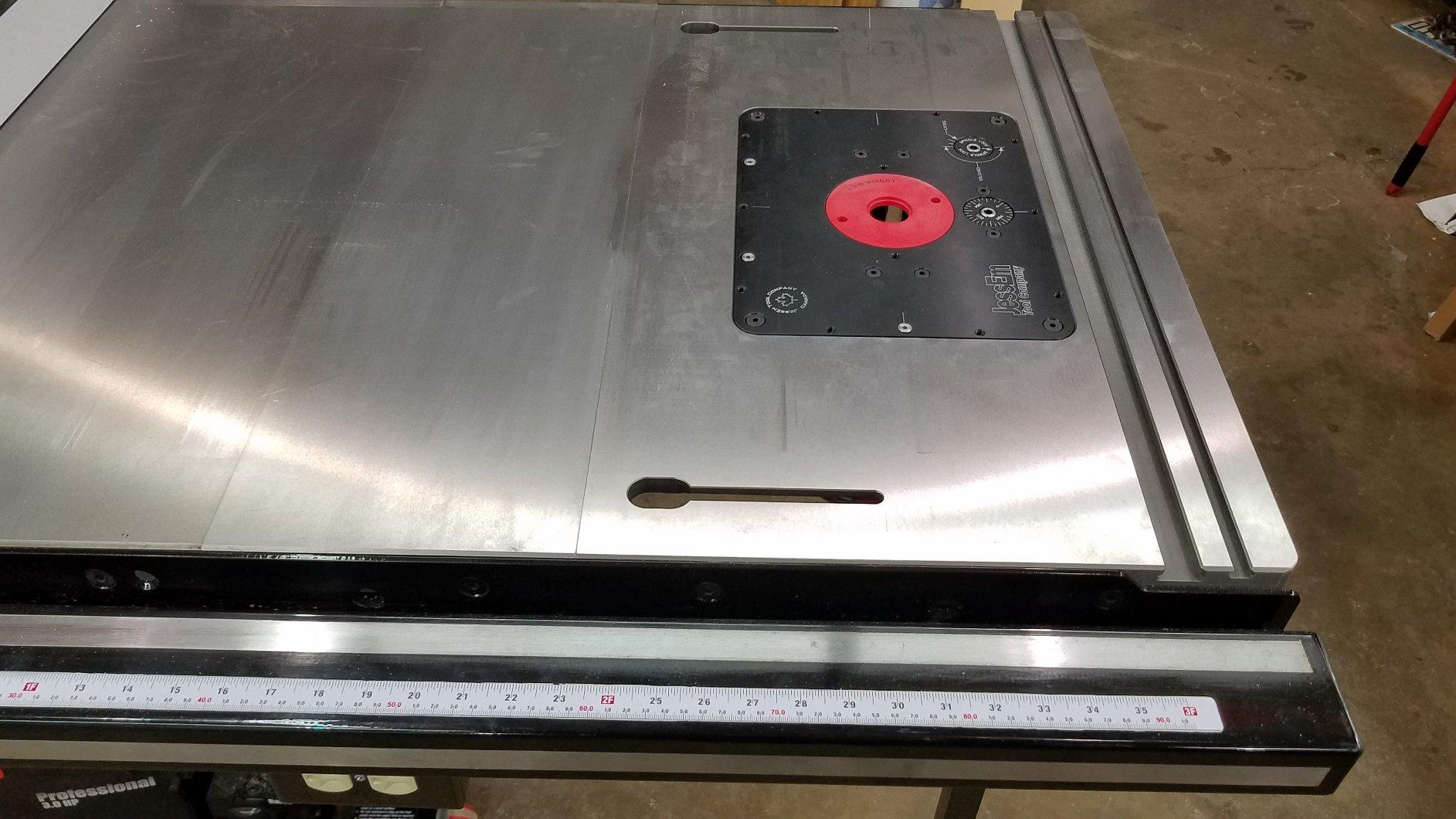
The package is incomplete by design, which is the main thing to plan for. The router lift is sold separately, and the top needs an additional cast iron or fabricated insert to finish it. Older saws need modified or replacement rails with notches for the T-track slots, so check your saw year before ordering. The lift hole pattern is also not universal, and other lifts may need corner modification.
Two geometry limits are worth knowing. The fence can only face the end of the table, so there is one working orientation, and you get roughly 8 1/8 inches from bit center to the leading edge, which restricts large panel work. No featherboards are included, so add a pair if you cut tall or narrow stock.
Is an 83 pound table too much for a small shop?
Weight is not the issue in a permanent in-line installation. It becomes an issue only if you expect to move it, which for a cast iron in-line table you should not. The real question is whether your saw is the right platform, because the rail modification on older saws adds work that can eat a weekend and cost more than the difference between two other tables on this list.
The fit note is specific. SawStop PCS owners report a clean, well-mated install with no complaints about the rails. If your saw is older or from another brand, verify compatibility before buying, and confirm the lift hole pattern against the lift you plan to use.
Where it falls short
Three additions are required before it functions: the lift, the filler insert, and featherboards. The single fence orientation and the limited bit-to-edge distance will constrain large panel work, and the 35-review history is thinner than the build quality deserves. At 4.5 across 35 reviews it earns its place on the strength of the casting, not the volume of feedback.
For vibration-sensitive work on a matched saw, nothing else in this roundup holds a bit as still.
11. VIYUKI Universal Electric Benchtop Router Table
VIYUKI Universal Electric Benchtop Router Tables Wood Working Craftsman Tool
14.5 lb
Die-cast aluminum top
11.22 in tall
Fits 6 in base plates
Pros
- Lightest table here at 14.5 lb and easy to carry between locations
- Die-cast aluminum top will not warp or mar like MDF
- Retractable fence guard contains chips and debris effectively
- Wide-stance iron stands are more stable than the size suggests
- Compact enough to store in a corner between projects
- Assembles quickly for most buyers
Cons
- Only fits routers with base plates up to 6 inches
- Fence is short and low for many cutting tasks
- Wing nut router clamps can let the router shift under load
- Instructions do not cover how to mount the router
- Some units arrived with missing hardware
This is the only table in the roundup you can genuinely carry. At 14.5 pounds it moves between the bench and a shelf without a second person, and the compact footprint means a shop with one bench and no spare floor can still own a router table. For a 10 by 10 shed, that portability is the whole feature.
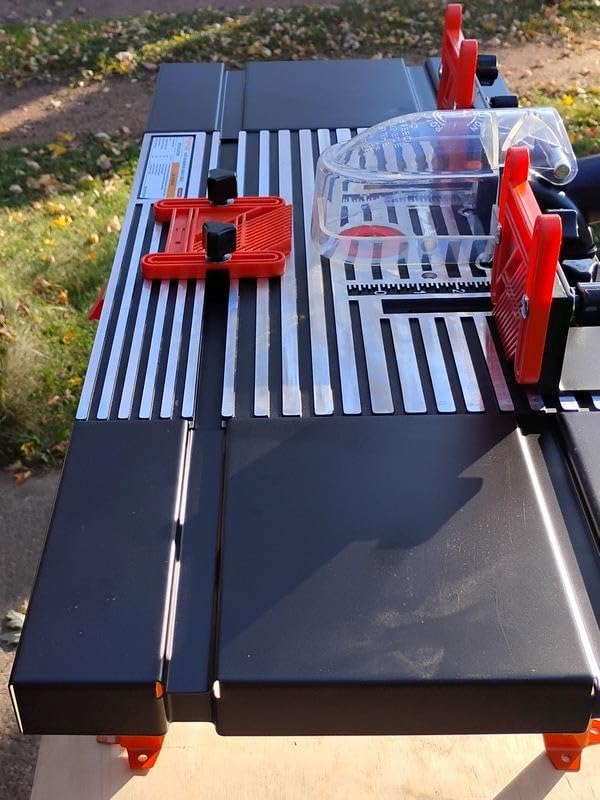
The die-cast aluminum top is a genuine alternative to MDF and will not scar workpieces, which is a real advantage for someone routing finished parts without a sacrificial board. The retractable fence guard retracts into the fence and does a better job of containing chips than most guards at this size, and the wide-stance iron stands hold it more steadily than the dimensions suggest.
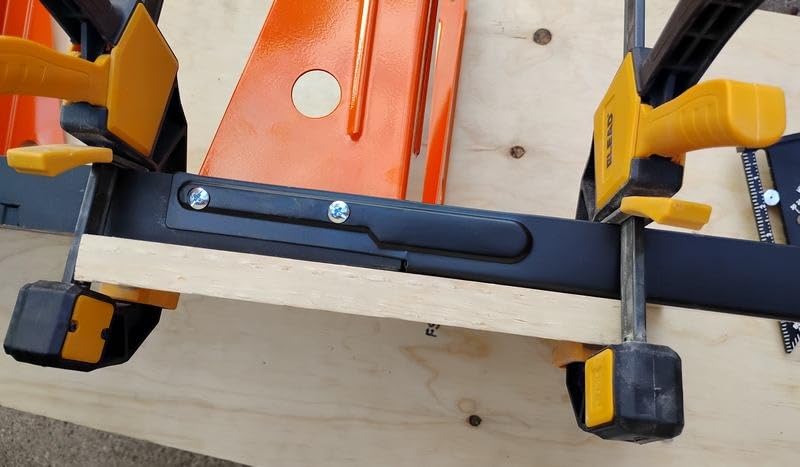
Fit is the first filter. It is designed for routers with base plates up to 6 inches, so full-size routers are fine and compact trim routers may not be. The fence is described as too short and too low for many cutting tasks, which limits it for profile work on tall stock, and the router clamp uses wing nuts that can allow the router to shift under load, so recheck the clamp before every pass.
The manual is the other weak point. Owners report it does not cover the single most important step, which is how to mount the router. There are also a few reports of missing hardware and one of a non-working safety switch, so inspect the box before you start assembly.
Who is this table actually for?
Anyone whose real constraint is storage rather than capability. If your shop cannot hold a permanent table and you want routing for occasional hinge boring, drawer work, or jig templates, this is the answer. It also works as a platform for a jig saw or circular saw according to the manufacturer, which adds a little flexibility in a shop that owns few tools.
If you do any jointing or tall profile work, look elsewhere. The short, low fence and the clamp that can shift under load are the wrong combination for work that pushes back on the workpiece.
Where it falls short
Wide gaps between the aluminum extrusions let shaped material dive into the grooves, which is a real hazard on molding work. The surface is only relatively flat once assembled, so expect to level it. And at 46 reviews with a 4.0 average, it has the thinnest evidence base and the lowest rating in the roundup.
Judge it as a portable accessory rather than a primary woodworking machine, and it delivers on that narrower promise.
Key Features to Consider in a Small Shop
Table top material. Cast aluminum is the flattest and most warp resistant, and it will not scar workpieces. Cast iron is heavier still and stays still under any bit. Phenolic resists moisture better than anything else. MDF damps vibration well, which quiets the machine, but it marks workpieces and dislikes damp air. Steel, as on the RYOBI, is stiff and moisture proof but only as flat as the stamping that made it.
Fence quality and squareness. Extruded or cast aluminum fences hold position under load. MDF face plates flex, and any fence with a plastic cam-lock hold-down will drift out of square over time. Check whether the fence faces adjust independently, and whether the fence can be positioned in two orientations. In a small shop you will be reaching around the table constantly, so a fence that only faces one direction is a real limitation.
Router lift. A lift raises the router from below so you can change bits and set depth from the top of the table. On a benchtop table, without a lift, every bit change means reaching under the bench. Above-table adjustment on the SKIL tables and the Bosch achieves part of the same benefit for a fixed base router. For a one-person shop working in a tight space, we consider a lift the highest-value accessory after the table itself.
Dust port and insert plate. A 2-1/2 inch port matches standard shop vac hoses and is the practical minimum. Larger ports move more air but need a reducer. On the insert side, look for multiple reducing rings so you can run different bit diameters, and for leveling screws that let you bring the plate flush with the top. Flushness is the single most repeated setup complaint in owner reviews, and it is what decides whether your jointing and panel work come out square.
Footprint and weight. Measure the bench before you buy. A 30 by 19 inch top gives you workpiece support and jointing capability; a 24 by 16 inch top leaves a usable strip on either side. Anything over 60 pounds is a permanent fixture that needs two people to move.
Benchtop vs Freestanding vs In-Line: What Fits Your Shop
Benchtop wins in almost every small shop, and it is the reason 6 of the 11 tables here are benchtop models. A benchtop table sits on a bench you already own, so the only new floor space is the bench footprint itself, and a mobile base with casters means the whole station rolls against a wall when you are not using it. That pattern comes up constantly in woodworking forums, where owners put both a router table and a benchtop planer on rolling Kreg benches and report being satisfied with the result.
Freestanding tables give you a taller, more stable working height and integrated storage, which matters if you are standing all day. The cost is permanent floor space and a heavier unit. In a shop under 150 square feet, that space is usually the scarcest resource you have.
In-line tables bolt to a table saw in place of an extension wing, which is the only option that gives you more routing surface while using less floor. Two entries here work this way, and both are the right call if you already own a cast iron saw. Both also need a separately purchased plate or lift, and both are effectively permanent.
One alternative deserves an honest mention: a handheld router with a template and a clamping fence on a plain bench gets you accurate repeat cuts without any of this hardware. It costs nothing extra, takes no floor space, and handles joinery and template work fine. What it will not do is profile work on large panels, cut dados across a wide workpiece with fence support, or free your hands for anything the router also needs to be doing.
How to Size a Router Table for Your Shop in 5 Steps
Step 1, measure the bench, not the floor. The table consumes bench surface, so measure the length and depth of the bench you already have. On a 24 inch deep bench, a compact benchtop table leaves under 10 inches of usable strip, which is enough for edge support but not for jointing a wide board on both sides.
Step 2, check the height. A standard bench sits at 34 to 35 inches. Benchtop tables add their own height, so the working surface can land uncomfortably high for a shorter user, and several models here are documented as taller than a standard bench. If you are under five foot ten, either build the base lower or plan to work standing.
Step 3, match the table to your shop tier. Under 100 square feet, which covers most 8 by 10 and 10 by 10 sheds, buy benchtop with a mobile base and stay under about 25 inches of depth. Between 100 and 150 square feet, a 30 inch wide benchtop is workable, and above 150 square feet you can consider a freestanding unit if you are standing most of the day.
Step 4, plan the dust path. The table needs a clear run to a hose or collector, and an in-line table on a saw borrows the saw’s dust path. In a confined shop, a bag is acceptable for short sessions, but it fills fast on MDF work and adds another thing to empty. Check ceiling clearance before committing to a 4 inch hose run.
Step 5, price the whole system. Add the router, insert rings, a fence upgrade if the included one is MDF, featherboards, a switch plate, and a lift. Two of the tables here arrive without a router, two arrive without a router plate or lift, and several exclude the on/off switch. Buyers who felt misled by cost almost always did this arithmetic after the purchase rather than before it.
One more checklist item before you order: confirm your router’s mounting pattern fits the plate before you buy, and never drill an aluminum insert without a template and a backstop. Drilling a new table is a mistake owners describe with real regret, and it is completely avoidable.
Frequently Asked Questions
What is the best benchtop router table?
The Bosch RA1181 is the best benchtop router table for most small shops. The cast aluminum top is the flattest and most warp-resistant in our test group, the machined aluminum fence stays rigid under load, and the 2-1/2 inch dust port fits a standard shop vac hose. If your bench is under 30 inches deep, the POWERTEC 71402V is more forgiving with a 24 by 16 inch top.
Which router table is better, Bosch or Kreg?
Bosch wins for a first benchtop table. The RA1181 ships complete, assembles in an evening, and needs no modifications, while the Kreg PRS2100 is more precise for jointing but has the hardest assembly in this roundup and needs metal screws and a separate switch. Choose Bosch if you want to route this weekend. Choose Kreg if jointing accuracy matters more than assembly time.
Is the Harbor Freight router table any good?
Harbor Freight has changed its router table lineup repeatedly, so we did not include a specific model in this roundup. The general verdict from owners is that the hardware is adequate for light work at the entry price, but fences are thinner and router fit is less predictable than the models we tested. If you want a metal-topped table on a budget, the RYOBI Universal in this list is a steadier bet.
What is the best router table for the money?
The SKIL RT1323-01 kit is the best value here, because it is the only option that ships with a capable 10 Amp 2.0 HP router included. At 4.6 across more than 1500 reviews it also has the highest rating in the group. If you already own a router, the SKIL SRT1039 table alone is the cheapest complete starting point.
What is the best size router table for woodworkers?
For a benchtop setup, 24 by 32 inches is the ideal working size because it leaves room to support a workpiece on the off side. Under a 24 inch deep bench, step down to 24 by 16 inches and add a folding outrigger for support. For jointing and panel work, go to 30 by 19 inches like the Kreg PRS2100. Weight matters too: anything above 60 pounds should be treated as a permanent fixture.
Is it worth buying a router table?
It is worth it if you cut dados, rabbets, hinge mortises, or do raised panel and profile work on panels. The fence, the flat table, and the workpiece support give you repeatability a handheld router cannot. If you only cut the occasional small template, a handheld router with a template and a clamping fence on your existing bench is enough and takes no floor space.
What is the most reliable router brand?
Reliability at the table depends more on the motor type than the brand. A fixed base router with a collet locking mechanism runs steadier under a table than a plunge router, which is why the SKIL kit ranks so high. Among the routers owners pair with tables, the Bosch 1617 and the DeWalt DW618 come up most often as dependable. Check your router’s base diameter against the table plate before buying either.
Which Router Table Should You Buy?
For most small shops, the Bosch RA1181 is the best router table you can buy: a cast aluminum top and fence that stay rigid, no router plate to buy separately, and the deepest owner history on this list. If you have no router at all, the SKIL RT1323-01 kit gets you cutting sooner because the motor is in the box. If your bench is narrow, the POWERTEC 71402V fits where the Bosch will not.
Shop owners with a cast iron table saw should ignore every benchtop option and look at the Rockler ProMAX or the SawStop in-line table, since both free floor space rather than consume it. Do the total-cost arithmetic before you order, confirm the router plate fits your motor, and give yourself an evening for assembly.
Whatever you choose, mount it on a bench with casters and measure twice. In a small shop, the router table you can move is worth more than the one with the longest spec sheet.