

A vacation home has one smoke alarm problem a primary residence does not: nobody is there to hear it. The best smart smoke alarms for vacation homes are the ones that push an alert to your phone when a detector sounds in an empty building, so a fire in a closed-up house becomes a 911 call made within minutes rather than a discovery on your next visit.
That distinction matters more than it sounds. A smart alarm does not sniff smoke any faster or more accurately than a conventional UL 217 listed detector. What it changes is the last mile, where a 85 dB siren goes unheard for hours. Remote notification, event history, and remote testing are the entire reason to pay more.
Our team compared nine connected alarms across the two architectures that show up in rental properties: alarms that talk to your phone directly, and add-on modules that bolt onto hardwired systems you already own. We weighed detection type, certification, power longevity during long vacancy, whether a hub is required, and what a dead alarm on arrival would cost you.
If you are outfitting a second home, our smart smoke detector roundup covers the basics. For the rest of the property, owners usually pair these with remote entry and monitoring gear, covered in our guides to garage door openers for smart homes and driveway alarms for rural homes.
Safety scope: every product below is a life-safety-adjacent purchase. UL 217 listing, local fire code, your authority having jurisdiction, and your insurer govern what you install. A smart alarm can add monitoring, but it never replaces a code-required alarm, and no manufacturer or reviewer can guarantee your safety.
Table of Contents
Top 3 Picks for Vacation Homes in 2026

X-Sense SC06-W 6-Pack
- Ten-year sealed lithium battery
- Wireless interconnection
- Photoelectric smoke plus electrochemical CO
- ETL listed to UL 217 and UL 2034

X-Sense SC07-W 6-Pack
- Up to 18 linked alarms across 820 ft
- One-button network silence
- Ten-year sealed lithium battery
- ETL listed to UL 217 and UL 2034

Kidde Smart Smoke and CO
- Phone alerts with no monthly subscription
- Smoke and CO in one unit
- Runs on two AA batteries
- Wire-free interconnectivity
9 Best Smart Smoke Alarms for Vacation Homes (October 2026)
The table below covers every alarm in this roundup. The single biggest fork in the road is whether the alarm reaches your phone by itself or needs a hub, a bridge, or wiring to a detector you already installed.
| Product | Specs | Action |
|---|---|---|
| X-Sense SC06-W 6-Pack |
|
Check Latest Price |
| X-Sense SC07-W 6-Pack |
|
Check Latest Price |
| Kidde Smart Smoke and CO |
|
Check Latest Price |
 Zooz ZEN55 Z-Wave Signal Sensor Zooz ZEN55 Z-Wave Signal Sensor |
|
Check Latest Price |
 eufy Security Smoke Alarm E10 eufy Security Smoke Alarm E10 |
|
Check Latest Price |
 Heiman S1-R 3-Pack Heiman S1-R 3-Pack |
|
Check Latest Price |
 Heiman S1-R 6-Pack with Gateway Heiman S1-R 6-Pack with Gateway |
|
Check Latest Price |
 X-Sense XP0H-WN Single Alarm X-Sense XP0H-WN Single Alarm |
|
Check Latest Price |
 SimpliSafe Alarm Listener SimpliSafe Alarm Listener |
|
Check Latest Price |
How We Picked Smart Alarms for an Unoccupied Home
We ranked these on six criteria, in this order: whether the alarm can reach a phone at all, then power longevity during months of vacancy, then certification, then detection type, then hub and subscription cost, then form factor.
Notification came first because a vacancy-specific alarm that cannot call your phone is just a louder conventional alarm. Power came second because a sealed 10-year lithium battery removes the trip to a house nobody is living in, which is the single complaint that recurs most in host communities. Certification is non-negotiable: UL 217 listing, UL 2034 for carbon monoxide units where applicable.
We did not treat brand familiarity as a virtue. Two of the strongest-reviewed items here come from brands most owners in the United States have never heard of, and the most review-proven pack in the group is not the one with the highest star rating.
1. X-Sense SC06-W 6-Pack Interconnected Smoke and CO Detector – Best Overall for Vacation Homes
X-Sense 6-Pack Interconnected Smoke and CO Detector, SC06-W
6 alarms in one pack
Smoke plus CO sensing
10-year sealed lithium battery
85 dB alarm
Pros
- Six alarms cover a whole property in one order
- Ten-year sealed lithium battery on every alarm
- Wireless interconnection so all alarms sound when one triggers
- No rewiring needed with all screws and anchors included
- Single-button test and silence across the system
Cons
- No Wi-Fi so phone alerts need a separate bridge
- Bundles have arrived with alarms needing manual pairing
- No junction-box adapter bracket
This is the pack we ended up recommending to anyone with a three-bedroom or larger rental, and it won on review volume rather than star rating. With more than 3,200 reviews averaging 4.6 stars, it carries by far the deepest body of long-term owner feedback in the group, which matters when the property is empty eight months of the year.
Each alarm combines a photoelectric smoke sensor with an electrochemical carbon monoxide sensor, so a single ceiling device covers both hazards. At 85 dB the siren is loud enough to wake a sleeping guest on the far side of the house, and wireless interconnection means one triggered detector sets off every linked alarm in seconds.
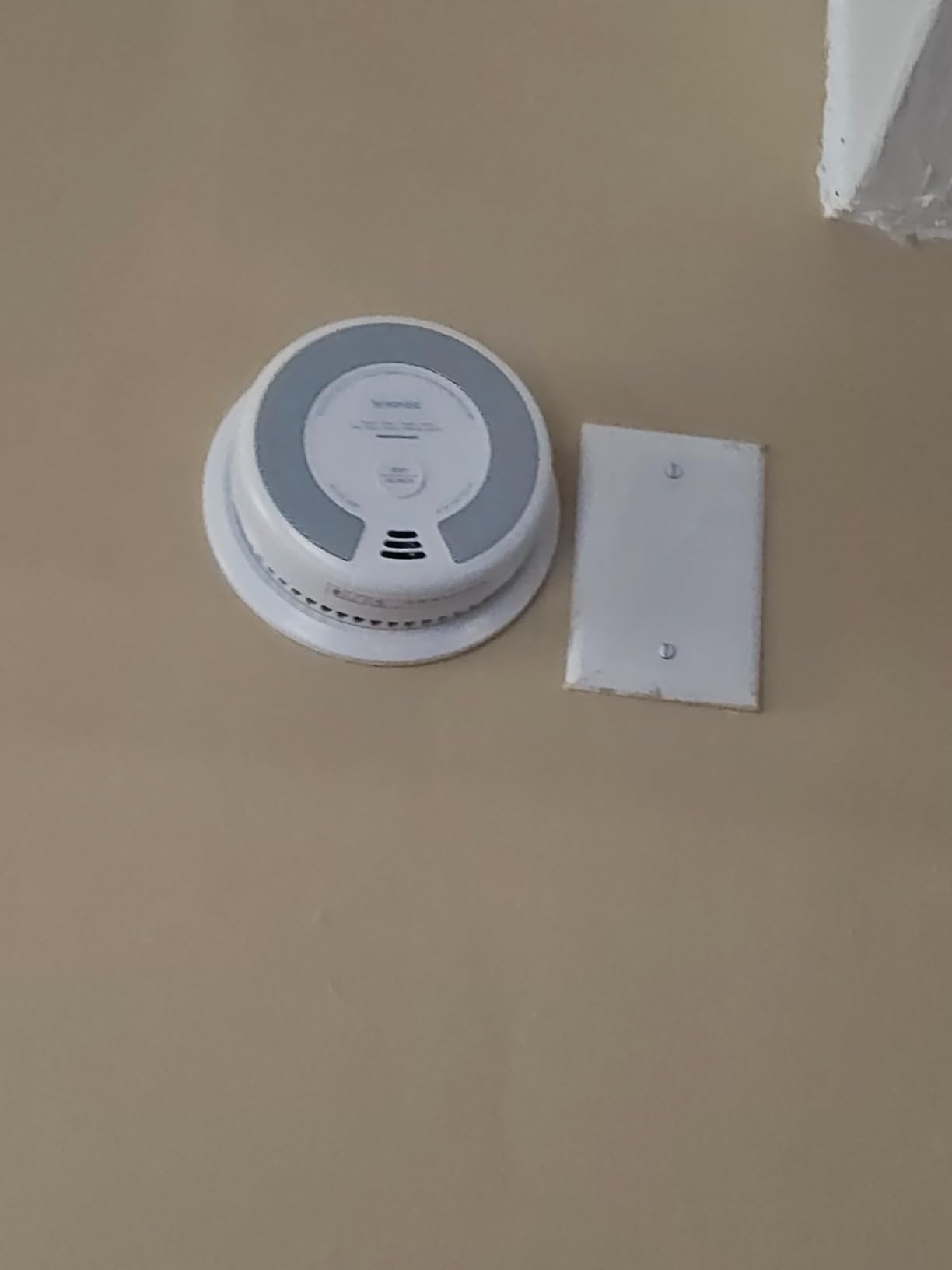
For a vacation home, the sealed 10-year lithium battery is the decisive spec. Hosts running professionalhosts-style operations tell us the reason they specifically want a sealed cell is so they never have to deal with chipping batteries between stays, and this pack delivers that on all six alarms. The pack also weighs 2.31 kg and measures 5.7 inches square by 2 inches, so mounting on a ceiling or wall is a bracket and three screws.
The honest weakness is connectivity. There is no Wi-Fi in the base unit, so getting an alert on your phone means adding a separate bridge or hub, which adds cost and another device that can fail. A small number of owners on multi-packs report receiving alarms that needed manual pairing rather than arriving factory-paired, so budget five minutes for setup before guests arrive.
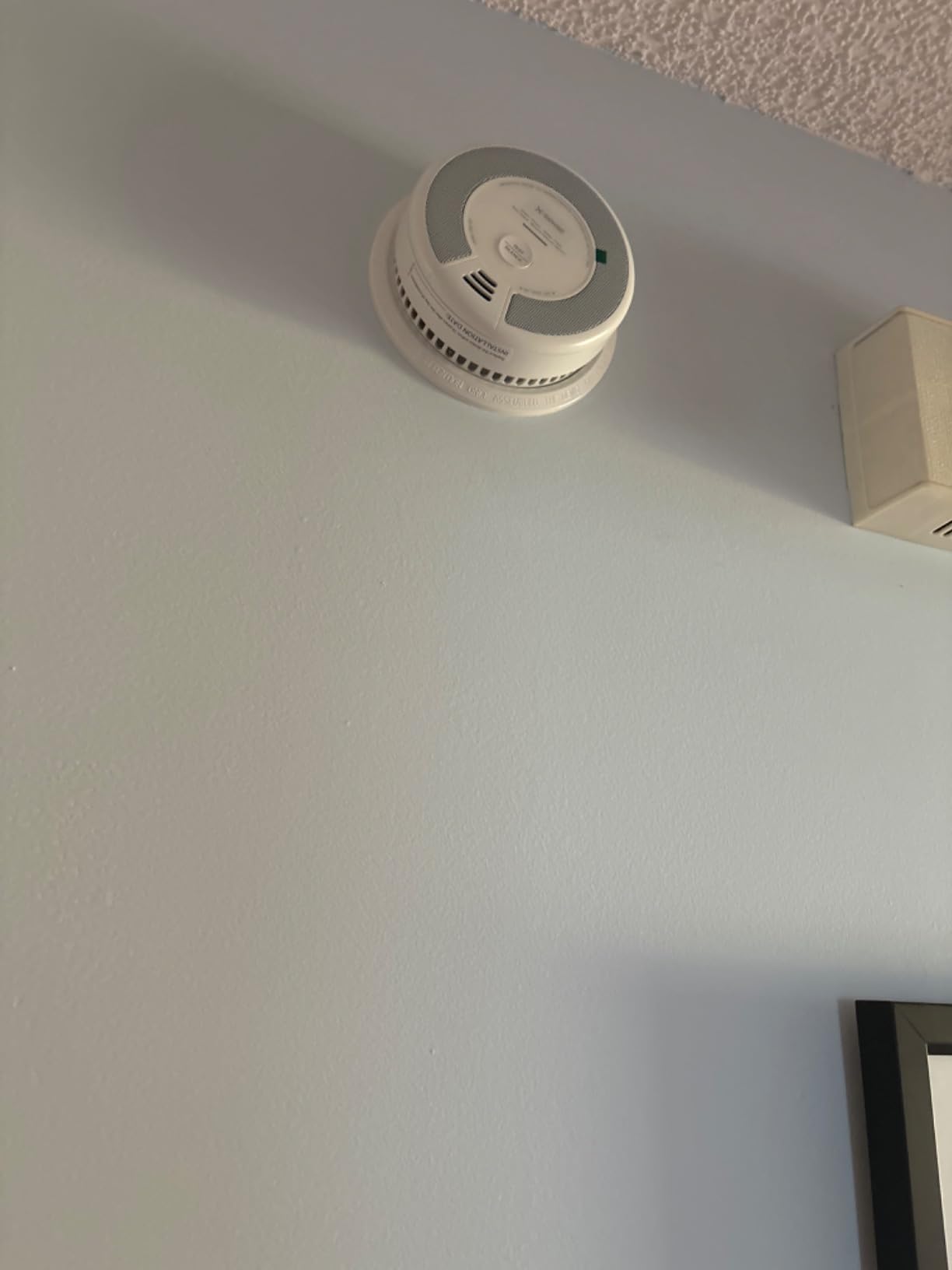
What to check before you install it
Confirm the bridge device you plan to pair supports this product line before you mount anything, since a hub that does not recognize the alarms means no phone notification at all. Check signal strength at the farthest mounting point rather than next to your router, because a detached garage or a basement bedroom is where the network usually gives out.
Also verify your local code. In many jurisdictions a battery-only pack can supplement hardwired interconnected alarms but cannot be the only coverage in a rental, and your insurer may have an opinion you should hear before you order.
Where it falls short
If your property has weak Wi-Fi and you do not want to run a hub, this pack is the wrong starting point. Buyers who want zero extra hardware should look at the Kidde unit later in this list, which alerts on its own.
The absence of a junction-box adapter bracket can also matter if you are replacing existing hardwired alarms and want a clean mount over the old box. On its own, without a bridge, this is a strong local alarm rather than a remote monitoring system.
2. X-Sense SC07-W 6-Pack Interconnected Smoke and CO Detector – Best for Large Properties
X-Sense Interconnected Smoke and CO Detector, SC07-W, 6-Pack
6 interconnected alarms
18-alarm network over 820 ft
10-year sealed battery
One-button network silence
Pros
- Largest supported network in the range at up to 18 linked alarms
- 820 ft range covers multiple floors and outbuildings
- Ten-year sealed lithium battery with no low-battery chirps
- Pressing silence on the triggering alarm mutes every linked alarm
- LCD display on each alarm for status reading
Cons
- No Wi-Fi or base station connection so remote alerts need another device
- Less review volume than the SC06-W pack
This is the SC06-W with more reach, and it is the version to pick if your vacation home is spread out. The manufacturer lists support for up to 18 X-Sense alarms in one network across as much as 820 feet, which is enough distance to link a main house, a basement bedroom, and a detached guest cottage.
At 4.4 stars across roughly 1,480 reviews it sits just behind our top pick, and the difference in practice comes down to scale. If you are covering a single rental under about 2,000 square feet, the extra network capacity is capacity you will never use.

The feature that reviewers mention most is the one-button silence. Press test and silence on the alarm that triggered and the entire linked network goes quiet, which matters enormously in a rental where a cooking-related nuisance alarm at 2 a.m. otherwise sets off six ceilings at once. Each alarm is 300 g, 5.7 inches square, and runs on a ten-year sealed lithium battery with a low-battery warning built in.
Like the pack above, the SC07-W is an RF interconnected model with no Wi-Fi and no base station connection. It is an excellent whole-home local alarm system, and it becomes a remote monitoring system only once you pair it with a bridge. There is no adapter bracket for mounting over a junction box.

How far does the network really reach
The 820 ft rating is an open-air figure, and building materials cut it down. In a three-story house with a finished basement and a detached structure, treat it as optimistic and test the pairing from the farthest intended mounting spot before fixing anything in place.
Verify that your chosen bridge supports this specific model. Some bridges are built for the SC06-W line only, and owners who assume compatibility have ended up with a system that alarms locally but never sends a notification.
Where it falls short
The single-alarm and small-pack options further down cover the same certification and sensor combination for less money if your property is compact. This pack earns its place on distance, not on detection, which is identical to the SC06-W.
It also carries less review volume than our top pick, so the long-term evidence base is thinner. Anyone who needs carbon monoxide monitoring in a specific location, such as near a garage or a wood stove, should check placement guidance before assuming a uniform six-alarm layout covers it.
3. Kidde Smart Smoke and CO Detector with Ring – Best Phone Alerts Without a Hub
Kidde Smart Smoke & CO Detector with Ring, AA Battery, RGCUDR-RW
Smoke and CO in one unit
Ring app alerts with no monthly fee
Runs on two AA batteries
Wire-free interconnect
Pros
- Sends smoke
- CO and low-battery alerts to the Ring app with no monthly subscription
- Only model in this lineup that alerts by itself without a separate hub or bridge
- Wire-free interconnectivity so every Kidde alarm sounds together
- Improved sensing cuts cooking-related nuisance alarms
- AA batteries avoid discarding a sealed lithium unit later
Cons
- AA batteries need periodic replacement
- Alexa support is limited to notifications rather than deeper automation
- Optional 24/7 professional monitoring needs a paid Ring plan
This is the answer for owners who want a phone alert and refuse to add hub hardware. It is the only unit in this roundup that pushes real-time notifications to the Ring app without a separate bridge, gateway, or base station, which removes the single most common failure point in DIY smart alarm setups.
It covers both hazards in one body, with dual smoke and carbon monoxide detection and low-level CO mobile alerts. It also interconnects wire-free across all Kidde alarms in the home, so an existing Kidde system in your primary residence can share that design language without rewiring anything.

Kidde claims detection more than 25 percent faster than a leading competitor based on internal testing, and the sensor revision is tuned to reduce cooking-related nuisance alarms compared with earlier Kidde generations. For a short-term rental, that second point is the one that matters, because a guest who is woken by a false alarm at 2 a.m. has a legitimate complaint and a bad review.
The trade-off is power. Two included AA alkaline batteries mean you will be replacing cells during a long vacancy, which is exactly the maintenance trip a sealed lithium cell is meant to remove. If you already send someone to the property monthly, this is a manageable chore. If you truly never visit, weigh it against the sealed options.
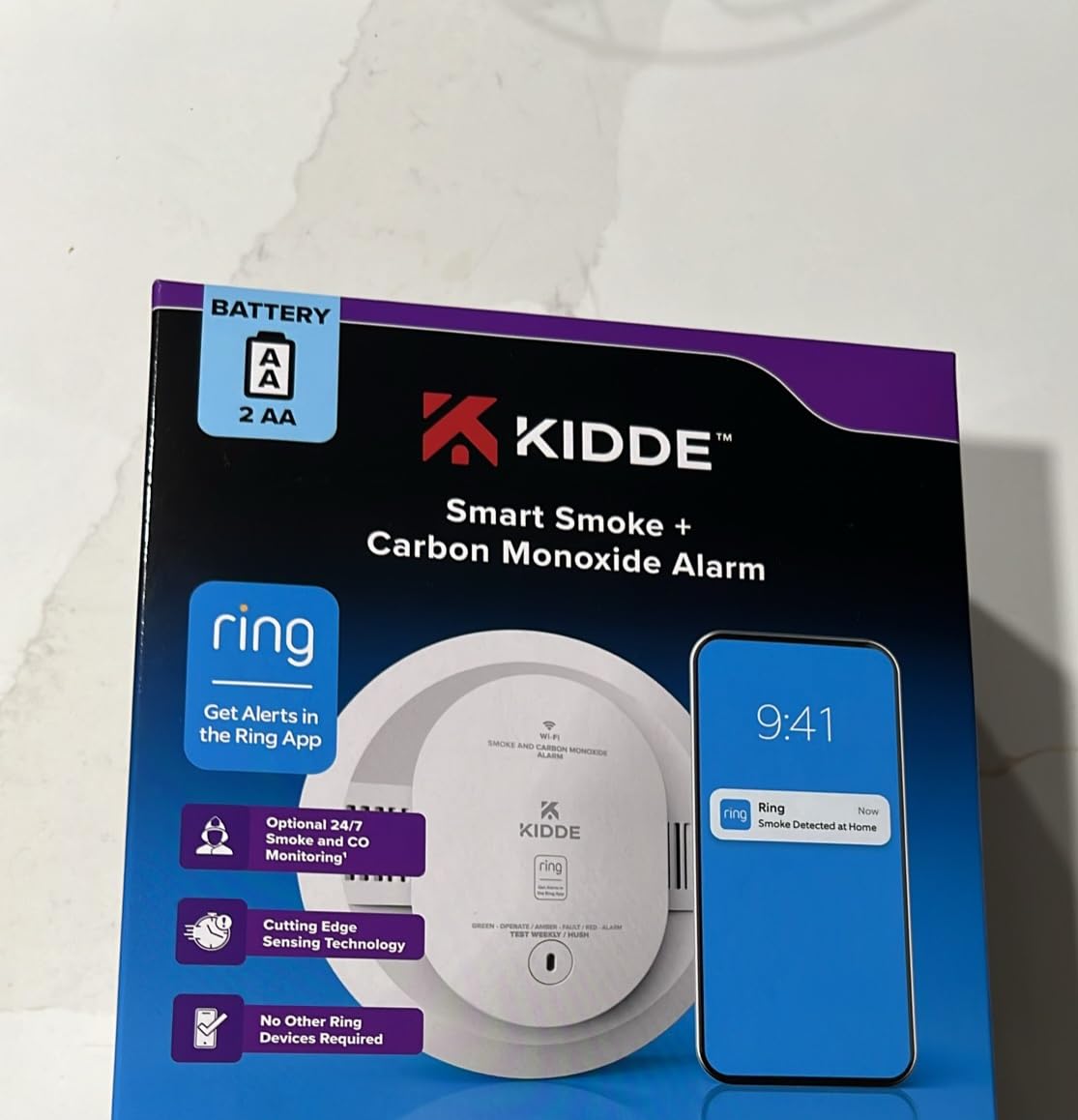
What the subscription question actually looks like
Notification to the app works without paying anything, which is what most owners need. A separate optional Ring subscription adds 24/7 professional monitoring if you want a monitoring centre to dispatch emergency services for you, and the professionalhosts community consistently frames that as a business decision rather than a requirement.
Alexa compatibility is notification-only, so do not expect the alarm to participate in broader automations. For a rental, that is usually plenty, since the critical action is a phone call rather than a lighting scene.
Where it falls short
Two AA batteries in a house that sits empty between stays is the wrong trade. The report also notes that over 25 percent faster detection is an internal test claim, so treat it as a vendor figure rather than an independent result.
At 426 reviews the feedback base is still growing. Anyone who needs a sealed 10-year battery to avoid the battery trip should look at the X-Sense packs, and anyone who needs carbon monoxide alerts while away still has to accept that a Ring subscription is the only route to a human dispatch.
4. Zooz ZEN55 Z-Wave Long Range DC Signal Sensor – Best for Homes That Already Have Hardwired Alarms
Zooz 800 Series Z-Wave Long Range DC Signal Sensor ZEN55 | for Use with Analog Smoke & CO Detectors Only | Z-Wave Hub Required (Sold Separately)
Wires to existing smoke and CO detectors
Z-Wave Long Range with repeater
Optional 120V relay
Hub required
Pros
- Highest rating in the lineup at 4.9 stars with 96 percent five-star reviews
- Adds remote notification to alarms you already own instead of replacing them
- Works with Home Assistant
- Hubitat
- Ezlo and SmartThings
- Supports Z-Wave Long Range and repeats the signal to keep the mesh stable
- Optional 120V relay can drive an extra light or siren on alert
Cons
- Requires a separate Z-Wave hub and a supported advanced device
- Wiring needed to the existing detector DC signal terminal
- Explicitly not a life-safety component so it adds monitoring not protection
- SmartThings support needs a custom edge driver
Most vacation homes built before the last few decades already have code-required hardwired interconnected alarms. If that describes yours, this module is the cheapest way to make an existing system call your phone without pulling out working hardware.
It wires to the DC signal output on your existing smoke and CO detectors and reports that signal over Z-Wave, including Z-Wave Long Range where the hub and automation software allow it. A built-in signal repeater keeps the mesh stable across a property where the router sits far from the bedrooms.
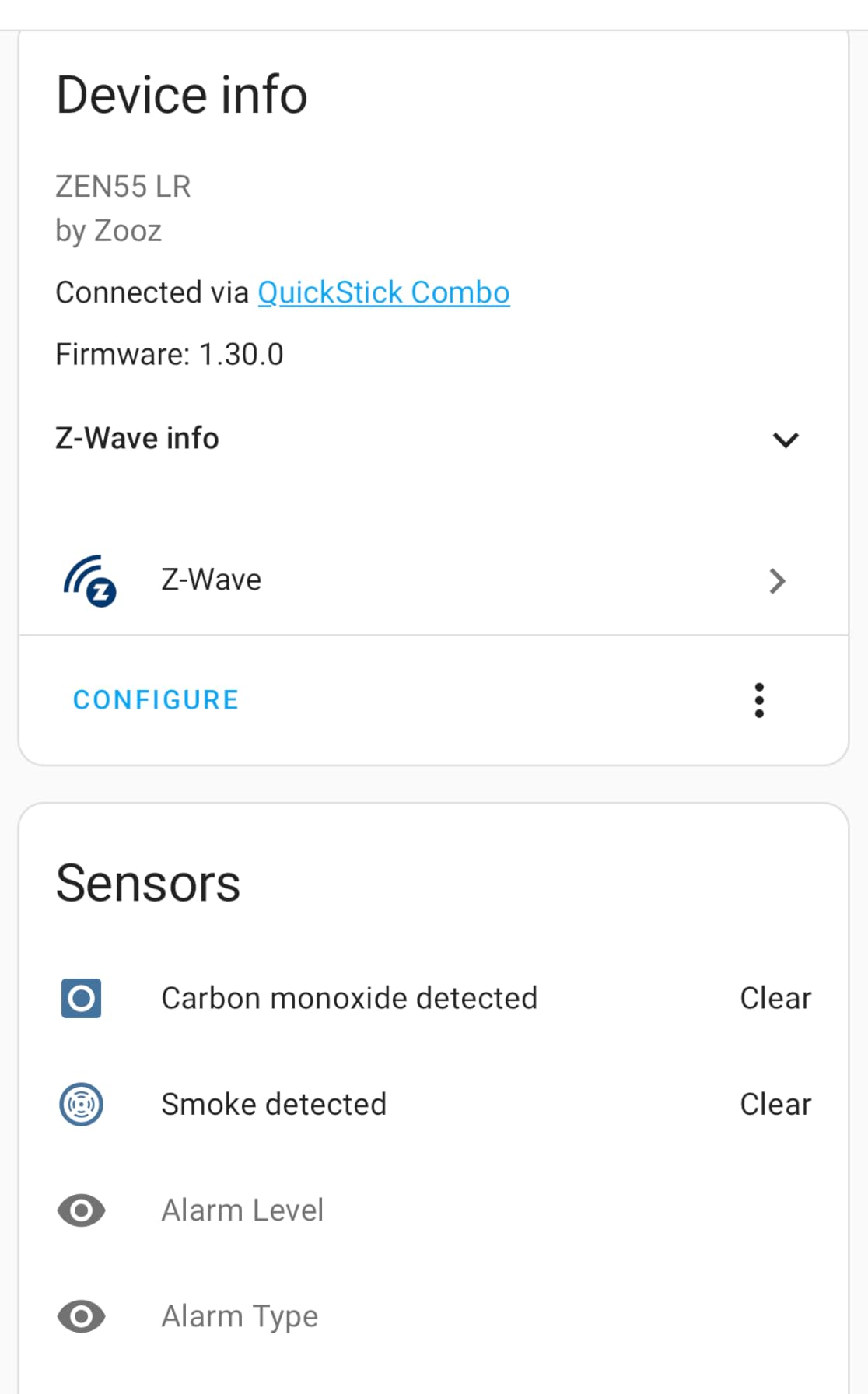
At 4.9 stars across 60 reviews with 96 percent five-star and no one-star share, it carries the strongest sentiment in the group. The audience is narrow and self-selecting, mostly existing Z-Wave owners who want monitoring without a hardware swap. Owners on r/homeautomation describe running multiple Z-Wave alarm devices for hub integration without trouble, which is the same pattern this module supports.
An optional 120 V relay lets you trigger an extra light or siren on alert, useful in a property where you want a visible cue outside the bedrooms. Pigtail wires are included, and the manufacturer offers a five-year warranty once registered plus lifetime US-based support.
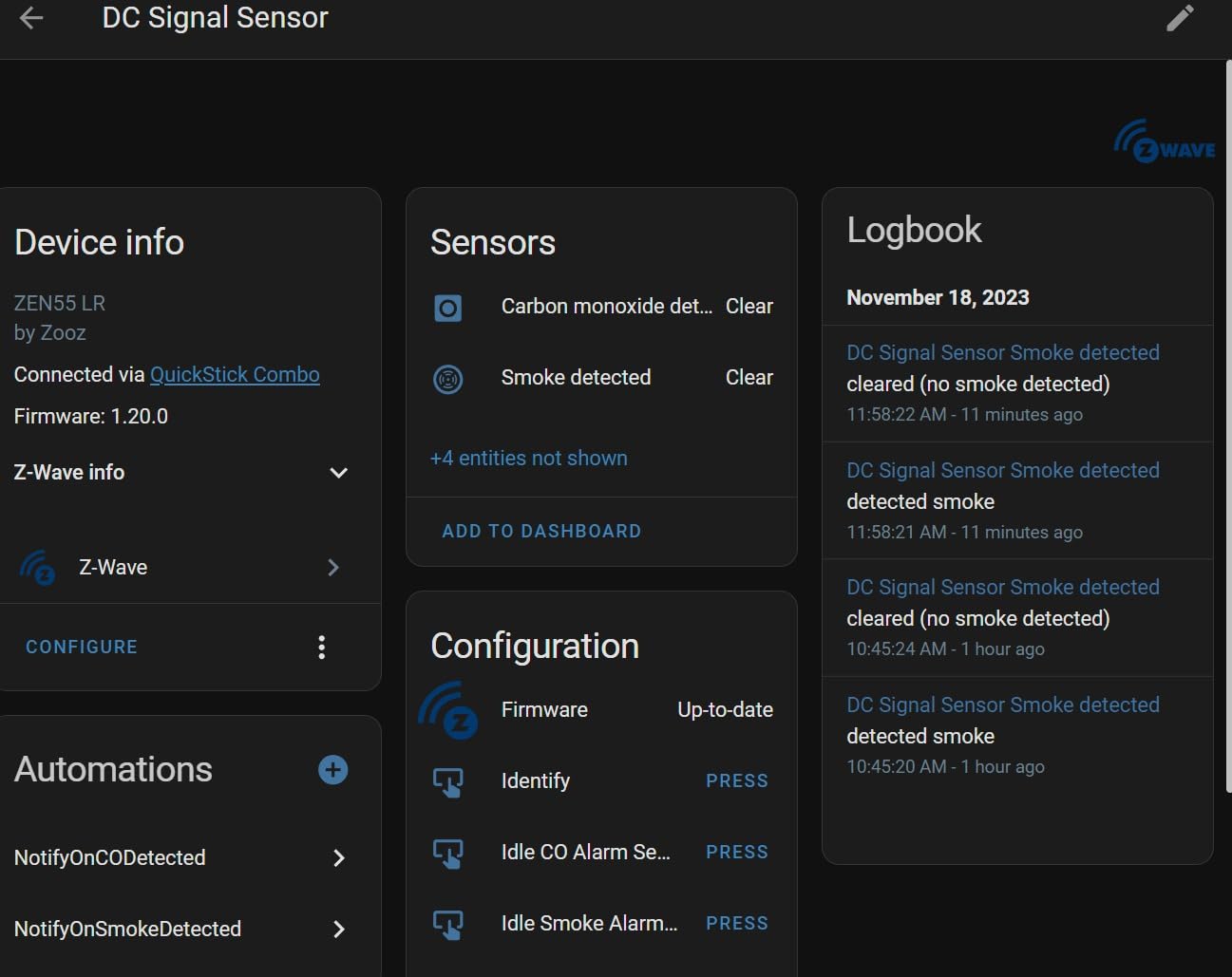
Check hub compatibility before you buy
Tested setups include Z-Box Hub, Hubitat with a custom driver, Home Assistant using Z-Wave JS, and Ezlo. SmartThings requires a custom edge driver obtained from Zooz support, so check that before ordering if SmartThings is your platform, or you will own an expensive paperweight.
This also requires wiring access to the detector signal terminal. In a finished ceiling that means opening a junction box, which pushes this toward an electrician rather than a weekend project for most owners.
Where it falls short
The manufacturer states plainly that this is not a life-safety component and not part of a life-safety system. It adds monitoring to a system that already provides protection, and it replaces nothing.
With 60 reviews the long-term data is thinner than the top pick, and the whole category assumes you already run Z-Wave. If you do not, a Wi-Fi or gateway-based alarm is a smaller detour than learning a new radio protocol.
5. eufy Security Smoke Alarm E10 – Best Compact Design for Aesthetics
eufy Security Smoke Alarm E10, Smoke Detector, Ultra-Compact 70 mm Design
70 mm ultra-compact body
UL 217 10th edition compliant
Five-year sealed lithium battery
Up to 656 ft to HomeBase
Pros
- Ultra-compact 70 mm unit roughly one-third the size of standard detectors
- App alerts through the eufy ecosystem you may already run
- Five-year sealed lithium battery
- Long 656 ft open-air range back to HomeBase
- UL 217 10th edition compliant detection tuned to cut false alarms
Cons
- Requires a separate eufy HomeBase hub that is not included
- Smoke only with no carbon monoxide sensing
- HomeBase firmware must be recent for the E10 to work
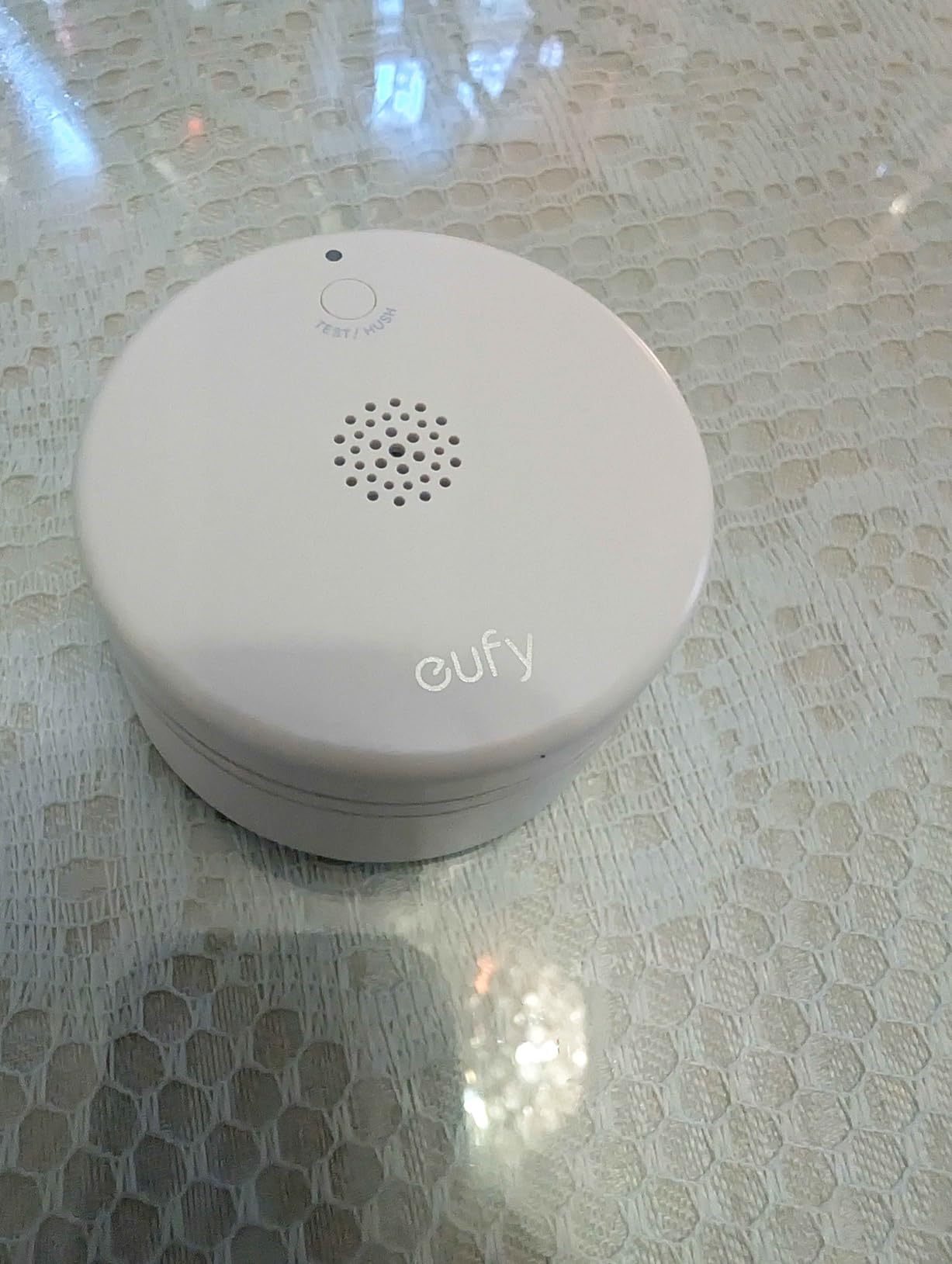
The reason to choose the E10 is physical. At 2.75 inches in diameter and 1.08 inches tall, weighing 3.52 ounces, it is roughly a third of the footprint of a traditional detector, and owners consistently mention that it matters in a bedroom or hallway ceiling you have to look at.
Detection complies with the UL 217 10th edition, and the manufacturer states the tuning targets detection accuracy and false-alarm avoidance. Communication runs to a eufy HomeBase hub up to 656 feet in open air, with alerts landing in an app that many owners already use for cameras, locks, and doorbells.
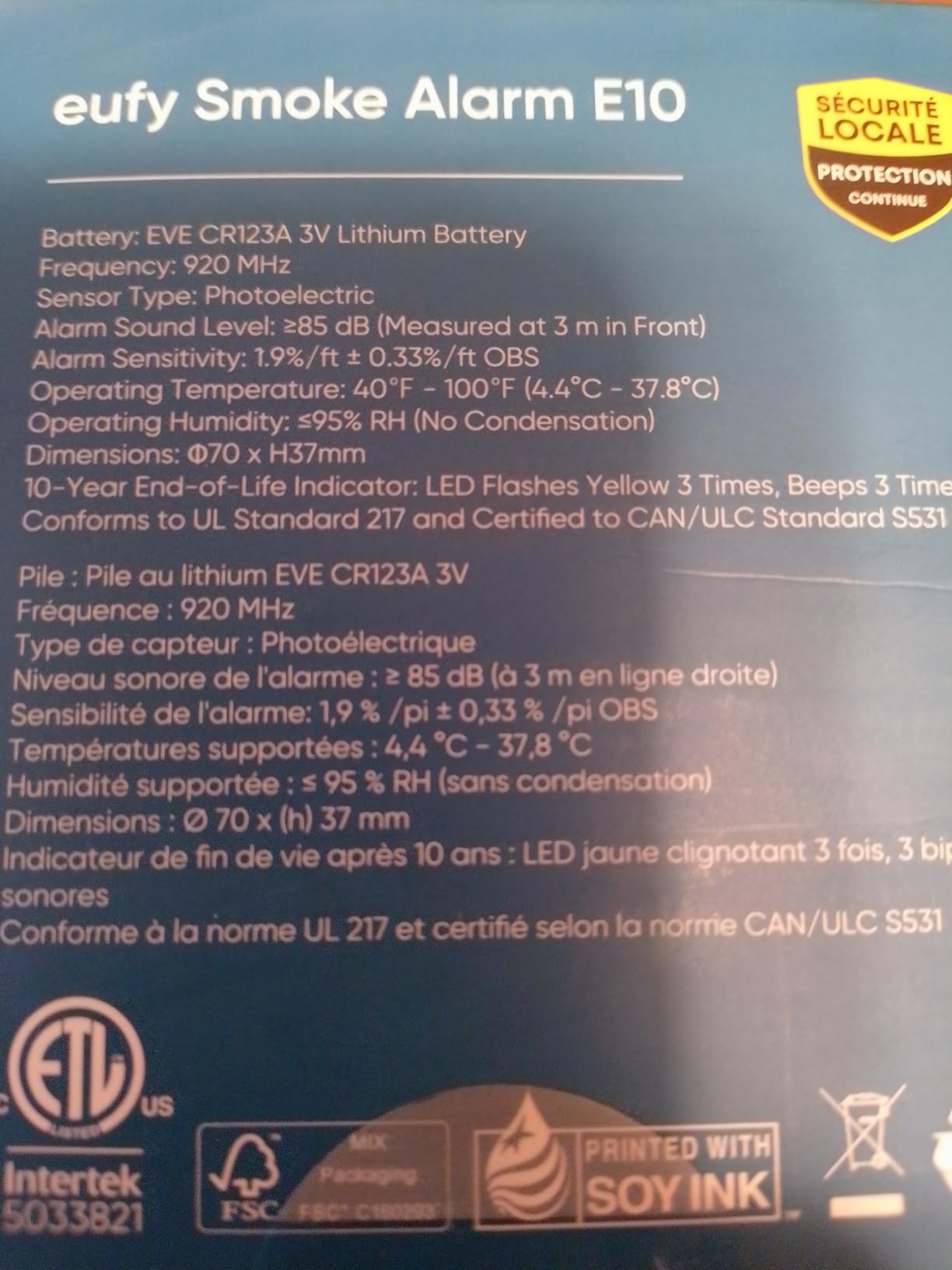
Power is a sealed lithium cell rated at five years. That is shorter than the ten-year cells in the X-Sense packs, and it is the main gap you should accept knowingly if you pick this unit for its size.
Compatibility is the second gap. The E10 requires a HomeBase Mini on firmware 4.0.5.2 or later, HomeBase 2 on 3.4.1.2 or later for post-2021 units, HomeBase 3 on 3.7.2.6 or later, or HomeBase Pro on 4.1.4.3 or later. Check your hub model and firmware before ordering six of them, because an outdated base station means they simply will not work.
When the small size is worth the hub
It is worth it if you already run eufy security gear and the hub is on hand, since the alarm then drops into an app you use daily instead of a second platform. It is also worth it in visible locations where a standard detector looks out of place.
Check the hub range for your property before committing. A 656-foot open-air figure has to cover the distance from hub to the farthest bedroom ceiling, and metal-roof or masonry rural builds can defeat it.
Where it falls short
There is no carbon monoxide sensor, so a home with a fuel-burning appliance, wood stove, or attached garage still needs a separate CO alarm, and many code environments require CO coverage in specific rooms.
The hub is not included, and smoke-only coverage means you are pairing it with other devices anyway. If carbon monoxide detection matters to your insurer or your local code, read this product as a smoke solution rather than a life-safety complete package.
6. Heiman S1-R 3-Pack Interconnected Smoke Alarm – Best Value
Heiman Smoke Detector, Wireless Interconnected Smoke Alarm for Home, 3 Pack
3 interconnected alarms
Link in about 30 seconds
Dual-beam photoelectric sensing
UL 217 10th edition
Pros
- Links three alarms in about 30 seconds and they all alarm within seconds of the first trigger
- Compact 70 mm design less obvious on a ceiling than a standard detector
- Dual-beam photoelectric sensing resists bathroom steam and cooking vapour false alarms
- Magnetic adhesive pads or screws mean no wiring and easy battery changes
- You can add more alarms later to grow the system
Cons
- No app or Wi-Fi connection at all so it cannot notify you while you are away
- Smoke only with no carbon monoxide sensing
- A minority of buyers report sealed batteries failing well before ten years
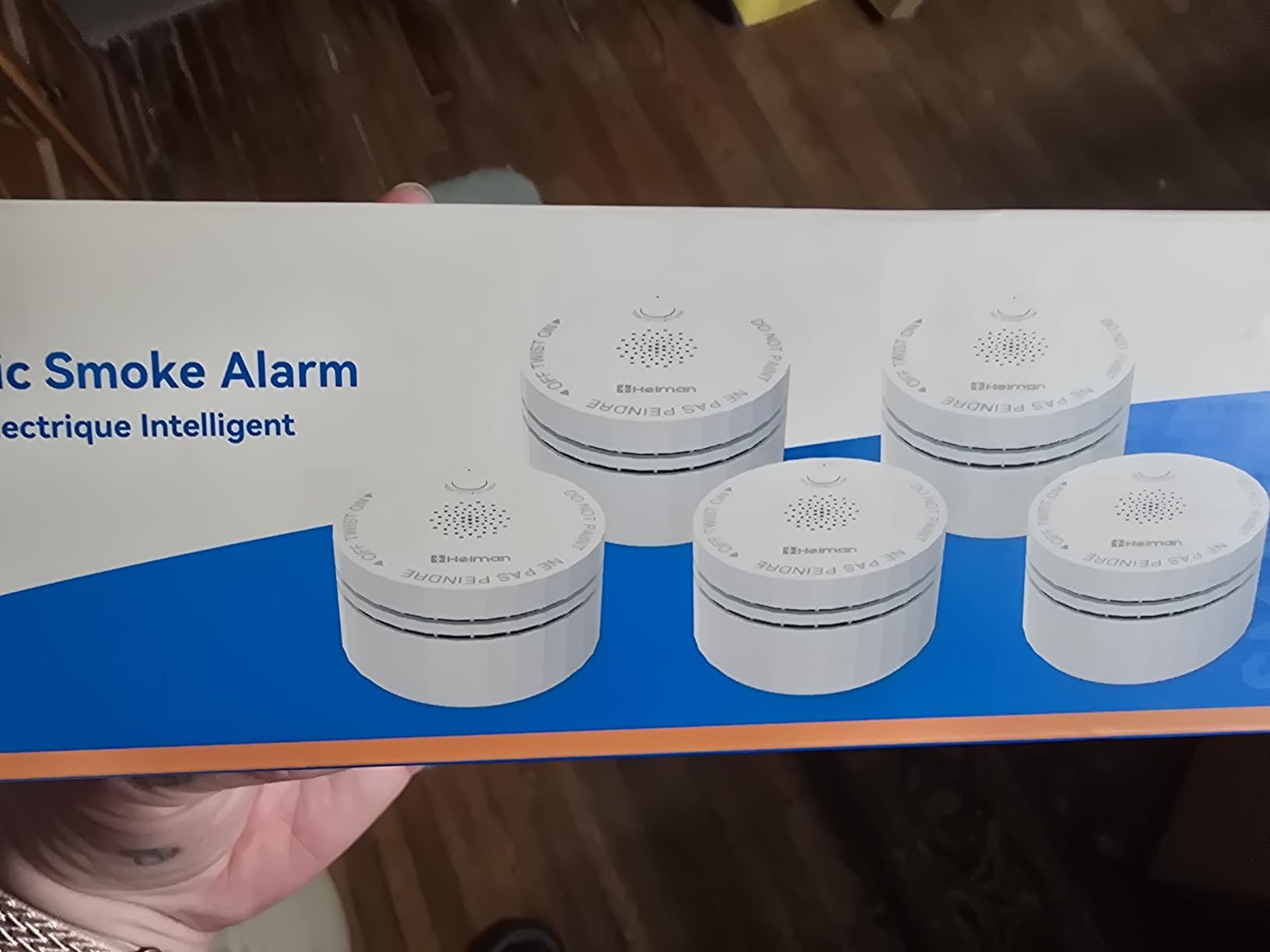
This is the cheapest way to get a code-respectful interconnected alarm network into a small property, and it performs well on the failure mode that ruins rental experiences. Owners report pairing three alarms in about 30 seconds and hearing the cascade follow the first trigger within seconds.
The sensing is dual-beam photoelectric, tuned for slow-smouldering smoke, and reviewers specifically note that bathroom steam and cooking vapour false alarms common with cheaper detectors are largely absent. The housing is UL94 V-0 rated flame-retardant ABS and PC, with an 85 dB buzzer at 10 feet, LED indicators, one-touch test, and a 10-minute silence.
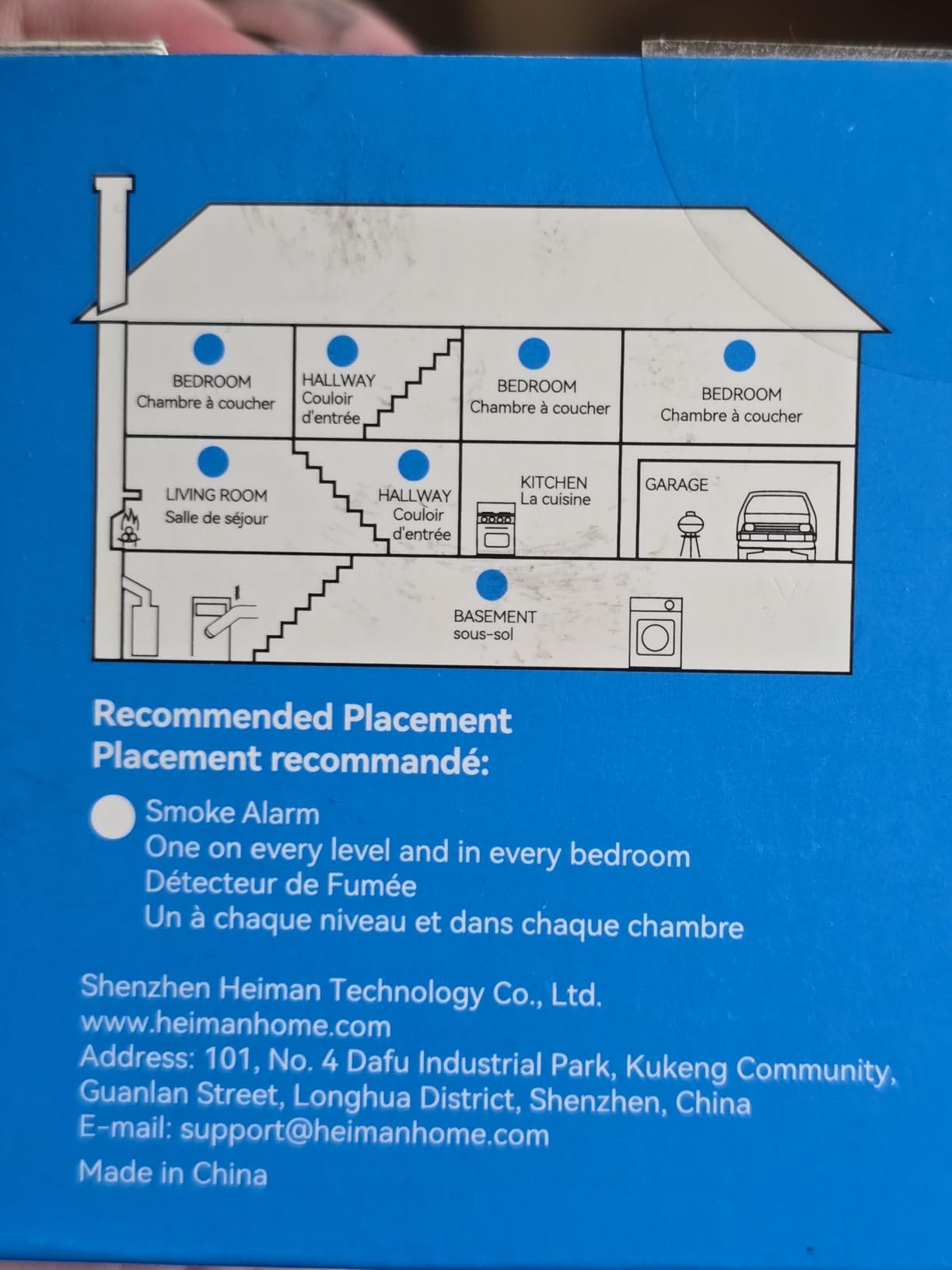
Mounting is tool-free magnetic pads or standard screws, and because there is no wiring, it also keeps working through a power outage on battery alone. Each alarm is 3.52 ounces and 2.75 inches in diameter, with interconnection reaching 656 feet in open areas. You can expand the system later with more of the same units.
The catch is the one that decides this product for you: there is no app and no Wi-Fi connection, so it cannot notify you from anywhere. It is a local alarm system only, and for a property that sits empty, that is a real limit.
How the ten-year battery claim holds up
The product is sold on a 10-year product life with battery operation, and most owners report no battery maintenance. A minority of buyers report sealed cells dying well before the advertised ten years, including one detailed review describing failures inside a year and another after about two years.
That complaint is the main reason we did not push this higher in the ranking. For a property nobody visits, a sealed cell that fails quietly two years in is exactly the failure mode that leaves you unprotected with no warning.
Where it falls short
Smoke only, with no carbon monoxide sensing, so it does not cover a home with fuel-burning appliances. And without any app layer, it cannot be the phone-notifying part of your setup.
Pairing this with the gateway bundle later in the list gives you the same sensing with a path to alerts, which is why the two Heiman options read very differently despite sharing a model number.
7. Heiman S1-R 6-Pack with Gateway – Best All-in-One Kit for Larger Rentals
Heiman Smart Wireless Interconnected Smoke Detector, 6-Pack + Gateway, S1-R
6 alarms plus a gateway
2.4GHz Wi-Fi app and email alerts
10-year CR123A lithium
UL 217 10th edition
Pros
- Six alarms plus a gateway in one kit
- Gateway required for phone and email alerts and pairs over 2.4GHz Wi-Fi
- Ten-year CR123A lithium battery removes annual battery changes
- Dual-beam photoelectric sensing filters cooking vapour and dust to cut false alarms
- Gateway integrates with Home Assistant
- IFTTT
- Google Home and SmartThings
- Tool-free magnetic pads make reinstallation easy
Cons
- Gateway only works on 2.4GHz Wi-Fi and not 5GHz
- Smoke detection only with no carbon monoxide sensor
- Smallest review base in the lineup so long-term data is thin
- Hub setup required per platform for automations
This is the only kit in the roundup that bundles the alarms and the gateway in one box, and that packaging decision matters when you are covering a whole rental. You get six interconnected smoke detectors, one smart gateway, six mounting kits, and the manual, with local interconnection working even when the gateway is offline.
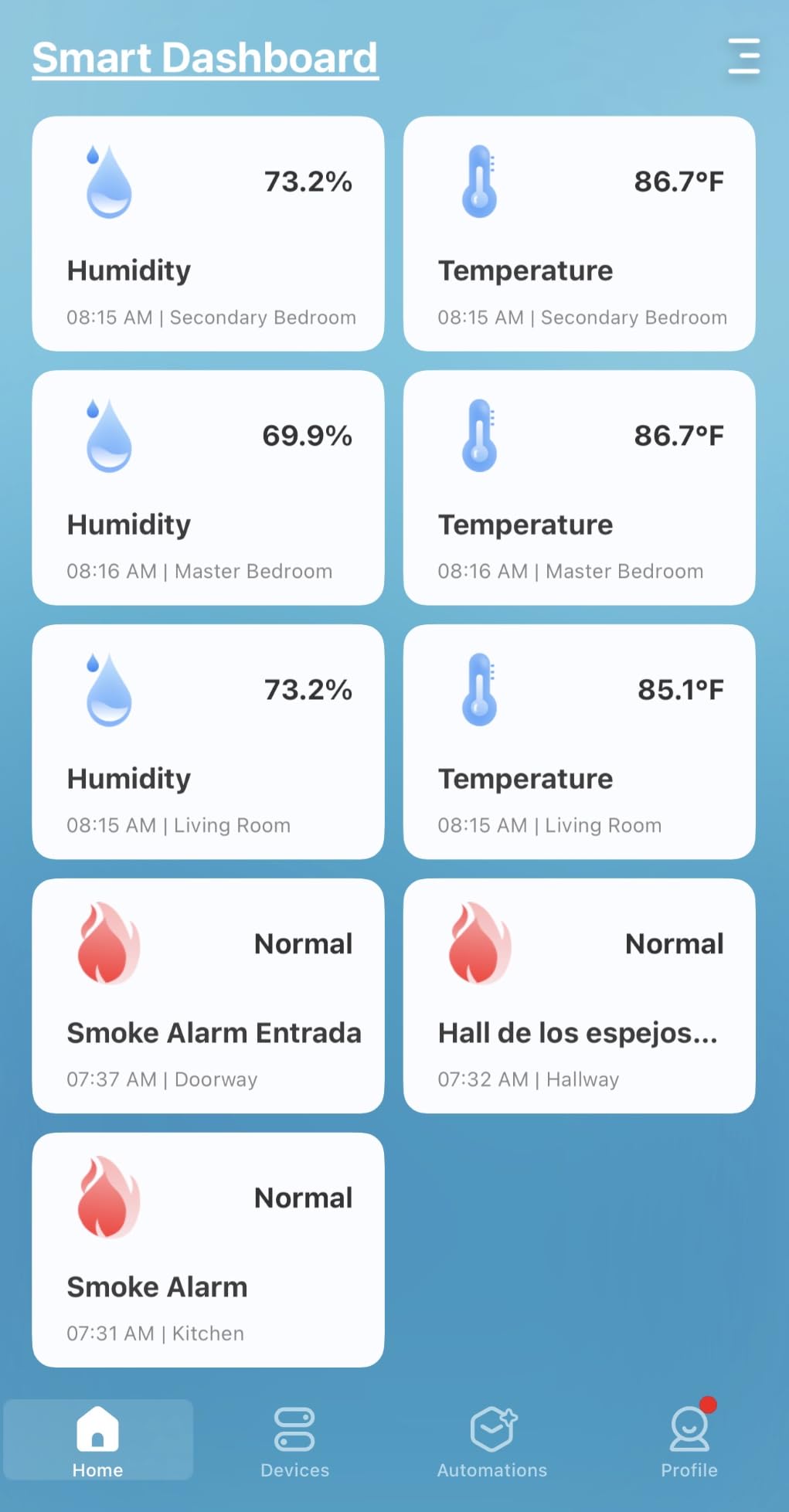
The gateway adds app and email alerts over 2.4GHz Wi-Fi and integrates with Home Assistant, IFTTT, Google Home, and SmartThings. Local interconnection supports up to 24 wireless interlinked smoke detectors per group, which comfortably covers a multi-property or multi-wing setup.
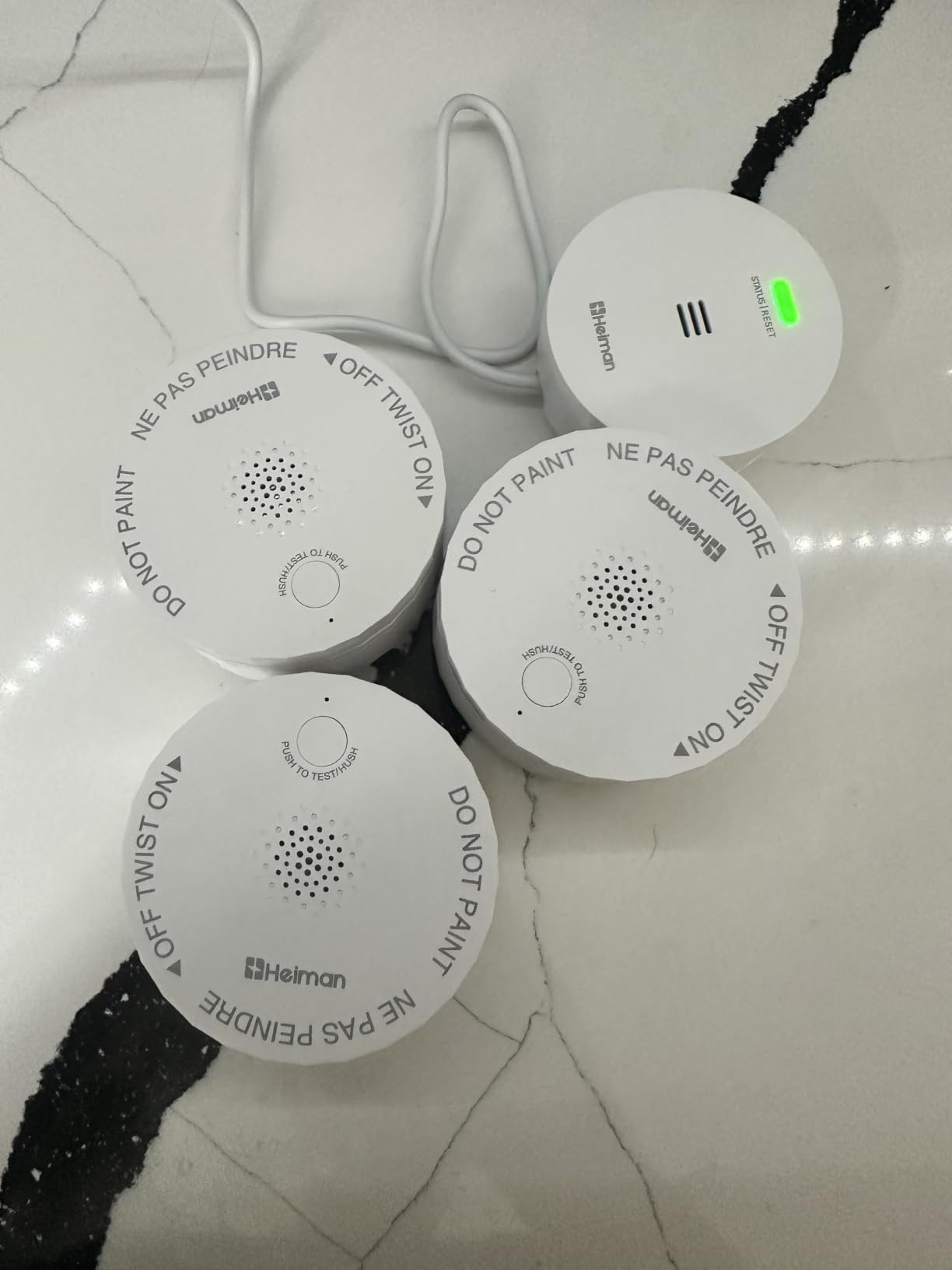
Power is a 10-year CR123A lithium battery, and each alarm includes low-battery chirps, fault alerts, and life-end warnings, which is the kind of self-reporting that matters in an unattended building. The dual-beam photoelectric sensor is specified to reduce false alarms from cooking and dust, and the 85 dB siren is paired with flashing LED indicators.
Form factor is the same Red Dot award-winning 70 mm by 37 mm body used in the three-pack, at 3.52 ounces, rated for operating humidity up to 95 percent non-condensing, with tool-free magnetic mounting or standard hardware. A 10-year limited warranty covers non-artificial damage.
The 2.4GHz limitation and how to work around it
The gateway cannot join a 5GHz network. If your router broadcasts both bands, enable 2.4GHz and pair there. If the router is 5GHz only, either enable a 2.4GHz SSID on it or use a router in dual-band mode near the property.
This is the kind of weak-network objection that host communities raise repeatedly for remote cabins. Check your router settings before ordering, because the gateway is not swappable for a different model.
Where it falls short
With 30 reviews it is the least-proven product here, so long-term reliability data is thin and the one-star share is larger than in better-reviewed kits. Buying six detectors on 30 reviews is a bigger commitment than buying one.
It is also smoke only. If your property needs carbon monoxide coverage near a garage, hearth, or fuel-burning appliance, budget for a separate CO alarm, and confirm whether your local code expects interconnected CO units rather than standalone devices.
8. X-Sense XP0H-WN Wireless Combination Smoke and CO Detector – Best Single-Room Starter
X-Sense Wireless Combination Smoke and CO Detector, XP0H-WN, 1-Pack
Smoke and CO in one unit
10-year sealed lithium battery
LCD shows CO level and status
ETL listed UL 217 and UL 2034
Pros
- Single unit covers both smoke and carbon monoxide with photoelectric and electrochemical sensors
- Ten-year sealed lithium battery removes annual battery changes
- Large LCD shows real-time CO level
- battery level and working status
- ETL listed to UL 217 and UL 2034
- No rewiring needed and mounts on wall or ceiling with the included bracket
Cons
- RF interconnection only with no Wi-Fi or hub connection of its own
- Needs at least one other linked unit for whole-home alerts
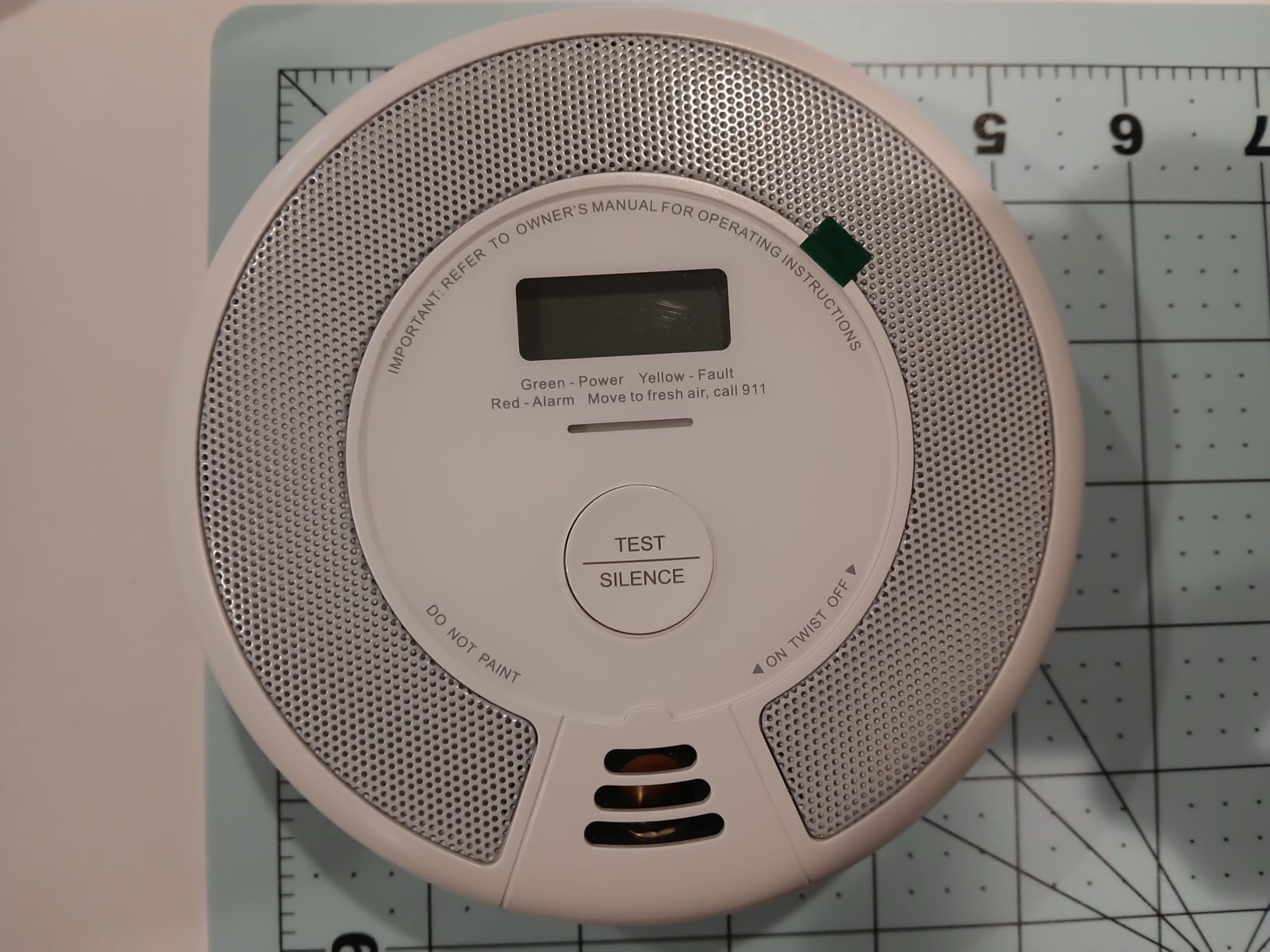
If you are outfitting a single cottage, a guest suite, or one floor, this is the sensible unit to start with rather than a six-pack. One device covers both smoke and carbon monoxide through a photoelectric sensor and an electrochemical CO sensor, and the ten-year sealed lithium battery fits an unattended property.
The feature owners single out is the large LCD, which shows real-time CO level, battery level, and working status. On a device in a closed-up house, seeing a rising CO number in the app or on the panel before anything sounds is genuinely useful information that most conventional detectors never give you.
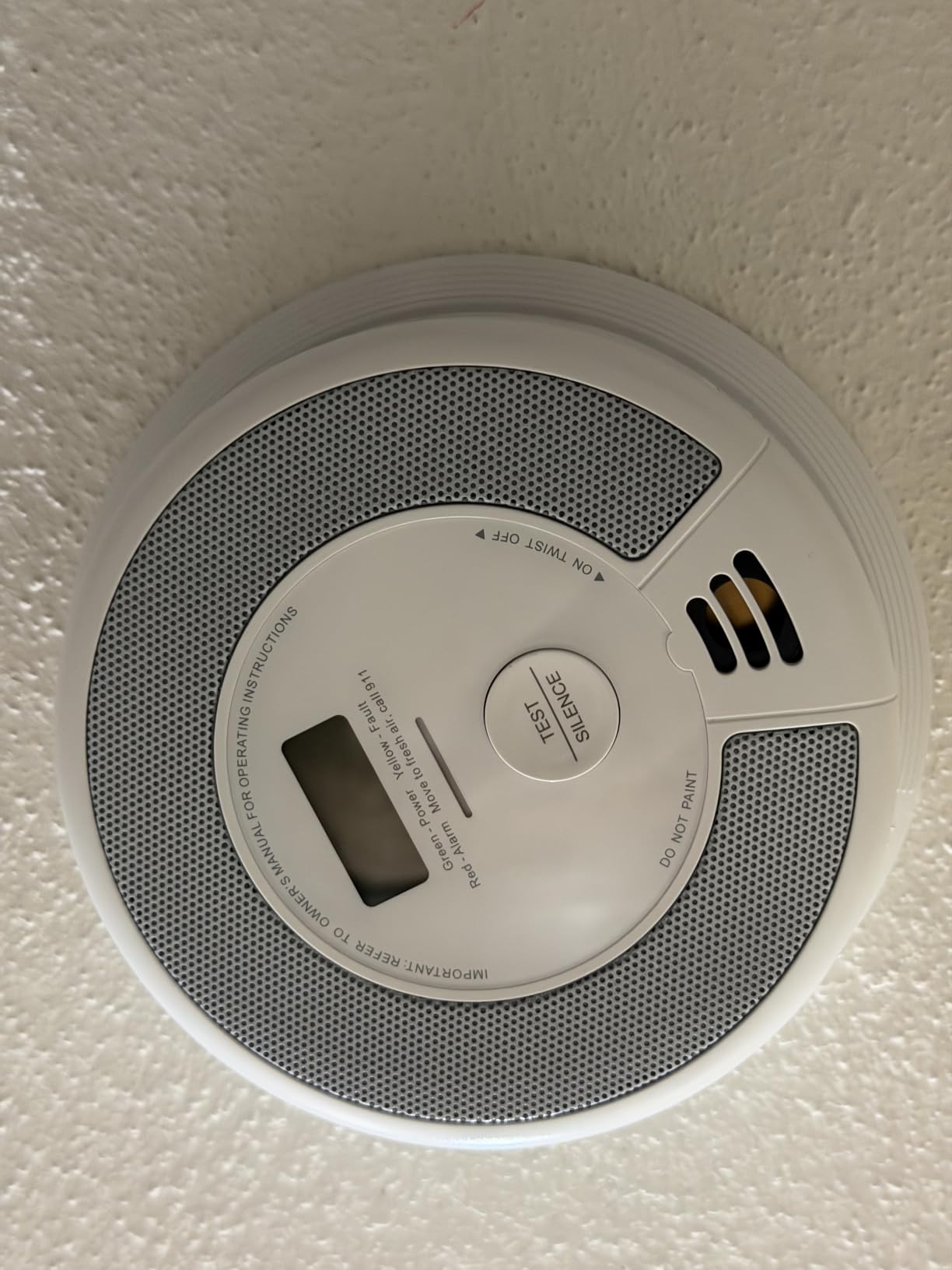
The alarm is ETL listed to UL 217 and UL 2034, sounds at 85 dB, and wires to nothing. Mounting uses a large 5.7-inch bracket with three screws and anchor plugs included, and the housing is heat-resistant PC material.
What it is not is connected. As an RF interconnected model with no Wi-Fi of its own, it cannot send phone notifications without a separate bridge, so on its own it is a local alarm with an unusually good display. Owners also report a 12 percent one-star share, higher than the multi-packs, so expect some variance in experience.
When one unit is genuinely enough
A single XP0H-WN is right for a single room with an adjacent sleeping area, a small guest cottage, or a property where you intend to buy more of the same model later. The product is also available in single, three, and six configurations in the wider range, so growing the system is straightforward.
Because it interconnects over RF, adding a second unit later is what gives you whole-home alerting. Plan the network rather than installing one and hoping.
Where it falls short
The lack of any Wi-Fi or hub connection means this device cannot be the remote monitoring layer. If nobody will be inside the property, you still need something else to tell you, which is the whole reason this roundup exists.
At 84 reviews the evidence base is small, and the 12 percent one-star group is worth noting. Manufacturer support is solid, with a 60-day money-back guarantee, a five-year quality warranty, and lifetime technical support, which partly offsets the thinner review history.
9. SimpliSafe Smoke and Carbon Monoxide Alarm Listener – Best for Keeping Your Existing Alarms
SimpliSafe Smoke & Carbon Monoxide Alarm Listener
Listens for certified alarm patterns
Tells smoke apart from CO
One listener covers a hardwired home
Needs a monitoring plan for dispatch
Pros
- Only device needed when hardwired detectors are already installed
- One listener covers a home with hardwired detectors
- UL certified to tell a smoke alarm apart from a CO alarm
- Works with existing third-party detectors including Nest Protect
- Some homeowners report an insurance discount from the added central monitoring
Cons
- Not a detector itself but a listening module that adds monitoring
- Emergency dispatch through monitoring agents requires a paid professional monitoring plan
- The included CR123A is an unbranded cell that has failed in months for some buyers
- No way to silence a low-battery condition on the central unit
- Triggers the monitoring centre whenever any nearby detector sounds including nuisance alarms
This module takes the opposite approach from the rest of the list. It contains no sensor and detects nothing. It listens for the standardized alarm pattern of certified smoke and CO detectors, is UL certified to distinguish a smoke alarm signal from a carbon monoxide alarm signal, and relays the right one to a base station.
If your vacation home already has hardwired interconnected alarms, one listener can cover the entire home rather than one per location, which is the clearest cost advantage in this roundup. It also works alongside existing third-party detectors, including Nest Protect, so you avoid the common mistake of replacing good hardware with lower-rated smart units.
The device is 4.09 by 1.54 by 4.17 inches, battery powered on a CR123A cell rated at three years, and mounts within 4 inches of an existing detector when you are not relying on a fully hardwired interconnected system. App status and instant notifications work while you are home or away.
One reviewer notes an insurance discount for having alarms signal a central monitoring service, which is worth asking your insurer about directly, since requirements and discounts vary by policy and state.
The nuisance alarm trade-off you should know about
This is the most important consideration in this section. A nuisance alarm from any nearby detector automatically triggers a monitoring centre call and potentially fire department dispatch, and there is no way to suppress it. In a short-term rental where guests cook, that is a live risk rather than a theoretical one.
Professional dispatch also requires a paid professional monitoring plan, so the device alone is monitoring without response.
Where it falls short
The included CR123A is an unbranded cell that some buyers report failing within months, and a low-battery condition cannot be silenced from the central unit. Both are minor individually and annoying during an unattended-property visit.
At 34 reviews this is a thin evidence base, and it does nothing at all for a property with no existing detectors. If you are starting from bare ceilings, choose an actual alarm instead.
What to Match to Your Vacation Home
Start with the question nobody asks: does the alarm need to reach a phone at all? If your property is a primary residence with someone home, a conventional interconnected alarm does the safety job. If it is a vacation home, a short-term rental, or a second home, notification is the entire reason to spend more.
Direct-notify versus hub-based. Wi-Fi units like the Kidde alert on their own with no extra hardware. Gateway-based units like the eufy E10 or the Heiman bundle need a hub, which adds cost and another failure point. Bridge-based units bolt onto alarms you already own. Z-Wave modules like the Zooz ZEN55 report existing hardwired systems. Choose based on what is already in the property, not on features you might use someday.
Power for long vacancy. A sealed 10-year lithium cell is the default host expectation, and hosts cite exactly this when explaining why they want one: nobody wants to handle chipping batteries between stays. Replaceable AA batteries mean a trip to a house nobody is living in. The Heiman three-pack carries early reports of sealed cells dying in under two years, so treat the ten-year claim on any pack as a claim to verify against your own monitoring rather than a promise.
Sensor type. Photoelectric sensors respond well to slow, smouldering fires, which is the pattern in most residential fires. Ionization sensors react faster to open flame. Dual-sensor units cover more ground but can carry more nuisance alarms. Dual-beam photoelectric designs, used in the Heiman line, are specified to filter cooking vapour and dust. Every product here is UL 217 listed; the smoke and CO combos are also certified to UL 2034.
Add-on versus replacement. This is the decision most owners get wrong. Many jurisdictions still require hardwired, interconnected alarms in a rental regardless of what you install, and your insurer may add its own condition. A smart alarm is frequently an addition on top of code-required hardware, not a substitute for it. Check with your local authority having jurisdiction and read your policy before ordering. Our guide to personal safety alarms for seniors covers the monitoring-plus-notification layer for people living alone, which is the same buying logic applied to a different resident.
Nuisance alarms and guests. The dominant complaint across host communities is a guest-triggered false alarm, and the second is a guest who disables the detector to make it stop. Cooking steam and humidity are the usual triggers. Choose units with sensing tuned against cooking vapour, mount alarms away from the kitchen and bathroom doors per NFPA 72 guidance, and place them where a guest cannot reach a battery or press a silence hush repeatedly without someone noticing.
Weak signal. Metal roofs, rural cabins, and thick masonry cut range far more than the open-air figures manufacturers publish. Pair the alarm at the farthest intended mounting position before you commit, enable 2.4GHz on dual-band routers, and expect to need an extender in a building with the router in a main-floor office.
Before every guest turn. Press the test button on each alarm, confirm the local siren is audible in the bedrooms, confirm the phone alert reached your handset rather than sitting in a notification tray, and check the battery or end-of-life status. That three-minute routine catches more real problems than any spec on this page.
Frequently Asked Questions
Who makes the best smart smoke detector?
For a vacation home, the X-Sense SC06-W is the one we recommend most often, because it combines a 10-year sealed lithium battery with wireless interconnection across a whole property and carries the deepest owner feedback in this roundup at more than 3,200 reviews. If you want alerts with no hub at all, the Kidde Smart Smoke and CO Detector with Ring is the runner-up, since it pushes app notifications on its own.
Are smart smoke detectors worth it?
Yes for an unoccupied property, and less so for a primary residence. A smart alarm does not detect smoke faster than a conventional UL 217 listed detector. What it adds is a phone alert when nobody is home to hear the siren, plus remote testing and event history. In a house that sits empty for weeks, that notification converts a fire nobody discovers into one reported within minutes.
Do smart smoke detectors work without Wi-Fi?
Most do, and this is the detail that trips people up. If the router is offline or the internet drops, the local siren still sounds and interconnected alarms still trigger each other, because detection and alarming do not depend on the network. What you lose is the remote notification. Verify in testing by pulling your router temporarily and confirming the alarm still sounds locally.
How many smoke detectors does a vacation rental need?
Your local fire code sets the number and the placement, and NFPA 72 is the standard most jurisdictions reference. Typically that means a detector in every bedroom, outside sleeping areas, on every level, and in common areas, with interconnection where the code requires it. Add carbon monoxide coverage near fuel-burning appliances and garages if your code requires it, and confirm the requirement locally rather than copying another property.
What smoke alarms do firemen recommend?
Fire service organizations generally point to UL 217 listed units with photoelectric or dual-sensor detection and interconnection across the home, which is why every product in this roundup carries that listing. We cannot speak for any individual fire department, and requirements differ by jurisdiction. Treat this as guidance on what to look for, then confirm your local requirements.
Are Airbnbs allowed to not have smoke detectors?
Working smoke alarms are required in essentially every jurisdiction, and short-term rental platforms impose their own equipment rules on top of that. A property without working alarms is not a viable rental. A smart alarm can supplement the required units and add remote monitoring, but it does not remove the obligation to have code-required alarms installed and maintained.
The Verdict for Unoccupied Homes in 2026
For most vacation homes, the X-Sense SC06-W 6-pack is the smart smoke alarm to buy, because it handles both hazards in every alarm, covers a property without wiring, and runs on sealed batteries for a decade. Add the SC07-W version if the house is spread out, and add the Kidde unit instead if you refuse to run a bridge.
Whatever you choose, test it before each guest turn and confirm your local code and insurer requirements first. A smart alarm adds notification to a life-safety system; it does not replace one.